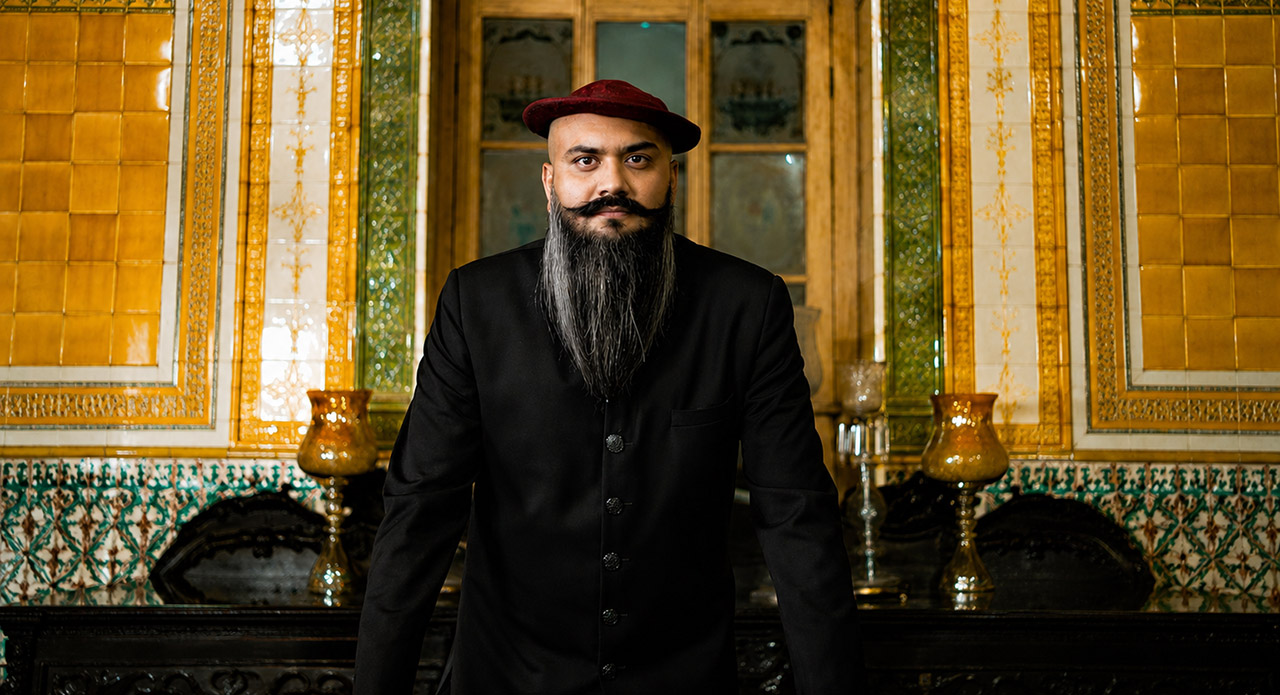


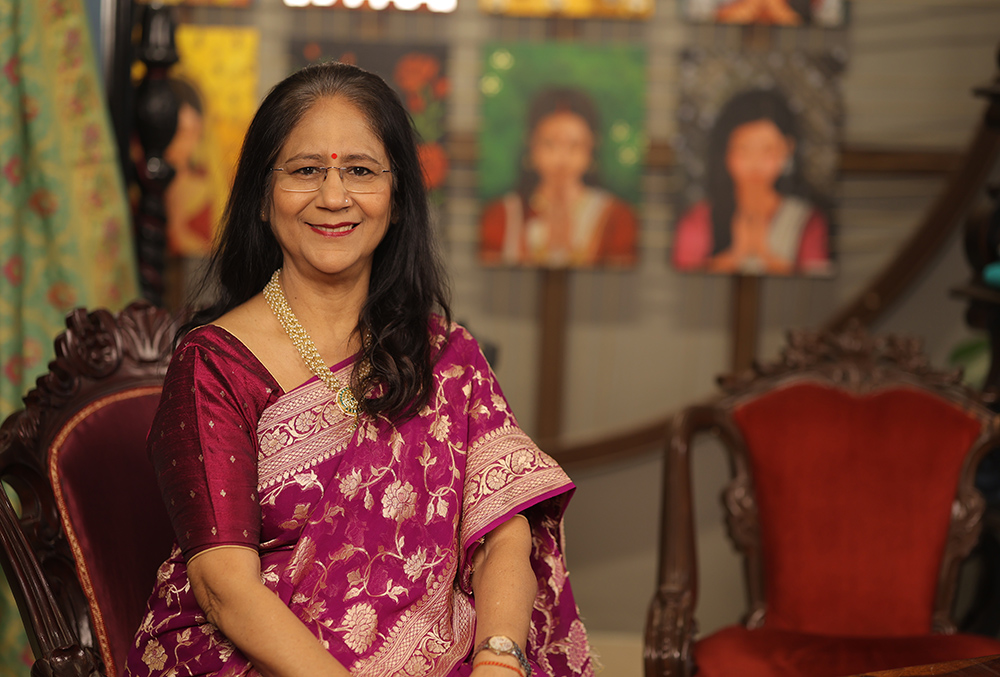
“We are moving too slow,” Pratibha Dudhoria told her son on a Sunday night at 10:30. She called him on the phone even though they live in the same city, in fact the same house, and he was already on his way back from work. “We need to run fast. We need to grow fast.” It was a regular Sunday for her, the matriarch, the heart and soul of Indian Silk House Agencies. Mapping out the to-do lists for the brand with her children for the week ahead, strategizing, restating ambitions. Her son Darshan Dudhoria is the Chief Executive Officer, while her daughter Lipika Dudhoria serves as Director, overseeing merchandising and marketing.
Darshan recalls this incident with the particular warmth of someone who has grown so used to being pushed by a woman he loves that he no longer registers it as pressure. He has come to admire it as one of her finest qualities.
India’s Fastest-Growing Heritage Saree Brand
I am sitting across from Darshan in a conference room (fine, we were on a laptop screen, miles apart, but it still felt like a room) and I have just asked him who the most important woman in his life is. He goes quiet for a second. The answer, he says, is easy. It’s just that a story about his mother from the previous week has suddenly found its way back to him. It’s a busy month for Indian silk houses, he tells me. Bengali New Year is just around the corner, which means the market is alive and the warehouse workers have been putting in longer hours than usual, the way they do every year around this time.
On a quiet afternoon, in the lull between rushes, word reached Darshan that the workers had not been looked after well enough at lunch. His mother heard the same thing. She came home unsettled. The next morning at 5:30, she pulled together a small team, rolled up her sleeves in her own kitchen, and by midday every boy and girl at that warehouse had eaten a hot meal made by the Managing Director of the company herself.
“When you hear tens of these stories,” Darshan says, “of course it stays with you. That one hit me at multiple levels. Now I know what the right thing looks like. My mother showed me. And these things go a long way.”
The Legacy Of Indian Silk House Agencies
This is the world Darshan Dudhoria grew up in, and in many ways, it is the world he is now trying to build at scale. Indian Silk House Agencies is not a recent start-up dressed in the language of heritage. Its roots go back to a saree shop in North Kolkata in 1971, started by Sumati Chand Samsukha who cared about two things: that local artisans get their due, and that every saree sold was the real, pure silk. Families found their way there and kept coming back.
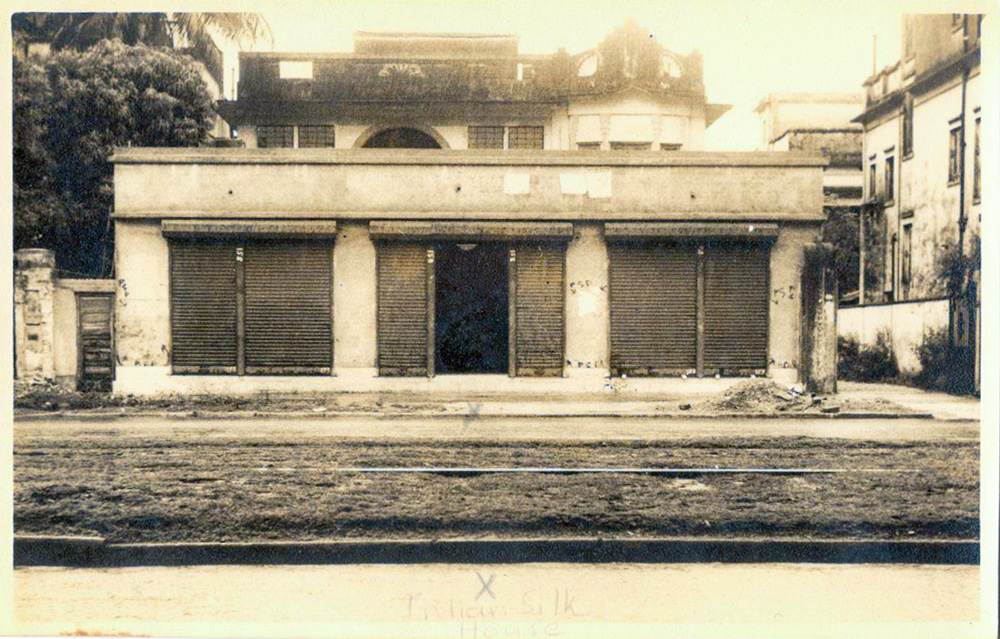
In 1998, his daughter Pratibha Dudhoria took over and became the person the brand revolved around, both in spirit and in running of things. She had started learning at thirteen, sitting with her father, understanding the artisans and the art. Under her leadership, stores spread across Kolkata and then across West Bengal. The brand grew but it did not lose its way.
The Lawyer Who Came Home
Darshan, Pratibha’s son, is a seventh-generation descendant of Rai Bahadur Singh Dudhoria, a family with over three centuries of patronage of art, textile, culture and community rooted in Murshidabad. He did not grow up expecting to run a saree business. He trained as a corporate lawyer, was raised in a business family, and what he actually wanted, he confesses to me, with a self-aware laugh, was politics. “I always aspired to be the youngest MP,” he says. “When I was sixteen, I had it all figured out, the way only a sixteen year old can,” he smiles. “I wanted to get into politics, so I did law. After law, I realised I didn’t have the money for politics. I was depending on my father and he said no. So I got a job, became a lawyer.”
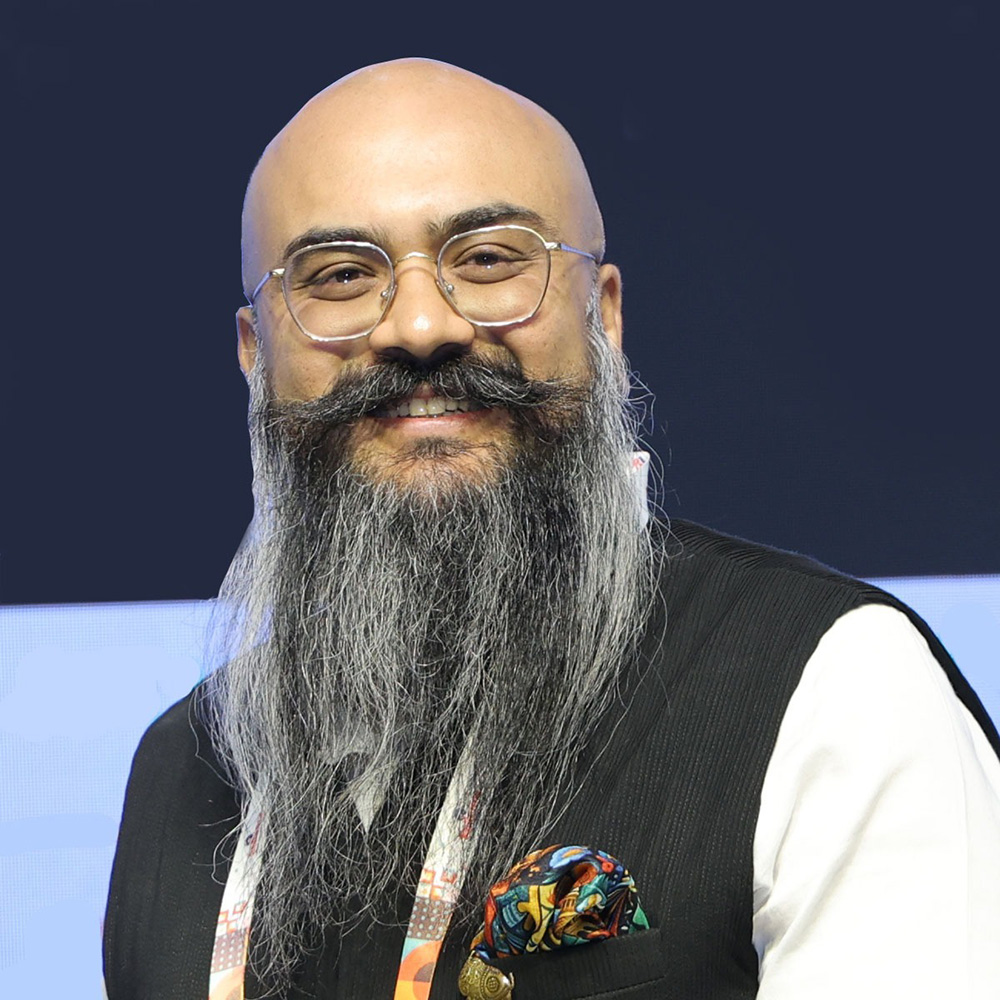
“…And then it hit me that without money, it is very difficult to bring about any kind of larger change or social reform. Money is the backbone.” So he became a lawyer instead. He eventually found his way into the family business around 2014 and 2015. He came home. He joined the family business. “I was very clear,” he says. “I didn’t join to become a Lala sitting on a gaddi and trying to show sarees. My idea was, how can you make this much bigger? How can you make sarees accessible to every saree wearer across India?”
The question he kept returning to was deceptively simple – is the saree actually available? Not available in the sense of existing somewhere, but available in the sense of being accessible, well-priced, authentic, and trustworthy, in a proper store, in every city across India. “In your hometown,” he says to me, “just think for a second…Is there a good saree store like there’s a Tanishq for jewellery? And the answer would be absolutely not.” And he was right to assume so. There isn’t. That gap, that white canvas, is what Indian Silk House Agencies set out to fill.
One Store Every Seven Days
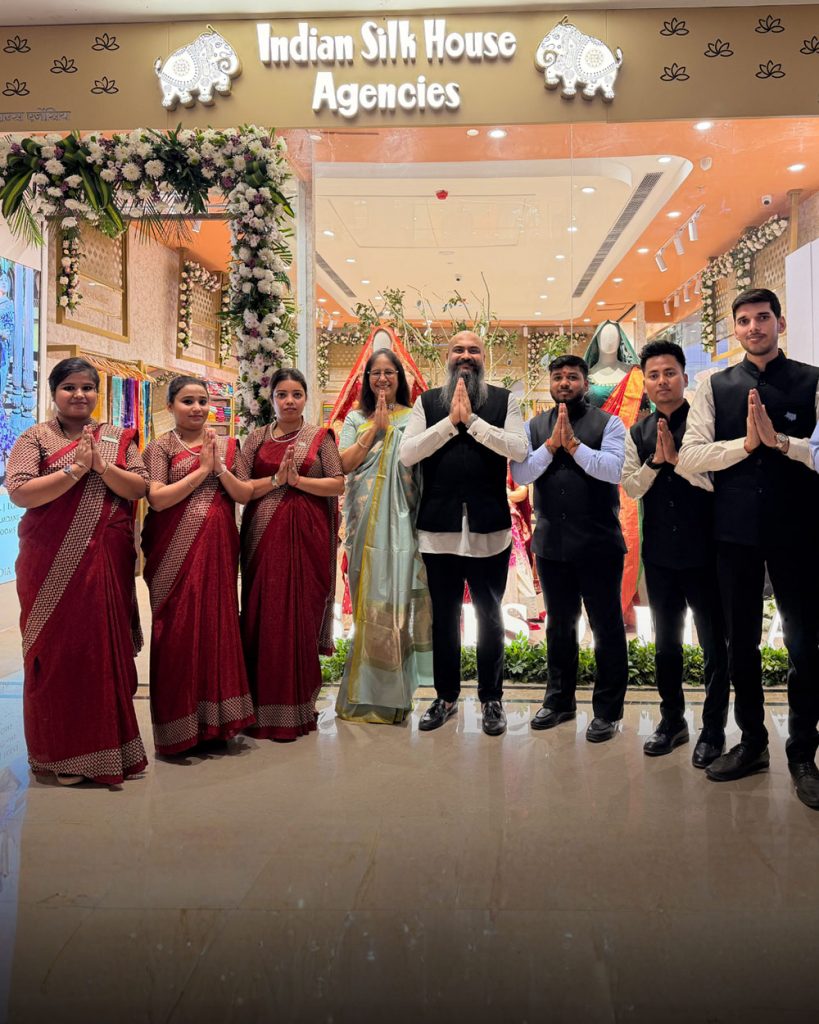
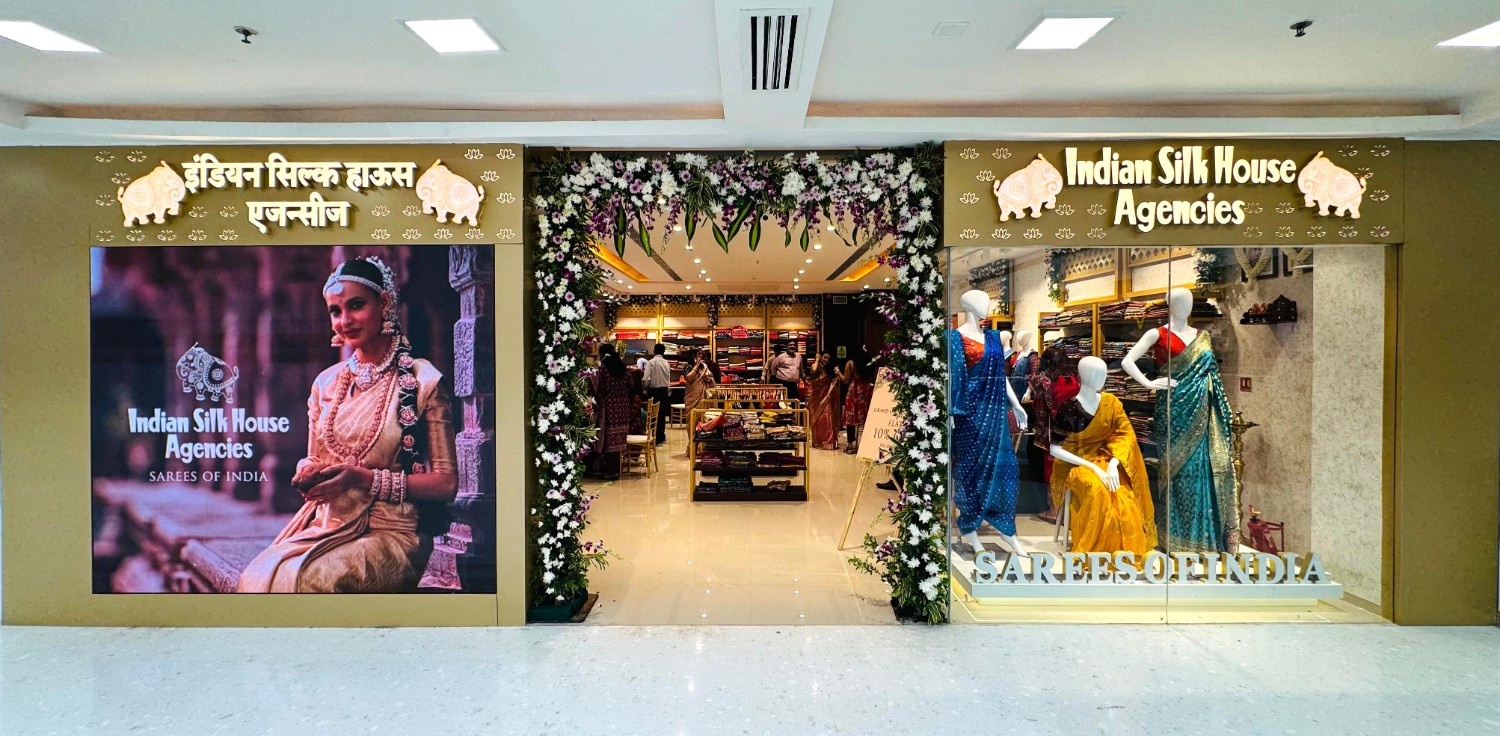
Today, the legacy brand operates 67+ stores across 13 states, with over two lakh products, and the ambition is to open 400 stores over the next four years.
View this post on Instagram
The math requires opening one store every seven days. Last year they were opening one roughly every two weeks. Darshan tells me, “Our dream is very, very, very simple and straightforward. We want to touch 400 stores over the next four years, and, in order to do that, this has to be the math.” They were also among the first, back in 2015, to sell pure Banarasi sarees to the Indian diaspora in the United States through their website, and they have announced plans to open at least five stores in the UK over the next three years.
On global expansion, Darshan is straightforward. “Honestly, we’re not doing it because we want to go international — we’re doing it because there’s an Indian diaspora in the West that either can’t access our products or pays ten times the price for them. So how do we level that market?…” Laughing, he adds, “If you ask me, I’d much rather make in India, sell in India, and stay in India.”
Also Read: The Price Tag And The Paycheck: Inside Fashion Industry’s Pay Disparity
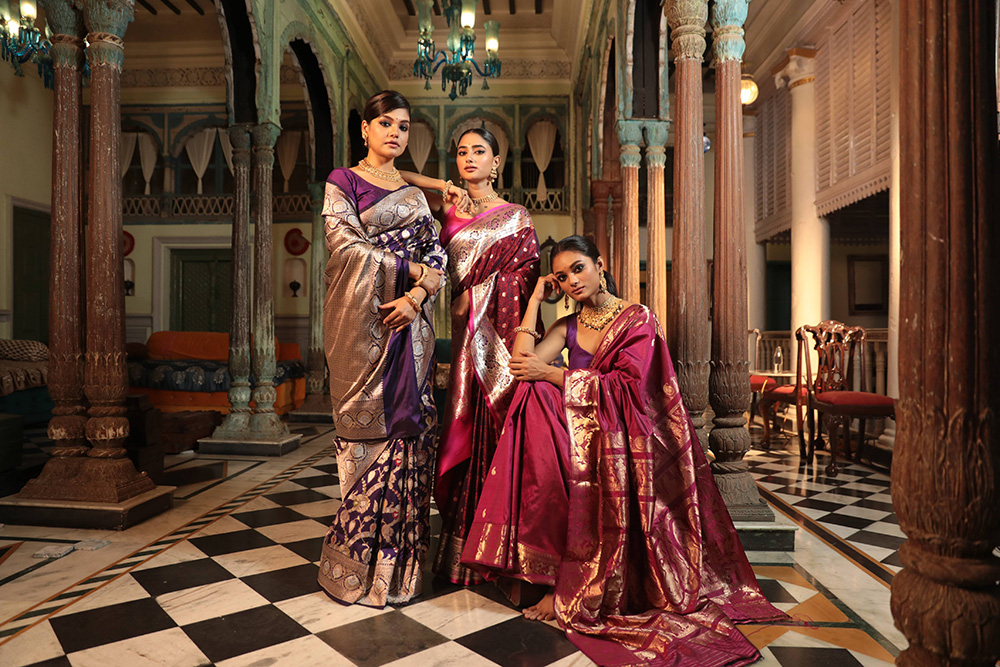
The brand carries upwards of 15,000 handloom designs spanning Banarasi, Kanjivaram, Baluchari, Tussar, Chanderi, Kantha, Ikkat, Paithani, Gadwal, Uppada, and others. Every single product, across all those stores, has been touched and approved by Pratibha Dudhoria herself. Who better to know what sarees women want than a woman who, as her son puts it, “probably wears it 364 days out of 365 days.” Darshan had told me, “My first memory of a saree was of my mother wearing it. She breathes, lives sarees.”
The New Custodian Of The Old Saree
The saree, as Darshan describes it, is genuinely democratic in a way that almost no other garment is. “It is that one garment that irrespective of what your age is, what your body type is, what your characteristics are – and I mean everything, it suits all and makes anyone and everyone look, I think, the most pretty.”
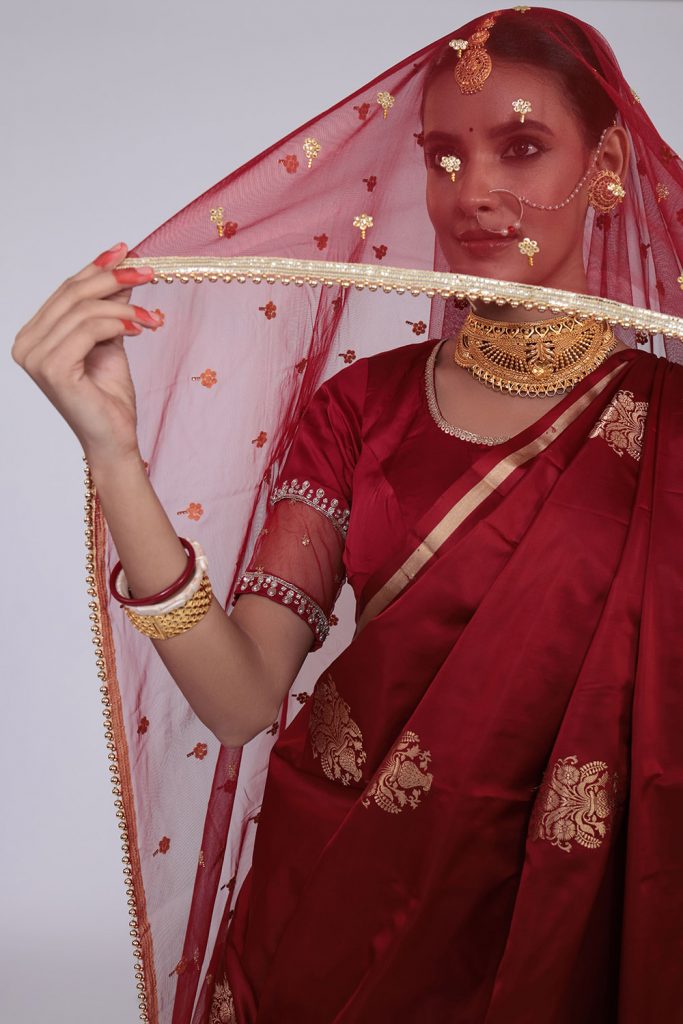
His wife, a Delhi girl by upbringing, was never the biggest saree wearer, he tells me. She has come around. Not to 365 days a year – “those are the couple goals and life goals that we need to reach,” he jokes, but around enough to understand what she had been missing. He credits this in part to the saree itself, and in part to what the brand is now working on, a pre-stitched version. “For the working generation to wear a saree and come to work – I’m sure you would love to, but the thought of how you’ll drape it, how you’ll wear and carry it, may seem daunting. So if tomorrow I gave you a pre-stitched saree that you could just pull on as a skirt and wrap around, I’m sure you would be more than happy to make it a daily wear. That’s something we’ve started very recently. We’ve introduced it into five of our 67+ stores as a pilot project. The moment this goes pan-India and mainstream, I think that will change the adoption of sarees amongst, let me say, the impatient class of wearers.”
The Business Of Sarees
In a market crowded with brands trying to be everything to everyone, Darshan has a clear-eyed answer for why Silk House stays in its lane. “In a world full of generalists, full of products, full of Instagram handles, it’s very important to make a space for yourself – and today, that space belongs to specialists.” He points to the market as proof. Manyavar’s dominance in one category, Biba’s staying power in salwar suits. And then the cautionary tale. “Fab India’s not-so-successful story is because of diversification and over-generalization. You stop standing for something. You stop representing something.”
The logic holds across categories – a beauty brand with 20,000 products will never own a customer’s mind the way a brand that is the destination for lipsticks will. Specialists win recall. Specialists win trust.
The business case, he admits, cuts both ways. Going deep in one category sharpens margins and simplifies inventory in ways that multi-category players can only envy. The trade-off is footfall. In a retail store, a wider assortment means a higher average order value, more units per transaction. Darshan doesn’t dismiss that math. “In certain stores, we will have an ecosystem – there’s no doubt about that.” But the mission stays non-negotiable. “We will stand for one product, which is sarees. Our mission is to take sarees across India. We don’t want to dilute that mission by putting on 20 other things.”
The Weaver Behind The Weave
Darshan is not just preserving something. He is building something bigger. And what he is building extends well beyond the women who wear sarees to the tens of thousands of artisans whose hands make them.
View this post on Instagram
Working with over 15,000 artisans across more than 60 weaving clusters nationally, Indian Silk House Agencies has made artisanal recognition a core part of its identity, which, in today’s time, is a rarity. Darshan tells me the brand is developing technology using NFC chips and blockchain so that when a customer holds their phone to a saree in the store and scans a QR code, a video plays of the weaver making that exact piece. Each saree will come with a certificate naming the region it was made in and the time it took to weave. “It’s only a matter of time,” he says. “Once due recognition is given deep down the fashion circuit, it’s going to make a lot of difference for artisans, fashion and Indian heritage.”
Also Read: Mayyur Girotra Wants You To See The Calloused Hands Behind His Couture, Will You?
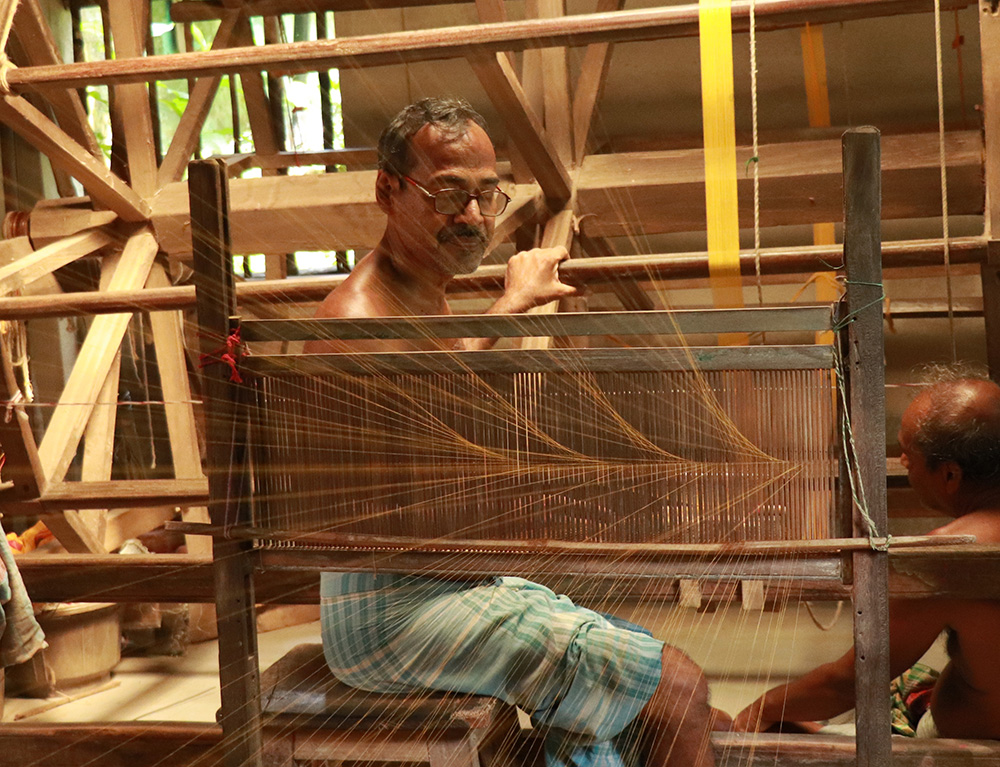
He puts it this way: a canvas hanging in a collector’s drawing room, made over six months, is valued in the tens of lakhs because the artist’s name is attached to it, because its provenance is documented, because there is a language around it that makes the “object” all the more precious. A Banarasi silk saree that took a master weaver the better part of a year does not yet have that language in the mainstream market. That is what he wants to change. “They will never get to be a Sabyasachi,” he says, “but they can stand proud like one. Maybe work-wise they are twice as good? But maybe they don’t have the resources, the confidence, the money, ten other things.” So Indian Silk House Agencies becomes the platform. So that the spotlight falls where it has almost never fallen before.
Why Are India’s Weavers Walking Away?
The generational problem is real and he does not mince his words. Weavers’ children are leaving. Not because they are indifferent, but because there is ‘no pride in making something no one is buying.’ “Why does someone want to do something that their parents did?” he asks. “It’s for two reasons. There is pride. And there is money. No matter how socialist we want to be, capitalism is the way of life, at least in our generation.”
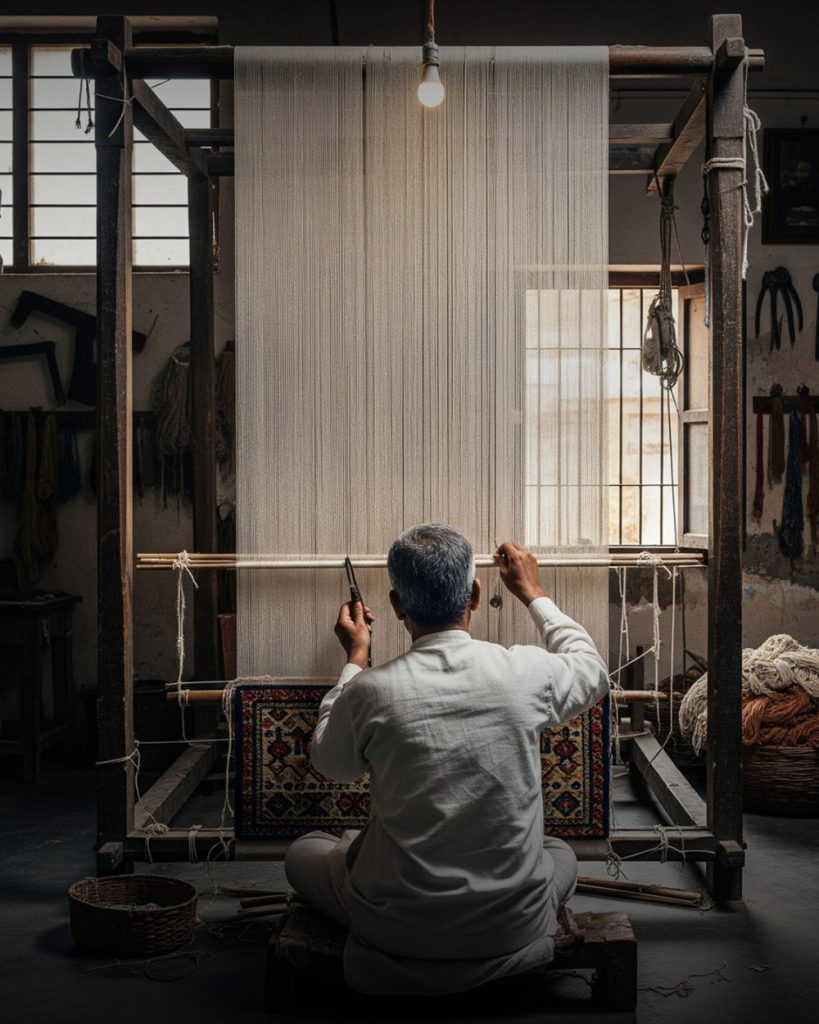
Every weaver, he says, wants better for their child. And better, right now, means out. “There is no artisanal work that remains. You make a name for yourself, you get a corporate job. That becomes the first dream from a parental perspective.” And from the child’s perspective, it is even simpler. “There is no pride. Pride comes from demand. Pride comes from market access. Imagine I am a weaver’s son and I look at my father and I say, ‘you’re making something that no one is buying. No one cares. This is beautiful, but no one cares.'” What follows from that is not just a career change but a kind of erasure. A master weaver leaves his loom and moves to Surat to work in a factory that makes the same saree on a machine, with poly threads because it pays more and takes half the time or lesser. “Or, this guy now moves to a factory where he’s become a security guard,” Darshan says, “getting paid higher than what he was as a weaver, with zero pride attached.” The craft does not just lose a pair of hands. It loses a lineage.
The Inheritance Nobody Wants And How To Fix It
The solution, as he sees it, is sequential. Demand first, market access second, and then pride and money follow each other in. He is not romantic about the economics. But he is clear about the stakes and he knows his journey has just begun. “If I fail in my mission,” he says, “nothing’s going to change for the next 50 years. But if we are successful, I can guarantee you there’ll be 100 other saree brands that pop up in the next two years. And in the next five to seven years, everything will change.”
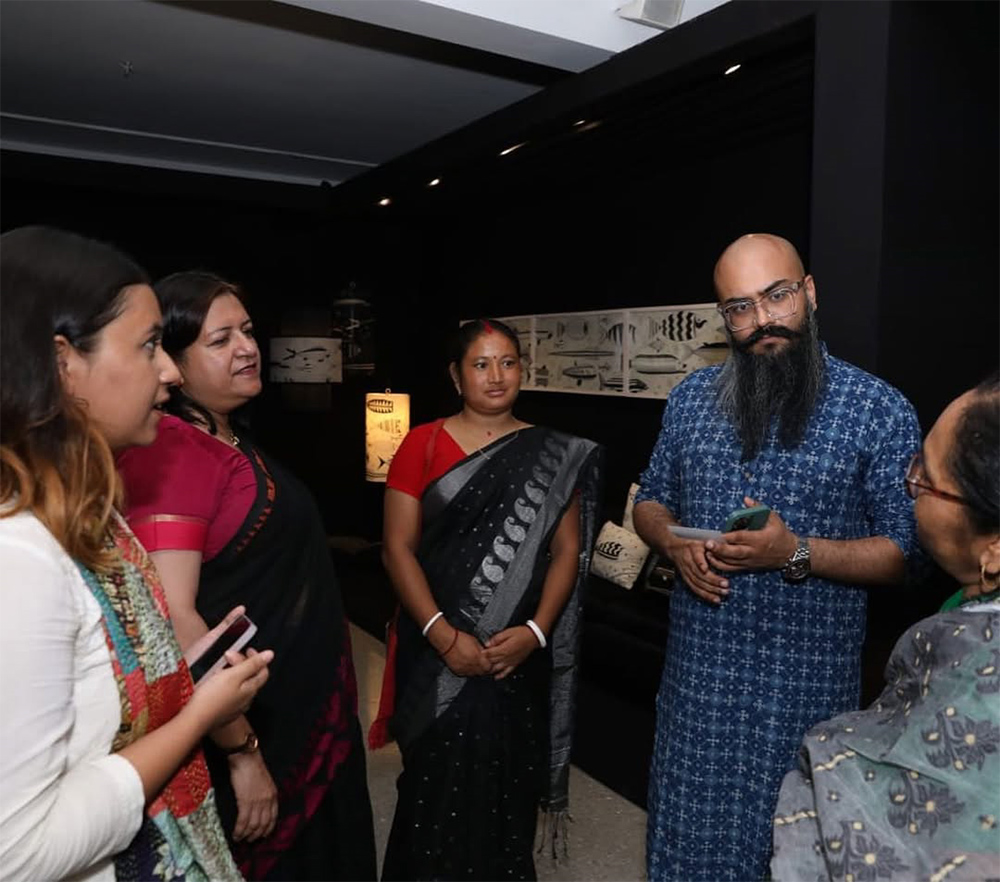
There is a moment in our conversation when I ask Darshan what it is like to be a man leading a category shaped almost entirely by women. His consumer. His workforce. His own family. This visibly catches him off guard and he thinks about it for a few seconds. “I’ve never thought about it that way,” he says, and then thinks about it out loud, right there. His mother leads the business. His sister handles merchandising and marketing and is, by his own admission, more powerful than he is. His wife. His daughters. He is, in every direction, surrounded by women who understand the saree in a way he is still, perhaps, catching up to.
When he walks into a room of investors to pitch, there are typically five men on the other side of the table. “I always make a joke to them,” he says, “that I’m trying to sell you something that you don’t even understand, will not even resonate with.” It is, in its own way, a rare admission from someone building a business at this scale. That the people who matter most to what he is doing are rarely in the rooms where the decisions get made.
Also Read: That Lady In CEO Suit(e): Karishma Manga Bedi And Her Indomitable “Spirit”
In Good Company
He pushes back, gently, on the idea that it is the women specifically who have shaped his emotional intelligence.
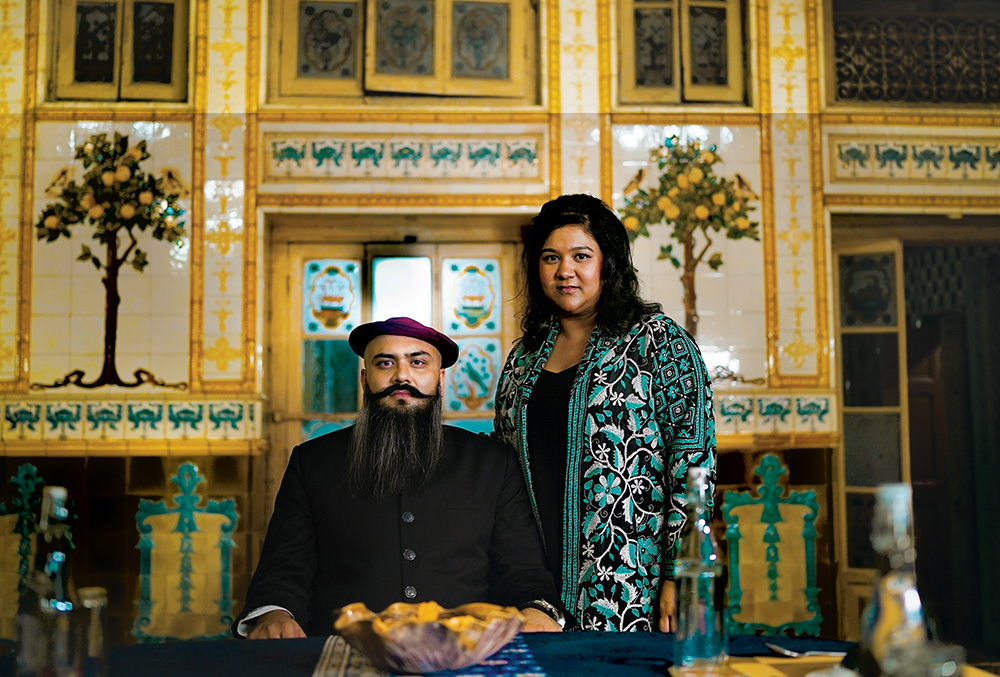
He thinks it might just as easily be the family’s DNA across centuries of cultural patronage, the particular sensibility that comes from hailing from Murshidabad, from being raised in Bengal where, he says, the heart beats differently. “You put five entrepreneurs in the same room,” he says. “You will see how Bengal stands out.” But he does not dismiss the influence of the women around him either. He says, with a straightforward lack of performance, that “the quotient of respect, the quotient of understanding, the quotient of empathy” are all higher for it. And then, with a grin, he gestures to his beard: “The more women I keep adding to my circle, my beard keeps growing longer. I think I’m preserving my masculinity to that extent.”
Politics Isn’t Off The Table
He laughs. But underneath the lightness there is a proud man who genuinely does not see the saree business as a woman’s world in which he is an outsider. He sees it as his world, the one he chose, the one his family built, the one he is now scaling with the same instinct for justice that once made him want to go into politics.
He never forgot that original dream, by the way. He says, plainly, that he will go into politics at some point – “when I have enough of the tools needed to bring about the change for which you want to get into politics.” The business, the artisans, the stores opening every few days across India – all of it is, in his telling, preparation. An ecosystem being built before the next chapter begins.
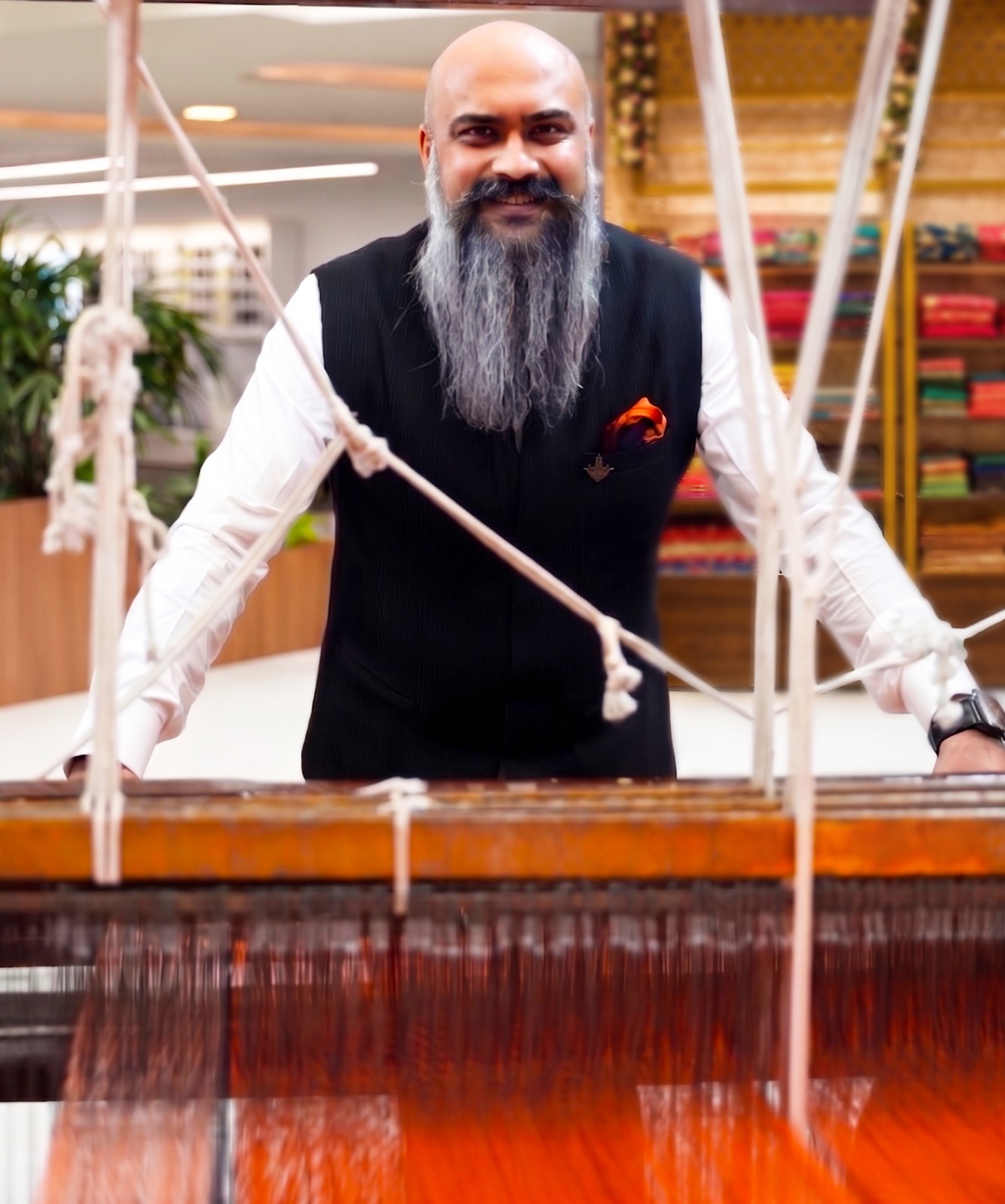
For now, though, the chapter he is in seems to suit him. If pressed on personal taste, the saree he would choose for himself would be Kantha or Ikat – “the coolest,” he says, “something that has a story and can easily be gender agnostic.” He is having garments made for himself inspired by their drape and movement, which is a lovely thing, I must admit. The CEO building an empire from sarees, absorbing their spirit into the clothes he wears, carrying the culture on his own body.
He is in Delhi when we speak, preparing to open another store. Somewhere in Kolkata, his mother is probably already thinking about the week after next. On a Sunday evening, she will call.