

There was a time when a gentleman bought a watch for precisely one reason. It told the time. Not his heart rate, not the weather in Singapore, and certainly not how many steps he’d taken after lunch. It was a mechanical companion, quietly ticking away beneath a starched cuff while steam locomotives thundered across Europe and leather suitcases were plastered with hotel labels from places most people only read about. And if anyone wandered into Abraham-Louis Breguet’s workshop in Paris more than two centuries ago, they wouldn’t have found marketing slogans or celebrity ambassadors. In fact what they would have found was brass wheels, steel springs, the smell of machine oil, and a man obsessed with exposing mechanical perfection rather than hiding it. That philosophy still lives today in the Breguet Tradition collection, a watch that doesn’t merely borrow history for aesthetic effect but wears it openly, proudly and with the quiet confidence of something that knows it helped invent modern watchmaking.
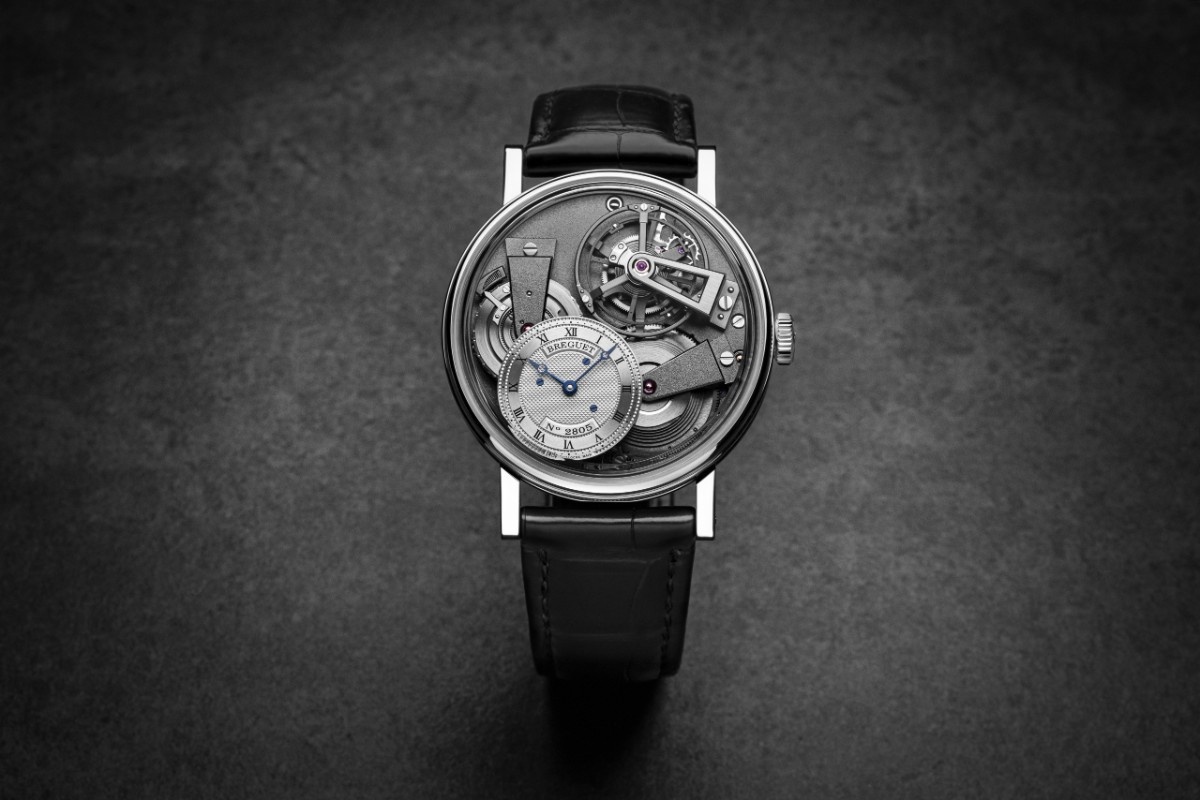
A Watch Born From History, Not Nostalgia
When Breguet unveiled the Tradition collection in 2005, it wasn’t creating another heritage-inspired watch. It was reviving one of the most important chapters in the Maison’s history. Drawing directly from the subscription and tact watches conceived by Abraham-Louis Breguet at the end of the eighteenth century, the collection transformed ideas first imagined more than two centuries earlier into an unmistakably contemporary wristwatch. Rather than copying vintage aesthetics, the Tradition reinterpreted Breguet’s original philosophy for modern collectors, proving that true innovation rarely has an expiry date.
Also Read: Inside Breguet’s Legacy: The Complications That Changed Timekeeping
The Dial That Isn’t Really A Dial
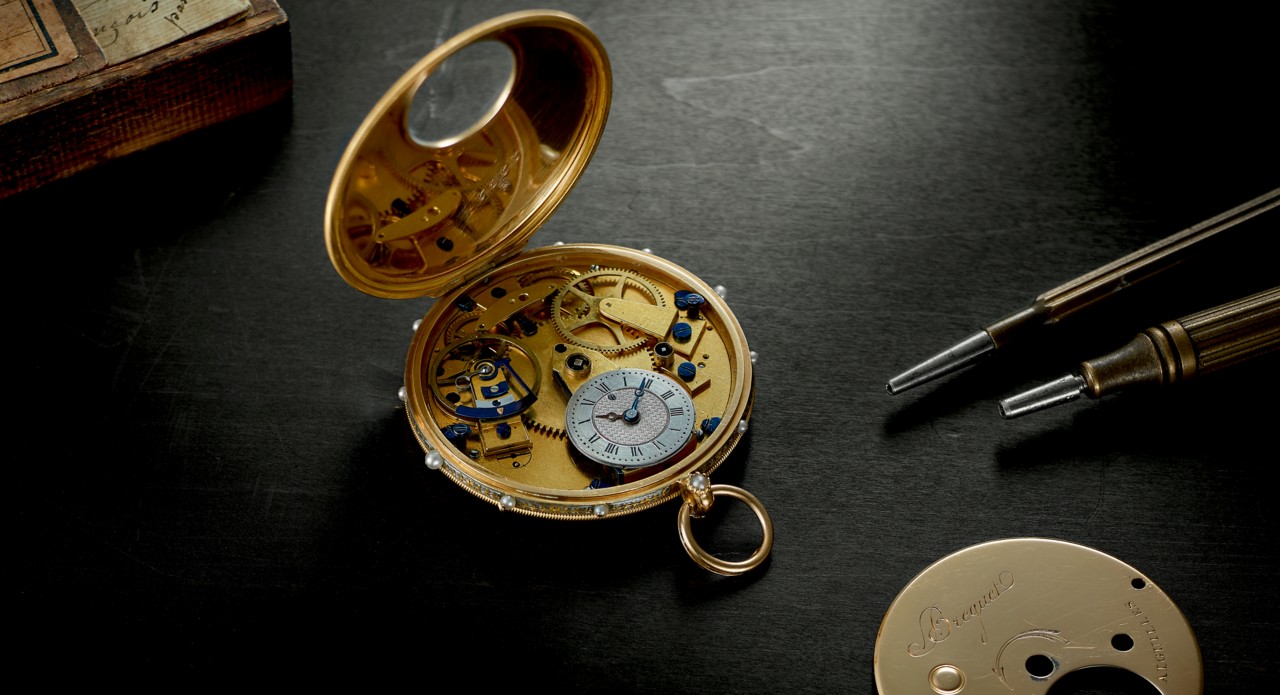
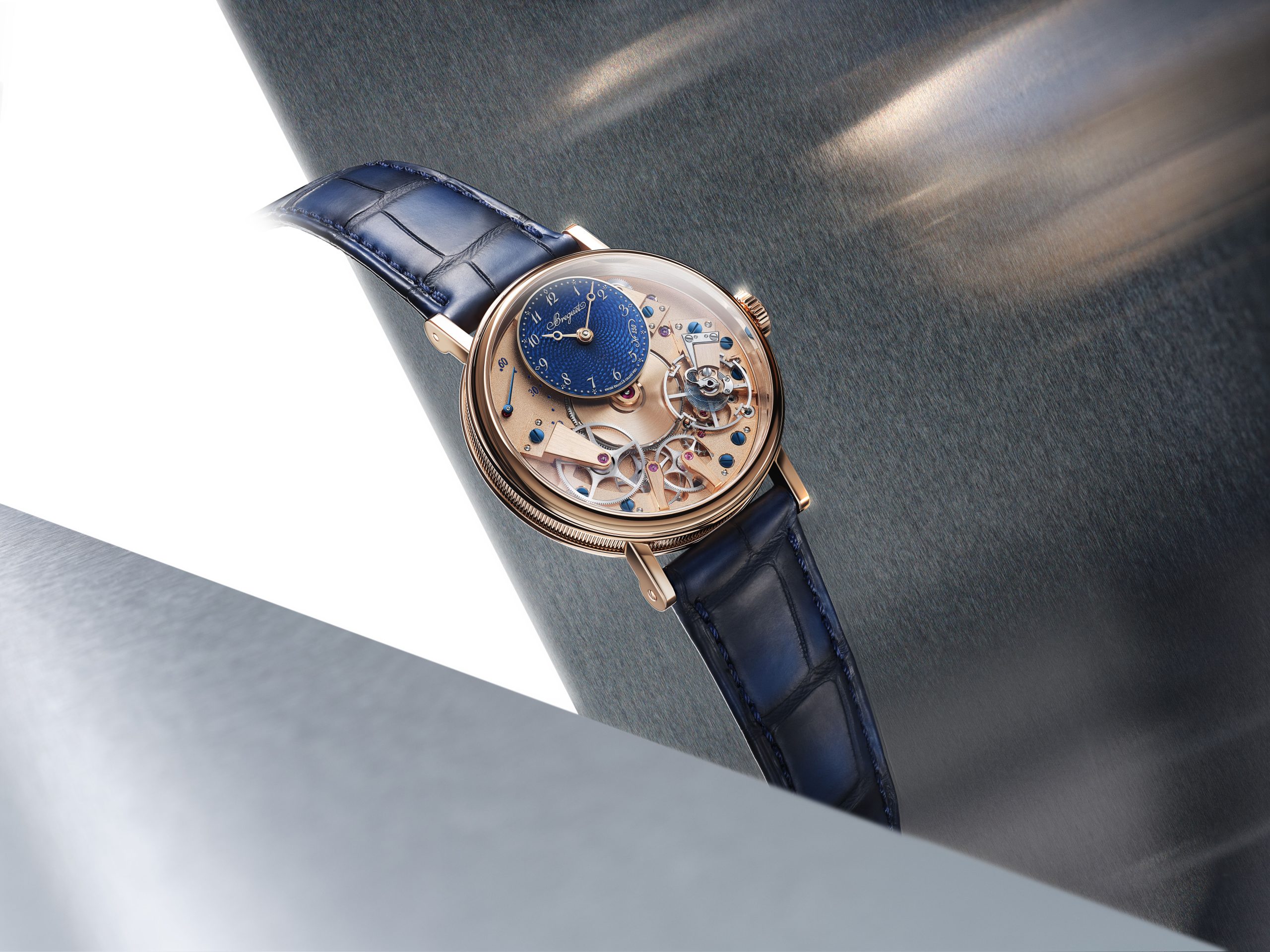
The defining characteristic of the Tradition collection is immediately obvious. There is almost no traditional dial at all. Instead, the movement itself becomes the face of the watch. Wheels, bridges, the barrel, gear train and balance wheel are arranged in full view, sharing space with the time display on a single side. What is usually hidden beneath a dial is instead celebrated, allowing the owner to observe the watch exactly as a master watchmaker would. Yet despite exposing almost every mechanical component, the display remains remarkably legible, balancing technical complexity with unmistakable elegance.
Symmetry Designed More Than Two Hundred Years Ago
Nothing within the Tradition collection exists purely for decoration. The movement architecture follows principles first established by Abraham-Louis Breguet himself. Built around a central plate, the barrel, gears and regulating organ are arranged with remarkable symmetry, creating a visual harmony that feels both scientific and artistic. Modern manufacturing techniques have refined the construction for the wristwatch, but the underlying philosophy remains untouched. Every polished bevel, frosted bridge and perfectly finished wheel reflects the uncompromising standards of haute horlogerie while preserving the mechanical honesty that defines the collection.
The Subscription Watch That Changed Everything
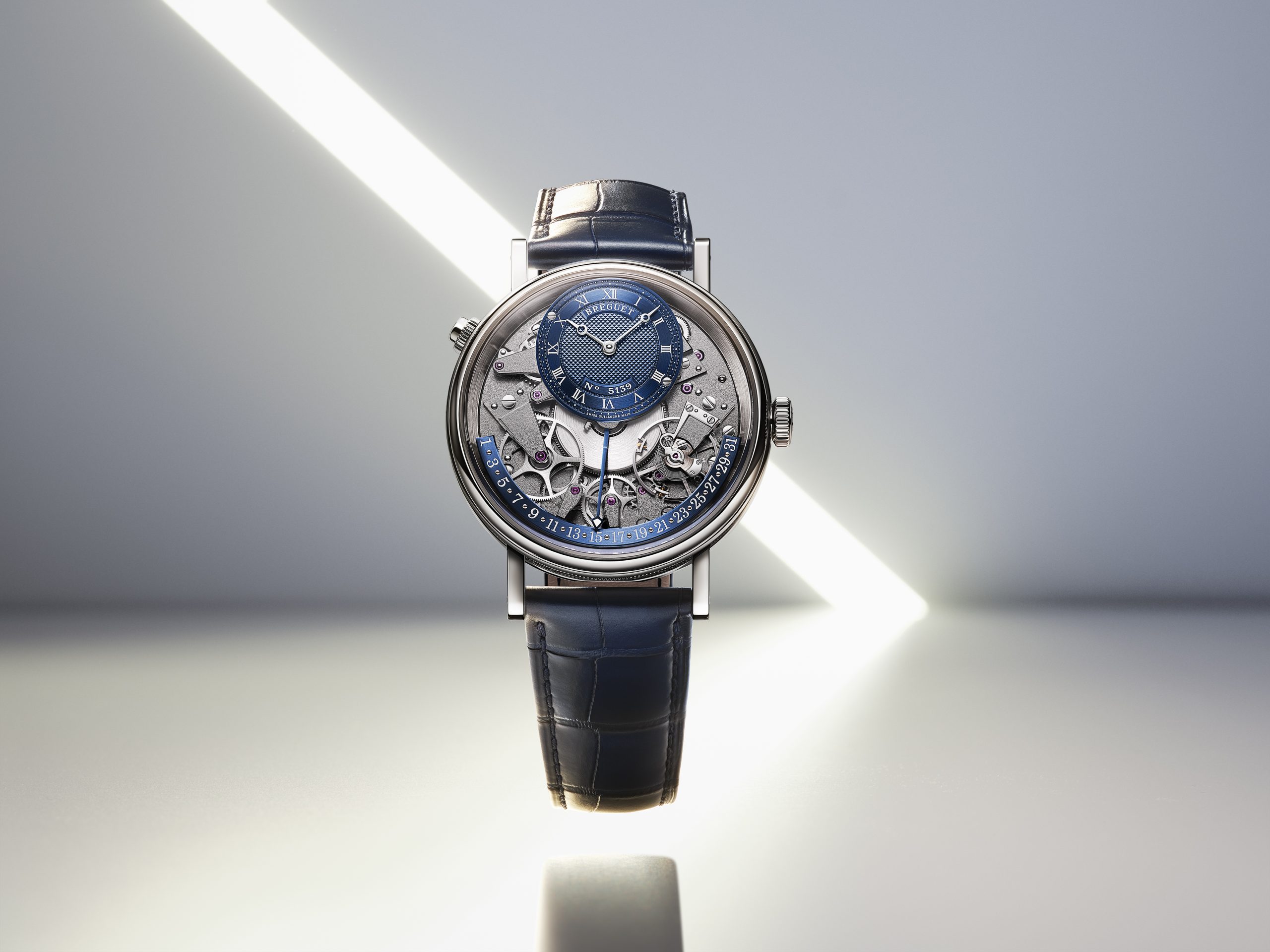
To understand the Tradition collection, one must travel back to the years immediately following the French Revolution. Society had changed, and Abraham-Louis Breguet responded by creating the subscription watch, a remarkably simple yet technically brilliant timepiece designed for a wider clientele. Unlike many of his complicated masterpieces, the subscription watch prioritised clarity, reliability and rational construction. Breguet even published a printed document explaining its design philosophy directly to his customers, an unusually transparent gesture for the period. The idea proved enormously successful, with nearly 700 subscription watches sold between 1798 and 1805, introducing an entirely new audience to the House of Breguet.
Also Read: Breguet’s 225th Anniversary New Tourbillon Models Honour The Legacy Of Abraham-Louis Breguet
When Time Could Be Read Without Looking
Alongside the subscription watch came another remarkable invention: the tact watch. Sharing much of the same movement architecture, it introduced an entirely different way of reading time. An external movable hand allowed the wearer to feel the time discreetly without opening the watch or even looking at it. Some examples also featured a secondary dial on the reverse, revealing yet another way of displaying time while simultaneously exposing elements of the movement itself. Long before anyone spoke about dual displays or unconventional layouts, Abraham-Louis Breguet had already explored both concepts with astonishing elegance. These early watches became the direct conceptual ancestors of the modern Tradition collection.
Where Heritage Becomes Innovation
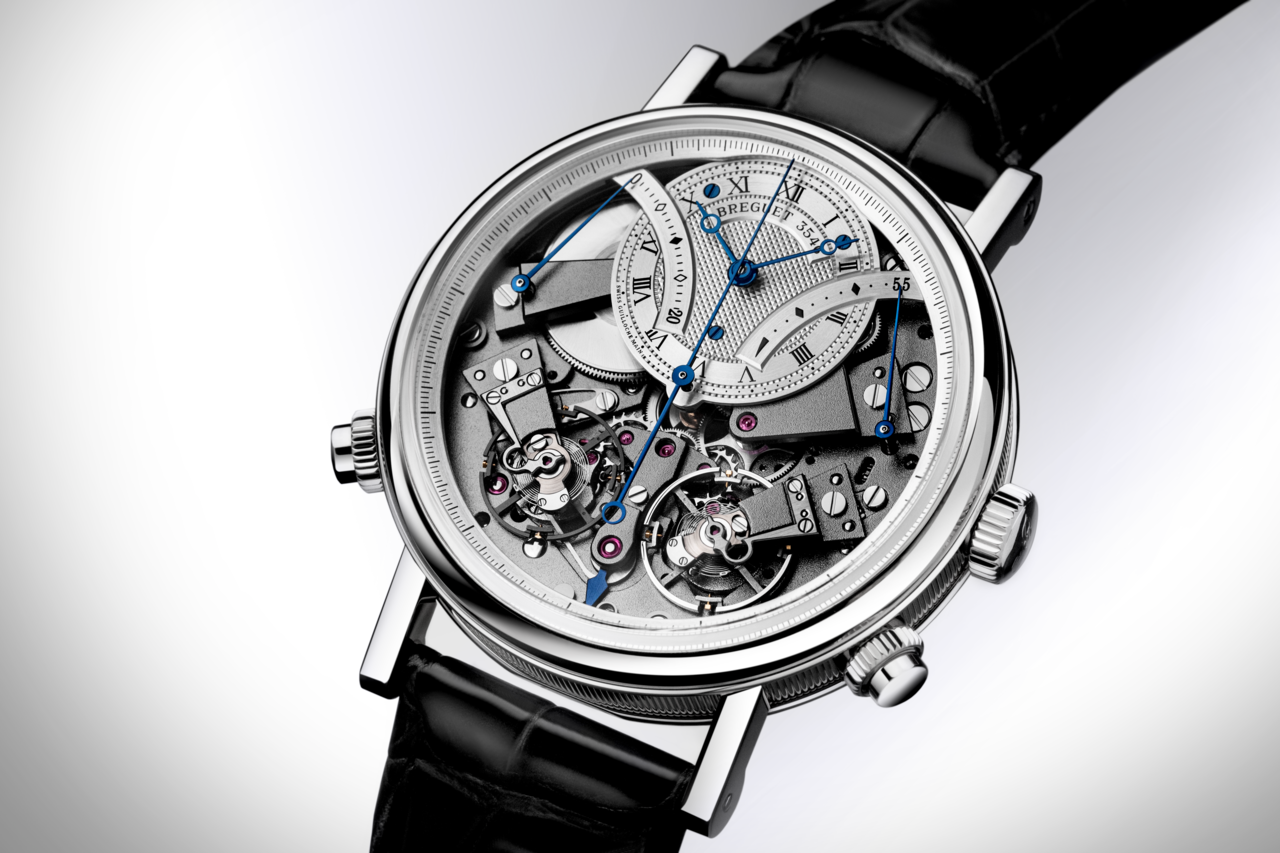
Over the past two decades, the Tradition collection has evolved far beyond its original model. Today it encompasses everything from elegantly restrained time-only watches to sophisticated complications, each retaining the unmistakable exposed architecture that defines the family. Different finishes, materials and complications have expanded the collection, yet every model continues the same dialogue between history and innovation. Rather than treating heritage as something to preserve behind museum glass, Breguet uses it as an active source of inspiration, allowing centuries-old ideas to shape contemporary watchmaking.
More Than A Collection
Perhaps that is why the Tradition remains unlike anything else in haute horlogerie. It does not imitate the past, nor does it chase the future for the sake of novelty. Instead, it reminds us that some of the greatest ideas in watchmaking were conceived long before electricity, computers or even railways. By exposing the movement instead of concealing it, Breguet transformed mechanical engineering into something deeply personal. The Tradition collection is not simply a tribute to Abraham-Louis Breguet’s genius. It is proof that genuine innovation never grows old; it simply keeps ticking.