

If watches were cars, the Swiss would be the suave Italians in tailored suits—beautiful, charming, and occasionally unreliable while the Germans would be the terrifyingly focused engineers who hand-polish a screw the way BMW tunes a straight-six: with frightening precision and absolutely no sense of humour. German watchmaking isn’t about flamboyant chronographs or diamond-encrusted absurdities; it’s about crafting machines so mechanically exact they feel like they were designed in a bunker lined with micrometers. Wander into Glashütte and you’re essentially stepping into the horological equivalent of a high-security performance lab—where everything is measured, regulated, and probably inspected twice before lunch. And this is where Outlook Luxe comes charging in, cutting through the hype to highlight the brands that don’t just make watches; they engineer disciplined masterpieces. So if you’re the sort of collector who values craft over clout and precision over pretense, prepare yourself: these German watch brands mean business.
A. Lange & Söhne
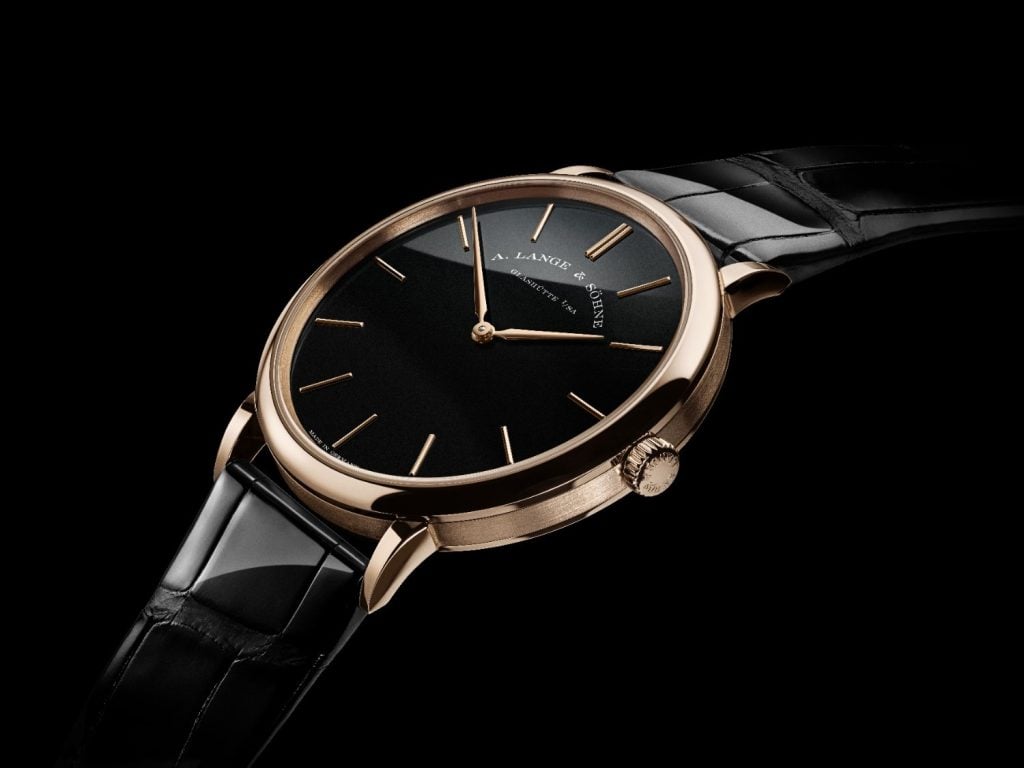
The timepiece maker stands as the undisputed crown jewel of German watchmaking, a brand that treats precision like doctrine and craftsmanship like religion. Founded in 1845 and resurrected in the 1990s, the timepiece maker has since produced some of the most revered mechanical timepieces on the planet—each one unmistakably German in its discipline, architecture, and attitude. Its collection reads like a roll-call of modern horological royalty: the Lange 1 with its iconic off-centre dial and outsize date; the Datograph, widely hailed as one of the finest chronographs ever engineered; the Zeitwerk, which transforms time into a mechanical digital display with jaw-dropping technical finesse; and the Saxonia line, a masterclass in minimalist purity.
Then there are the halo pieceslike the Tourbograph Perpetual, the Richard Lange observatory-inspired models, and those terrifyingly complex Handwerkskunst editions that look like they were carved by a monk with supernatural patience. Every Lange watch is built in Glashütte, finished by hand twice over, and designed to outlive its owner. In the world of serious collecting, this is not just a brand—it’s the benchmark everyone else is quietly trying to reach.
Also Read: What Are Meteorite Dials? The Cosmic Story Behind Watches Made From Space Rock
Moritz Grossmann
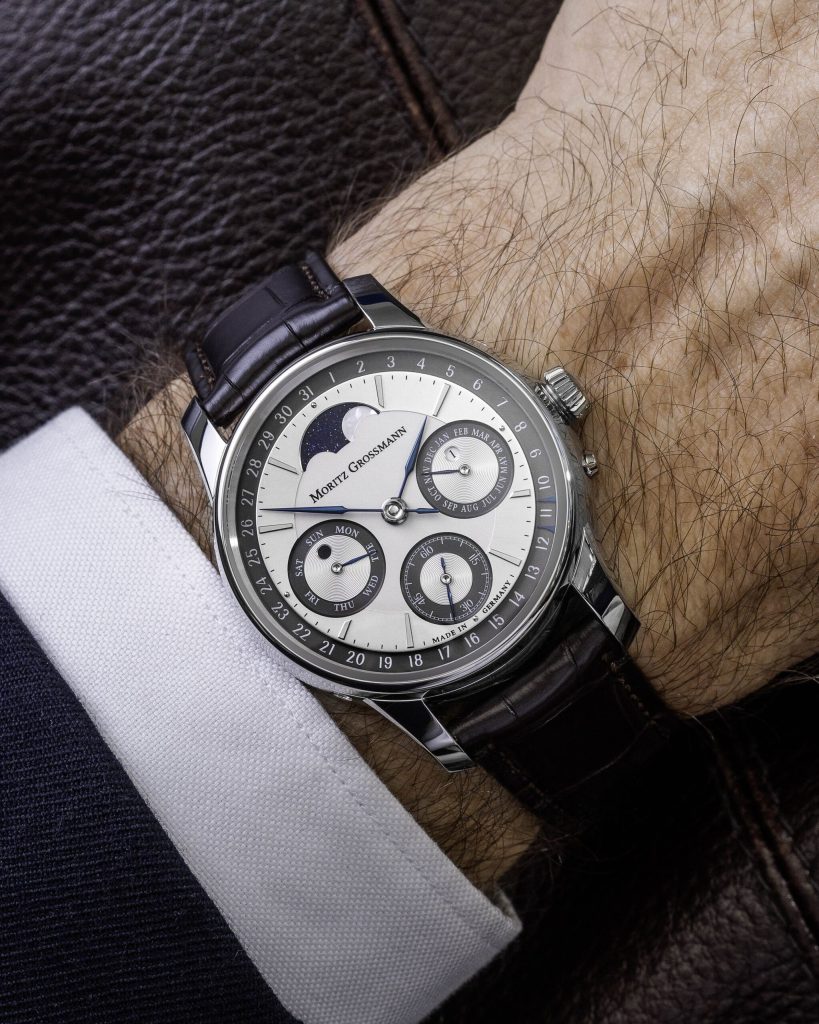
A quiet, scholarly genius of Glashütte, the brand that doesn’t shout for attention because its watches do all the talking under a loupe. Revived in 2008 but rooted in the legacy of the 19th-century watchmaking pioneer Carl Moritz Grossmann, the manufacture has become synonymous with uncompromising handcraft, old-world techniques, and movements so immaculately finished they feel like private art exhibitions. Its collection is deliberately tight and obsessively refined: the Benu series anchors the line-up with elegant, technically purist pieces; the Atum models bring classical simplicity with razor-sharp detailing; and the Tefnut line offers a more contemporary, architectural approach to dress watch design.
Then there are the connoisseur favourites, the Benu Tourbillon with its human-hair-thin balance staff, and the Hamatic, a brilliant revival of a 19th-century hammer-winding system rendered in modern haute horlogerie form. Every component, right down to the hands (which Grossmann makes in-house—a rarity), is crafted with painstaking attention. For collectors who crave traditional watchmaking elevated to an almost meditative state, Moritz Grossmann stands as Glashütte’s understated masterpiece.
Glashütte Original
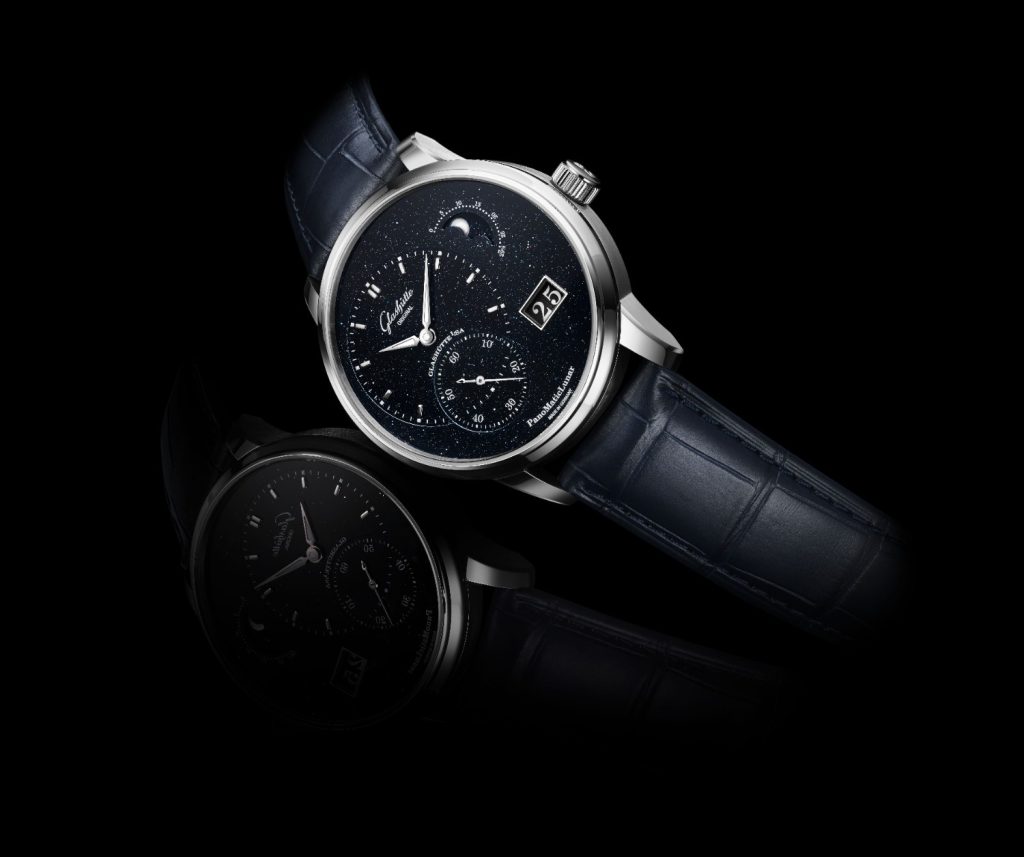
This is the polished powerhouse of Saxon watchmaking, a brand that blends traditional German craft with a modern, almost industrial confidence. Born from the consolidation of Glashütte’s historic ateliers after reunification, GO has since carved out its own identity through in-house mastery, robust engineering, and a design language that’s unmistakably its own. Its collection spans some of the most versatile and technically impressive watches on the market: the Senator line, with its impeccable moonphases, perpetual calendars, and panorama-date displays; the Pano series, famous for asymmetrical dials that feel like architectural blueprints rendered on your wrist; and the SeaQ, a diver with vintage East German roots reimagined for contemporary tool-watch enthusiasts.
Then there are the showpieces—the Senator Chronometer, certified to marine precision standards; the PanoGraph, a chronograph executed with Saxon flair; and the breathtaking PanoMaticLunar, beloved for its poetic moonphase. Add to that the brand’s mastery of in-house dial production—sunburst blues, grainé finishes, and those striking dégradé colours from the Pforzheim facility—and you get a manufacture that does everything under one roof. For collectors who crave serious engineering wrapped in refined aesthetics, Glashütte Original remains one of Germany’s most complete and compelling watchmakers.
MeisterSinger
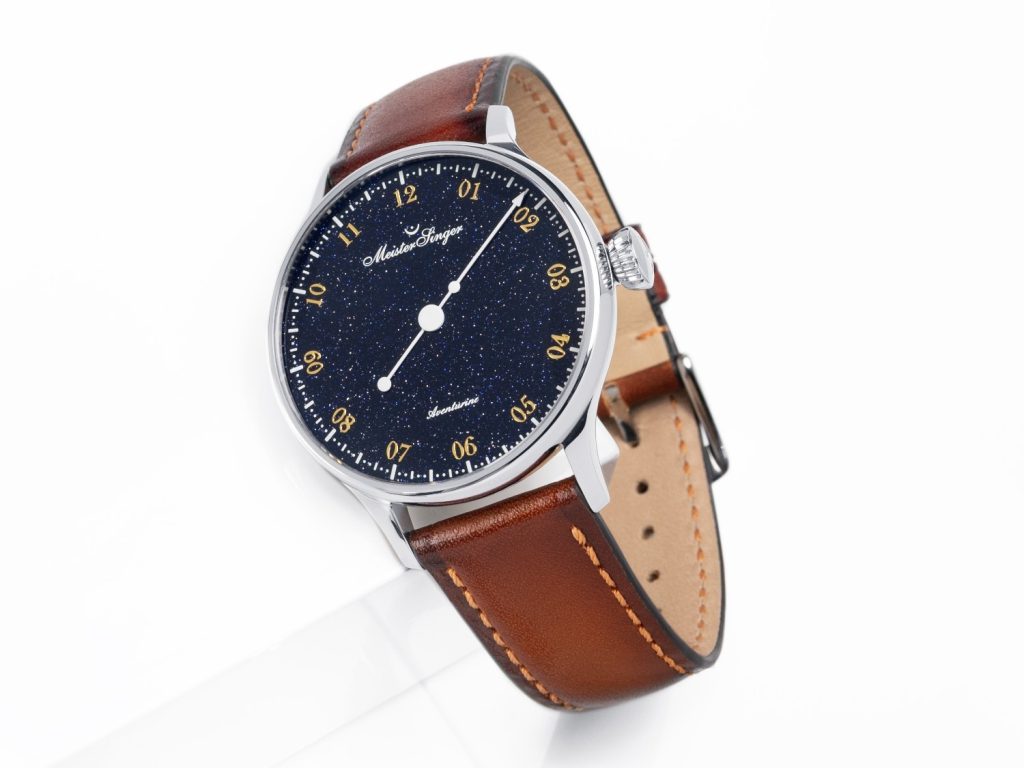
It is the philosophical outlier of German horology, a brand that has built an entire identity around the radical notion that life doesn’t need to be measured in frantic, ticking increments. With its signature single-hand display, MeisterSinger’s watches read like elegant scientific instruments from a gentler century, where time flowed rather than marched. The collection spans the effortlessly iconic N°01, the award-winning Circularis with an engineered hand-wound movement, and the charismatic Perigraph, whose open date ring adds a layer of visual theatre without disturbing the brand’s minimalist calm. For collectors seeking something more celestial, the Lunascope and Stratoscope offer some of the most dramatic moonphase complications in contemporary watchmaking.
Even the rugged Unomat stays true to the one-hand ethos while offering everyday durability. MeisterSinger doesn’t try to compete with traditional powerhouses; instead, it presents an entirely different philosophy—time told with clarity, serenity, and a certain quiet confidence. For those who appreciate originality over orthodoxy, MeisterSinger remains one of Germany’s most soulful and distinctive watchmakers.
Also Read: Rattrapante Chronograph Guide: Working, History And The 5 Best Split-Seconds Watches To Buy
Junghans
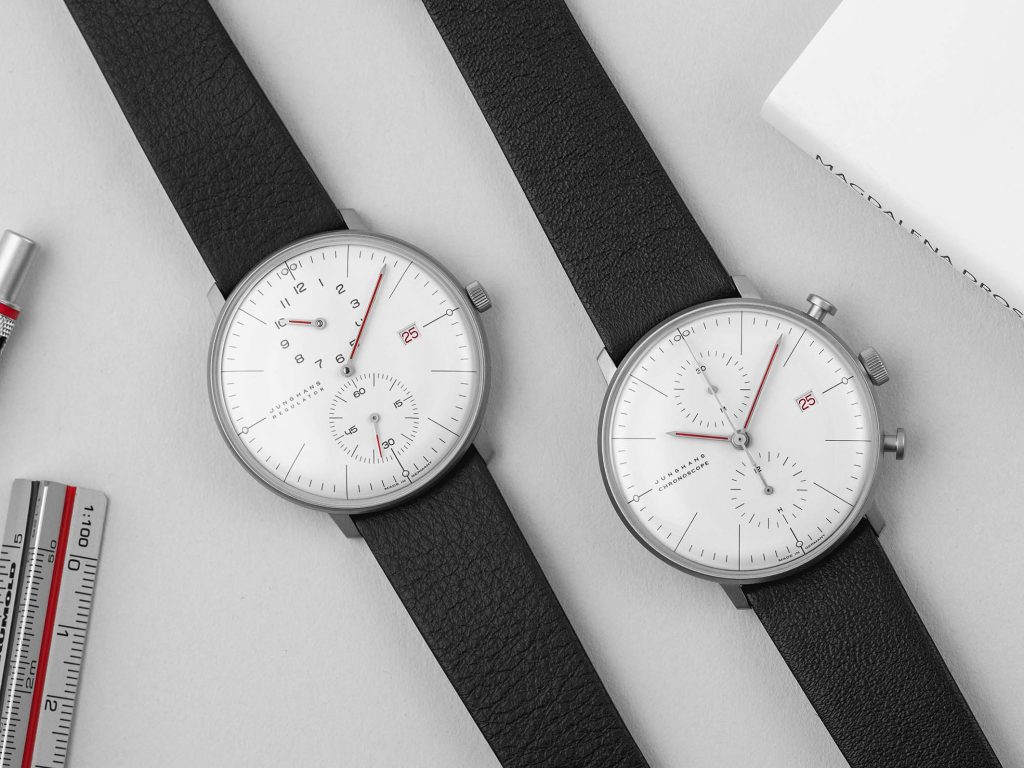
It is the minimalist heartbeat of German watchmaking—a brand that has spent over 160 years proving that elegance doesn’t need theatrics, it just needs clarity, proportion, and a quietly confident design philosophy. Rooted in the Black Forest and shaped by the legendary influence of designer Max Bill, Junghans has become synonymous with Bauhaus purity: clean dials, slender cases, and typography so crisp it could have been drawn with a drafting compass. Its collection reflects this disciplined aesthetic across multiple lines—the iconic Max Bill series, beloved for its perfectly balanced geometry; the Meister collection, which blends vintage-inspired detailing with modern refinement; and the Form lineup, offering a fresh, architectural take on contemporary everyday wear. Even its radio-controlled and solar-powered models stay true to Junghans’ signature restraint.
This is a brand that doesn’t shout, doesn’t chase complications, and doesn’t feel the need to impress with mechanical pyrotechnics. Instead, it delivers watches that are effortlessly wearable and instantly recognisable. For collectors who appreciate clean design, historical heritage, and the kind of understatement that ages gracefully, Junghans is German watchmaking at its most timeless.