How India’s Young Royal Patrons Have Turned Legacy Keepers To Safeguard India’s Cultural Heritage
The India design story is enriched by the craft oeuvres of young art patrons, textile designers and craft promoters. Outlook Luxe profiles ten leading royals who are working in the realm of contemporary art, textiles and jewellery
The Indian Maharaja lifestyle is possibly the most refined form of indigenous luxury, the plume on the heritage crown, a cordon bleu fable of India handmade. What the Princely families wore, how they ate, where they lived remaining a tale of enchantment that has endured time. In fact, much before the rest of the world discovered decadence and opulence, the Indian rulers were already ‘living the life’. Inviting master weavers, legendary seamstresses, evolved artists and expert jewelers to work in palace studios housed within designated spaces of their sprawling palaces. Giving them generous patronage and aesthetic support to create something that was so rich and opulent that it was only privy to the Maharaja and his loved ones. Besides of course their thakurs (Gods) and devis (Goddesses) whom they regarded as the true head of the family, dressing them with equal aplomb.
Though the 500 plus princely states dissolved when India got independence, their kingdoms merging into the Indian republic, what remained were tales of the Maharaja life. Stories of emeralds the size of easter eggs, diamonds that shone like torches, robes that were embellished with precious stones and weaves that imbibed gold threads in their silken yarn.
Interestingly this tryst with design never died. It remained alive under the silent patronage of the erstwhile maharajas who were now playing their part as mere citizens in a unified India. With their own resources they continued to commission collectibles for themselves and their families. However, this tradition of patronage truly flowered in the past decade when a crop of young, talented, evolved and creative design afficionados of royal lineage returned from universities abroad to live within their forts, havelis and palaces, inviting third generation masters of art, textile and crafts to rekindle the tradition of palace karkhanas. Outlook Luxe traces their footprints in the world of art, textiles and jewels.
Palace art: A miniature tale of magnificence
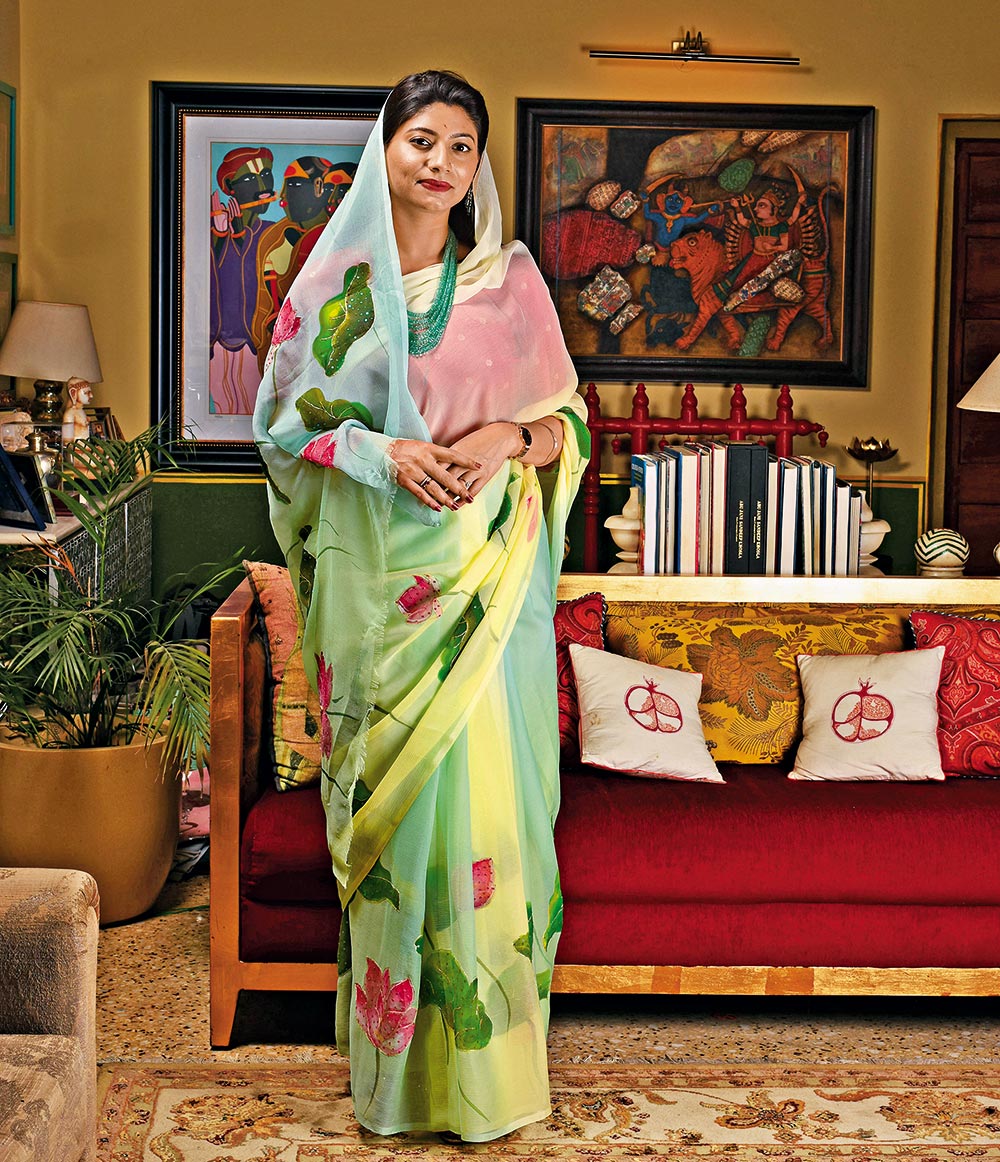
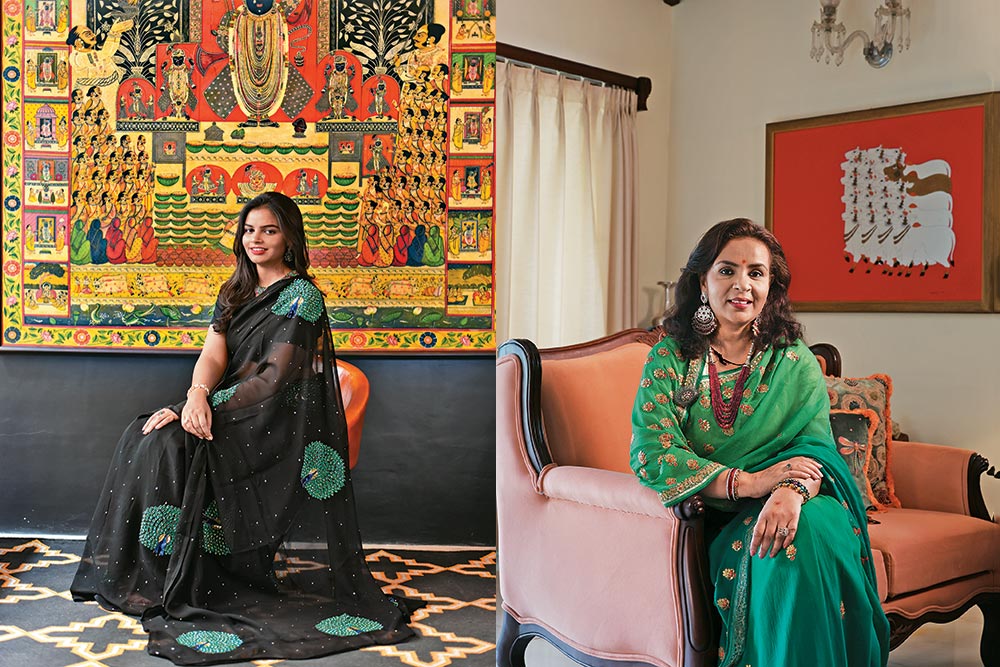
Indian palaces became true hubs for miniature art during Aurangzeb’s reign. A fanatic, he banished all figurative artists from his kingdom. These artists, terrified for their life, returned to their villages and were immediately brought under the kind patronage of the Rajput rajas of their region. The Kishangarh, Kangra, Bundi, Jaipur, Basholi miniature schools were all born in that era. Post-independence these art forms were kept alive within private ateliers as the royal patrons remained quiet in this frontier. Till stalwarts like Vaishnavi Kumari rekindled this romance. A SOAS graduate in art she inherited the legacy of Kishangarh miniatures, brought to life by her ancestor Raja Savant Singh ji, a Krishna bhakt who took under his tutelage the much-celebrated artist Nihal Chand. Vaishnavi’s Studio Kishangarh revived this art giving it a more modern, minimal avatar. From a cluttered Pichwai she pulled out a single Kamdhenu cow, getting her artists to paint it on a very lyrical chevron print backdrop, or amidst a verdant garden of Mughal flowers. “What is art if not fluid, ” she smiles, sharing that, “Keeping true to the form, I turn each canvas into a reflection of modern minimalism.” Deeply inspired by many bastions of vintage design her art reflects chintz prints, the tree of life, or the Rajput architecture of her fort as well as the verdant greens that surround the Gundalov lake that flanks her Phool Mahal!
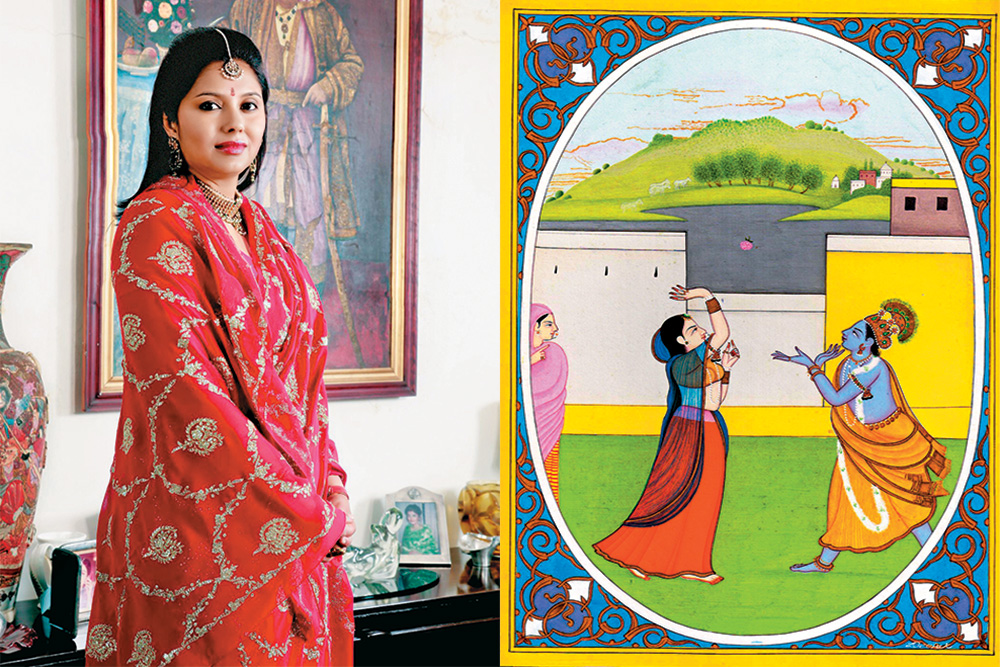
In contrast the young and beautiful Kamalaxi Katoch and her talented mother-in-law Shailaja Katoch follow a purist approach whilst keeping Kangra Kalaam alive. They have adopted master artists who are generational miniature artists. They commission them to reproduce the art that originally was brought alive under the patronage of their ancestor, Maharaja Sansar Chand. The longest surviving line of rulers in the world, the Kangra kings are known to worship Shiva and their art captures this mystic God in his most beautiful avatar. Besides recreating the romance of the Barhamasa poetry, a traditional Indian poetic genre depicting a woman’s longing for her absent lover across twelve consecutive months, set against changing seasons and rituals.
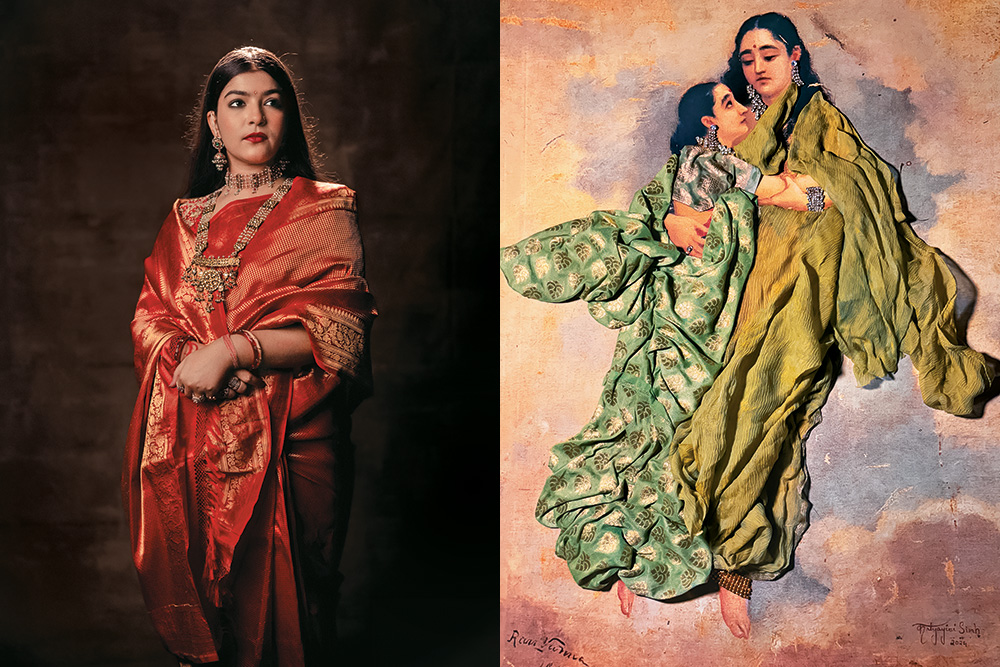
From art to photography, the petite and pretty princess of Sanand, Katyayani Singh, now married into the Khajurgaon family in Avadh gets inspired by Raja Ravi Varma, combining her photography with the tradition of oleographs getting adorned with jewels and textiles in the early 20th Century. With this twist, they turned plebian prints into unique, devotional objects for home shrines. A newly married bride who was given a room in the haveli to convert into her studio, she has “ Adorned many of my art prints with the saris I got in my trousseau ! Isn’t that what preloved textiles are all about?”
Also Read: The Anantara Jewel Bagh at Jaipur is A Royal Fairytale
The textile trove: Rich and resplendent
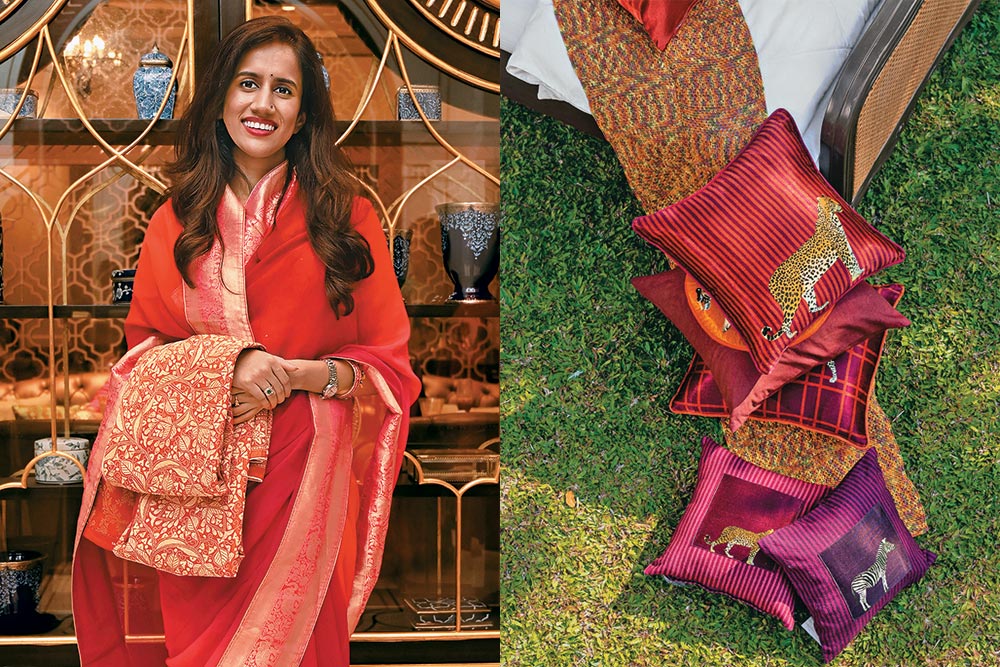
Art for the kings and queens did not stop on what adorned the walls. What they wore on themselves being as much a piece of art. A tradition kept alive by many designers born into noble and royal homes. Like block print expert, Jaykirti Singh. Married into Baria in Gujarat, she got fascinated with the block printing tradition of Jaipur. How she set up her own studio of block prints being an equally fascinating story. “ I had a guard who asked if he could take shelter in our home and in return block print our cottons.” Interestingly Rajasthan is full of such rangrez (Block printers and dyers). What he created was fascinating enough to stoke her journey into creating a fashion studio where she combines traditional silhouettes of the angarkha, farshis, anarkalis and kurtas with very unique block prints. Taking a deeper step into her inherited heritage, Jaykirti also started creating capes that, “ Our grandmothers wore over their chiffon saris in winter.” Made from rich velvet these capes are hand embroidered and embellished and are true tales of adornment.
Equally enamoured by the traditional forms of costumery worn by women of royal lineage are the mother daughter duo Chandni and Kamini Singh from the Seohara noble family in Bijnor. They founded Rosetree, a craft atelier that employs women who are experts in the gota patti school of embroidery. Giving this school a more eclectic direction they create wedding attire from the softest organic cotton that feel like second skin. Shares Chandni, “ The royals truly patronised cotton, weaves like chanderi and Maheshwari emerging from this love. We turn soft, organic cotton into Indian costumes to be worn at weddings.”
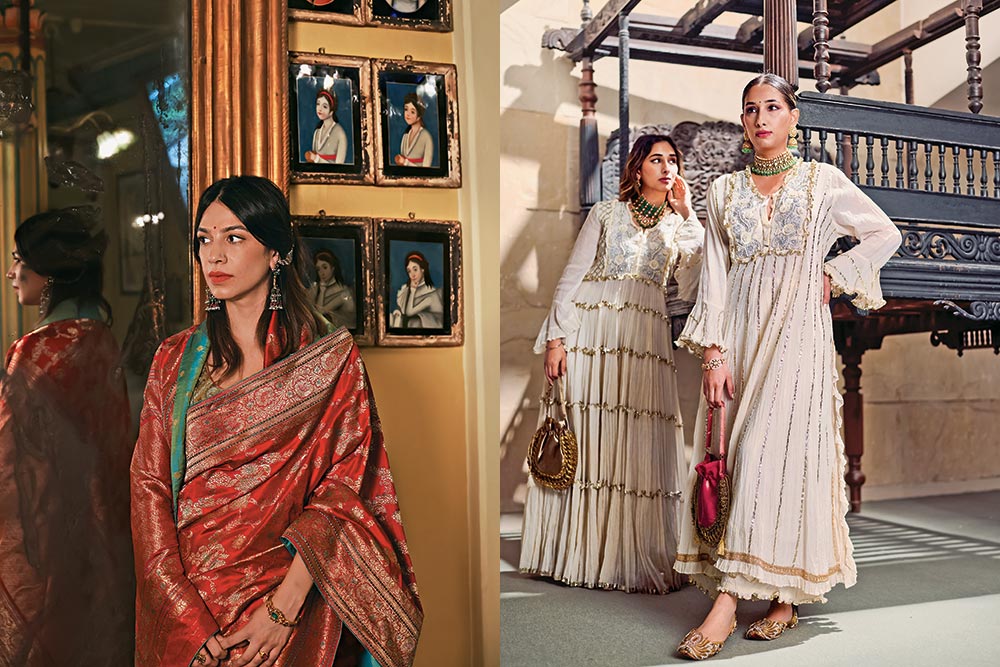
Art on textiles is a true indulgence in Avadh and Rajyashri Parihar who was born in Shoratgarh palace, situated in Uttar Pradesh uses fashion as her canvas. She hand paints wildlife, Indian botanicals and geometrics on billowy cotton skirts, sharp Indian jackets and stunning chiffon saris. She shares, “Royal women would have a battery of textile artists painting everything they wore, from petticoats to their saris to even their inner wear. I was truly inspired by this story and recreated this tradition in a more boho form.” Herself a stunner, she does equal justice, modelling everything she creates on herself.
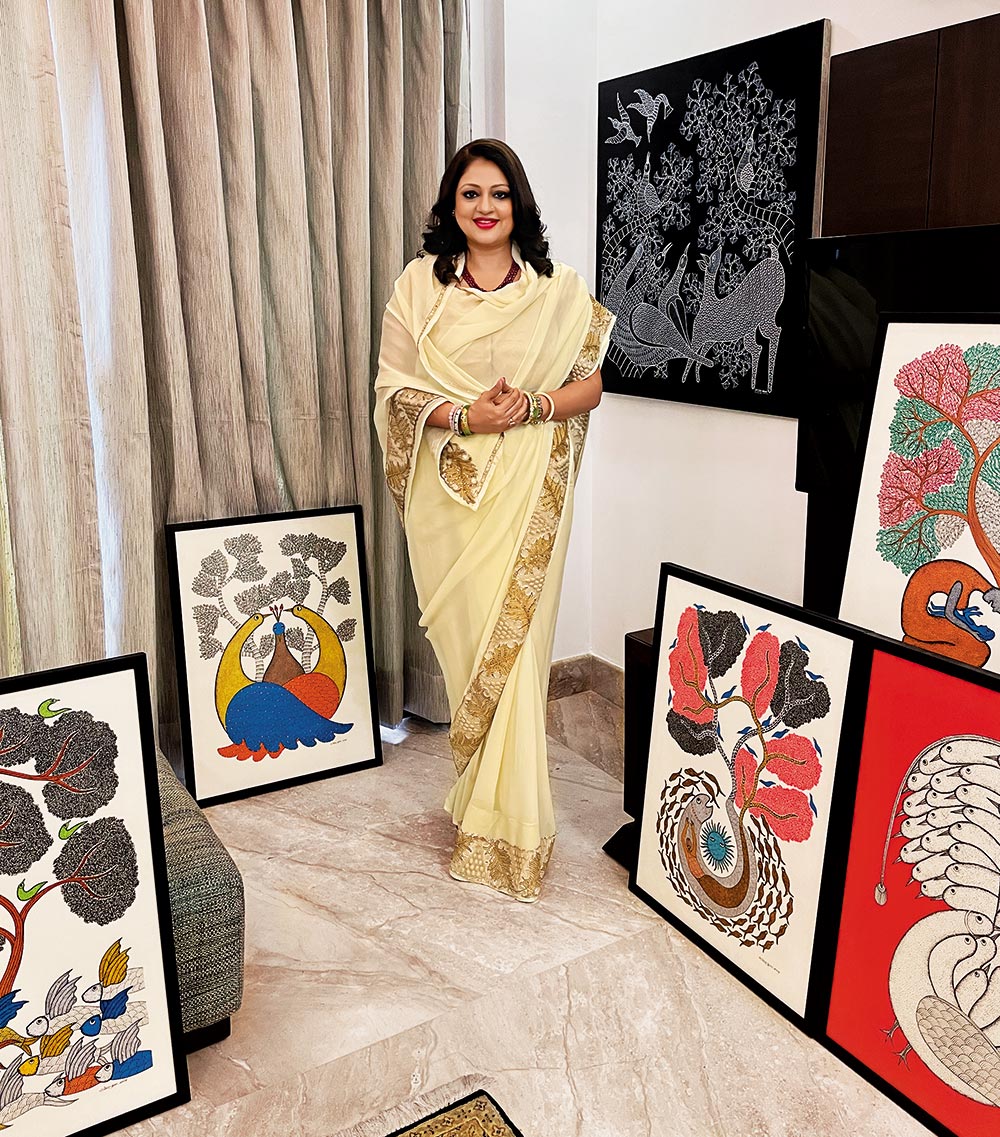
For Nandini a tryst with tribal art came naturally. The Princess of Jhabua state she was raised within a family deeply rooted in India’s traditional and tribal practices, “I came to understand early that these works are not decorative—they are vessels of memory, culture, and continuity.”
Her palace atelier brings together evocative wildlife art from Madhya Pradesh and Rajasthan with legacy works from my family archive—most notably Gond art and rare antique Pichwais, each carrying the quiet gravitas of India’s devotional and courtly traditions. At its core, her work sits at the intersection of art and purpose—where heritage is not only preserved, but activated to create awareness, dialogue, and meaningful change.
Meanwhile in Gujarat , an artist and a wildlife lover, Mrinalini Kumari, heir to the sprawling Lunawada palace converts the wild life pictures she captured in her camera as a child into a luxury home linen label called Loonawara. She first converts her photographs into art and then prints them digitally into the finest Mashru silk her region of Gujarat is known for. Combining the art with geometric prints in tones of pastels she creates beautiful throws, cushions and table-ware that recreates the regalia of the past.
Also involved in the restoration of her ancestral palace in Lunawada, Mrinalini admits that, “My home remains my biggest inspiration. Having grown up here, I everyday discover one more beautiful architectural nuance that I quickly interpret in my home linen.”
The jewel trail: Vintage tales
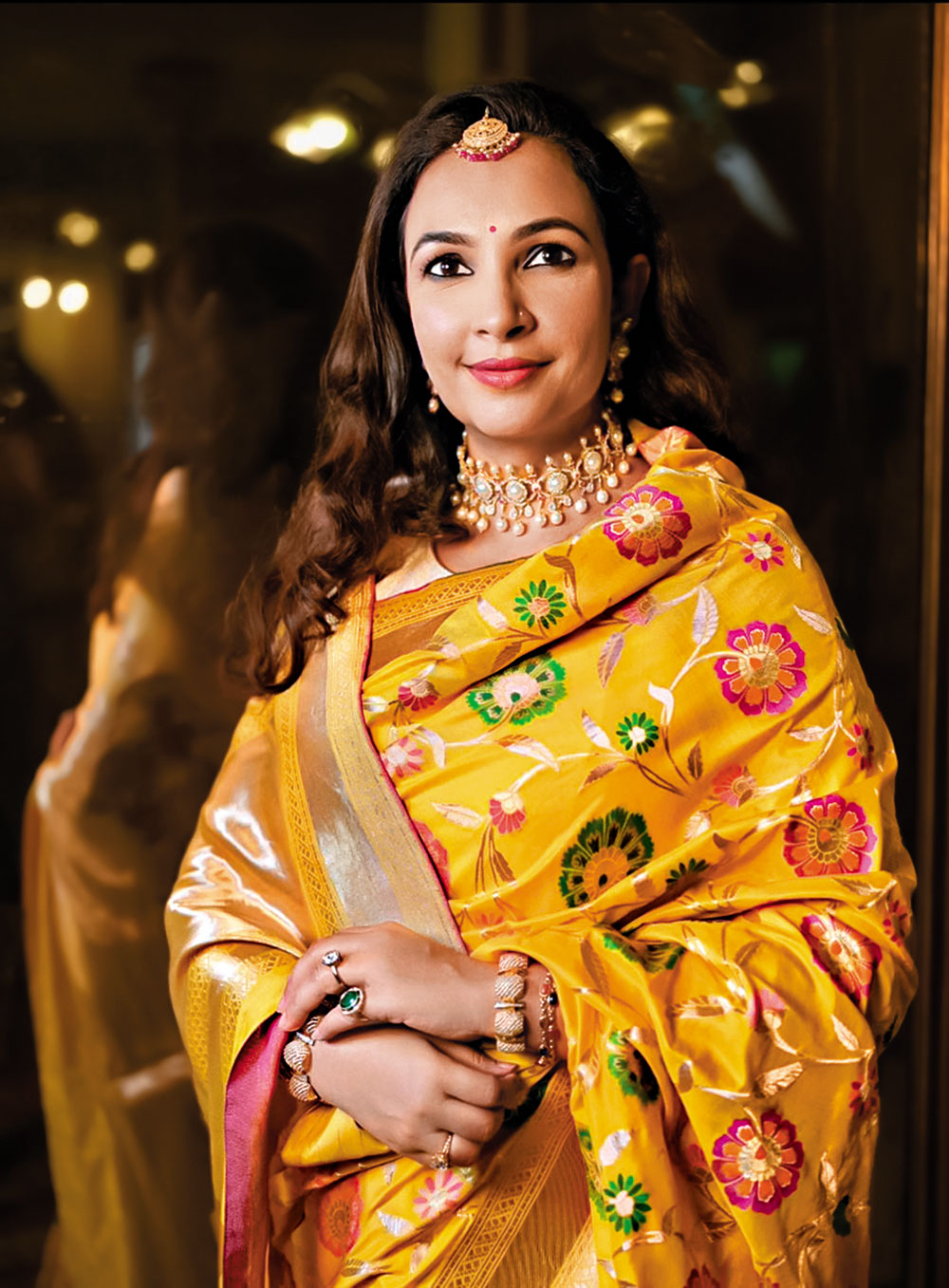
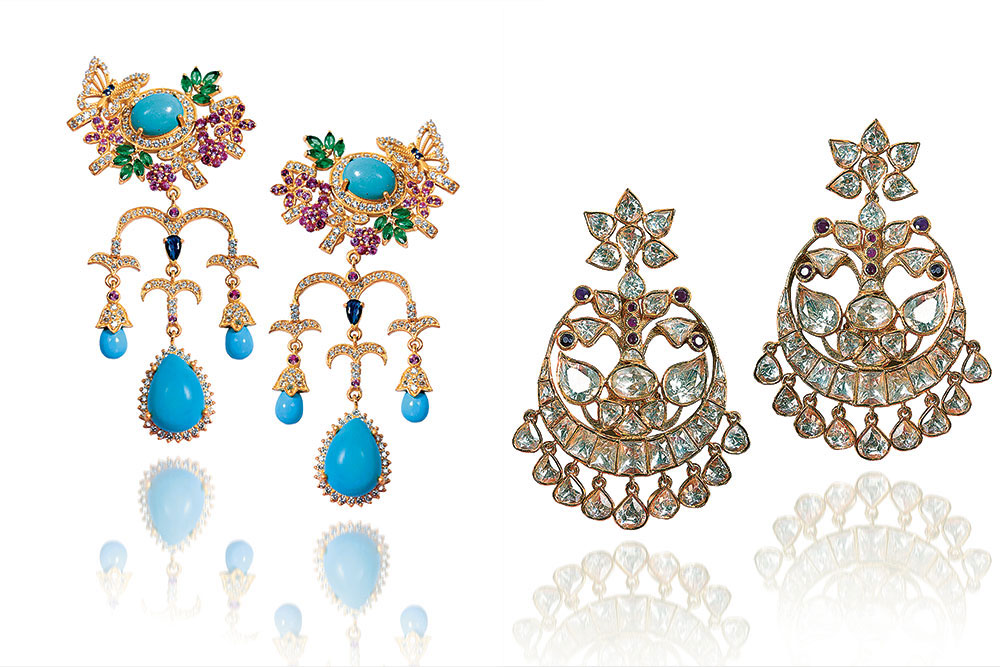
Finally a look at a Maharani’s real love, her jewels. Now, whilst most European ateliers still dip into the Made for the Maharaja story when linking their brand to luxury, Indian queens spent more time with their family jewellers creating spectacular pieces that they passed on to their heirs. Their saat ladas in Basra pearls, haath phools embellished with uncut diamonds, maang tikas the size of the moon filling pages of history.
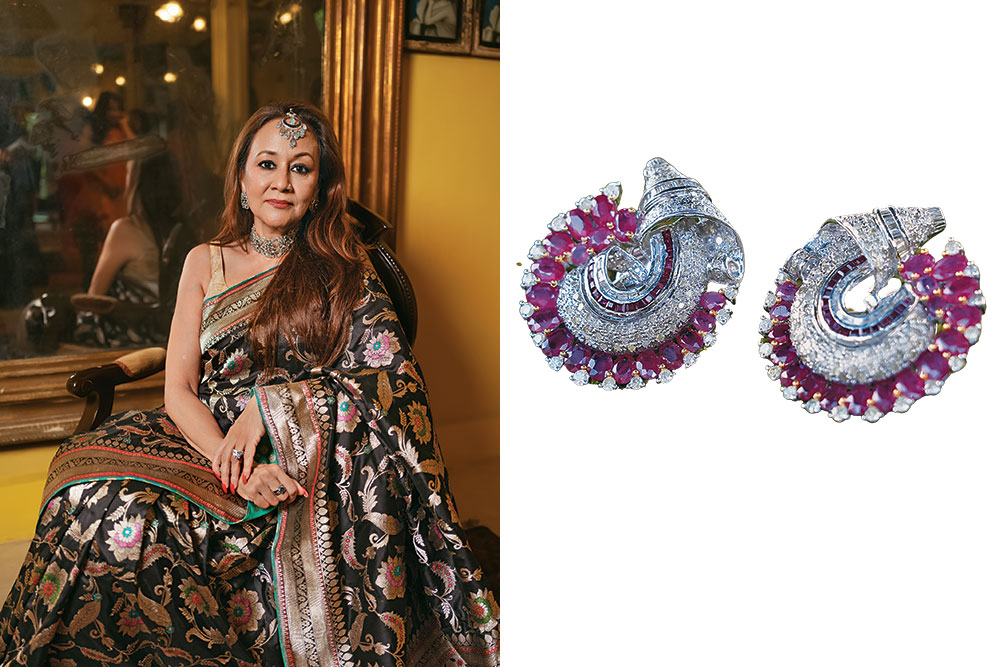
Dipping into this fable with Nepalese sensibility is Amrita Rana. Hailing from the Rana family, Amrita creates Nepalese style jewellery that creates elaborate ornaments with the finest precious stones set in silver in a very Victorian and European style. She says, “ The royal Nepalese women were very inspired by the west. We wore gowns for our wedding, tiaras, clasps and necklaces. We preferred silver to gold and only used the finest stones in our jewels. Our ladies converted their tiaras into chokers and cummerbunds, filling each piece with finely faceted diamonds, emeralds and rubies.” A style Amrita very beautifully keeps alive. She laughs,” Today silver is as preciously viewed as gold, making women collectors respect our story a lot more.”
Also working with silver and creating semi-precious and costume jewels is the young and beautiful Namrata Singh. An imaginative soul, she converts her global travels into pieces of jewellery. Besides of course recreating the finest Rajasthani jewels in brass and silver. The arsi rings, the elaborate aad necklace, the resplendent rakhdis….Not to forget the precious stone and diamond buttons that the dandy Rajput men attach to their bandgalas. “ Jewels are part of our legacy. I am simply having fun whilst keeping this story alive.” As are more than fifty royal ladies and men who are quietly playing patrons as legacy keepers, employing generational artisans and hence ensuring a legacy is preserved and the Indian royal treasure trove is kept alive.