Watches and Wonders 2026: IWC Introduces Limited Editions And Collector-Grade Timepieces
Engineering precision meets storytelling rooted in horological heritage as IWC Schaffhausen balances limited edition innovation with timeless literary inspiration, proving this is not just watchmaking but mechanics shaped by imagination
There are watch brands that build watches, and then there is IWC Schaffhausen, which builds arguments about why engineering should always come first and everything else should politely follow. For decades, it has approached horology with the kind of calm, overengineered confidence that suggests it is far less interested in trends and far more interested in getting things exactly right. At Watches and Wonders 2026, that philosophy is on full display through a lineup of limited edition, collector grade timepieces that do not merely exist to tell time but to demonstrate how precisely and reliably it can be done, down to the last toleranced component. And then, just when it could have remained all gears and gravitas, IWC does something rather unexpected, it introduces a sense of narrative. By honouring The Little Prince, the world imagined by Antoine de Saint-Exupéry, it adds a layer of warmth and imagination to its otherwise methodical universe, proving that even the most serious machines can carry a sense of wonder without compromising their purpose, and that true watchmaking excellence lies not just in precision, but in the ability to make that precision feel something.
Portofino Automatic Day & Night 34 Le Petit Prince

The Portofino Automatic Day & Night 34 Le Petit Prince (Ref. IW459806) features a 34mm case with the case, lugs, polished bezel, and an onion crown at 3 o’clock in stainless steel. The deep blue dial gets gold-plated hour, minute, and second hand, and hour markers with diamonds, a sunray finish, and a day-and-night indication at 6 o’clock, which visualises the continuous transition between day and night and completes one full rotation every 24 hours. At noon or at midnight, either the sun or the moon appears in the upper section of the small disc, indicating whether it is currently day or night. As a charming design detail, the Little Prince is depicted standing on the moon, gazing at the starry night sky.
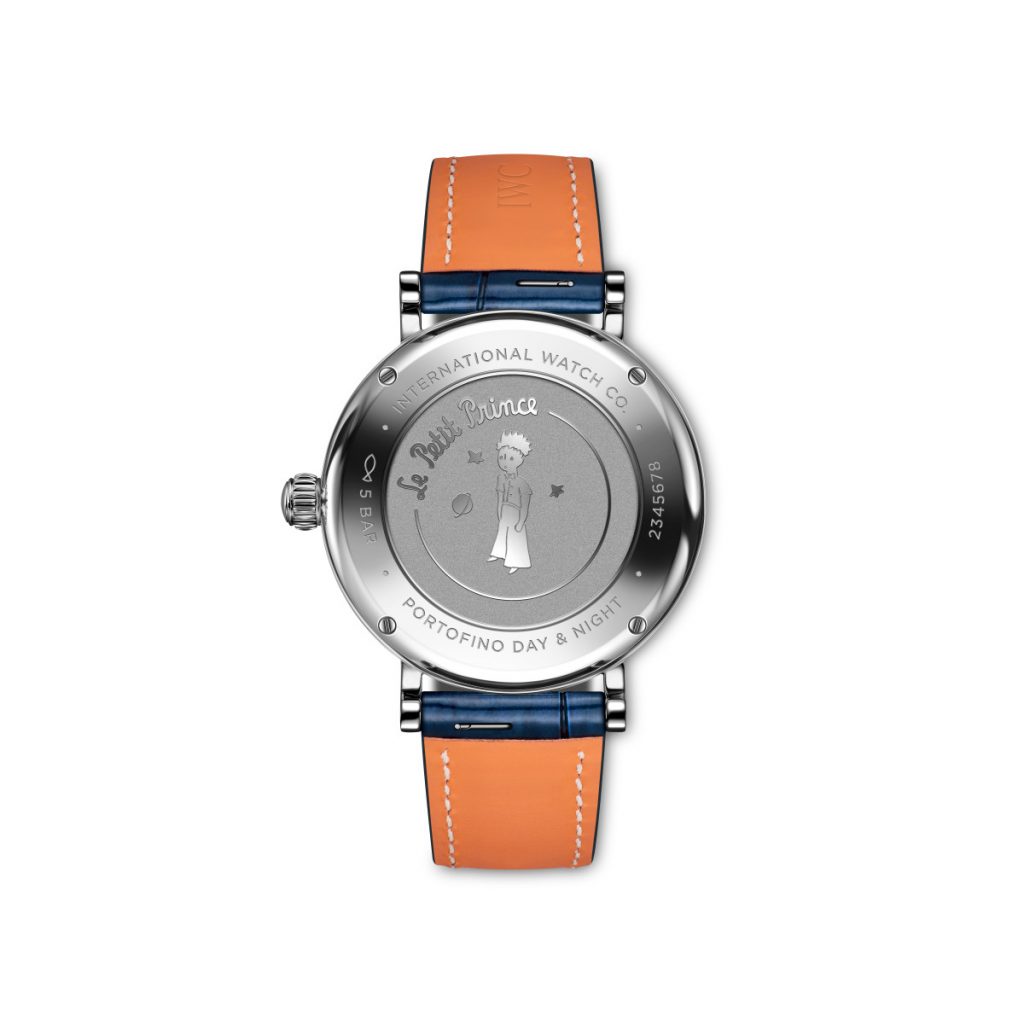
This watch is powered by the Calibre 35180, which features an automatic winding system and has a power reserve of 50 hours. Turning the watch showcases the stainless steel caseback also featuring an engraving of the Little Prince. It is paired with a hand-coloured blue alligator leather strap from the Italian leather artisan Santoni, which is equipped with a quick-change system and a butterfly folding clasp.
Also Read: Watches and Wonders 2026: Oris Unveils New Artelier Complication And Star Edition
Pilot’s Watch Chronograph 41 Le Petit Prince

The Pilot’s Watch Chronograph 41 Le Petit Prince (Ref. IW389410) features a 41mm case made from white zirconium oxide ceramic with two chronograph pushers at 2 o’clock, 4 o’clock, and a crown at 3 o’clock. The deep blue dial has a sunburst finish with a 30-minute subdial at 12 o’clock, a 12-hour subdial at 9 o’clock, a 60-second subdial at 6 o’clock, and a dual day-date window at 3 o’clock. The Arabic hour markers, the minute track are printed in white. The hands in the subdials, as well as the hour and minute hands, are rhodium-plated and filled with Super-LumiNova®.
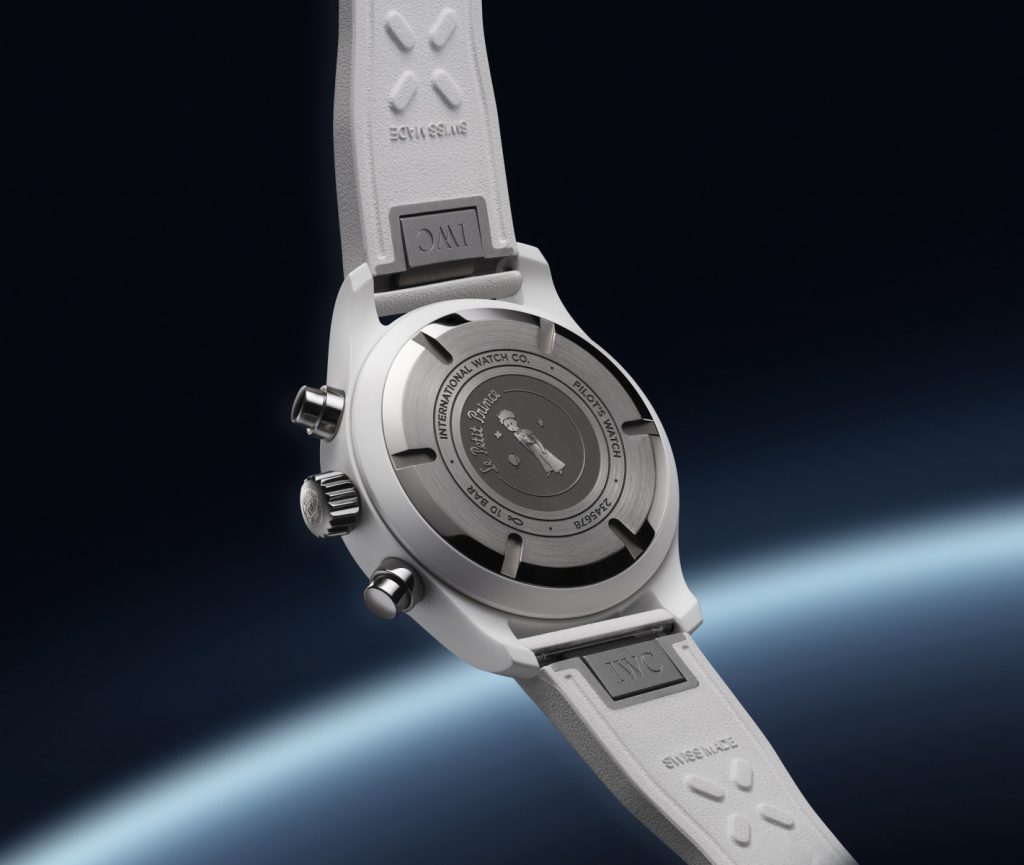
The Pilot’s Watch Chronograph 41 Le Petit Prince is powered by the IWC-manufactured 69381 calibre featuring a bidirectional pawl-winding system with a power reserve of 46 hours in the mainspring. The titanium caseback is adorned with an engraving depicting the Little Prince. Additionally, the watch is equipped with the practical EasX-CHANGE® strap change system, allowing the white rubber strap to be changed at the touch of a button.
Ingenieur Automatic 35

Ref. IW324911 has a 35mm stainless steel case, a crown with guards at 3 o’clock with a screw-on bezel made from 18ct gold with 45 white diamonds weighing a total of 0.7ct. The edges of the bezel are polished. The silver-plated “Grid” dial has hour, minute, and second hads and hour markers are gold-plated, and are filled with Super-LumiNova® with a date window at 3 o’clock. There is an integrated stainless steel bracelet with butterfly folding clasp.

Ref. IW324907 also has a 35mm stainless steel case, and a crown with guards at 3 o’clock with a five screwed bezel. There is a deep blue “Grid” dial, rhodium-plated hour, minute, and second hands, and hour markers are filled with Super-LumiNova®. There is an integrated stainless steel bracelet with butterfly folding clasp.
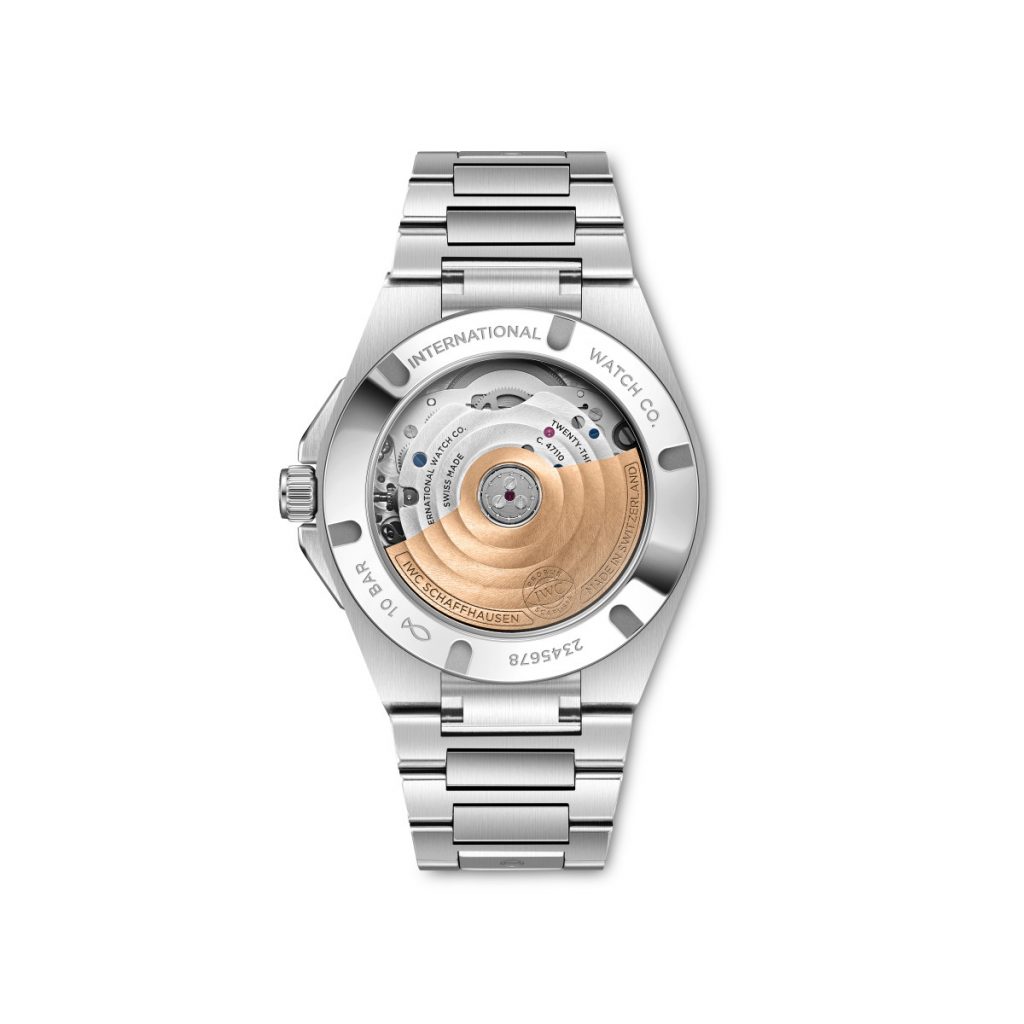
Both new models feature transparent sapphire glass casebacks that showcase the 47110 calibre, which offers automatic winding and a power reserve of 42 hours. Finished with circular graining and Geneva stripes, the movement also features a gold-plated oscillating weight.
Also Read: Inside IWC’s Portugieser Chronograph Ceratanium: Features, Design And Performance
Ingenieur Automatic 42
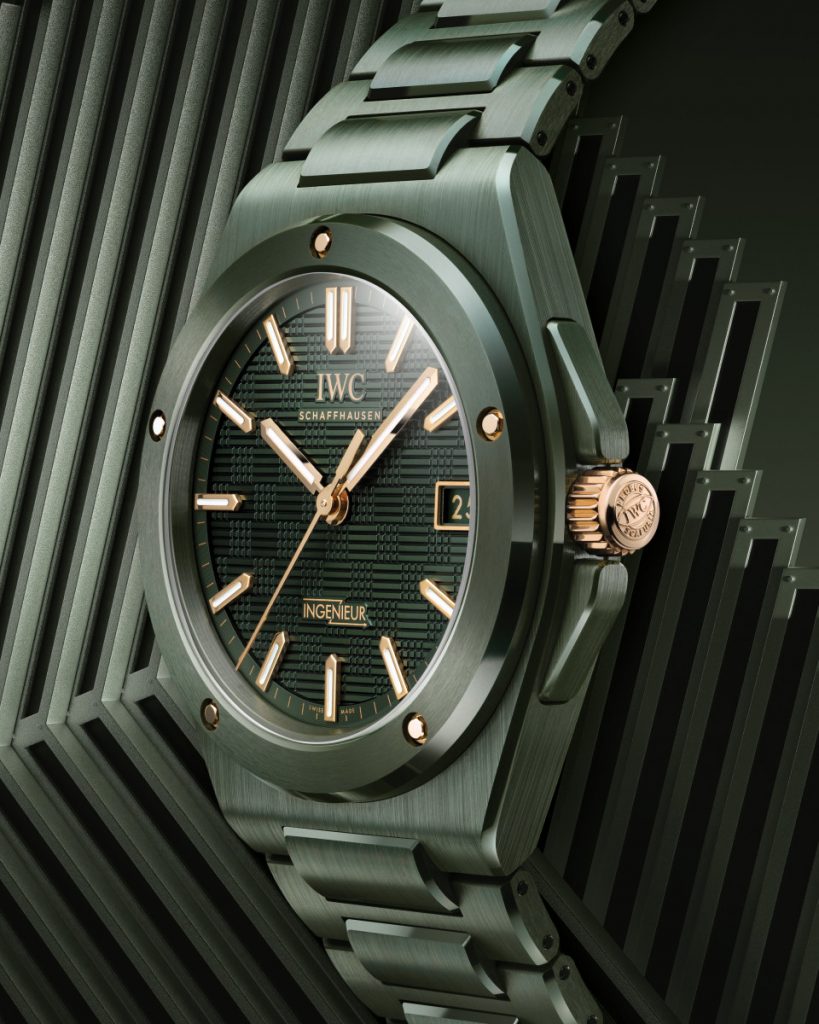
Ref. IW338902 features a 42mm case, case ring, bezel, case back ring and a gold crown with crown protection made of dark olive green ceramic. The screws that secure the bezel to the case ring are made of 18-carat Armor Gold®, the “Grid” patterned dial features the same green hue as the ceramic component, with a gold framed date window at 3 o’clock, gold hour markers, and also hour, minute, and second hands filled with Super-LumiNova®. The integrated ceramic bracelet has a butterfly clasp, and is attached to the case ring via its middle links, making it sit ergonomically on the wrist.
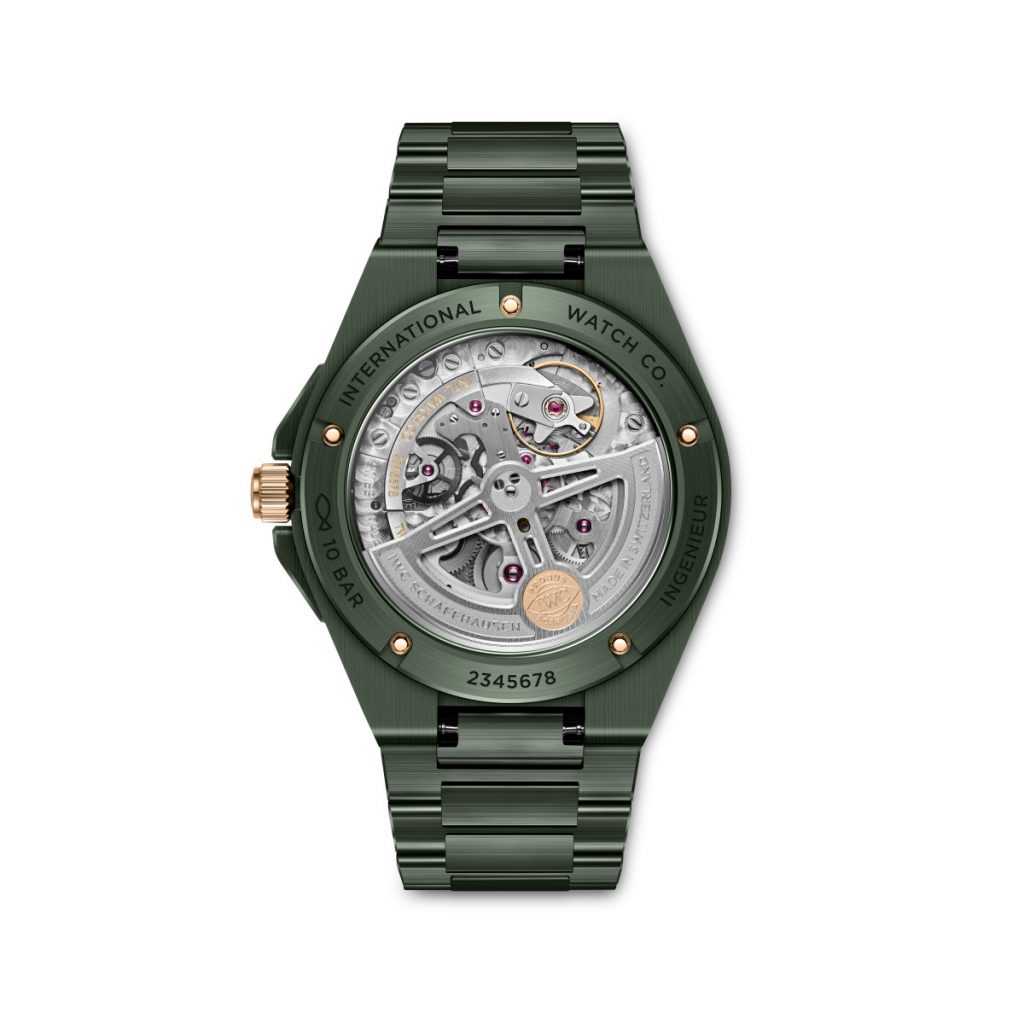
The Ingenieur Automatic 42 is powered by the IWC-manufactured 82110 calibre, featuring a Pellaton winding system and a 60-hour power reserve. This efficient winding system utilises rotations of the oscillating mass in both directions to wind the mainspring. The automatic wheel and the clicks are crafted from black ceramic, while the central rotor bearing is made of white ceramic. The balance wheel oscillating at 4Hz ensures a high level of precision. Elaborately decorated and finished with Geneva stripes, the movement can be viewed through the transparent sapphire glass caseback.
Ingenieur Perpetual Calendar 41

The timepiece features a grade 5 titanium case measuring 41mm, the round bezel is secured to the case ring with five functional screws. The case, bezel, crown protection, and bracelet links are sandblasted, with their edges lightly polished, while the crown at 3 o’clock is only sandblasted. The matte grey dial features the characteristic “Grid” structure, consisting of small lines and squares, adding depth and texture to it. The subdials displaying the calendar information are treated with a circular satin finish and feature a azurage on their edges.mBoth the applied metal hour markers and the hour, minute and second hands are filled with Super-LumiNova®. The perpetual calendar will automatically recognize the different lengths of the months and also insert a leap day every four years at the end of February. The date is displayed in the subdial at 3 o’clock, the month with an integrated moonphase is displayed at 6 o’clock, while the day of the week is shown at the 9 o’clock position. Thanks to a special reduction gear train, it will only deviate from the moon’s actual orbit by one day after 577.5 years. The counter at 9 o’clock also features a small leap-year indicator that counts down the years to the next leap year. In the subdial at 6 o’clock, the single moon disc boasts a detailed azurage background.

Powering the watch is the IWC-manufactured 82600 calibre featuring a Pellaton winding system, which uses movements of the oscillating mass in both directions to wind the watch. The mainspring stores a power reserve of 60 hours. Visible through the sapphire glass caseback, the movement is decorated with Geneva stripes, circular graining and blued screws.
Ingenieur Tourbillon 41

Limited to 100 pieces, the timepiece features a 41.6mm case, bezel with five functional screws, crown protection and crown at 3 o’clock all made from 18ct Armor Gold®. Featuring the characteristic dark olive green “Grid” pattern, the hour, minute and second hands are gold-plated, the hour markers, which are individually set by hand, are made of solid gold. The tourbillon places the balance wheel and the escapement inside a small cage that rotates around its axis once every minute. This continuous rotation counteracts the effects of gravity on the oscillating system, contributing to a highly accurate rate. The flying minute tourbillon of the Ingenieur Tourbillon 41 is placed at the 6 o’clock position and suspended from gold-coated bridges, providing a stunning visual spectacle. Consisting of 56 individual parts, the delicate mechanism weighs just 0.635 grams. Thanks to the integrated tourbillon stop, the mechanism can be brought to a complete halt, allowing the watch to be set with down-to-the-second accuracy. The pallet lever and the escape wheel are treated with Diamond Shell® technology, an innovative coating that reduces friction and enhances the flow of energy in the movement.
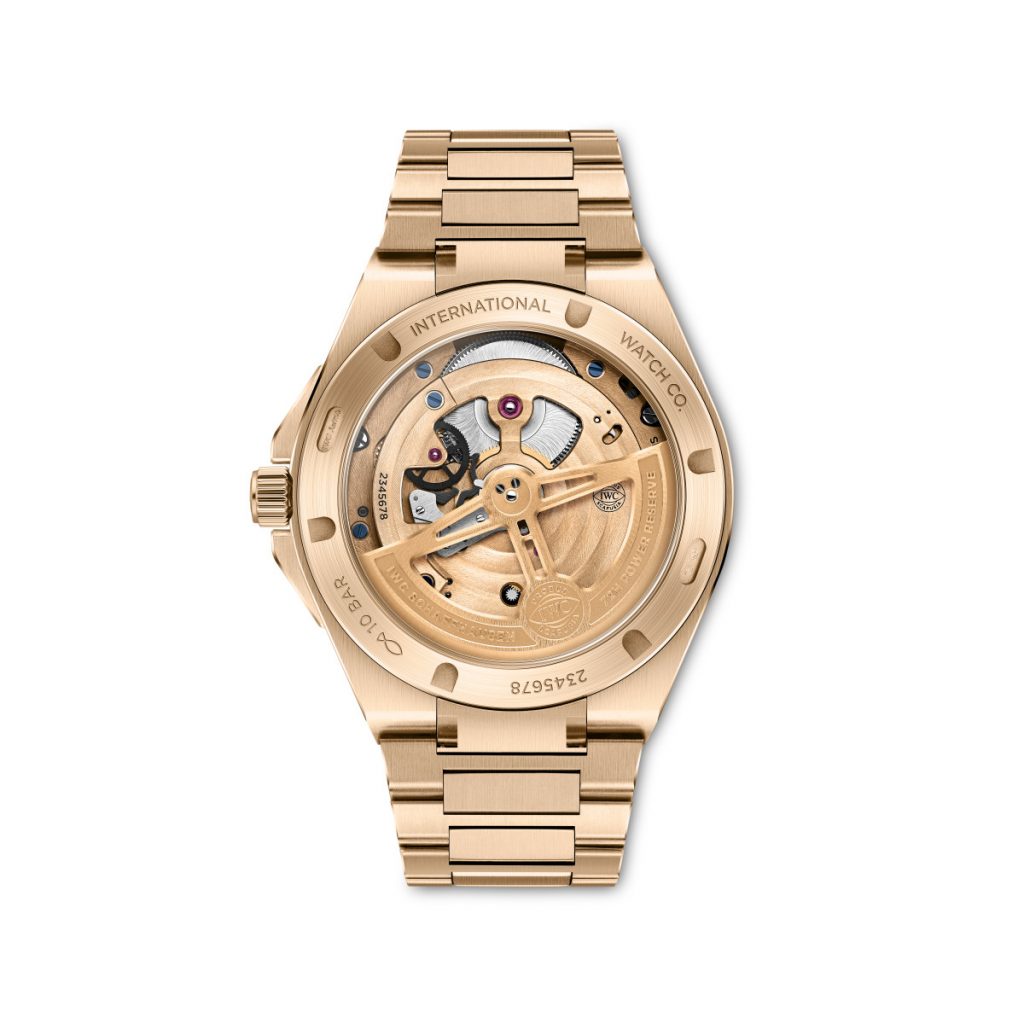
The Ingenieur Tourbillon 41 is powered by the IWC-manufactured 82905 calibre. Its highly efficient Pellaton winding system utilises the rotor’s movements in both directions to reliably build up a power reserve of 80 hours in the mainspring. Among these are the automatic wheel and the clicks, which are crafted from black ceramic, while the rotor bearing is made of white ceramic. The movement also features a high level of detail in the finishing. As an example, the automatic bridge and the rotor are both gold-plated and decorated with Geneva stripes. The oscillating mass features an integrated “Probus Scafusia” medallion, crafted from solid gold and symbolising IWC’s commitment to craftsmanship and quality. The watch is finished on an integrated 18ct gold bracelet with butterfly folding clasp.
Big Pilot’s Watch Perpetual Calendar Ceralume
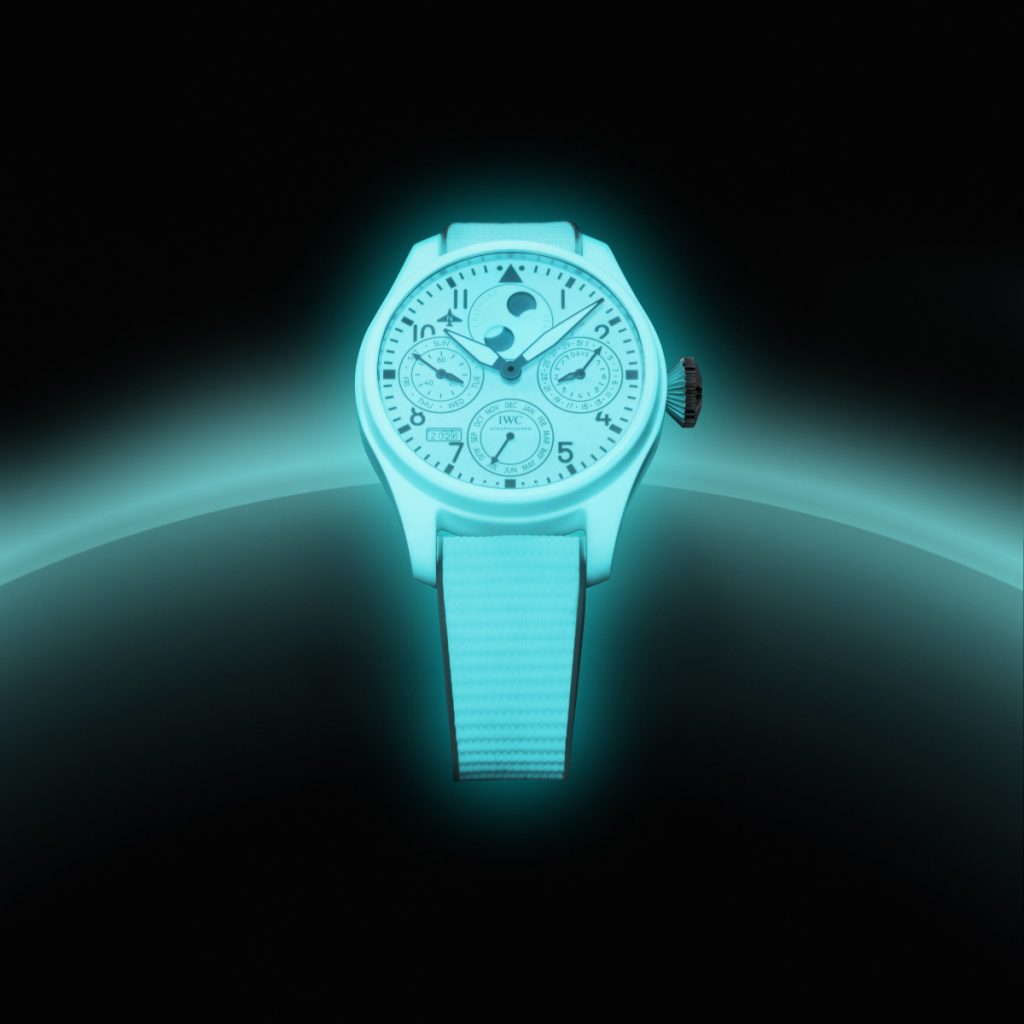
Limited to 250 pieces, the Big Pilot’s Watch Perpetual Calendar Ceralume® (Ref. IW505801) features a 46.5mm case made of luminous white ceramic. The white luminous dial and a white rubber strap are enhanced with SuperLumiNova® pigments. The hour markers, the minute track are printed in a different shade of white on the dial, while the grey hour, and minute hands are filled with luminous material. This makes the Big Pilot’s Watch Perpetual Calendar Ceralume® a watch with two entirely different expressions. In daylight, it captivates with its varying shades of white and grey and the interplay of shiny and matte surfaces. In darkness, the watch transforms completely; the case, dial, and strap emit an intense bluish glow, while the numerals and hands appear as nothing but dark shadows against the fully luminous dial.

The date with an integrated power reserve indicator is located at 3 o’clock, month is displayed at 6 o’clock, day of the week with an integrated small seconds hand is displayed at 9’clock, and a double moonphase is displayed at 12 o’clock showing the moon as seen from the Northern and Southern Hemispheres, and a four-digit year display is located at 7:30. The calendar module is powered by the IWCmanufactured 52616 calibre. Featuring a Pellaton winding system reinforced with components made of virtually wear-free ceramic, the movement stores a power reserve of 168 hours (7 days) in the mainspring. The luminous details even extend to the back of the watch, where the “Probus Scafusia” medallion integrated into the rotor is made of Super-LumiNova® and glows in the dark. Decorated with circular graining and fitted with blued screws, the movement is visible through the transparent sapphire glass caseback.
Pilot’s Watch Mark XX Le Petit Prince
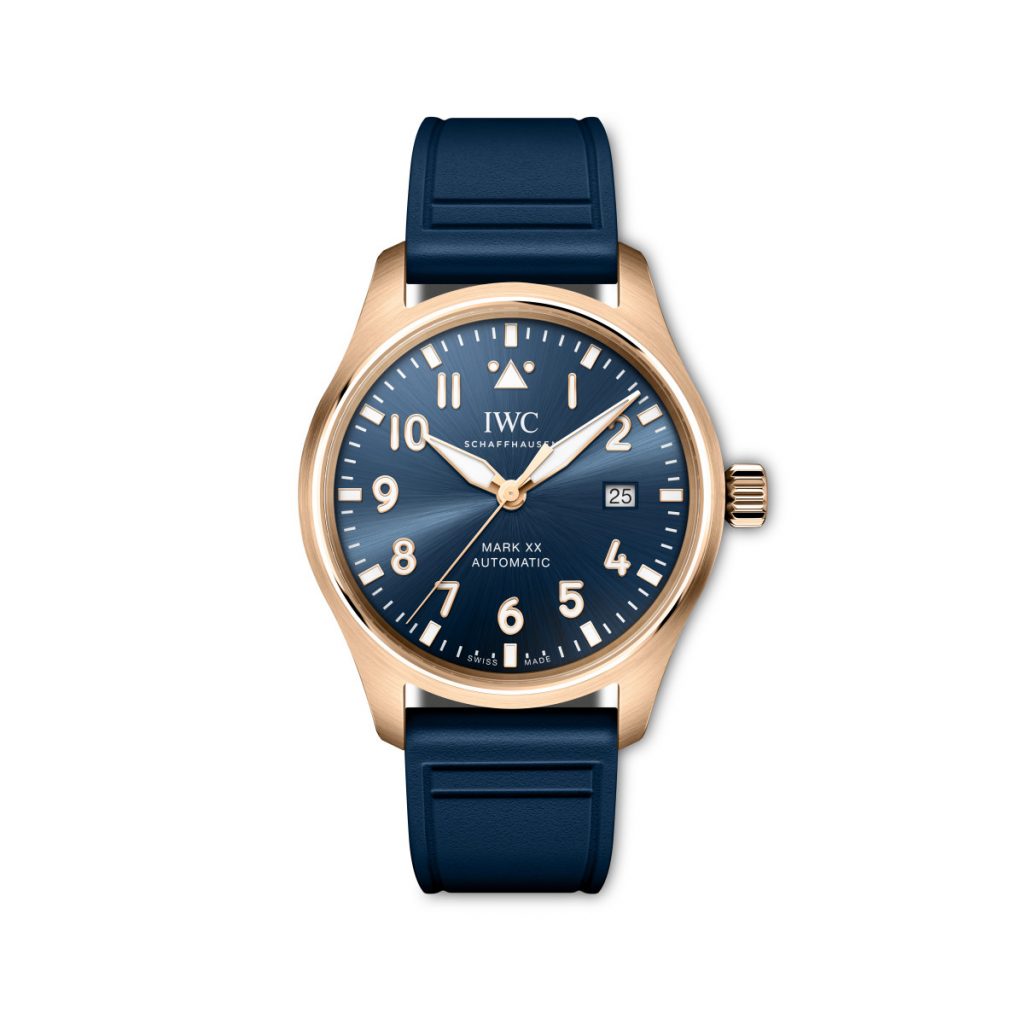
IWC unveiled two references; Ref. IW328301 features a 40mm case, a crown, polished bezel, lugs, and a caseback ring made of 18ct gold. Here, the Arabic hour markers, the hour, minute, and second hands are in 18ct gold with Super-LumiNova®. This model has an 18ct gold tinted sapphire glass caseback showcasing an illustration of the Little Prince.
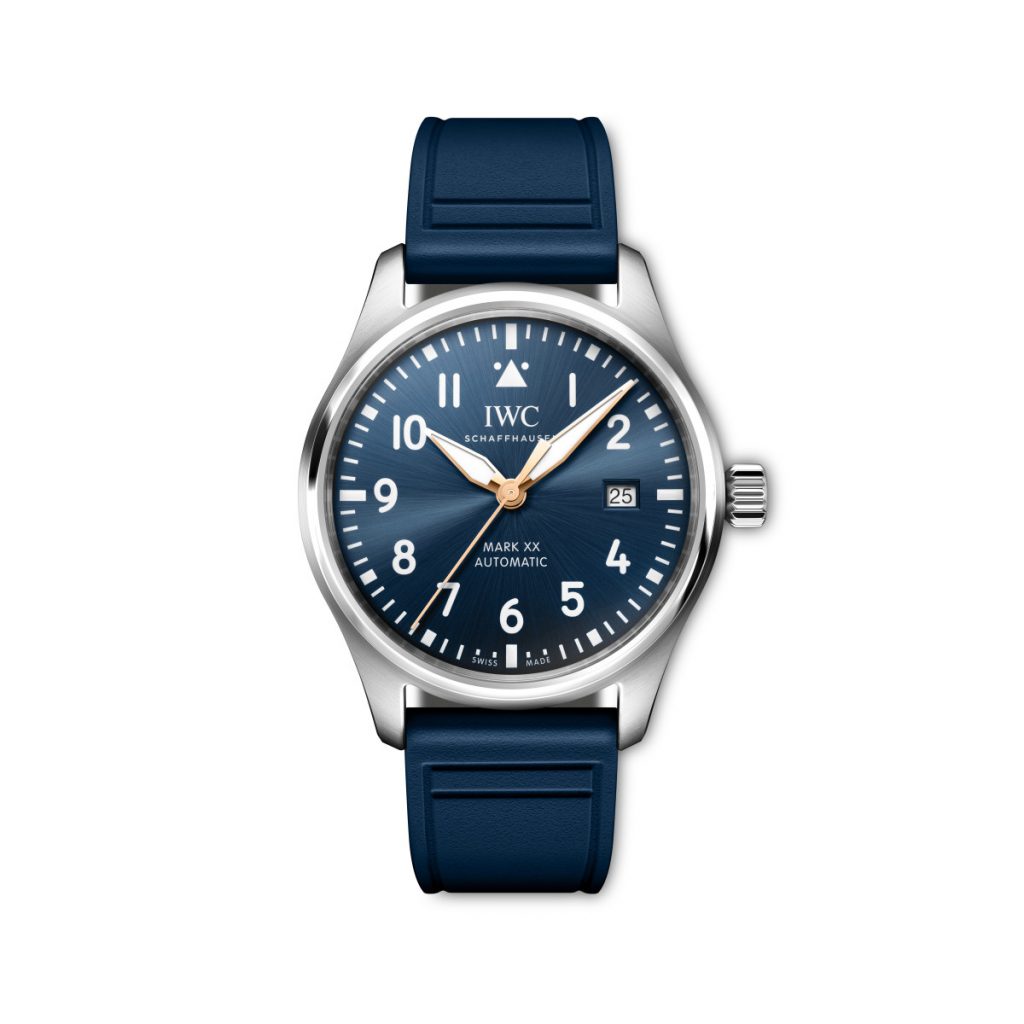
While Ref. IW328221 has a 40mm stainless steel case, polished bezel, crown at 3 o’clock with white hour markers with gold-plated hour, minute and second hands. In contrast, the stainless steel version has a solid steel case back engraved with the same drawing.
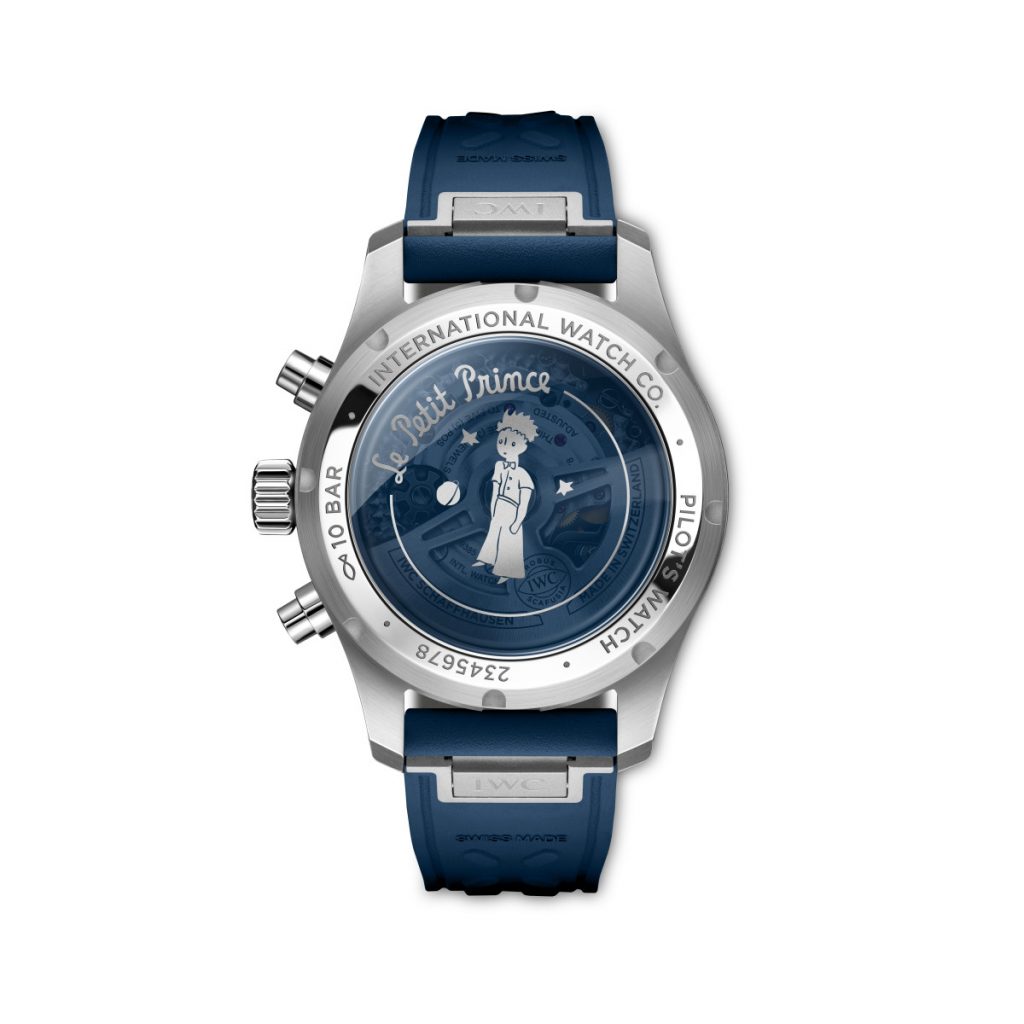
Both models get a deep blue sunray finish dial, and a date window at 3 o’clock. Both models are powered by the IWC-manufactured 32112 calibre, featuring an automatic winding system and a power reserve of 120 hours, and a blue rubber strap featuring the EasX-CHANGE® system.
Pilot’s Watch Chronograph Le Petit Prince
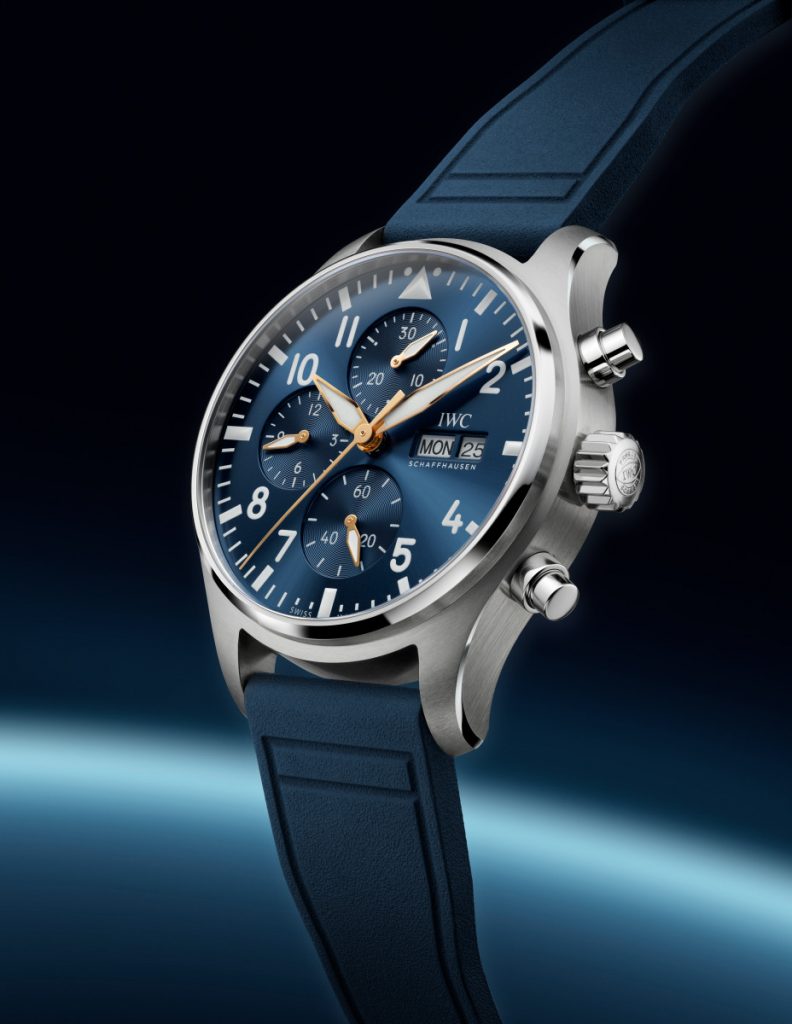
The Pilot’s Watch Chronograph Le Petit Prince (Ref. IW378011) has a 41mm from stainless steel case, lugs, crown at 3 o’clock, and two chronograph pushers at 2 o’clock, and 4 o’clock. The timepiece has a deep blue dial with a sunray finish, white Arabic hour markers with a 30-minute subdial at 12 o’clock, a 12-hour subdial at 9 o’clock, a 60-second subdial at 6 o’clock, and a dual day-date window at 3 o’clock. The hands in the subdials, as well as the hour and minute hands, are gold-plated and filled with Super-LumiNova®. The chronograph is powered by the IWC-manufactured 69385 calibre, a mechanical chronograph movement in classic column-wheel design storing a power reserve of 46 hours . The tinted sapphire glass caseback showcase The Little Prince, surrounded by the characteristic “Le Petit Prince” lettering, a moon and two stars. The watch is fitted with durable blue rubber strap. The integrated EasX-CHANGE® system allows wearers to change the straps quickly and easily without tools.
Pilot’s Venturer Vertical Drive
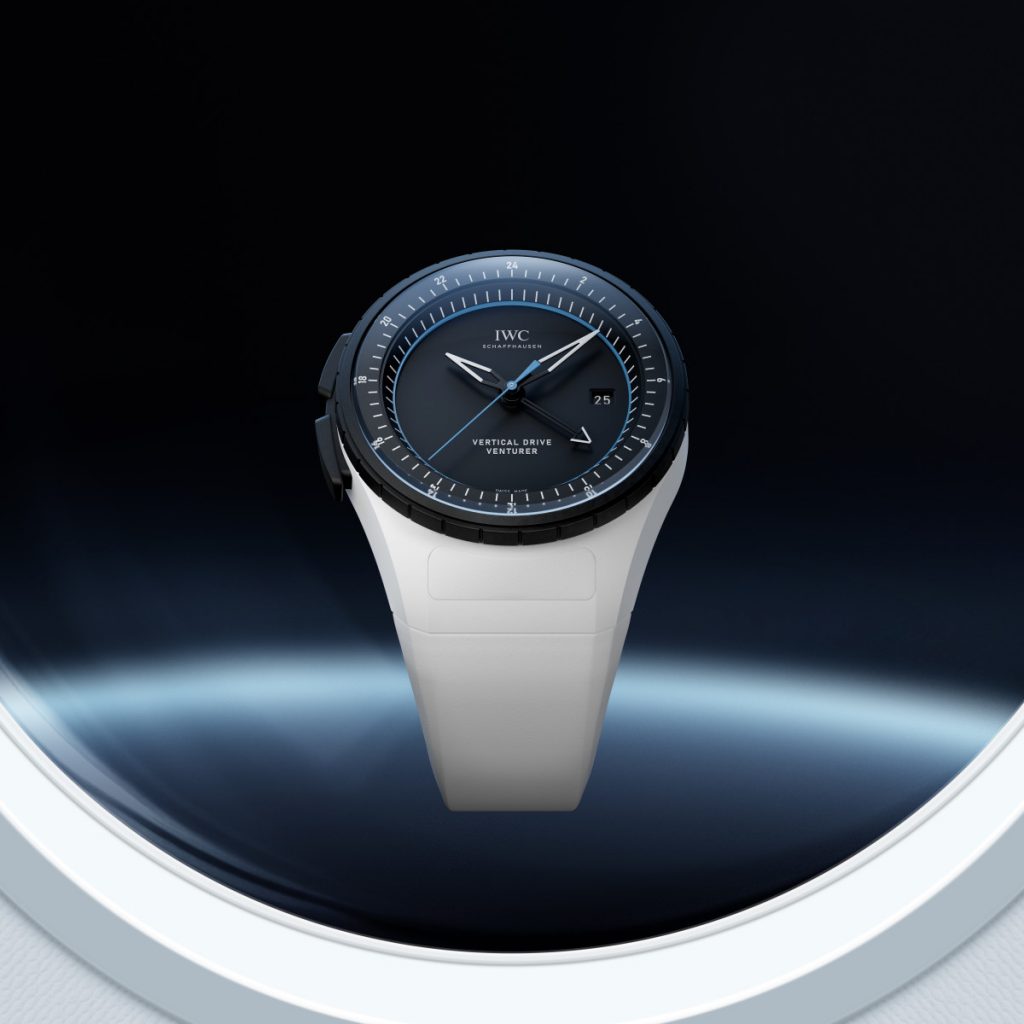
This 44.3mm ceramic watch features an innovative, patent-pending rotating bezel system that allows all watch functions to be controlled without the use of a crown. Inspired by the scenario of astronauts wearing a space suit during spacewalks (EVA, or Extravehicular Activity), the ultimate exploration moment, the watch is designed to be able to be operated while wearing gloves. The movements of the bezel are transmitted to the winding stem through an efficient clutch system known as “Vertical Drive.” A rocker switch on the side of the case enables the wearer to change between various functions, including winding the movement or setting the two different time zones. The watch can be wound using the integrated oscillating mass or by rotating the bezel anti-clockwise. This hybrid winding system ensures efficient operation both on Earth and in microgravity or zero-gravity environments.
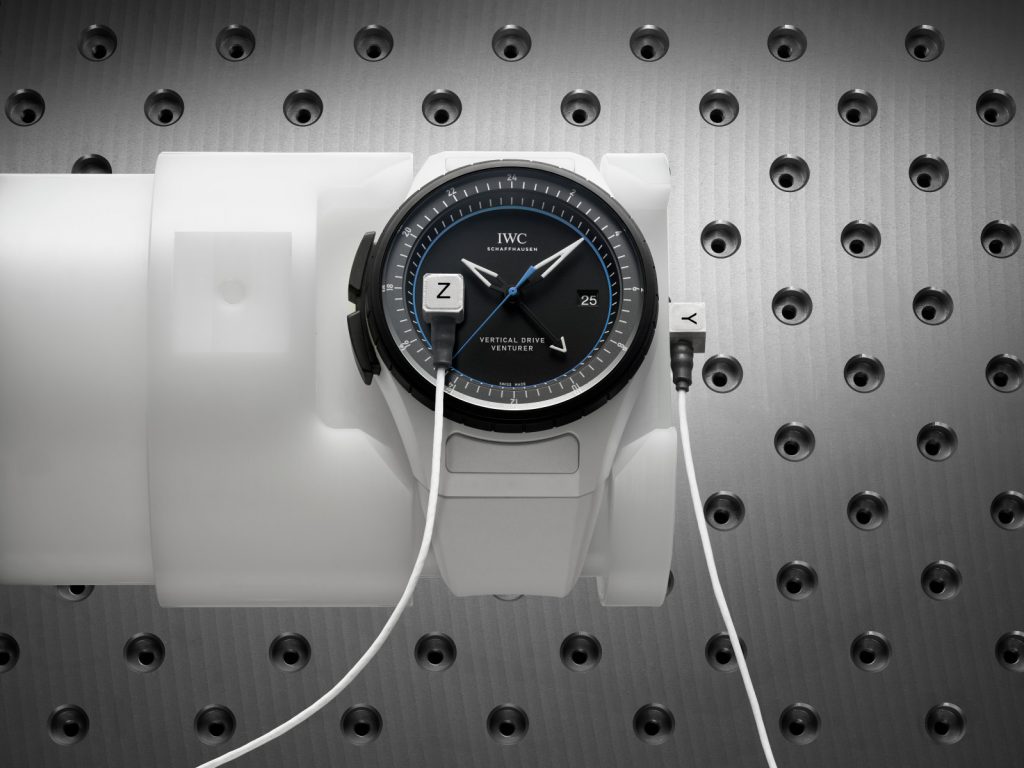
The Pilot’s Venturer Vertical Drive boasts a matte black dial that is reduced to the absolute essentials and avoids light reflections. With highly legible markings, it displays two different times. The mission’s reference time is indicated by the central hour and minute hand, and also in 24-hour format by a dedicated hand on the outer dial scale, which runs from 00:00 to 24:00, and a date window at 3 o’clock. The edges of the black triangular hour and minute hands are coated with green Super-LumiNova®, while the arrow-shaped tip of the 24-hour hand glows blue in the dark. The blue second hand points to the inner scale, which features a thin ring in the same shade of blue. The colour is a nod to the horizon of the Earth as seen by astronauts from space.
The necessity for a 24-hour display comes from the fact that a spacecraft or a space station completes an orbital cycle around the Earth roughly every 90 minutes. This means astronauts experience as many as 16 sunrises and sunsets within a 24-hour period. To manage this rapid sequence of day and night, they adhere to GMT (Greenwich Mean Time) or UTC (Coordinated Universal Time). These formats retain the familiar 24-hour rhythm of Earth time, enabling the crew to keep a consistent routine with work and sleep times while in space.
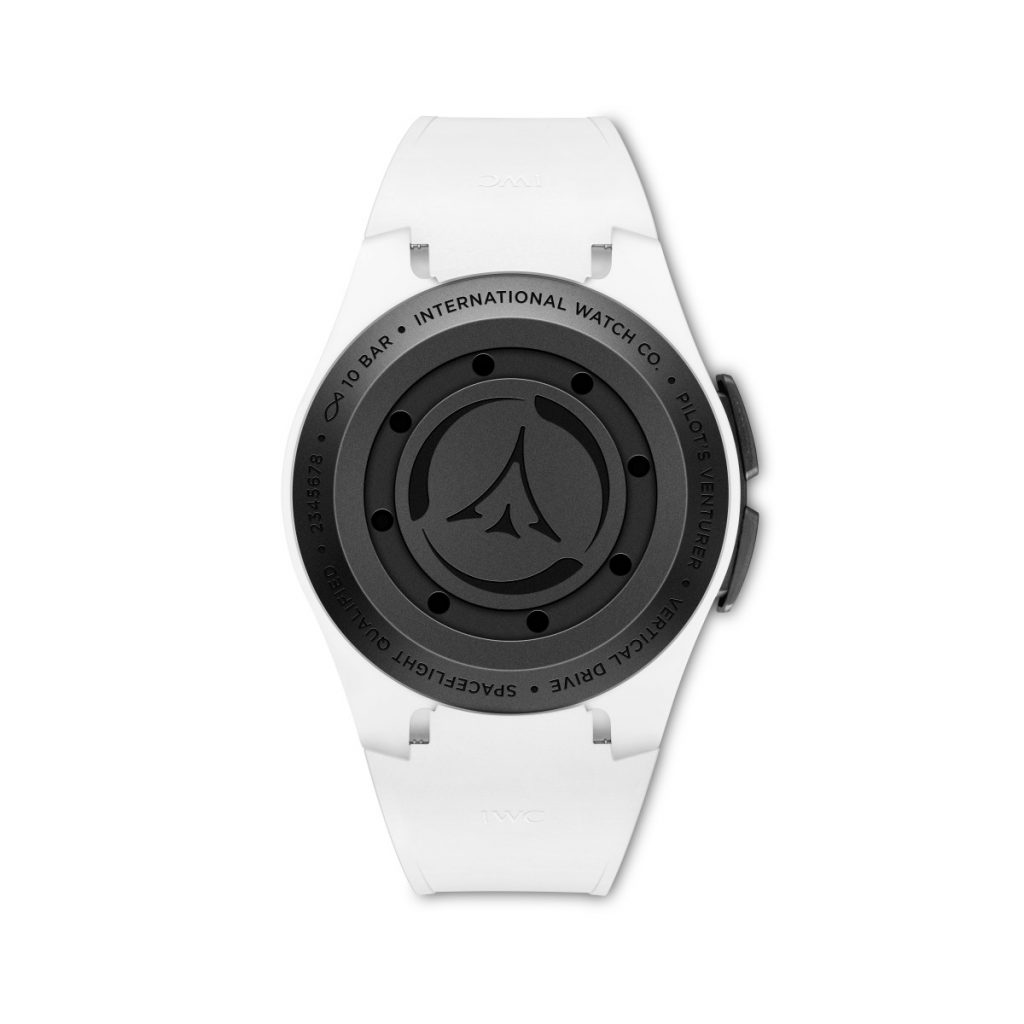
The central hour and minute hands are normally synchronized with this reference time. If required, however, the hour hand can be moved in one-hour increments to display a second time zone. An astronaut in space can use this function, for example, to show the home time in any location on Earth. After returning to Earth, the second time zone feature transforms the watch into the quintessential companion for frequent flyers: with a simple turn of the bezel, it can be set to display the time at the destination of travel. This dual-time display is made possible by the newly engineered IWC-manufactured 32722 caliber, an efficient automatic movement with a 120-hour power reserve that includes an integrated GMT module. The Pilot’s Venturer Vertical Drive is fitted with a white integrated FKM rubber strap.