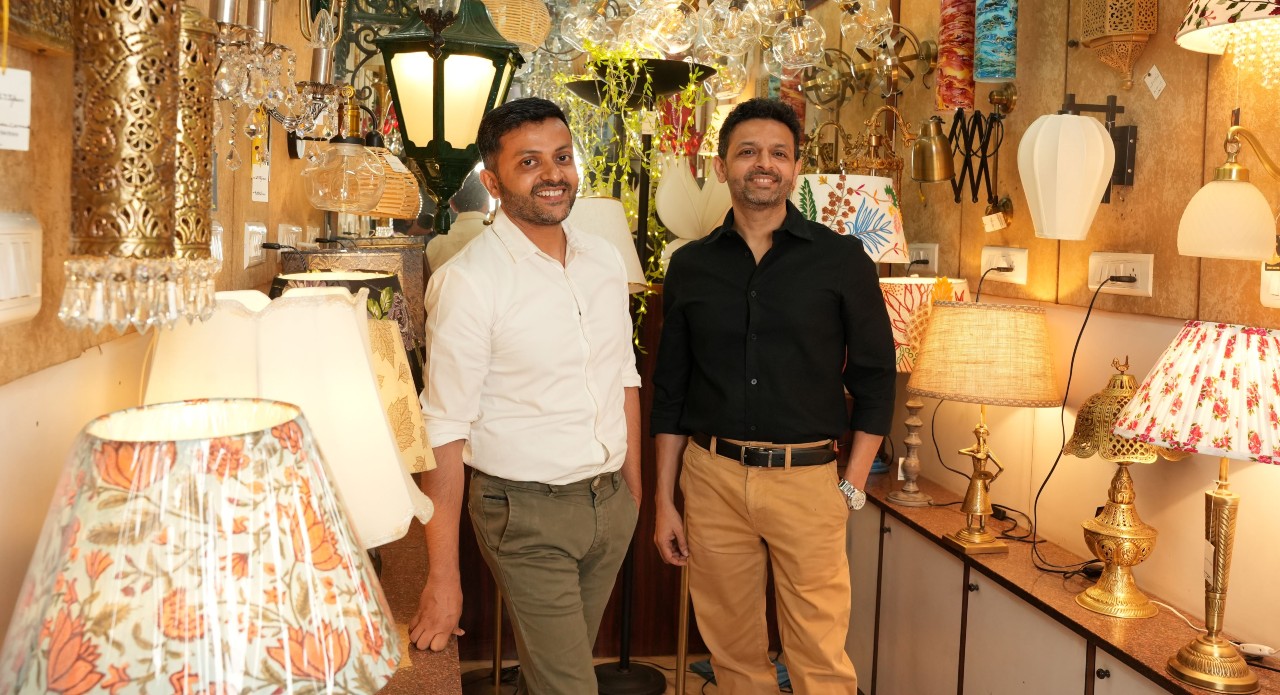


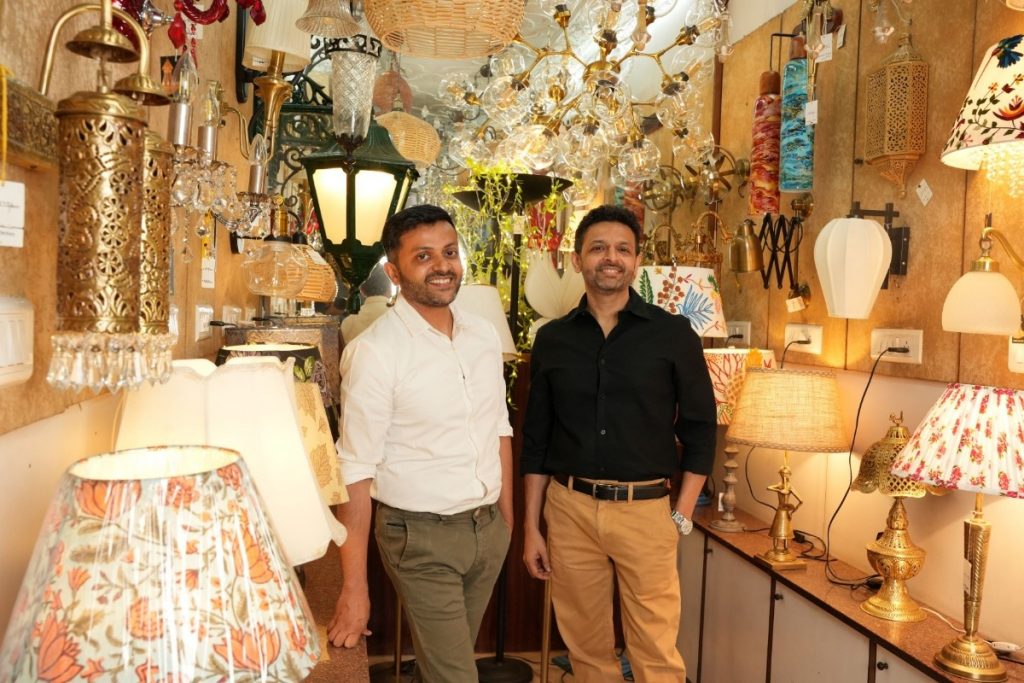
There are lighting brands, and then there are people who understand that a lamp is never just a lamp. It is mood, theatre, memory, and occasionally the reason your dinner guests suddenly believe you have your life together. In a world obsessed with minimalism so severe it often resembles emotional bankruptcy, Siddharth Rohatgi is doing something far more interesting; bringing soul back into interiors. At Fos Lighting, brass carving, Kashida embroidery, marble inlay, and Madhubani art are not decorative afterthoughts but the very language of design itself, where craftsmanship and engineering sit at the same table without arguing. It is luxury rooted in memory, built with precision, and illuminated with purpose rather than performance. In an age where many interiors look like they were designed by accountants, this feels refreshingly human. Outlook Luxe had a tête-à-tête with Siddharth Rohatgi, Director, Fos Lighting, on heritage, craftsmanship, contemporary relevance, and why the future of luxury interiors may depend on remembering where the light first came from.
How do you balance heritage with relevance in today’s fast-evolving luxury interiors market?
Siddharth Rohatgi: Heritage is our most competitive differentiator. Our mother brand Orient Electric House has been illuminating homes since 1950, and seven decades of accumulated craft knowledge simply cannot be replicated overnight — that depth is precisely what discerning luxury consumers seek today.
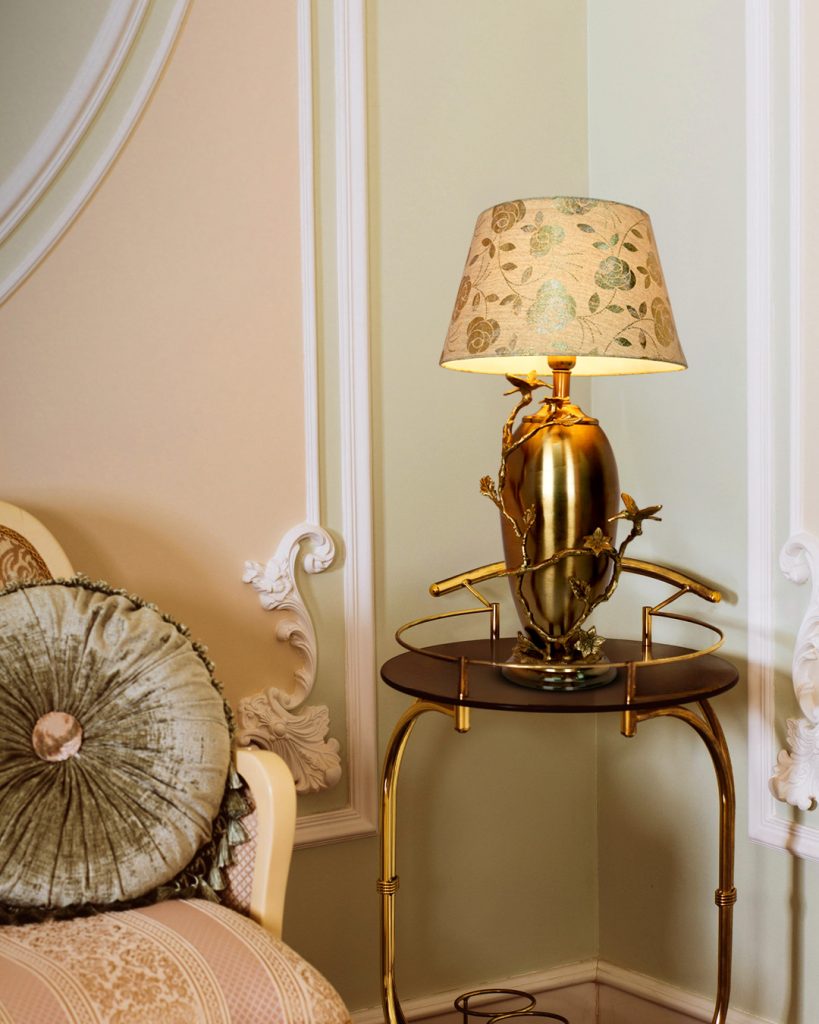
But standing still is not an option. Kunal and I travel extensively, stay close to a circle of young designers, and remain deeply attuned to global interiors. The balance we strike is deliberate: the soul of every product is anchored in Indian craftsmanship, while its silhouette speaks the language of the contemporary moment. Our Kumuda Floor Lamp is a classic example — drawing on Sanskrit symbolism and the sacred vocabulary of temple art, yet its ceramic and mild-steel form feels entirely at home in a modern living room. Heritage gives us authenticity. Design rigour gives us relevance.
How do you ensure traditional art forms like Brass carving, Warli, Madhubani, and Kashida embroidery feel authentic rather than decorative add-ons?
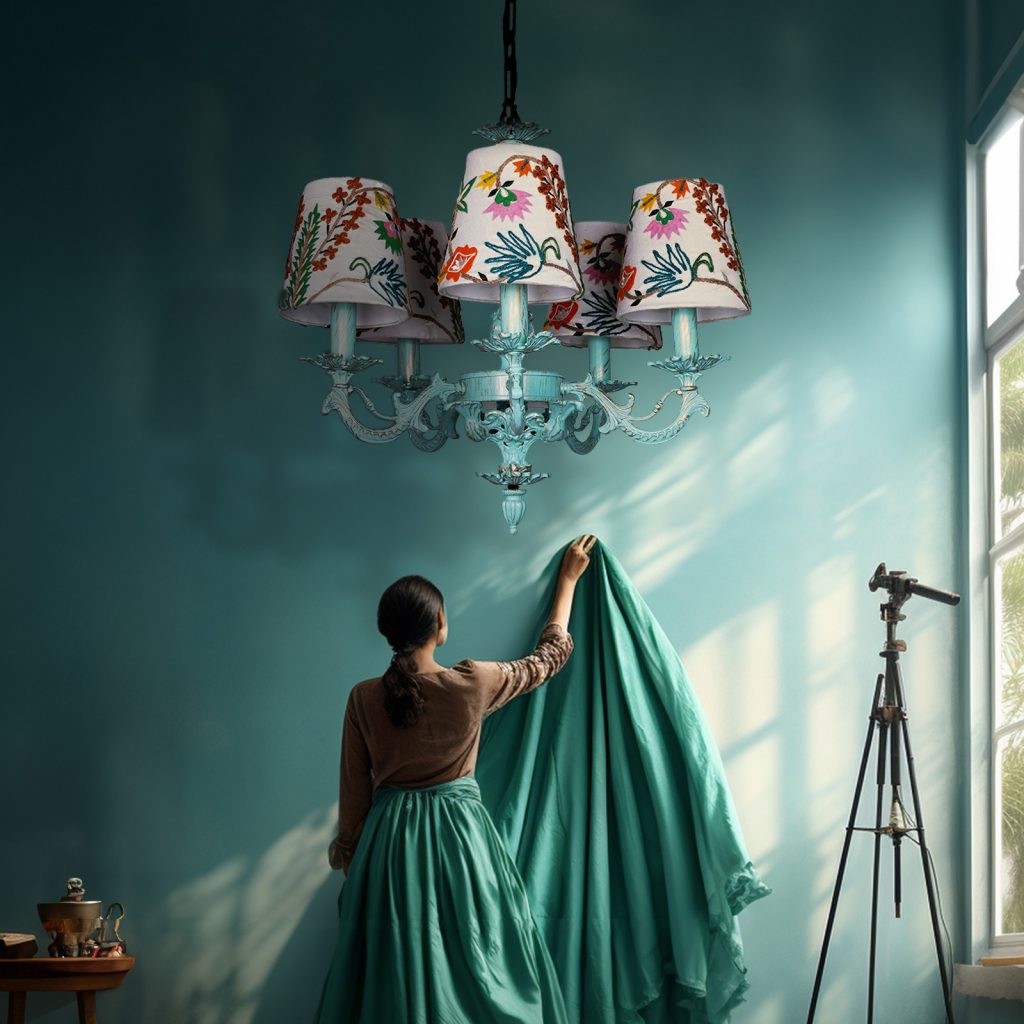
SR: Authenticity comes from process, not intention. My inspiration for embroidered lights came from watching my parents buy shawls — I was struck by the designs and wanted to bring that same sensibility into lighting. That personal connection to the source is what keeps the work honest. We do not commission a motif the way one commissions a wallpaper print. We sit with artisan communities, understand the grammar of each art form — its symbols, proportions, and soul — and ask: where does light itself become a canvas for this story? That is how Kashida embroidery, Madhubani, Warli, Naqashi, Dhokra, metal embossing, Meenakari, Bidriware, and marble inlay have each found their way into our work — not as decorative gestures, but as integral narratives. We are proud to be keeping so many Indian artforms alive. This distinction is everything and our longtime customers can sense it immediately.
Also Read: Indian Home Décor Accents In A Modern World
How does global travel influence how you reinterpret Indian art forms for modern lighting?
SR: Travel is my most honest design school. The inspiration for our marble lamp collection, for instance, emerged during travels to Jaipur and Agra, where I was struck by the timelessness of marble as a material. I was actually looking for a dining table when the idea crystallised. When you think about the strength, the carving potential, and the inherent beauty of stone, we realised marble had all these qualities that could translate beautifully into lighting. That is how travel works for me: it sharpens the eye for materials and proportions in unexpected contexts.
When I walk through a design district in Milan or a ceramics market in Marrakech, I am not looking to copy, I am looking to understand how other cultures solve a fundamental design problem. That perspective makes me see Indian art forms differently when I return. I understand what to distil, what to amplify, and what to let breathe. The world informs the eye; India informs the hand.
How do you balance engineering precision with artistic storytelling in a single product?
SR: My father and I design most of our collections together — and they begin with a sketch. There is something about putting an idea on paper that makes it real. Once that vision takes shape, the real work begins: working with our team on materials, colours, proportions, and scale. But a beautiful idea must also be accessible. Affordability is never an afterthought at Fos — it is part of the design brief from the very beginning. We experiment, iterate, and refine until the product holds its form and its price point with equal confidence.
That, at its core, is what engineering brings to design — the discipline to marry creative vision with technical and commercial reality. When those three elements align, you get something that is not just beautiful to look at, but built to last and priced to reach.
How does Fos Lighting ensure responsible sourcing while maintaining premium quality?
SR: We work with factories and artisans across the country, especially in Tier 3 and Tier 4 where a certain craft has been taught and travelled through generations. Every piece we create is a testament to that craft, and a desire to put Indian craftsmanship on the global map. We have also served generational customers, families who bought from us decades ago and whose children and grandchildren continue to do so today.
Longevity is itself a sustainability statement: a Fos fixture that lasts for decades is inherently more responsible than a cheaper alternative replaced every three. We also provide spares for all our fixtures, ensuring that any wear and tear can be easily addressed, the reason we have clients across demographics and the products become heirlooms in the homes they illuminate. Beyond materials, sustaining artisan communities whose livelihoods depend on the continuation of their traditions is itself an act of social responsibility. Ethical sourcing is inseparable from the kind of brand we want to be.
How does designing for hospitality spaces differ from creating lighting for private homes?
SR: In a private home, the lighting needs to calm the resident, it must make them feel at ease. Here, the warmth and tone of the light becomes important. But in a hotel or restaurant, that same emotional alchemy has to work for every single person who walks through the door, regardless of where they have come from or what they are carrying. That is what makes hospitality lighting so intentional. A chandelier in a lobby is not decoration. It sets the emotional register for everything that follows.
To get that right, we must understand the mood the space is meant to create. We are glad to illuminate more than 100 hotels and restaurants across the country including Lemon Tree, Marriott, the Taj, among others. Working with hospitality chains across the country, has taught us that no two briefs are ever the same. When the scale goes high, the durability and maintenance cycles go up as well.
How do regional tastes and cultural preferences shape your design language across Tier 2 and Tier 3 cities?
SR: India is not one market; it is thirty markets with overlapping aesthetics and distinct cultural sensibilities. A client in Rajasthan has a different relationship with brass and warmth than a client in coastal Kerala, who gravitates toward lighter materials and diffused natural light. We talk to our customers individually across geographies, and those conversations are a design resource in themselves. This process guides the perfect balance between traditional and modern design trends. In Tier 2 and Tier 3 cities particularly, we have found that customers are often more deeply connected to regional craft traditions, they recognise a Madhubani motif or a Worli pattern not as exotic heritage but as lived culture. Our embroidered lights, for instance, which draw on traditions from Kashmir to Bengal, resonate differently in different cities, in some, the embroidery recalls a grandmother’s shawl; in others, it evokes a regional festival textile. That layered resonance is something only an Indian lighting brand can offer.
Do design brands carry a cultural responsibility beyond commerce? How does that guide decisions at Fos?
SR: Absolutely. At Fos, this is not a philosophical position we arrived at. It is the foundation every brand decision is built on. We believe a design brand operating in India today carries a responsibility to the artistic traditions that precede it. Commerce follows culture, not the other way around.
That belief shapes everything. We are perhaps the only lighting brand in the country working seriously with brass in the way we do. We revived Kashmir’s Kashida embroidery and brought it into the language of light — giving a fading art form a new context and a new audience. We introduced marble inlay into lighting for the first time, drawing on the vocabulary of monuments like Jama Masjid and the Mughal Gardens. Each was a deliberate act of cultural stewardship. These art forms don’t sit in our products as novelties — they breathe through them, finding contemporary ways to live and illuminate.