

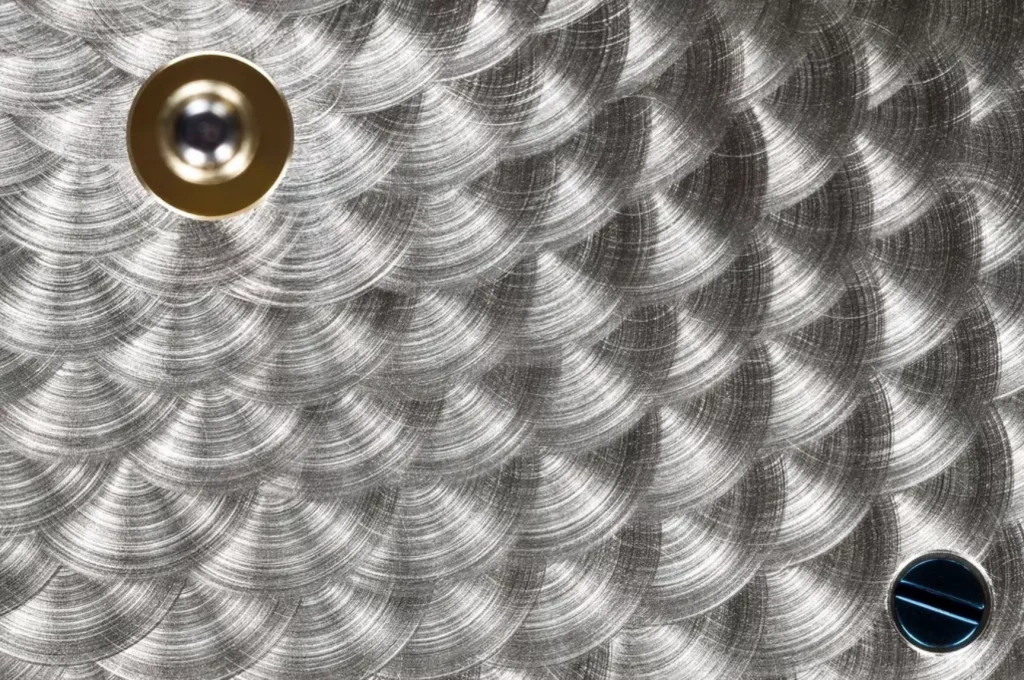
Luxury watchmaking has always thrived on a peculiar contradiction. It is an industry obsessed with perfection, even in places that remain invisible. Beneath polished cases and beneath immaculate dials lies a secret world, one that few ever examine closely. And within that world exists Perlage. At first glance, it seems almost absurd. Hours of painstaking work devoted to surfaces that spend most of their existence hidden from view. Yet that is precisely the point. Perlage is not about necessity. It is about intent. This delicate pattern of overlapping circles, often described as circular graining or stippling, transforms otherwise ordinary metal into something quietly mesmerising. It catches light in a way that feels alive, producing a soft shimmer that recalls strands of pearls scattered across the surface. It serves no mechanical purpose whatsoever, and that is exactly why it matters. Because in haute horlogerie, doing something purely for beauty is the ultimate expression of seriousness.
A Tradition Forged In Obsession
Perlage did not arrive as a modern flourish. Its origins stretch back to the earliest days of watchmaking, when timepieces were not merely instruments but declarations of wealth, taste, and craftsmanship. In those early workshops, artisans were not content with functional excellence alone. Every component, visible or otherwise, was treated as a canvas. Decoration became a language, and Perlage emerged as one of its most subtle dialects. Even as industrialisation crept in and efficiency began to dominate other industries, watchmaking resisted. Techniques such as Perlage endured, not because they were necessary, but because they represented something far more important. Continuity. Today, the presence of Perlage is less about nostalgia and more about defiance. It is a refusal to abandon the idea that craftsmanship should extend beyond what the eye immediately sees.
Also Read: Montblanc’s New Collection Launch: A Perfect Blend of Innovation And Heritage
The Method Behind The Magic
Creating Perlage is, on paper, rather straightforward. A rotating tool, often a small abrasive tipped peg, is pressed gently against a metal surface. Each contact produces a tiny circular mark. Repeat the process, overlap the circles with absolute precision, and gradually a pattern emerges. In reality, it is anything but simple. Consistency is everything. Each circle must match the next in size, depth, and spacing. The pattern must flow seamlessly across the surface, without hesitation or deviation. There is no room for error, no opportunity for correction. One misplaced circle can disrupt the entire visual rhythm. It demands patience, control, and an almost obsessive attention to detail. Machines can replicate the effect, certainly, but they rarely capture the same depth and subtle irregularity that defines hand applied Perlage. And therein lies the difference between decoration and artistry.
Where Perlage Lives
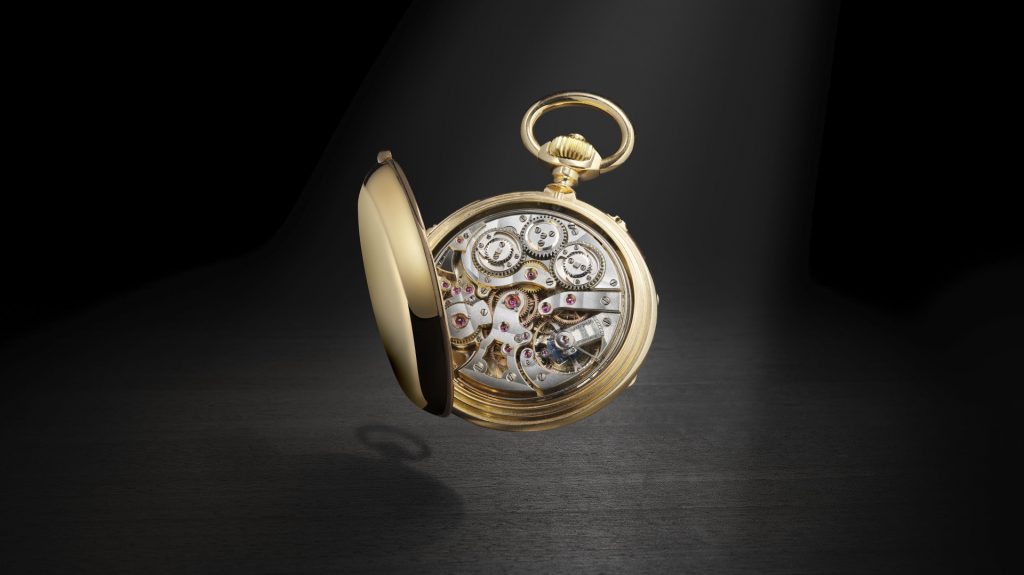
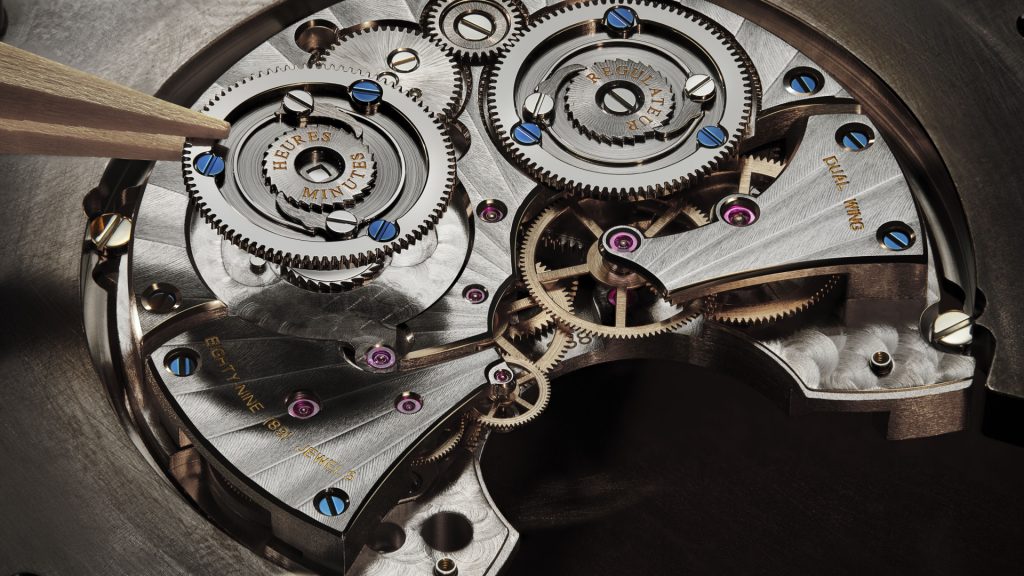
Perlage is most commonly found on movement plates and bridges, the structural backbone of a mechanical watch. These are the surfaces that become visible through a sapphire case back, offering a glimpse into the otherwise concealed world within. Yet its presence is not limited to what can be easily seen. Some watchmakers extend the technique to inner case surfaces or hidden components, areas that require deliberate effort to uncover. It is a detail placed there not for casual admiration, but for discovery. This layered approach adds a sense of depth to the watch. It rewards curiosity. It invites closer inspection. And once noticed, it becomes impossible to ignore.
The Illusion Of Simplicity
There is a deceptive simplicity to Perlage. At a distance, it appears uniform, almost effortless. But up close, the complexity reveals itself. Light dances across the overlapping circles, shifting with every movement. The surface seems to breathe, changing character depending on angle and intensity. It is subtle, yet captivating. This is not decoration that shouts. It whispers. And in doing so, it commands attention in a far more enduring way.
A Mark Of Serious Craftsmanship
In a world increasingly dominated by automation, the presence of Perlage carries significant weight. It signals intent. It suggests that the watchmaker has gone beyond the functional requirements and ventured into the realm of refinement. Collectors recognise this immediately. Perlage becomes a quiet indicator of quality, a sign that the same level of care applied to decoration likely extends to every other aspect of the watch. It is not merely about how the watch looks. It is about what the watch represents. A commitment to doing things properly, even when no one is looking.
Value Beyond Function
From a purely technical standpoint, Perlage contributes nothing to the operation of a watch. It does not improve accuracy, enhance durability, or extend power reserve. And yet, it adds value. Considerable value. Watches featuring hand applied Perlage often command higher prices, not because of what the technique does, but because of what it signifies. Time, skill, and dedication. In many ways, it functions as a form of authentication. A subtle assurance that the watch belongs to a higher tier of craftsmanship. Collectors understand this. They do not simply purchase a watch. They invest in the philosophy behind it.
The Aesthetic Dimension
Beyond its symbolic importance, Perlage also plays a crucial role in the overall aesthetic of a watch. It adds texture, depth, and visual intrigue to surfaces that might otherwise appear flat and lifeless. When viewed through a case back, the effect can be hypnotic. The movement transforms from a collection of mechanical parts into something far more artistic. A landscape of light and shadow, punctuated by the gentle rhythm of overlapping circles. It is a detail that reveals itself slowly. And once it does, it changes the way the entire watch is perceived.