

The easiest way to recognise a truly great watchmaker is not by counting how many watches it has sold, but by asking a far simpler question. How many times did it force the entire industry to start again? TAG Heuer has spent more than a century doing precisely that. While others refined existing ideas, the brand repeatedly chose the more complicated route of inventing entirely new ones. It chased fractions of a second when nobody else thought they mattered, placed chronographs inside square cases when conventional wisdom insisted they should remain round, experimented with belt driven movements that looked more like Formula One transmissions than traditional calibres, and even attempted to eliminate the hairspring altogether. The result is a catalogue of inventions that has shaped modern chronograph technology as profoundly as almost any Swiss manufacture. Some became commercial successes. Others remained remarkable technical demonstrations. Yet every one of them pushed watchmaking into territory that had never been explored before. Outlook Luxe revisits five of TAG Heuer’s most significant horological breakthroughs that permanently changed the way we measure time.
Mikrograph
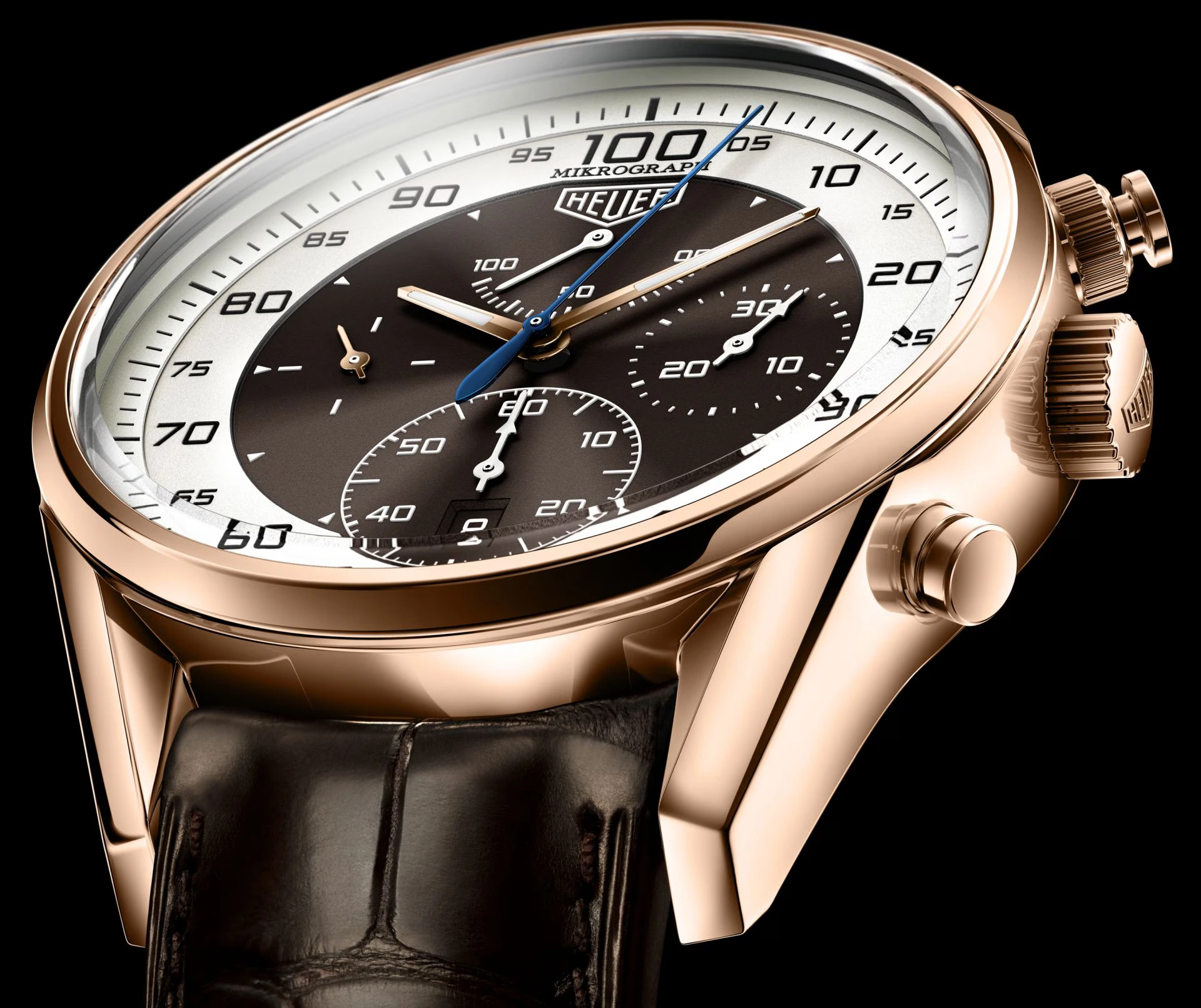
In 1916, TAG Heuer unveiled the Mikrograph, the world’s first mechanical stopwatch capable of measuring 1/100th of a second. Operating at an astonishing 360,000 vibrations per hour, it transformed sports timing and scientific measurement, becoming the benchmark for Olympic events, motorsport and industrial precision. The Mikrograph demonstrated that mechanical watchmaking could achieve extraordinary accuracy decades before electronic timing became commonplace.
Also Read: Inside The TAG Heuer Monaco Chronograph Goodwood 2026 Edition
Monaco
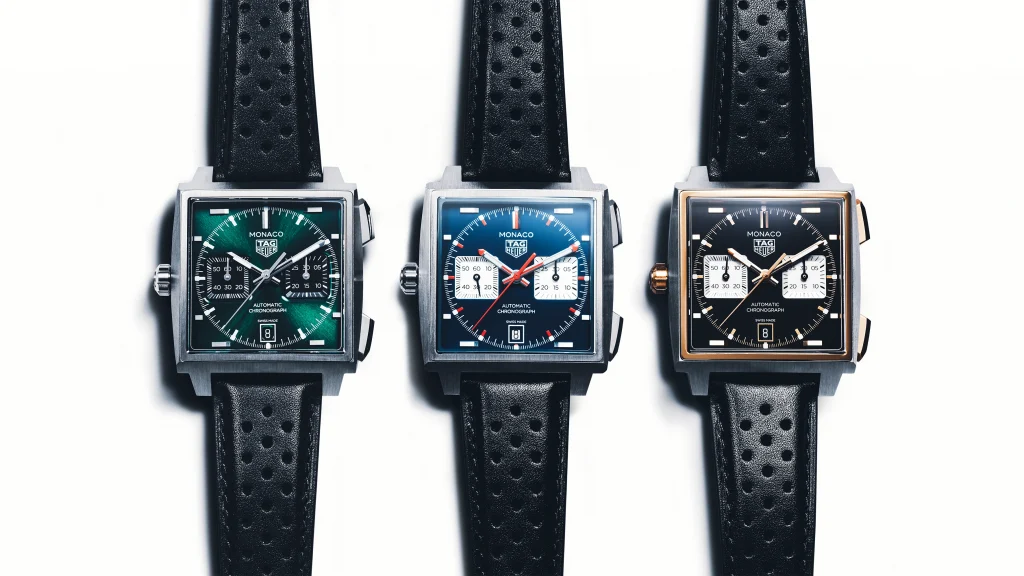
When the TAG Heuer Monaco debuted in 1969, it challenged virtually every convention in watchmaking. Powered by the revolutionary Calibre 11, one of the world’s first automatic chronograph movements, the Monaco became the first water resistant square cased automatic chronograph. Its left hand crown, bold blue dial and unconventional geometry turned it into an icon, later immortalised by Steve McQueen in the 1971 film Le Mans. Today, it remains one of the most recognisable chronographs ever produced.
Mikrotimer
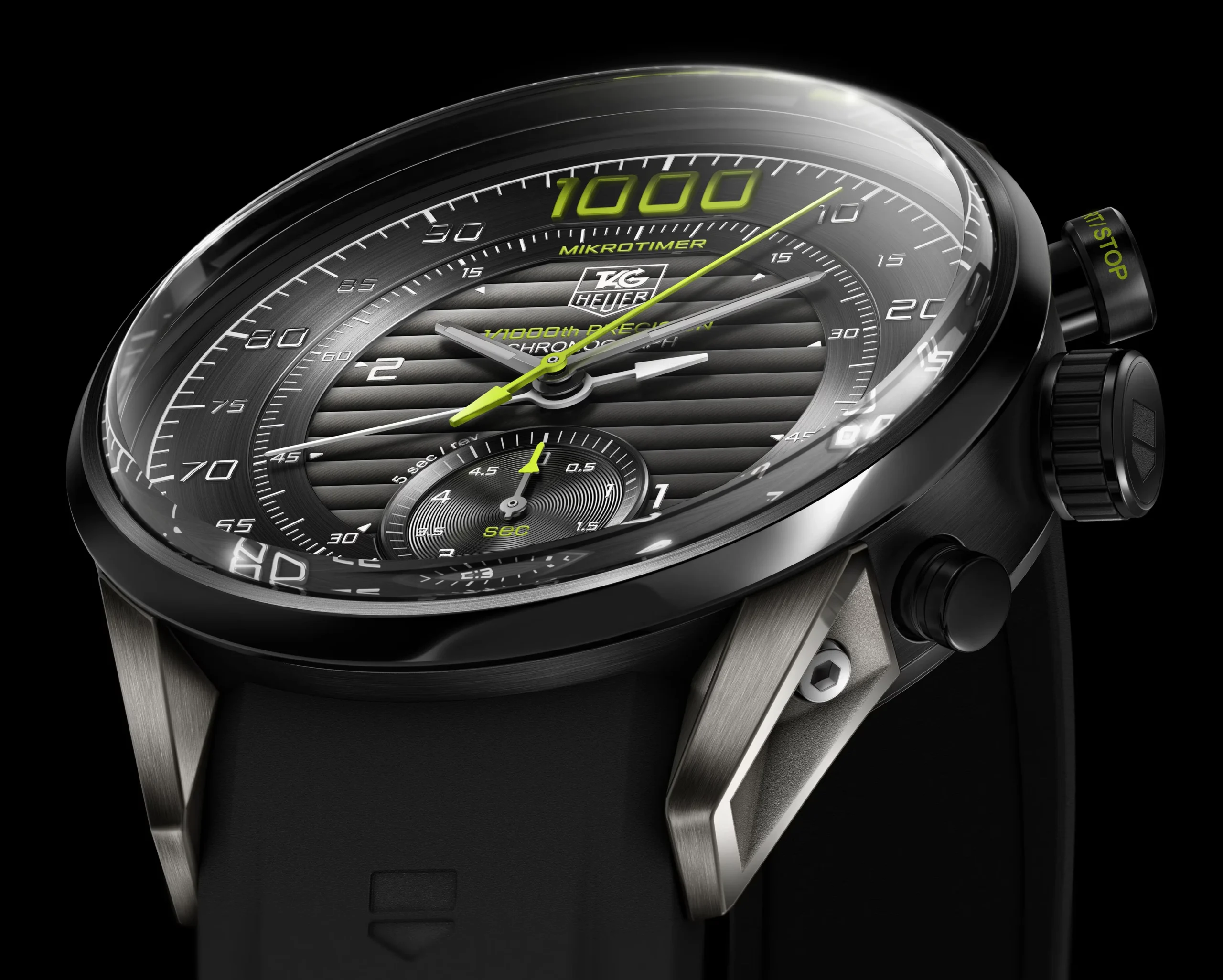
TAG Heuer stunned the watch industry in 2011 with the Mikrotimer Flying 1000, the world’s first mechanical chronograph capable of measuring 1/1000th of a second. Its dedicated chronograph mechanism operated at an astonishing 3.6 million vibrations per hour, while the conventional timekeeping movement remained separate for everyday accuracy. The achievement demonstrated that purely mechanical watchmaking could compete with electronic timing systems in levels of precision once thought impossible.
Monaco V4
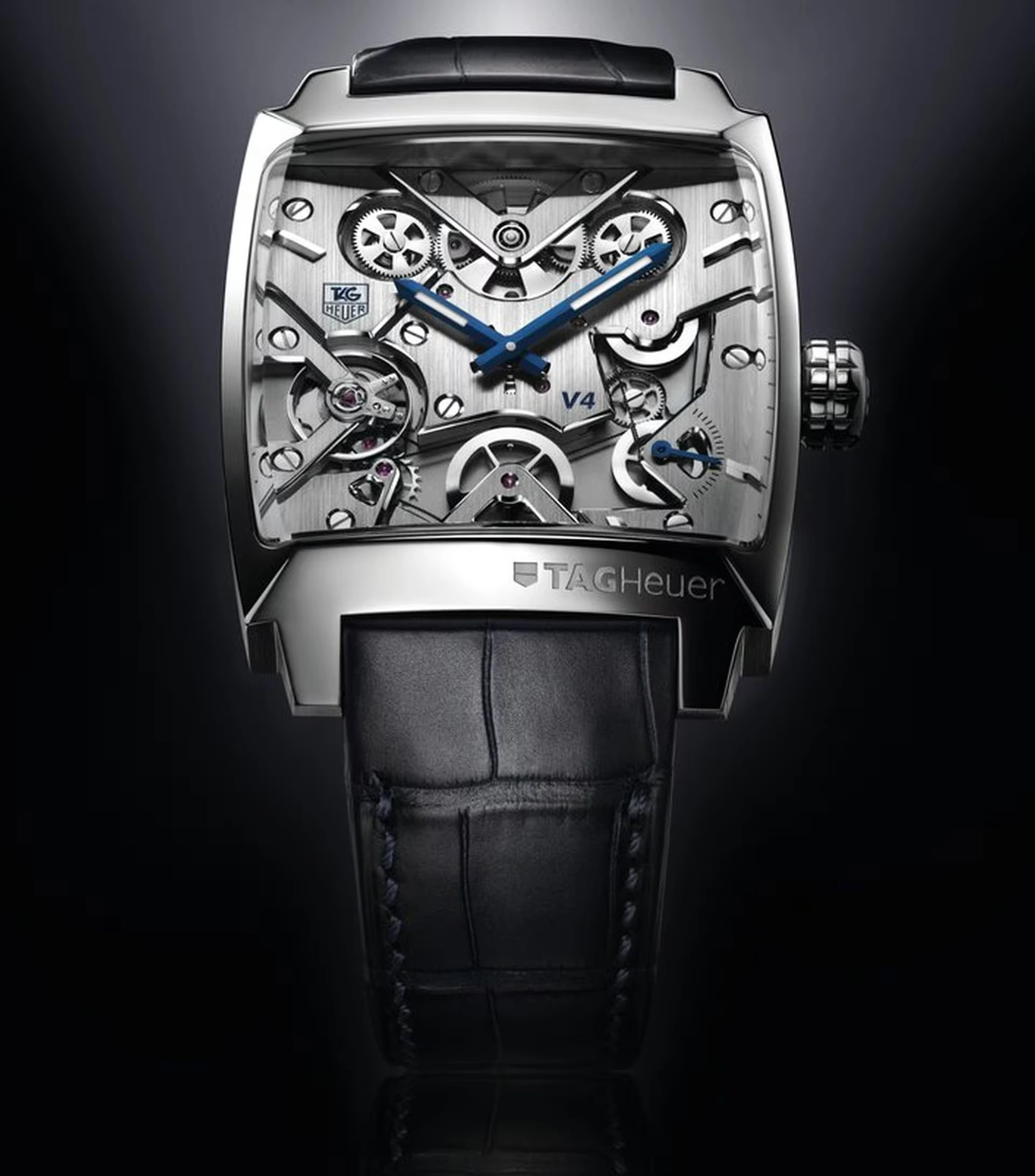
The Monaco V4, first presented as a concept in 2004 before entering production, fundamentally reimagined how a mechanical watch could be powered. Instead of conventional gears transmitting energy throughout the movement, the V4 employed tiny toothed belts, miniature ball bearings and a linear oscillating weight inspired by automotive engineering. Its architecture resembled a high performance engine more than a traditional Swiss calibre, making it one of the most technically unconventional wristwatches ever commercialised. The Monaco V4 proved that innovation could emerge from rethinking the movement’s entire construction.
Pendulum Concept
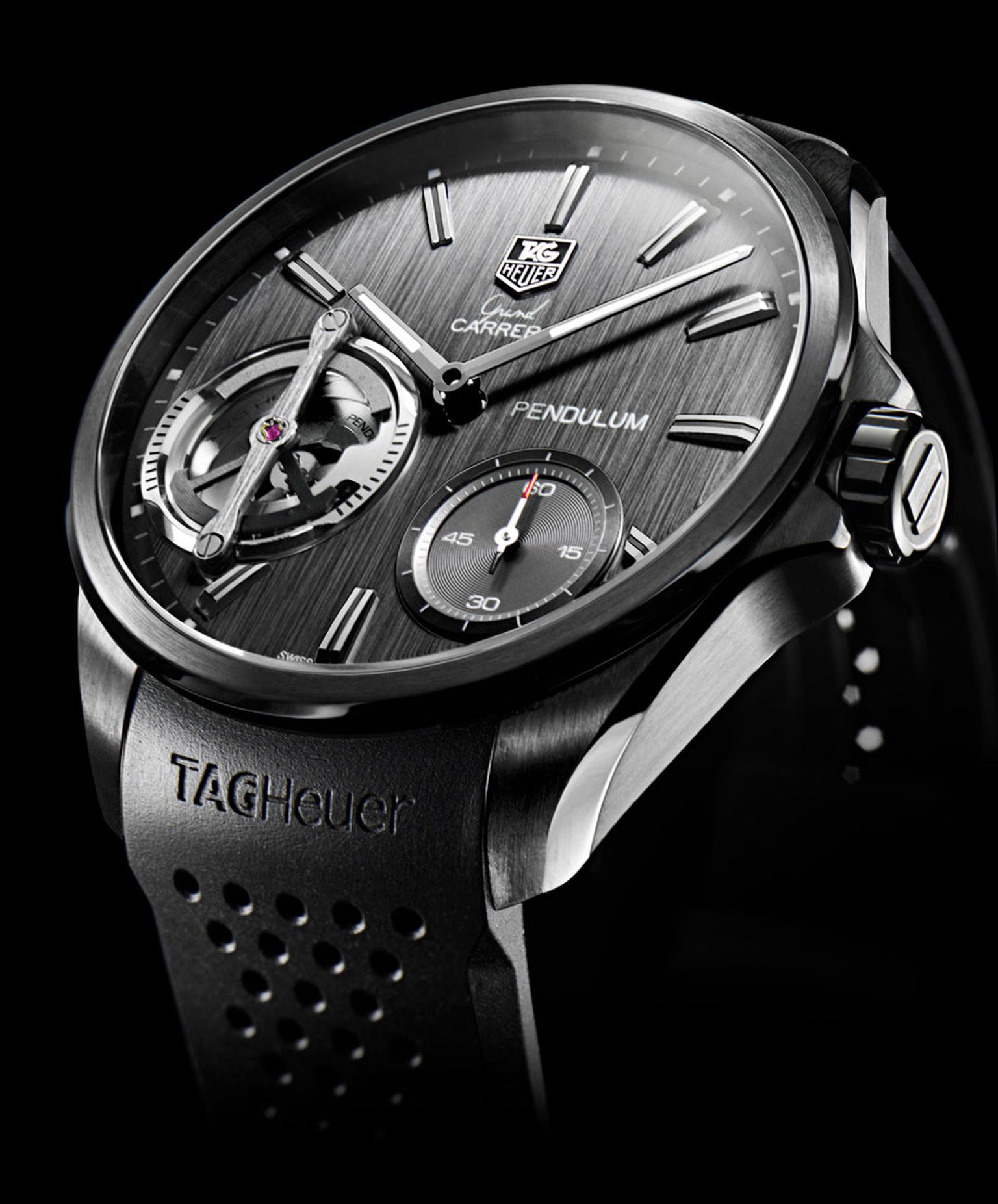
Perhaps TAG Heuer’s boldest experiment arrived in 2010 with the Pendulum Concept. The prototype replaced the traditional balance spring, the beating heart of virtually every mechanical watch, with a magnetic oscillator. Using opposing permanent magnets rather than a hairspring, the concept aimed to eliminate friction while dramatically increasing precision and long term stability. Although it never entered serial production, the Pendulum Concept remains one of the most ambitious attempts to rethink the foundations of mechanical timekeeping.