Bandra Bay: India’s Next Waterfront Moment
Mumbai’s luxury real estate market is witnessing a major shift as Bandra Bay emerges as the city’s next premium waterfront destination. Driven by large-scale infrastructure and global-style urban planning, the shoreline is redefining the future of luxury living in India
There are cities that expand. And then there are cities that reinvent themselves. Mumbai, long shaped by scarcity of land, time, space and stillness — now appears to be entering a different phase of urban imagination. For decades, the city’s relationship with luxury was largely vertical. Height became an aspiration. Penthouse living, skyline views and elevation defined status. But increasingly, luxury in Mumbai is beginning to move from skyline to shoreline.
The city, once turned away from its own coastline, is slowly rediscovering the value of water. And nowhere is that shift becoming more visible than around Bandra Bay.
Turning to the Sea
Across the world, some of the most coveted luxury districts share a common relationship with the sea. From Monaco’s Riviera and Singapore’s Marina Bay to Dubai Marina and Palm Jumeirah, waterfront living creates a distinct rhythm of life — one shaped by openness, light, horizon and calm. These addresses are not simply expensive because they are rare. They are aspirational because they alter the experience of urban living itself. Mumbai, constrained for decades by density and fragmented planning, is beginning to engage with that idea more deliberately.
“Globally, the most celebrated luxury districts have emerged along the water’s edge — be it Monaco on the Mediterranean, Singapore’s Marina Bay or Dubai’s waterfront developments,” says Niranjan Hiranandani, Founder and Chairman, Hiranandani Communities. “These destinations demonstrate how visionary planning, combined with natural geography, can create globally recognised urban addresses. India, particularly Mumbai, is now witnessing a similar evolution.”
Why Now
Infrastructure has played a critical role in accelerating this transition. Mumbai’s long-delayed mobility transformation is finally beginning to alter how the city connects with itself. The Coastal Road is reshaping commute patterns. The Mumbai Trans Harbour Link is opening entirely new corridors. Metro expansion is stitching together distances once defined by traffic paralysis. Together, they are unlocking a different layer of location value.
“With transformative infrastructure such as the Coastal Road, the Mumbai Trans Harbour Link and expanding metro networks, the city’s waterfront precincts are entering a new phase of urban prominence,” says Hiranandani. “Among these, Bandra Bay holds distinctive potential, offering a rare blend of location, connectivity and uninterrupted sea views within the heart of Mumbai.”
The Bandra Bay Edge
What makes Bandra Bay especially compelling is that it does not function as a detached luxury enclave. Unlike many emerging premium districts globally, it exists within one of Mumbai’s most culturally layered and socially vibrant neighbourhood ecosystems. It sits at the intersection of South Mumbai’s legacy and Bandra’s cosmopolitan energy — where old money, creative culture, entertainment, fashion and business coexist naturally.
That cultural positioning matters. Increasingly, luxury real estate is becoming as much about social geography as physical geography. Buyers are investing not only into homes, but into ecosystems of taste, lifestyle and identity.
Building the Waterfront
Recognising this shift, several of India’s largest developers are now actively focusing on the Bandra Bay stretch. Players including Adani Realty, Oberoi Realty, Godrej Properties, L&T Realty and Hiranandani Communities are either already present or evaluating projects across the larger reclamation belt.
The scale itself signals intent. Nearly 8 million square feet of development is expected to unfold across the broader waterfront corridor over the coming years, largely focused on premium and luxury housing. But this is not speculative quick-build real estate. Redevelopment complexities, regulatory frameworks and coastal safeguards mean timelines remain long and layered. Much of what is being imagined today is likely to fully materialise only towards the end of the decade.
Yet what is taking shape feels larger than a conventional luxury housing cycle. It signals the possibility of a globally comparable waterfront district emerging within India.
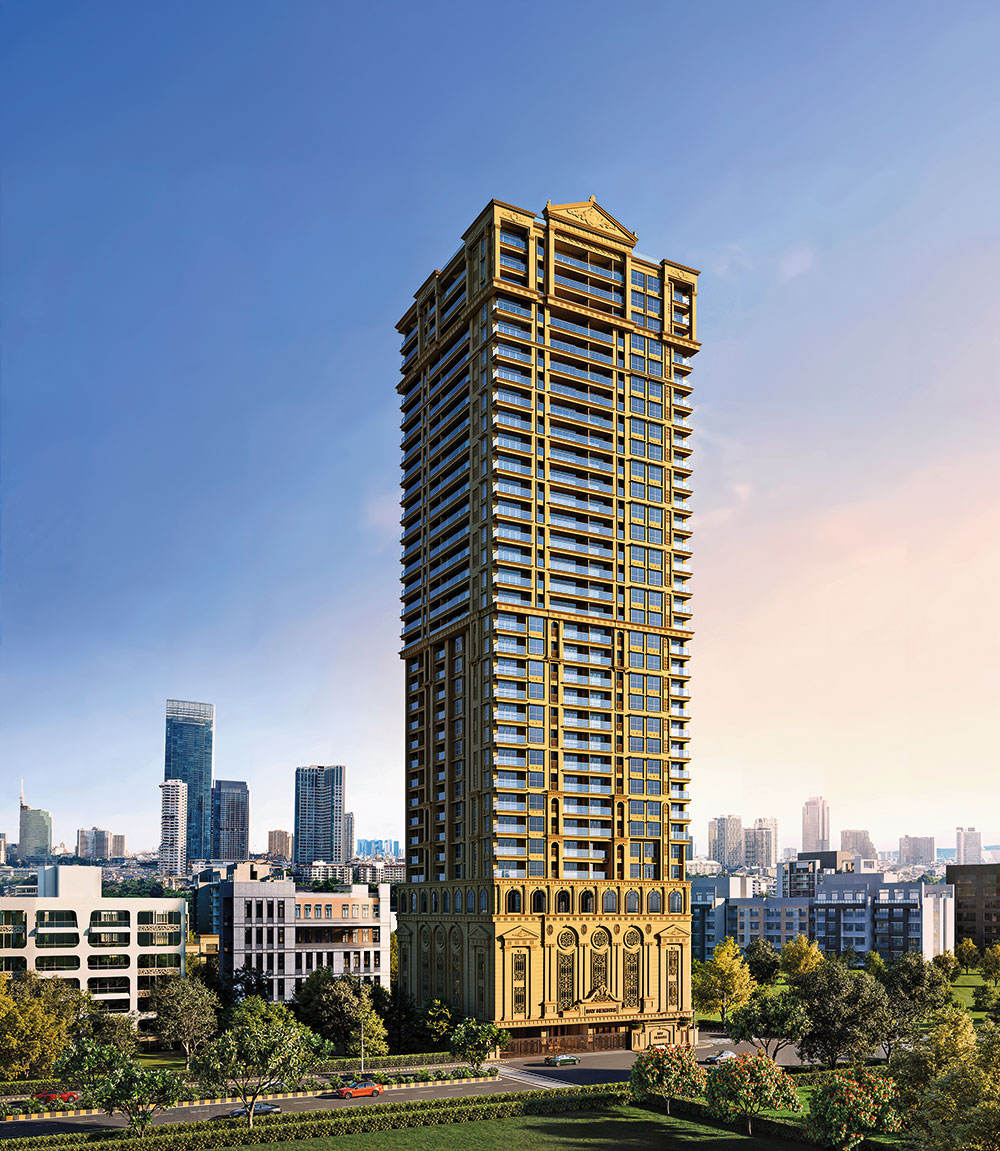
“Recognising this opportunity, we are developing Hiranandani Bay Heights at Bandra Bay, a luxury residential redevelopment that reflects global benchmarks in design, lifestyle amenities and experiential living,” says Hiranandani.
Beyond Buildings
Globally, successful waterfront districts rarely function as isolated residential projects. They evolve as integrated urban ecosystems — combining residences, hospitality, retail, promenades, leisure infrastructure and public spaces into a seamless lifestyle environment. The ambition around Bandra Bay increasingly appears to be moving in that direction.
“When we look at global benchmarks like Marina Bay or Dubai Marina, they represent integrated ecosystems — residences, leisure and lifestyle infrastructure working in harmony,” Hiranandani explains. “What we are witnessing in Bandra Bay is the early stage of such a transformation. It is not just about building homes, but about shaping a globally comparable waterfront district.”
Water as Luxury
Water itself is becoming the new luxury metric. “For decades, luxury in Mumbai was defined by location and skyline views,” says Hiranandani. “But with developments emerging along Bandra Bay, we are seeing a shift towards waterfront living as the new pinnacle of luxury.”
Beyond Mumbai
If Bandra Bay succeeds, its influence could extend far beyond Mumbai. It may reshape how Indian cities think about their coastlines altogether. Cities such as Goa, Kochi, Chennai and Visakhapatnam could begin to see their waterfronts not as peripheral edges, but as future centres of value, identity and urban aspiration.
There is also a deeper symbolic layer to this story. For decades, Mumbai represented ambition compressed into limitation — a city constantly negotiating shortage. With Bandra Bay, the city is beginning to think expansively again. Not simply about adding more real estate, but about elevating the experience of urban living itself.