Montblanc’s New Collection Launch: A Perfect Blend of Innovation And Heritage
Montblanc unveils its 2026 timepieces collection, blending heritage design with modern innovation across sport, classic, and complication driven creations
There is something rather brilliant about the way Montblanc approaches a new collection, because it does not arrive with a single headline act screaming for attention, it arrives like a well stocked bar where every bottle has a story worth telling. The 2026 lineup is exactly that, a carefully orchestrated spread of timepieces and novelties that refuse to be pigeonholed. On one side sits the Rieussec, steeped in historical significance and ticking away with the quiet confidence of something that knows exactly where it comes from. On the other, the Iced Sea pieces march in with bold materials and striking colour, including a rather unapologetic coral dial that refuses to blend into the background. Then there are the limited editions, the complications, and the various case sizes that seem to acknowledge that wrists, much like personalities, come in all shapes and preferences. From the rugged, adventure ready spirit of the 1858 and Iced Sea models to the more composed elegance of the Star Legacy and Rieussec lines, this is not a reinvention, it is a deliberate refinement. Each piece feels familiar, yet slightly sharper, slightly more confident, as though the entire collection has spent the off season at the gym and returned with purpose. Outlook
Montblanc Star Legacy Nicolas Rieussec Chronograph Limited Edition 821
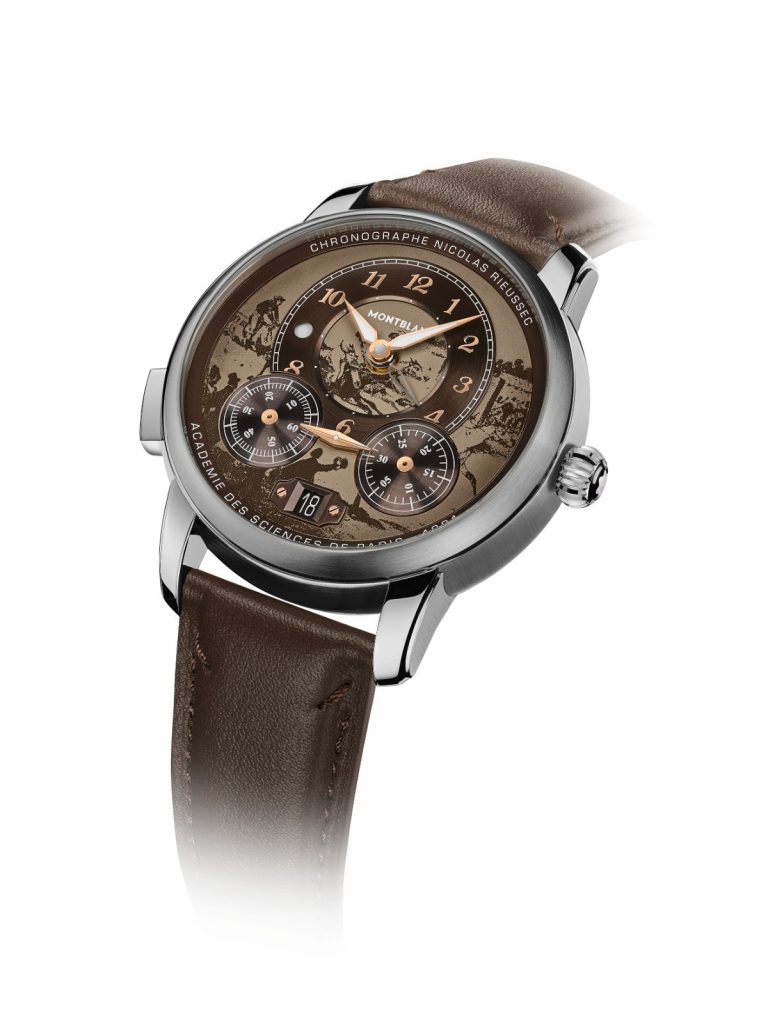
There are clever ideas, and then there are ideas so absurdly simple that they end up changing everything, which is exactly what Nicolas Rieussec managed back in 1821. Instead of fiddling about with complicated mechanisms, he took a fixed nib and made it drop ink onto two rotating counters every time a horse thundered past the finish line. One for seconds, one for minutes, job done. The boffins at the French Academy of Sciences were so impressed they gave it a name, stitching together the Greek words for time and writing, and just like that, the chronograph was born. Not reinvented, not evolved, born. Fast forward to this rather handsome revival, limited to 821 pieces, and it arrives in a fully polished stainless steel case that measures a confident 43mm across. The lugs have that stepped, architectural flair, while the onion crown at 3 o’clock feels like it has wandered straight out of the pocket watch era with no intention of leaving. A satin finished bezel politely steps aside, allowing the dial to do what it clearly wants to do, which is show off. The single pusher at 8 o’clock controls the chronograph’s start, stop, and reset functions.
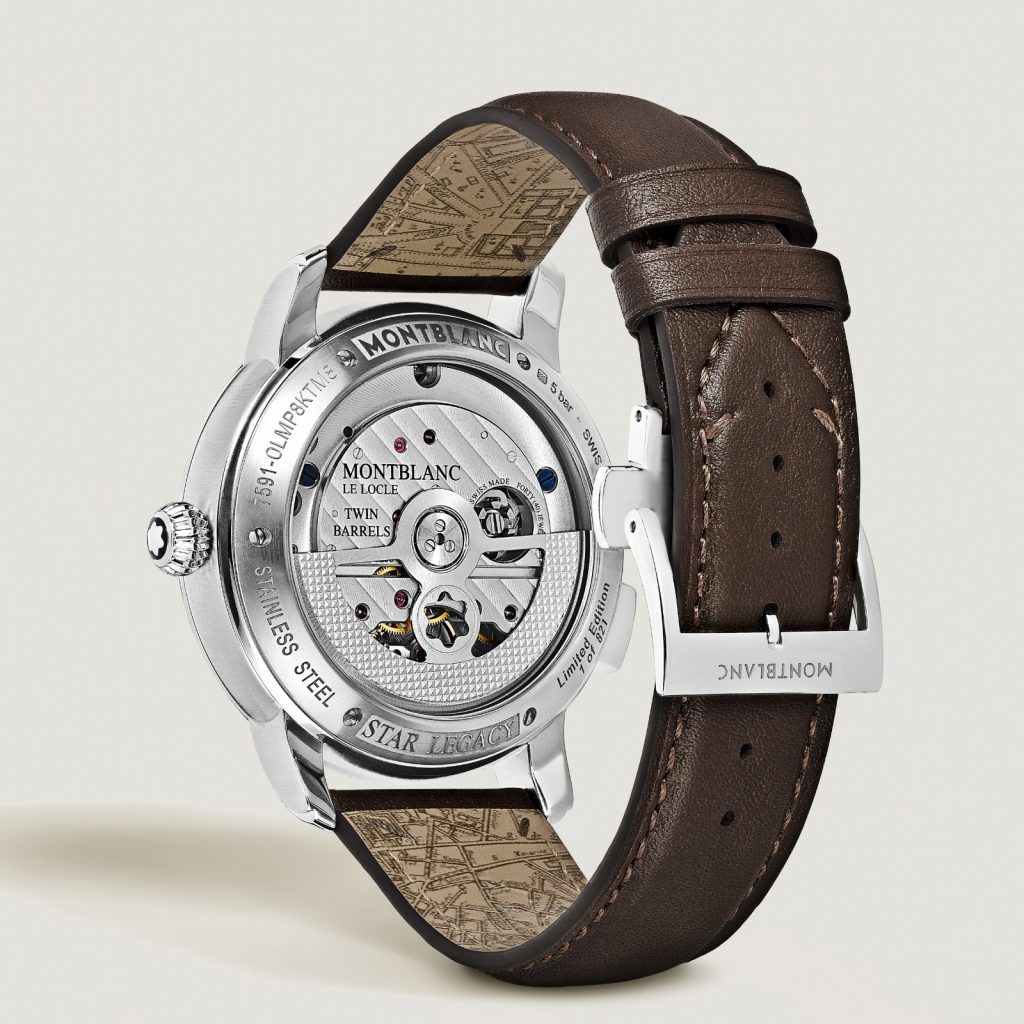
And what a dial it is. This is not just decoration, it is theatre. A vivid Parisian horse racing scene unfolds across the surface, inspired by Victor Adam and his 1829 work depicting four jockeys charging across the Champ de Mars. The beige sfumato finish gives it depth, warmth, and just enough drama to make it feel alive. Around the edges, there are subtle nods to history, with Rieussec marked at twelve and a respectful salute to the Academy at six, just in case anyone forgets who started all this. Then come the clever bits. The chronograph does not use hands in the traditional sense, instead relying on two rotating domed discs, one counting 60-seconds at 8 o’clock and the other 30-minutes at 4 o’clock. Between them sits a horizontal bridge acting as a pointer, faithfully echoing that original 1821 layout. It is unusual, slightly eccentric, and utterly brilliant. Add to that a dual time display on the non concentric dial, a day and night indicator at 9 o’clock, and a skeletonised hour hand that can either work independently or tuck itself neatly out of the way, and suddenly this becomes less of a timepiece and more of a mechanical conversation starter. Practicality has not been forgotten either. Luminescent dauphine hands ensure readability when the lights go down, the date sits neatly at 6 o’clock, and beneath it all beats the calibre MB R200 with a solid 72-hour power reserve. Flip it over and there is a sapphire caseback revealing a rhodium coated rotor, because even something this rooted in history knows how to dress properly for the modern world.
Montblanc Iced Sea Automatic Date 0 Oxygen
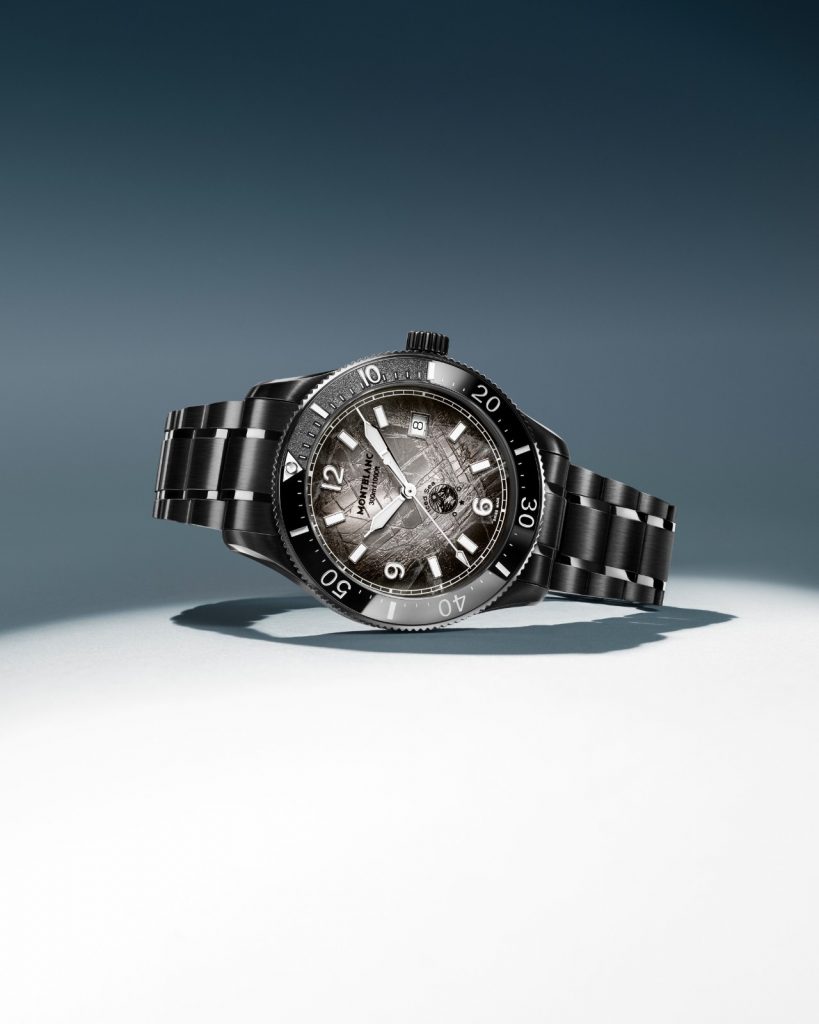
The 41mm Montblanc Iced Sea Automatic Date 0 Oxygen Ref. 137541 does not arrive looking polished and pampered, it turns up as though it has already survived something rather unpleasant. The steel case and bracelet are coated in black and then deliberately distressed using quartsite dragged straight from Mont Blanc, which is about as subtle as sanding a dinner jacket, yet the result is undeniably brilliant. It has that dark, weathered look that feels organic, almost accidental, as if nature itself had a hand in finishing it. Then there is the dial, which does not merely sit there telling the time but instead looks like a frozen landscape captured mid tantrum. The grey glacier pattern, achieved through the painstaking gratte boise technique, recreates the texture and depth of ice with obsessive precision. It is layered, it is luminous, and it pairs perfectly with the rugged case. Bright white Super LumiNova fills the hands and markers so legibility is never in question, while the Iced Sea signature sits neatly at six and the date window at three does its job without making a fuss.
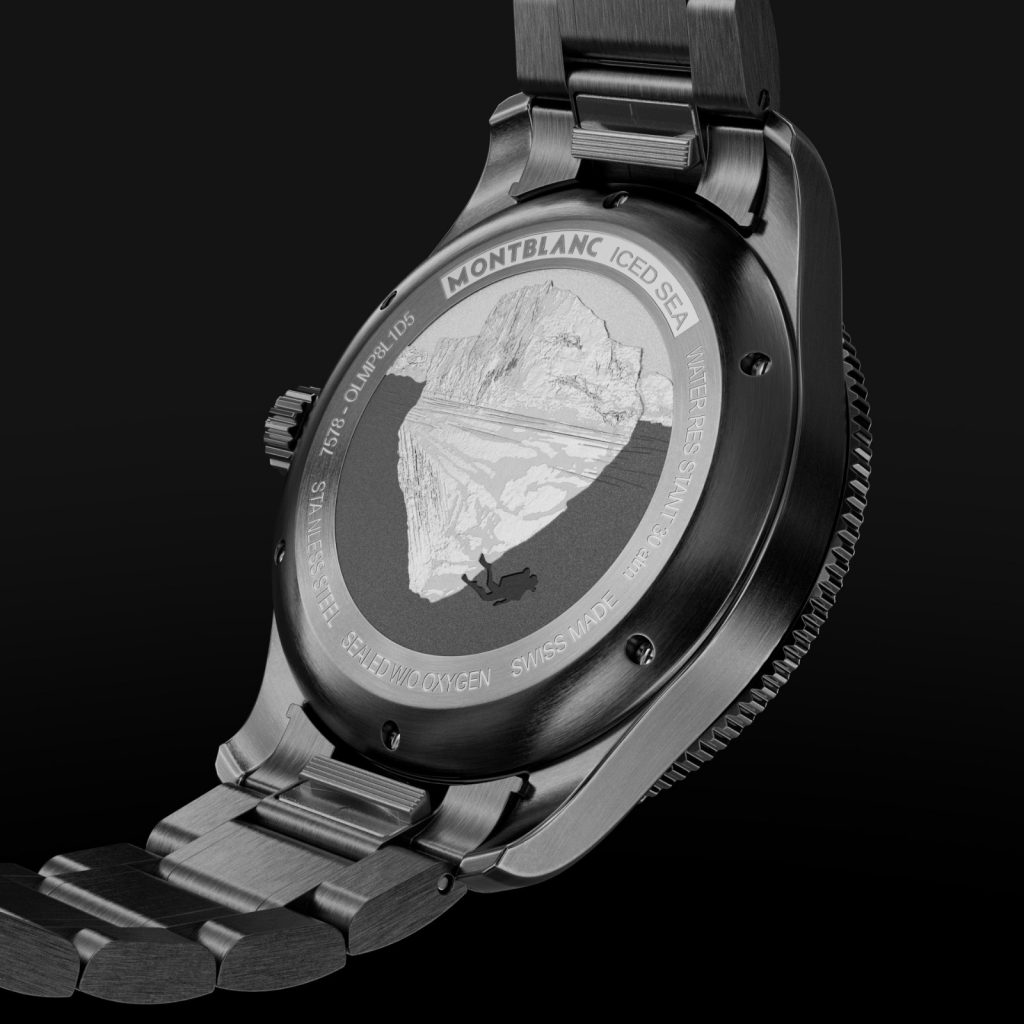
Being a proper dive timepiece, it is built to go underwater rather than merely talk about it. Three hundred metres of water resistance ensures it can handle serious pressure, while the bezel clicks around with 120 crisp, deliberate steps. It features a ceramic insert that resists scratches with stubborn determination, and a cleverly textured section between zero and fifteen minutes, created through laser work, which allows divers to track decompression stops without second guessing anything. Turn it over and the caseback greets with an engraved diver and iceberg, not just decoration, but a final nod to the icy, unforgiving world this thing was clearly designed to conquer.
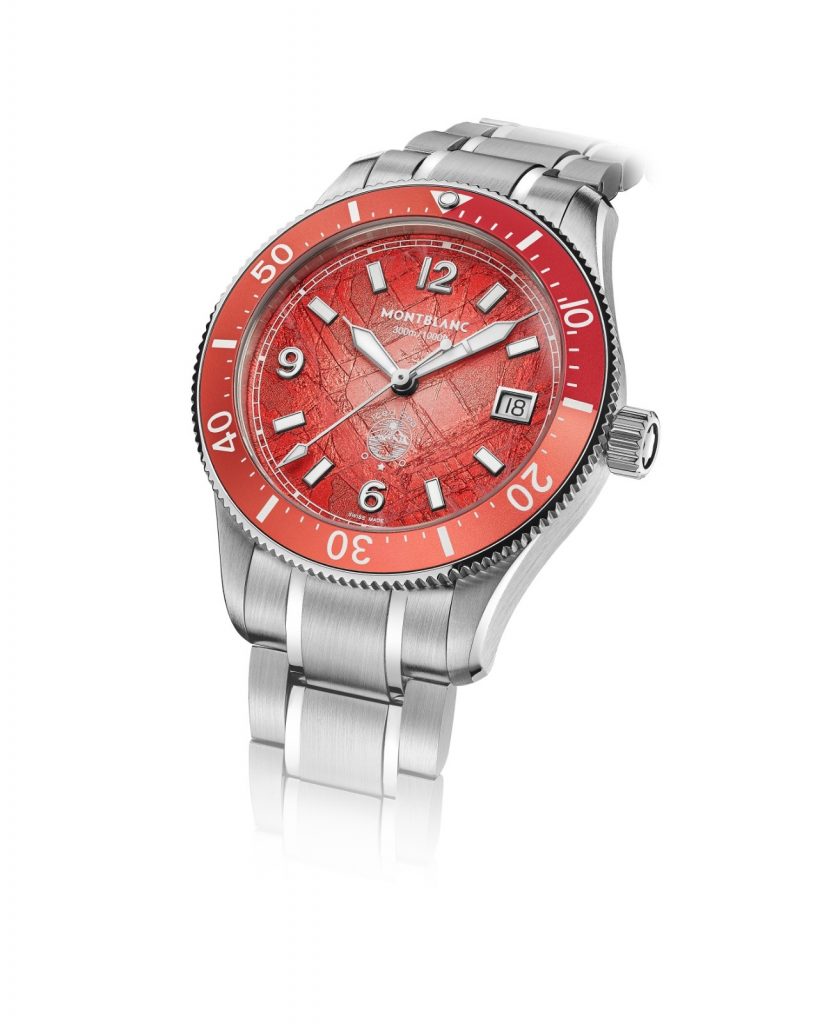
Limited to 300 pieces, the timepiece takes the entire glacier inspired drama and shrinks it down to a far more compact 38mm case, without losing an ounce of attitude. This time, however, it has clearly decided subtlety is overrated, because the coral dial arrives like a burst of colour in an otherwise frozen landscape. It is bright, unapologetic, and carries straight through to the bezel, where a deeper shade of red marks out the first fifteen minutes with purpose and clarity.
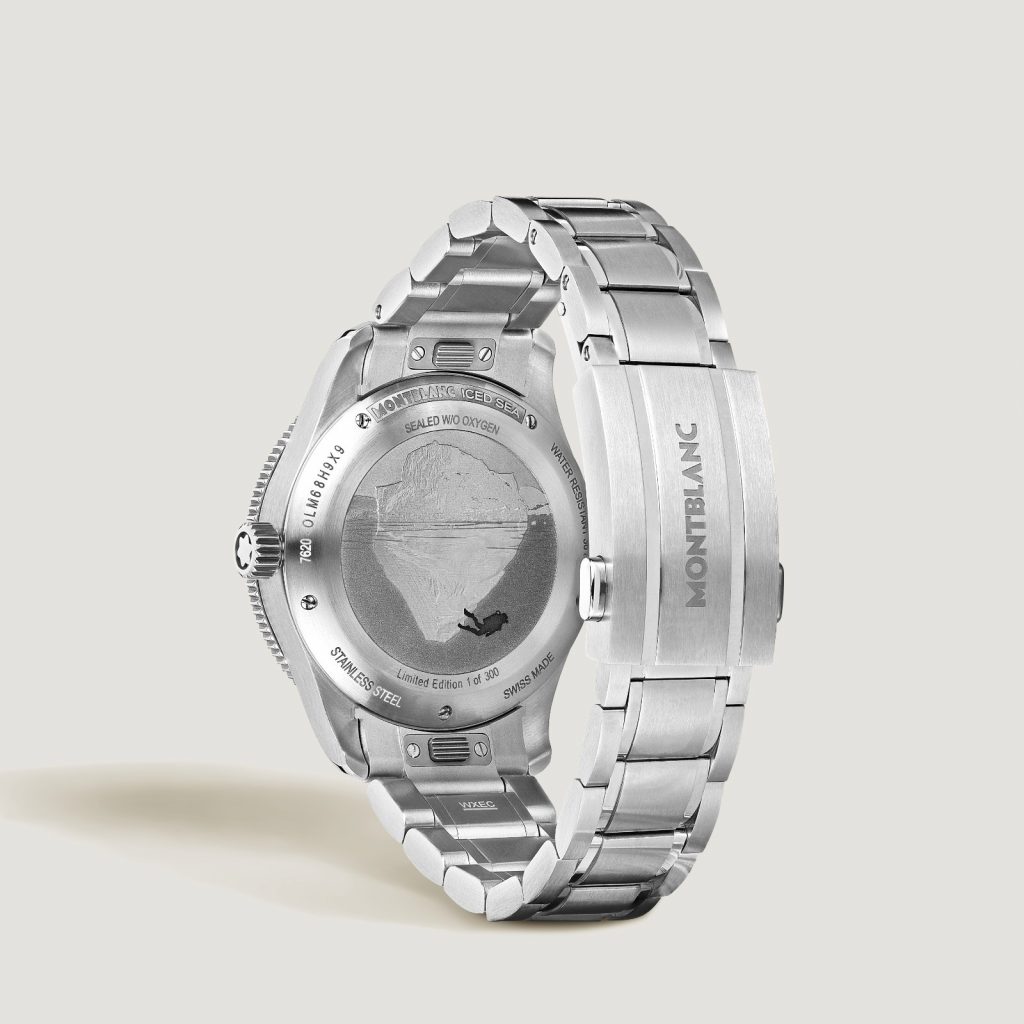
The case itself strikes a rather clever balance, mixing brushed and polished surfaces with crisp edges and gently curved lugs that ensure it sits on the wrist without feeling like a chunk of diving equipment strapped on for survival. It feels considered, almost refined, which is not something often said about something built to handle the ocean. As for versatility, it does not hold back. There is the option of a coral red rubber strap that leans fully into its bold personality, or a stainless steel bracelet for those moments when a touch of restraint feels appropriate.
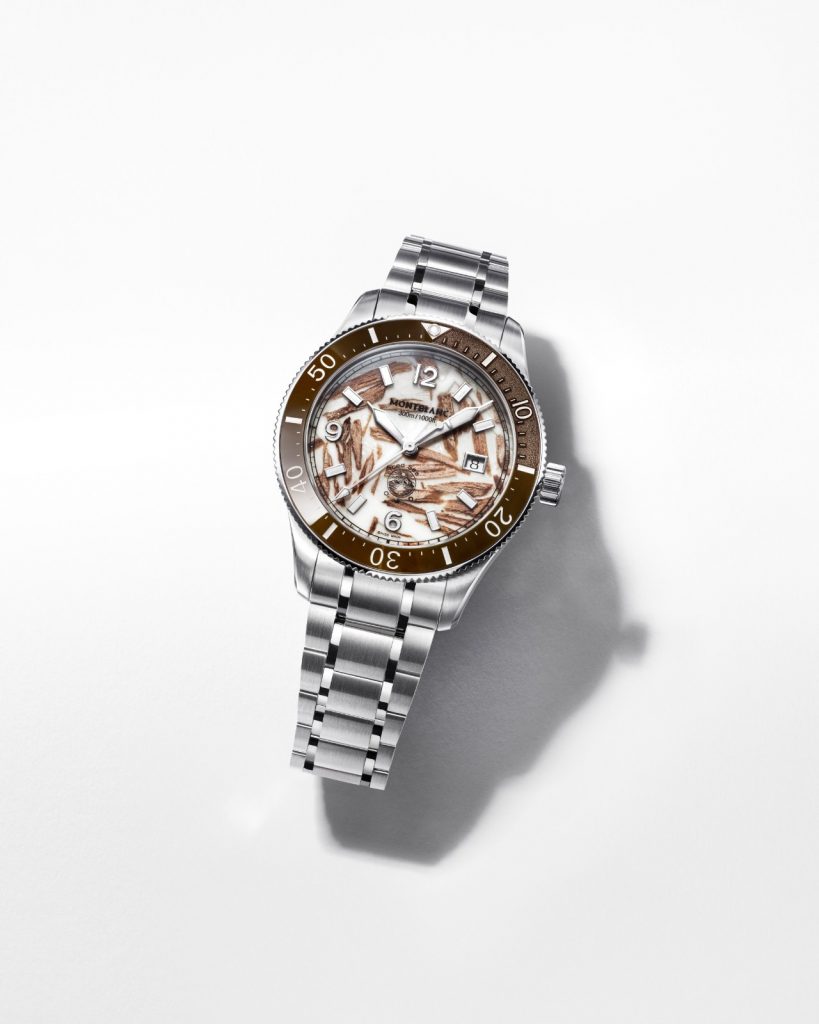
The Iced Sea Automatic Date 0 Oxygen Limited Edition 700 does something rather unusual in a world obsessed with perfection. Instead of chasing uniformity, Montblanc has decided that no two dials should look the same, and the result is gloriously unpredictable. The surface is made from subfossil wood, broken into fragments and set beneath clear resin, creating a textured landscape that feels more geological than mechanical. Every single piece ends up slightly different, which means this is not just a timepiece, it is a one off disguised as a limited edition. The 41mm steel case keeps things grounded, solid and purposeful, while the unidirectional bezel, fitted with a brown ceramic insert, ties the whole look together with surprising elegance. It complements the dial rather than competing with it, which is no small achievement given how visually busy that surface is. Offered on a stainless steel bracelet and capped at 700 pieces, this is less about telling the time and more about wearing a small slice of ancient history on the wrist, which, when put like that, sounds rather brilliant.
Montblanc 1858 Small Second 0 Oxygen
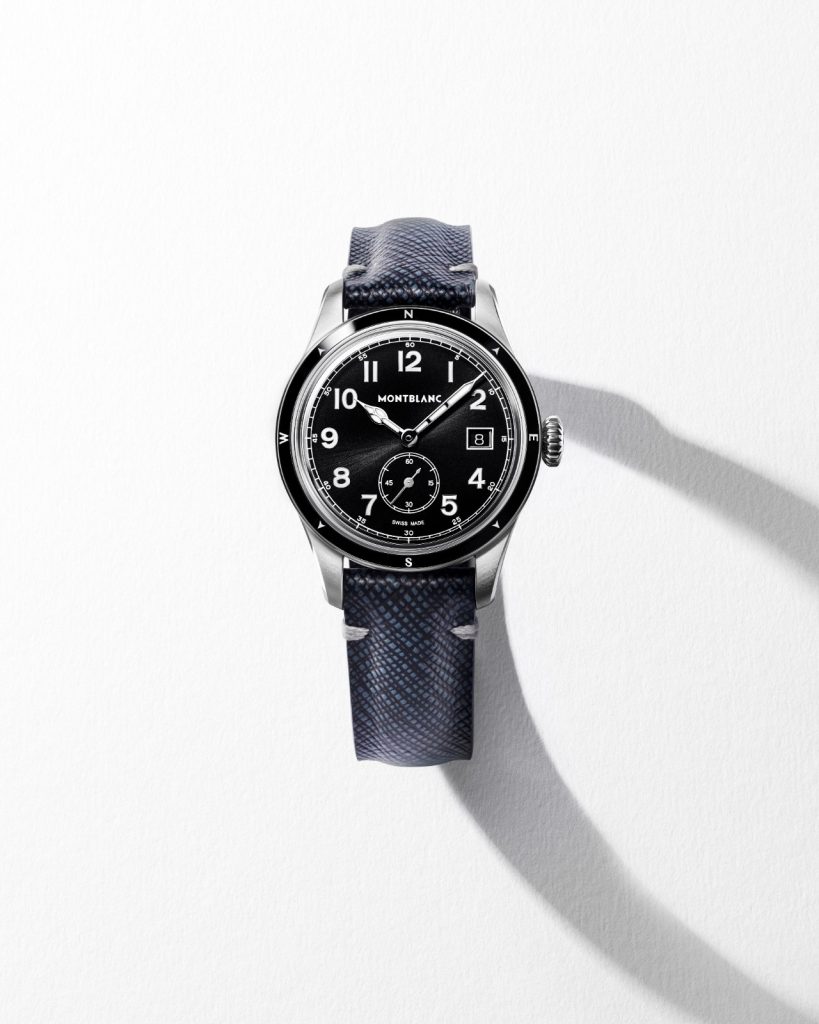
Montblanc reimagines the 1858 Small Second 0 Oxygen in a new, smaller 38mm size, complemented by a vintage-inspired aesthetic to bring together modern watchmaking techniques and materials with timeless design codes. The timepiece features a lacquered dial with luminescent Arabic hand and indexes, a colour-matched date wheel behind a beveled aperture at 3 o’clock, and a symmetrically positioned sub-dial for the running seconds at 6 o’clock. The traditionally styled “railroad” minute-track around the outer edge of the dial is punctuated with numerical markers at the five-minute positions. Meanwhile, the Super-LumiNova®-filled cathedral hands harken back to expedition watches of the 1920s and 30s. Completing the vintage-inspired look is a fixed bezel with a black ceramic insert that includes luminescent cardinal compass points accented with small triangle direction indicators in between. Powering the watch is MB 24.16 calibre with a 38-hour power reserve.
Also Read: Top 5 Most Complicated Watches Ever Made Every Serious Collector Must Know
Montblanc 1858 Geosphere 0 Oxygen Mount Elbrouz Limited Edition 829
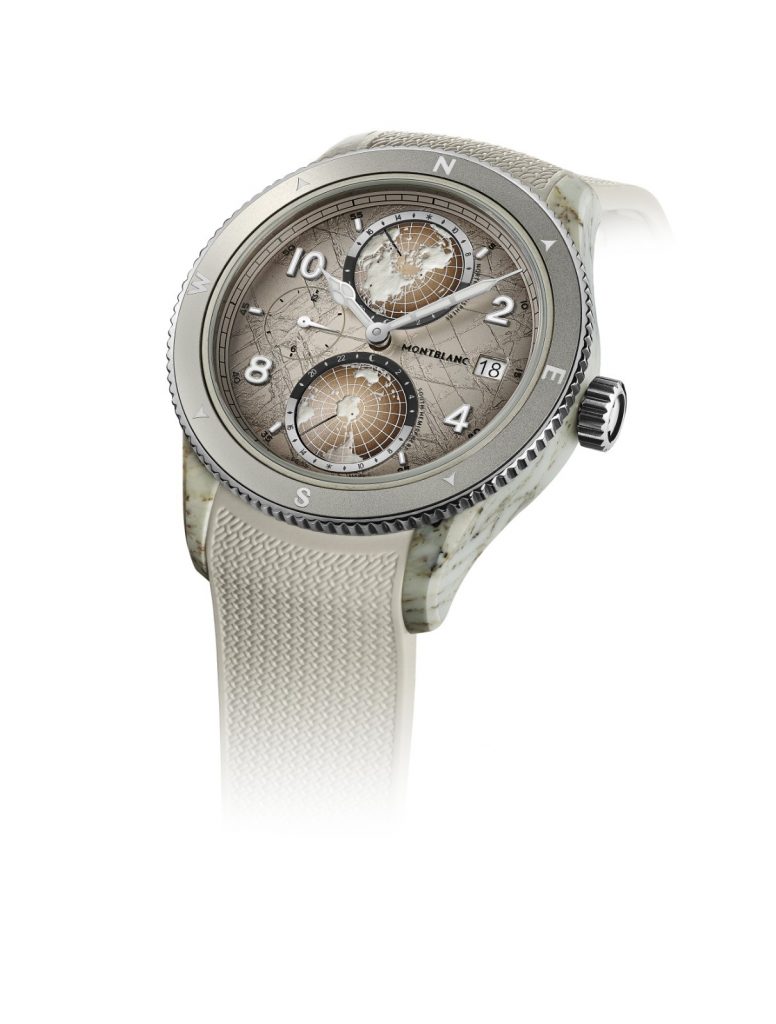
The 1858 Geosphere line from Montblanc does not dabble in mountaineering romance, it lives in it. This is a collection tied to people who treat mountains the way most treat a Sunday stroll, names like Reinhold Messner, the man who casually rewrote the rules of Everest, and his son Simon Messner. The case middle is not just metal, it is a concoction that sounds like it belongs in a laboratory rather than on a wrist. A proprietary composite made from volcanic ash, aluminised basalt fibres, calcium carbonate, and a bio sourced resin containing 30 percent vegetable matter forms the backbone of the watch. On the side opposite the crown, there is an engraved rendering of Mount Elbrus’s twin peaks, hand filled with white luminescent paint that glows orange in the dark, because apparently even mountains deserve a bit of theatre. At 43.5mm , the titanium case carries a colour scheme lifted straight from the mountain itself, with a dial finished in white and brown sfumato over a glacier patterned base. The hands, hour markers, and bezel markings are filled with the same orange luminescence, while the continents on the twin rotating spheres and the 24 hour hand at 9 o’clock glow blue, neatly separating local and home time without any confusion.
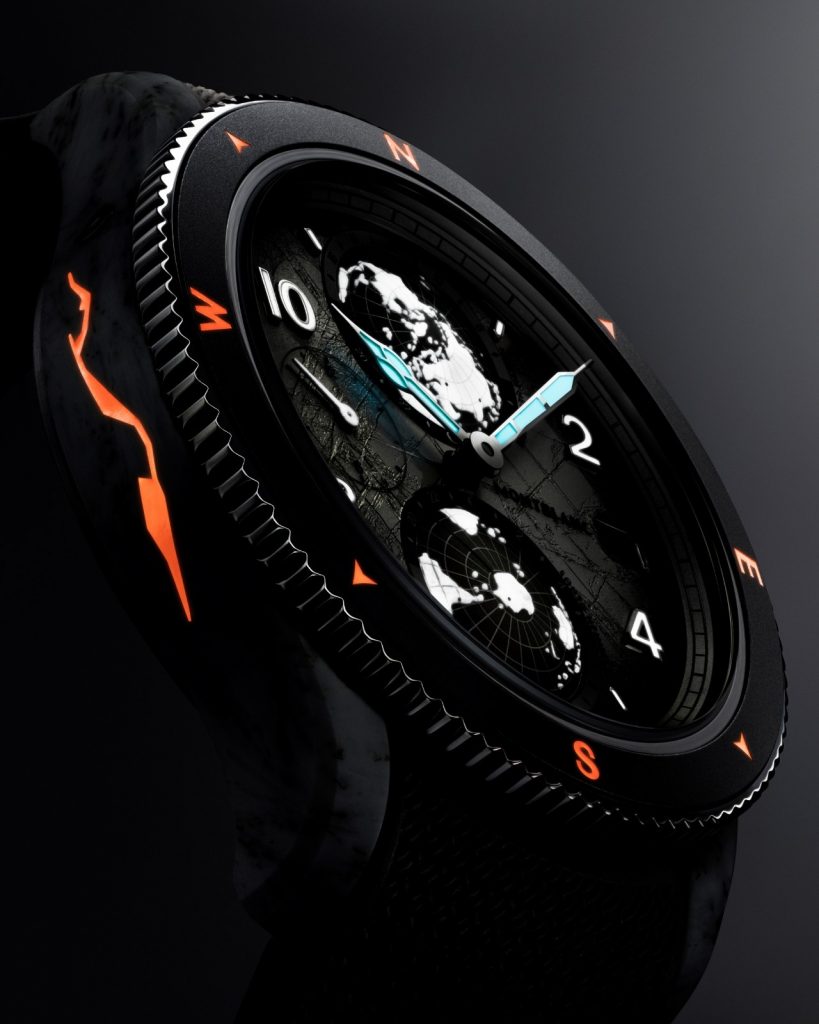
The world time complication remains the star of the show, with dual rotating half globes, the 12 o’clock displaying the Northern hemisphere as seen from above the North Pole, and the 6 o’clock; the Southern hemisphere. One rotates counterclockwise, the other clockwise, mimicking the Earth itself, which is either wonderfully poetic or mildly obsessive, depending on the mood. Each globe is framed by a 24 hour AM/PM indicator, and scattered across the continents are eight black dots marking the highest peaks on each landmass, along with Mont Blanc sitting proudly on the border of Italy and France. The Greenwich Meridian is marked with a simple black line, while a second time zone sits at 9 o’clock, adjustable via a recessed pusher at 10 o’clock. The date appears at 3 o’clock, doing its job without drama. Turn the watch over and the caseback reveals a detailed depiction of Mount Elbrus created using a laser generated oxidation process, which sounds complicated because it is. Then there is the 0 Oxygen technology, ensuring the movement is cased without oxygen, reducing wear and extending longevity, which is rather useful when dealing with something built to outlast most adventures. Power comes from the automatic Calibre MB 29.25, delivering a respectable 42-hour power reserve. It arrives with two interchangeable rubber straps in ivory and light brown, because versatility matters even at altitude, and it is limited to 829 pieces, a nod to the year 1829 when the higher peak of Mount Elbrus was first conquered. It is, in every sense, a timepiece that does not just tell the time, it tells a story, and quite a dramatic one at that.
Montblanc Star Legacy Smalls Seconds, Moonphase, and Chronograph
Star Legacy
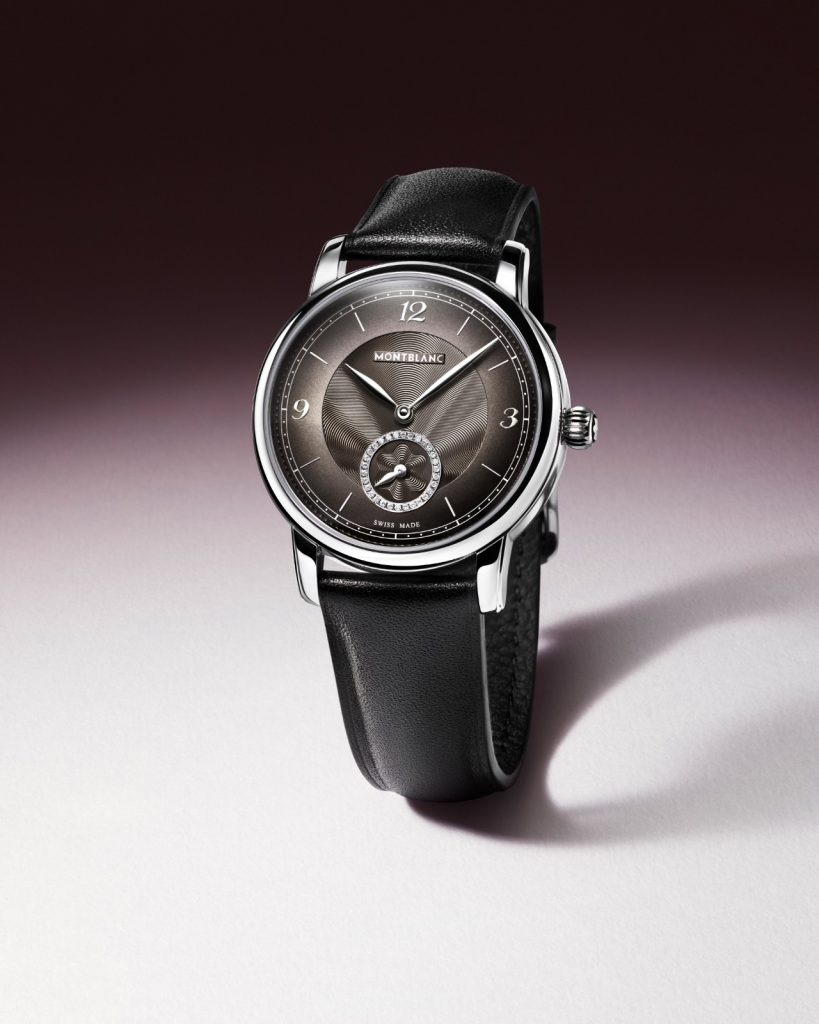
Montblanc has rolled out three new additions to the Star Legacy line, each with its own mechanical personality, and none of them particularly interested in blending into the background. Leading the charge is the 36mm Small Seconds, reference 132887, which rather confidently surrounds its sub dial with 30 diamonds, as if to remind everyone that precision and a bit of sparkle can coexist quite happily. Then come the two larger 42mm pieces, a Moonphase and a Chronograph, both leaning into a more purposeful, slightly more serious character. What ties them all together is a dial that looks as though a star has burst apart in slow motion, thanks to that wavy exploding star guilloché pattern, finished in a brooding gradient anthracite tone that shifts and plays with light in a rather dramatic fashion. Each watch is housed in stainless steel, fitted with those unmistakably bulbous onion crowns that feel delightfully old world, and finished with transparent casebacks that proudly display the mechanical workings within. As for the Small Seconds, it is powered by the MB 24.16 automatic movement, delivering 38 hours of power reserve, quietly getting on with the job while everything else steals the spotlight.
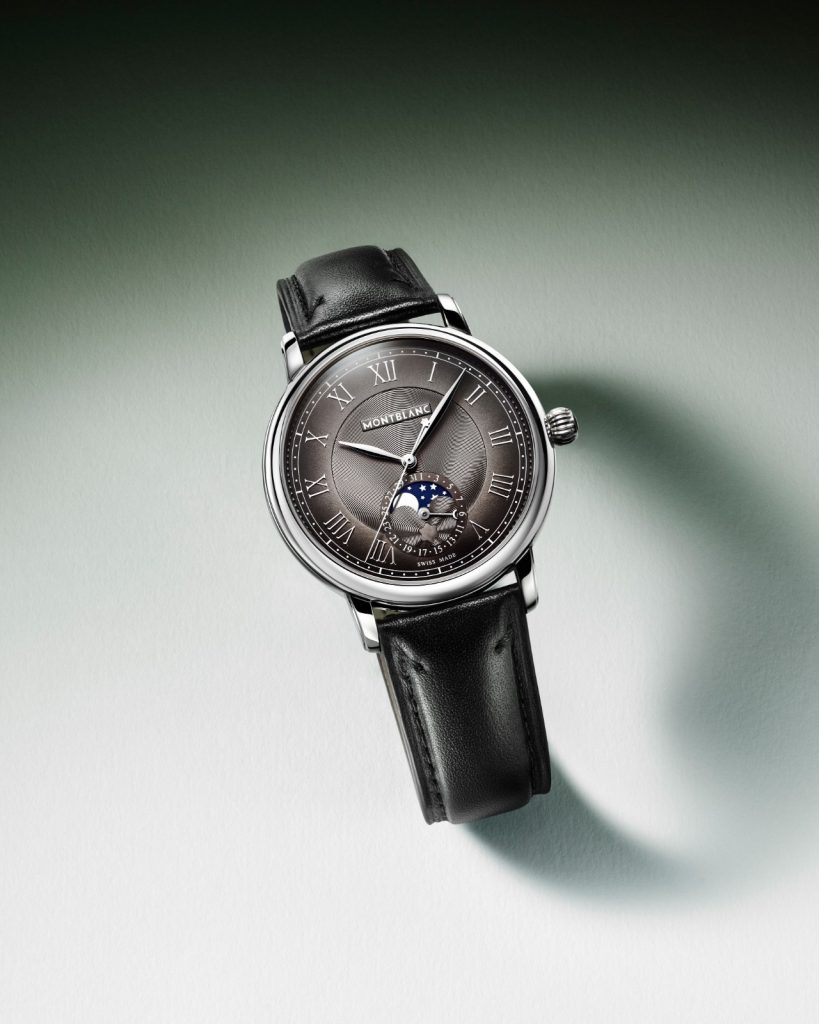
The Moonphase model, reference 134297, is the sort of watch that quietly gets on with being complicated without needing to shout about it, though it does have a few rather charming tricks up its sleeve. At six o’clock sits a beautifully composed sub dial that combines a moonphase display with a pointer date, indicated by a crescent tipped hand that sweeps around with a sense of calm precision. Nestled within this same space is the Montblanc emblem, from which that dramatic exploding star guilloché pattern seems to erupt upwards across the dial, as if the whole thing has been set in motion from that very point. The seconds hand, not content with simply doing its job, carries a counterweight shaped like the Montblanc emblem as well, adding a subtle flourish to every sweep, while a neatly defined minute track frames the dial with proper discipline. Beneath all of this sits the MB 24.31 movement, delivering 42 hours of power reserve, ticking along with the sort of quiet confidence that suggests it knows exactly how good it is.
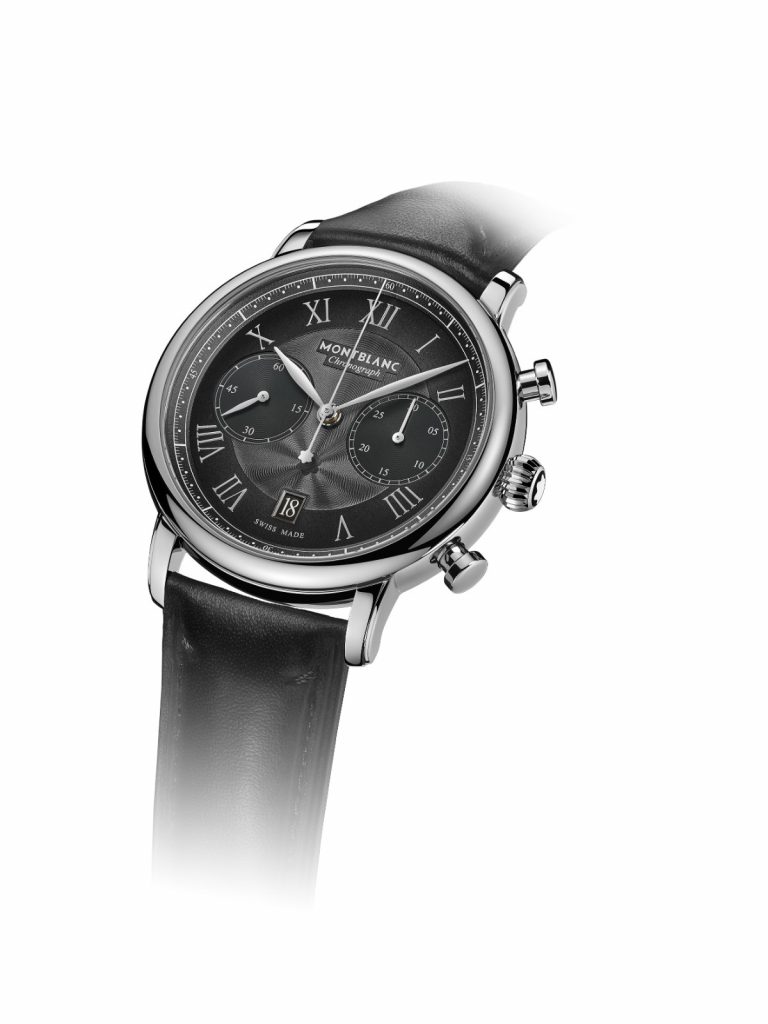
The Montblanc Star Legacy Chronograph 42mm, reference 136357, is a wonderfully traditional sort of thing, the kind that looks as though it has been quietly perfecting its craft while the rest of the world was busy chasing trends. The dial is laid out with reassuring symmetry, a small seconds display anchored at nine o’clock and a 30 minute counter positioned at three, while a discreet date window settles in at six without disturbing the overall balance. Roman numerals stand proudly around the dial, paired with elegant leaf shaped hands that feel as though they have been lifted straight out of a far more refined era. On the flanks sit proper pump style pushers, the sort that demand a deliberate press, reminding anyone in charge that this is a chronograph meant to be used. The track itself is pleasingly old school, a closed scale marked down to one tenth of a second, allowing for properly precise stopwatch readings. Beneath it all works the MB 25.13 movement, offering 48 hours of power reserve, ticking away with a calm, dependable assurance that suggests it has absolutely everything under control.