

Most buildings treat water like a nuisance something to drain away quickly before it causes trouble. Architects have traditionally feared it blamed it for leaks cracks and maintenance nightmares. Then there is a braver group who looked at water and thought yes that let us build with it. These architects realised water could do what concrete never quite manages to achieve. It slows you down calms your senses reflects light like a magician and makes even the hardest stone feel poetic. In their hands water is not decoration it is drama. It mirrors the sky doubles space cools heat muffles sound and sometimes steals the entire show. Walk into one of these buildings and architecture stops shouting and starts whispering. In a world addicted to noise that feels quietly radical.
Long before glass towers and climate control systems water was an essential architectural material. Ancient Persian gardens Roman baths and Mughal courtyards all used water to regulate temperature organise space and symbolise life itself. Pools fountains and channels were not decorative gestures but functional systems that cooled cities cleansed bodies and structured movement. Architects today who integrate water are not inventing a trend they are rediscovering an ancient intelligence and translating it into contemporary form.
Salk Institute, La Jolla
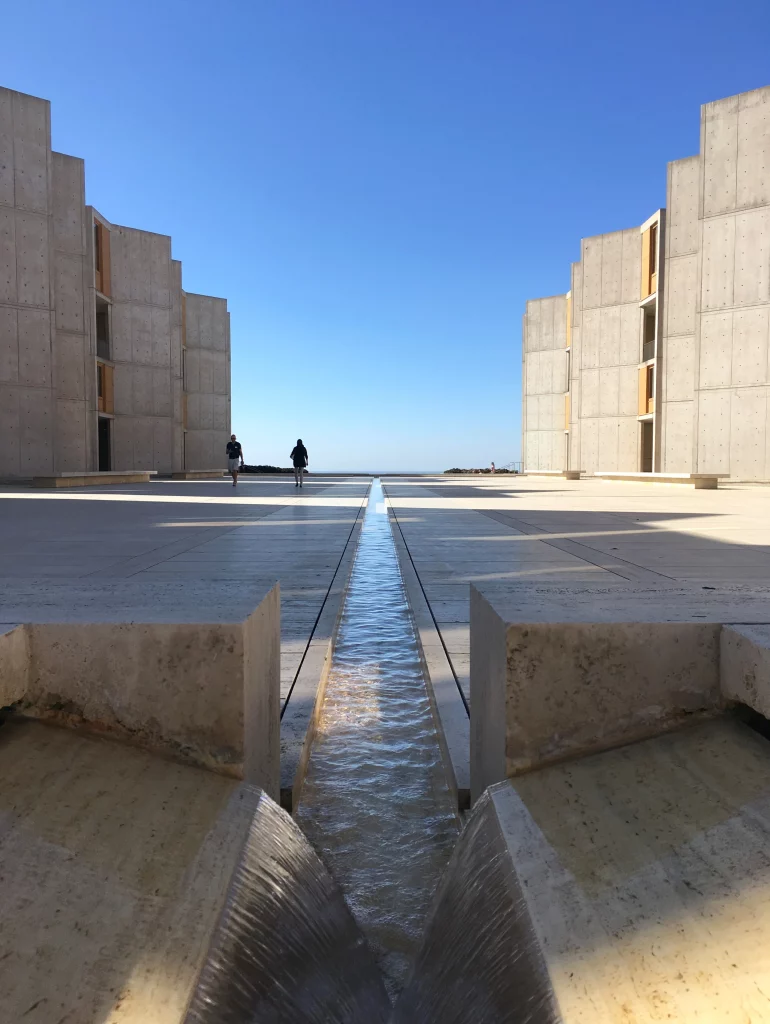
Designed by Louis Kahn the Salk Institute is one of the most profound examples of water shaping architectural experience. A narrow channel of water cuts through the central courtyard drawing the eye toward the Pacific Ocean beyond. The water does not serve a functional purpose in the conventional sense yet it defines the soul of the building. It slows movement enhances silence and amplifies light as it reflects across concrete surfaces. The simplicity of the water element transforms the monumental structure into a place of contemplation making science and spirituality feel unexpectedly aligned.
Fallingwater, Pennsylvania
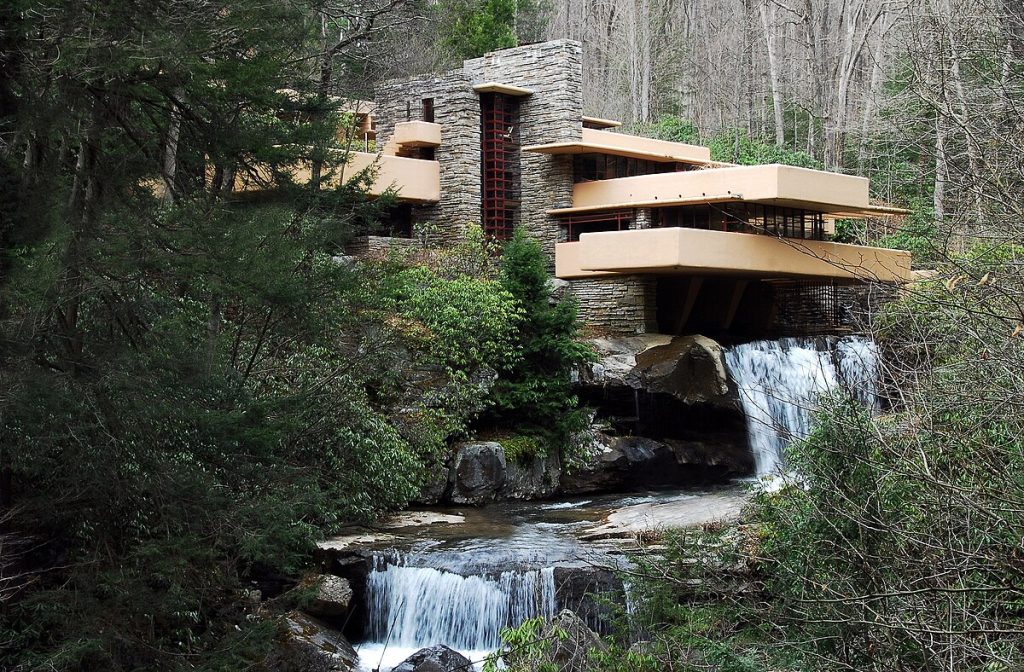
Frank Lloyd Wright’s Fallingwater is perhaps the most dramatic union of architecture and water ever conceived. Built directly over a waterfall the house does not merely overlook nature it inhabits it. The constant sound of flowing water becomes part of daily life while cantilevered terraces extend over the stream as if grown from the rock itself. Water is present in every sensory moment shaping mood sound and rhythm. Wright’s vision redefined how buildings could coexist with their environment rather than dominate it.
Water Temple, Awaji Island
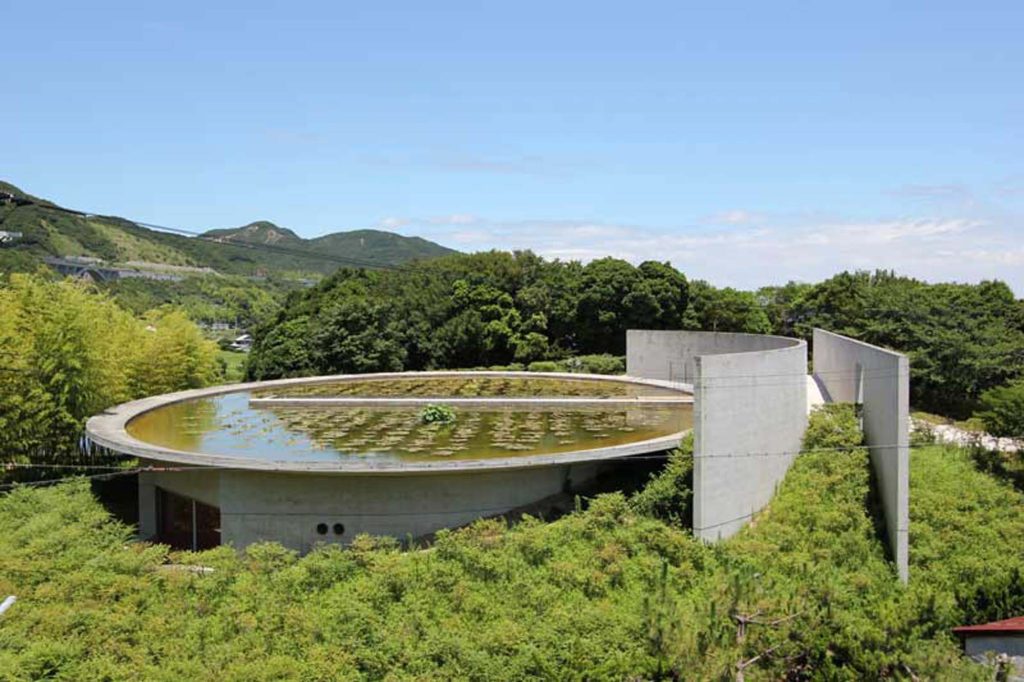
Tadao Ando’s Water Temple is an exercise in restraint and spiritual clarity. Visitors approach a serene lotus pond before descending into the temple below. The water acts as both barrier and invitation forcing a pause before entry. Light reflects softly onto exposed concrete creating an atmosphere of calm introspection. Ando uses water not as visual spectacle but as a psychological threshold transforming movement into ritual and architecture into meditation.
Brion Cemetery, San Vito d Altivole
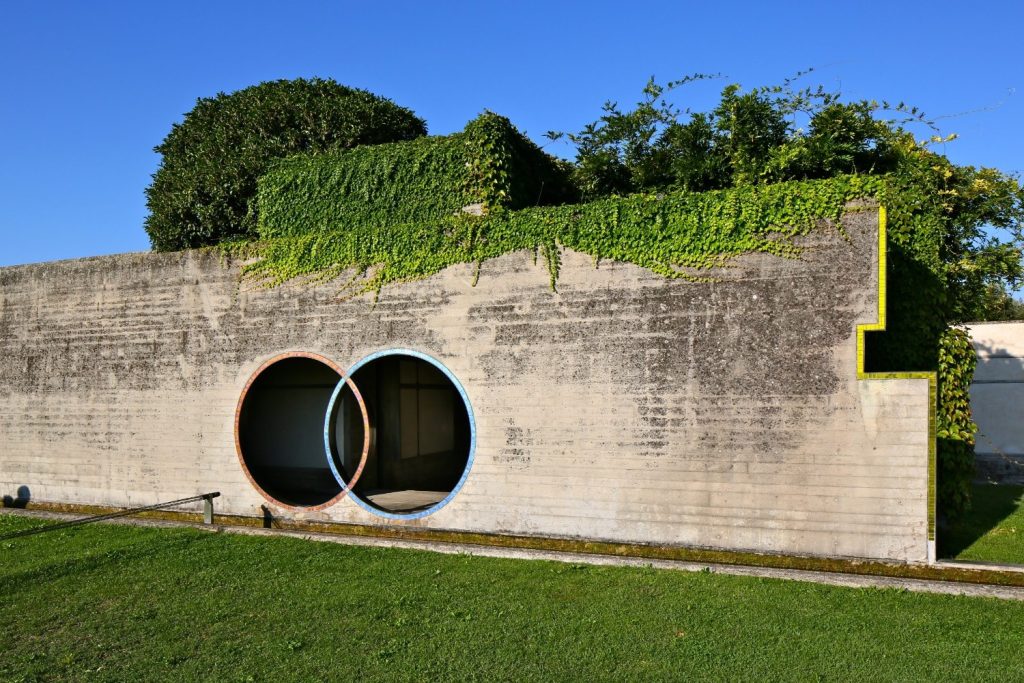
Carlo Scarpa’s Brion Cemetery treats water as a living memory rather than a static design feature. Shallow pools narrow channels and reflective surfaces interact with stone metal and vegetation. Water flows quietly through the site collecting aging and changing over time. It mirrors the passage of life and loss making the cemetery feel intimate and deeply human. Scarpa allowed water to age alongside architecture creating a space where emotion and time coexist naturally.
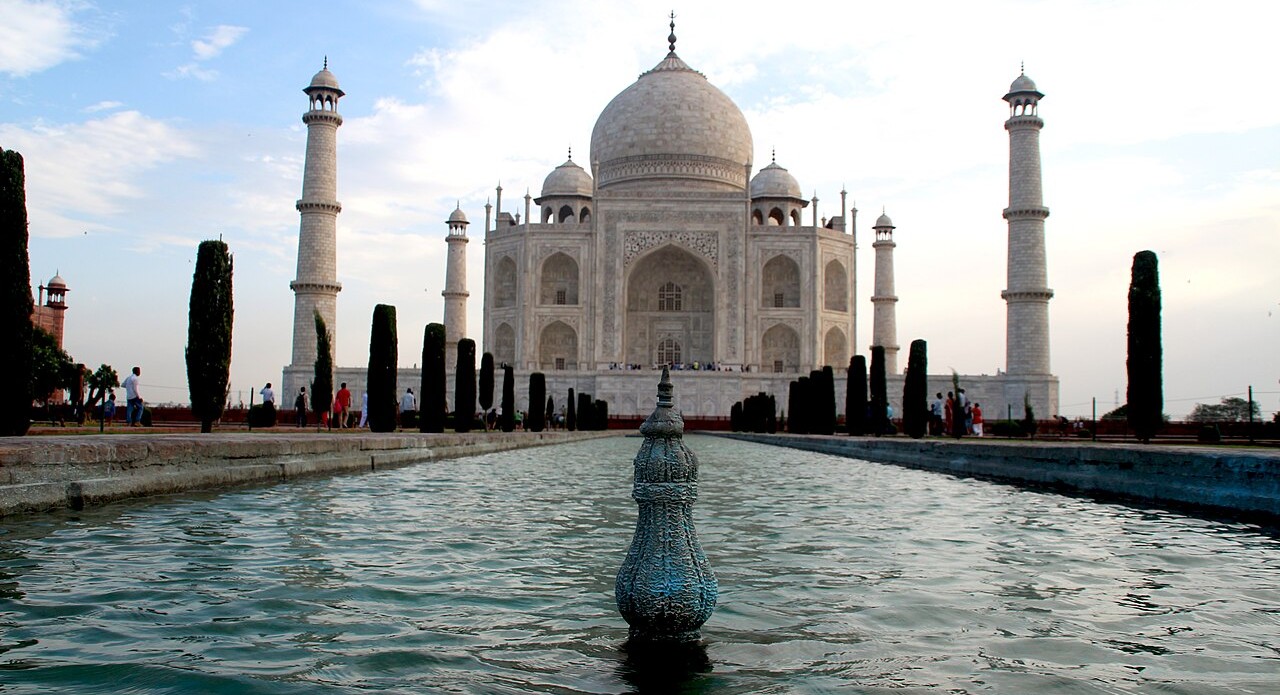
Taj Mahal, Agra
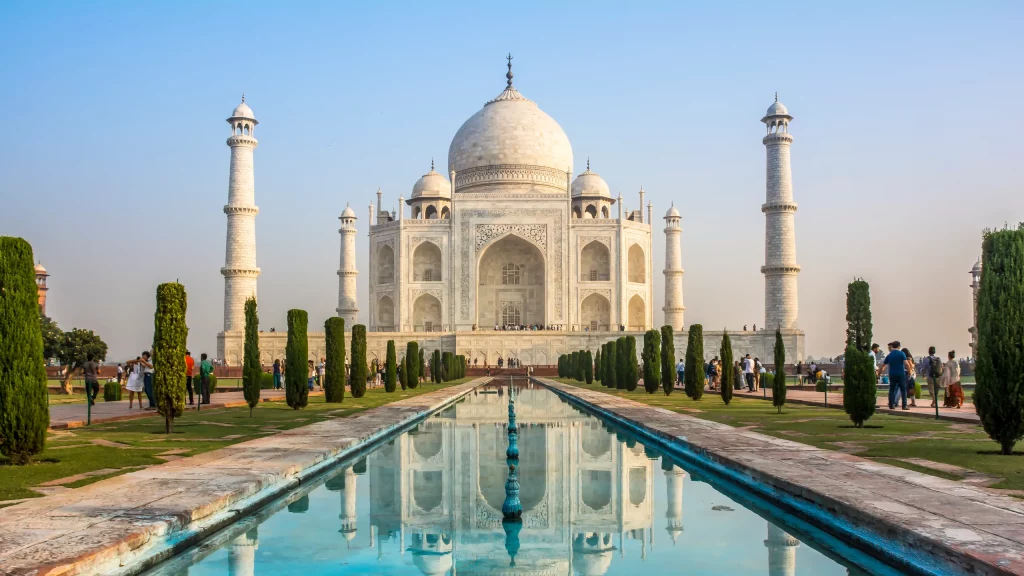
The Taj Mahal uses water as an instrument of symmetry symbolism and illusion. A long reflecting pool stretches along the central axis doubling the monument and reinforcing its sense of perfection. Water guides visitors forward creating anticipation while reflecting sky light and marble in perfect harmony. The use of water is inseparable from the emotional impact of the monument turning architecture into an image of eternity and devotion. It remains one of the most powerful demonstrations of water shaping perception and meaning.