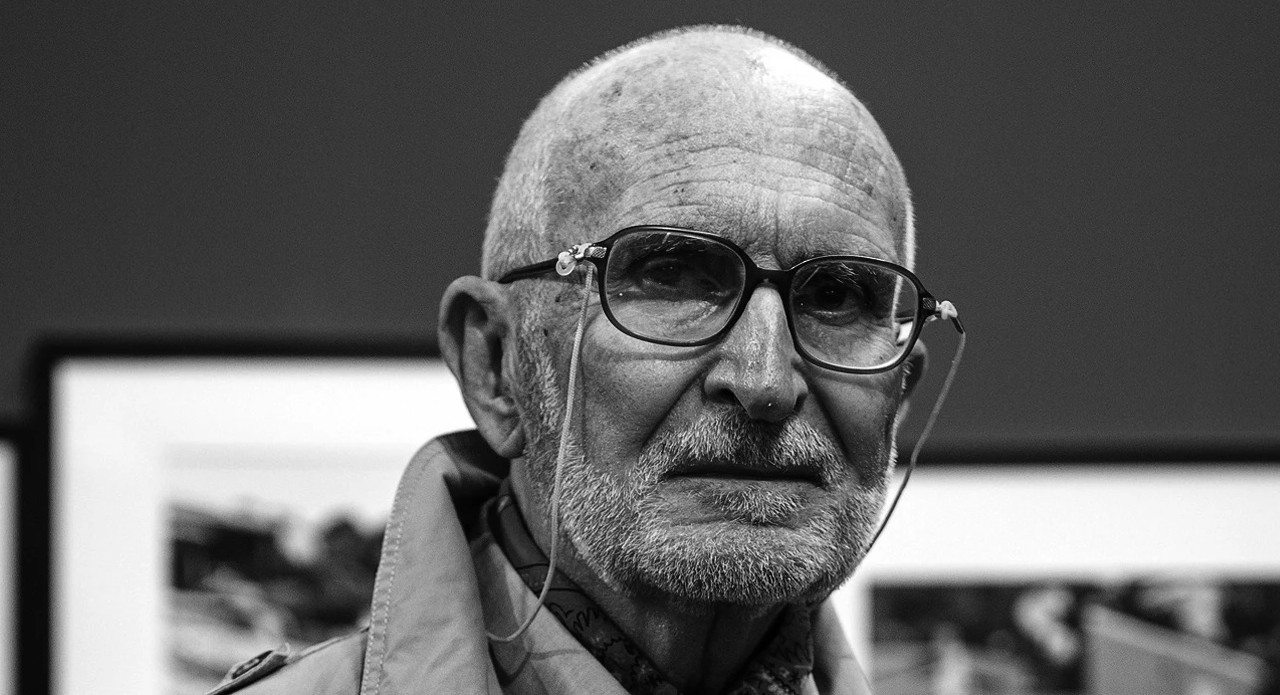


There are architects who design houses, and then there are architects who seem to negotiate peace treaties with landscapes. Alberto Ponis belongs firmly in the second category. While much of modern architecture spent decades trying to dominate nature with glass boxes and aggressive statements, Ponis looked at northern Sardinia and decided arrogance would be a terrible idea. When your competition is millions of years of wind, granite, and Mediterranean sunlight, it is best to stay humble.
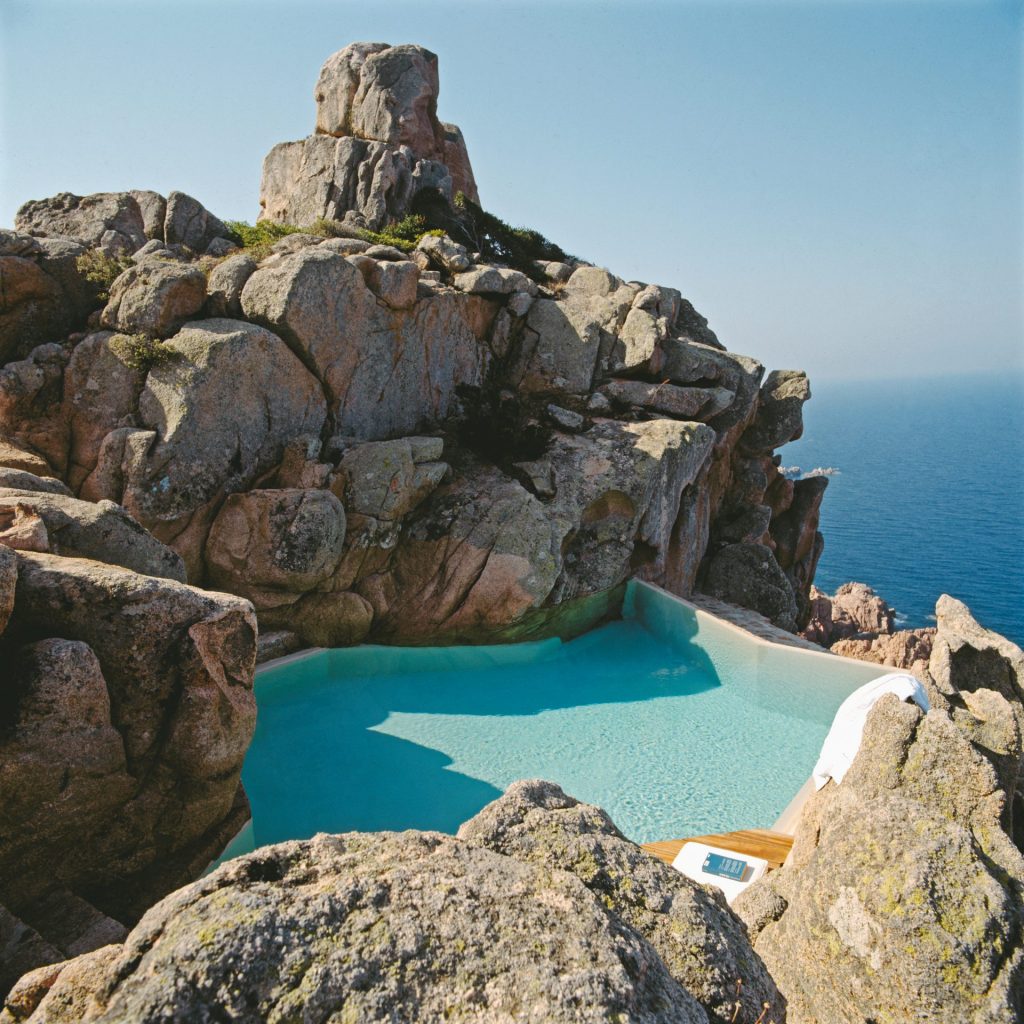
From the 1960s onward, Ponis made the rugged region of Gallura his architectural laboratory. This is not the sort of place that politely welcomes construction. Gallura is wild, fractured, and unapologetically dramatic, defined by wind-swept granite coastlines, sparse vegetation, and rock formations that look as though the earth itself had an argument and never quite settled down. Most developers would see inconvenience. Ponis saw instruction.
His approach was almost primal. Before sketches, before plans, before anyone started discussing square footage or swimming pools, there was the land. He read terrain the way others read blueprints. Every slope, every fracture in the stone, every shadow cast by the afternoon sun became part of the design language. Architecture, for him, did not begin with imagination. It began with listening. Which is refreshingly rare in a profession often populated by people who prefer announcing.
The clearest expression of this philosophy is the remarkable Scalesciani Casa in Costa Paradiso, a project that does not merely sit on the landscape but seems to have emerged from it after centuries of patient geological negotiation. This is not a house placed on rocks. It is a house in conversation with them. Massive granite outcrops are not obstacles to be removed; they become structural anchors, walls, thresholds, and the emotional centre of the entire composition. Imagine telling a luxury developer today that instead of clearing the site, we shall simply build around the giant immovable boulders and let them dictate the mood. They would probably faint into a spreadsheet. Ponis, however, understood that the rocks were not the problem. They were the architecture.
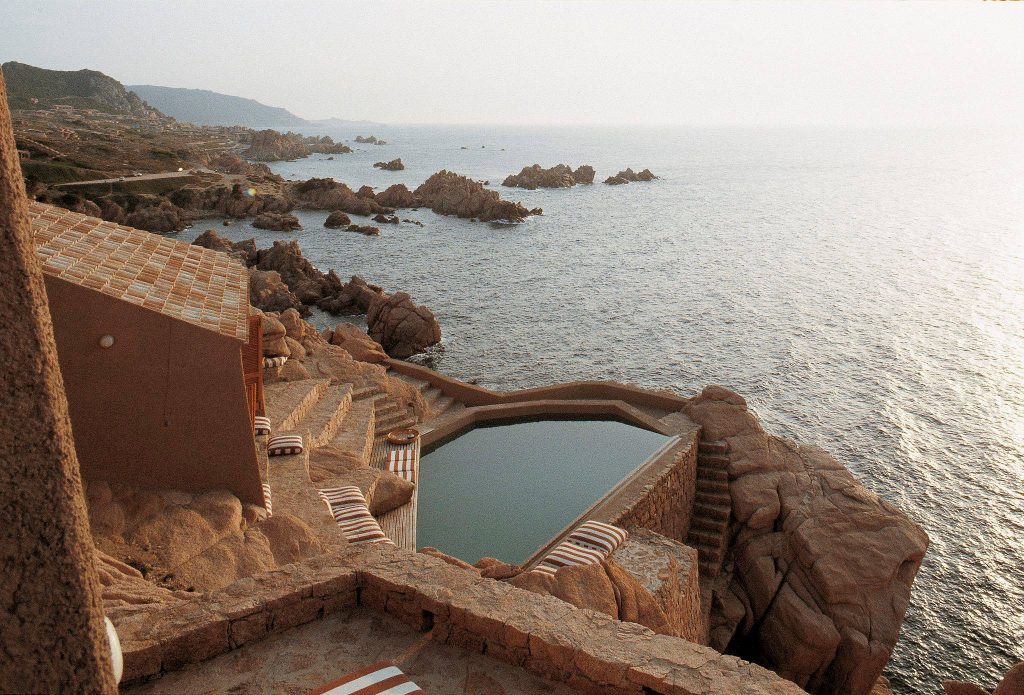
The house follows the raw logic of the site with fractured geometries, low horizontal volumes, and open courtyards that respond directly to the irregularity and density of the terrain. Nothing feels imposed. The forms stretch and settle like they belong there, as if the granite itself had quietly requested better furniture. There is no theatrical monumentality, no desperate attempt to shout for attention. Instead, there is permanence, silence, and a kind of confidence that only comes from knowing you are not trying too hard.
Also Read: Meet Fernanda Canales: The Visionary Shaping Contemporary Mexican Architecture
Mediterranean light plays its own starring role. Ponis understood that sunlight is not decoration in Sardinia; it is a building material. Walls are shaped by shadow as much as structure. Openings are positioned not just for views, but for atmosphere, temperature, and rhythm. Courtyards become breathing spaces where the harshness of stone meets the softness of air and light. The experience of living there is less about occupying rooms and more about inhabiting the landscape itself.
This is why Ponis’s work feels so distinct. He was never interested in exporting an architectural signature from elsewhere and forcing it onto Sardinia like an expensive mistake. He developed a language that belonged to the island, one shaped by geology, erosion, vernacular memory, and restraint. His buildings feel inevitable rather than designed, which is perhaps the highest compliment architecture can receive.
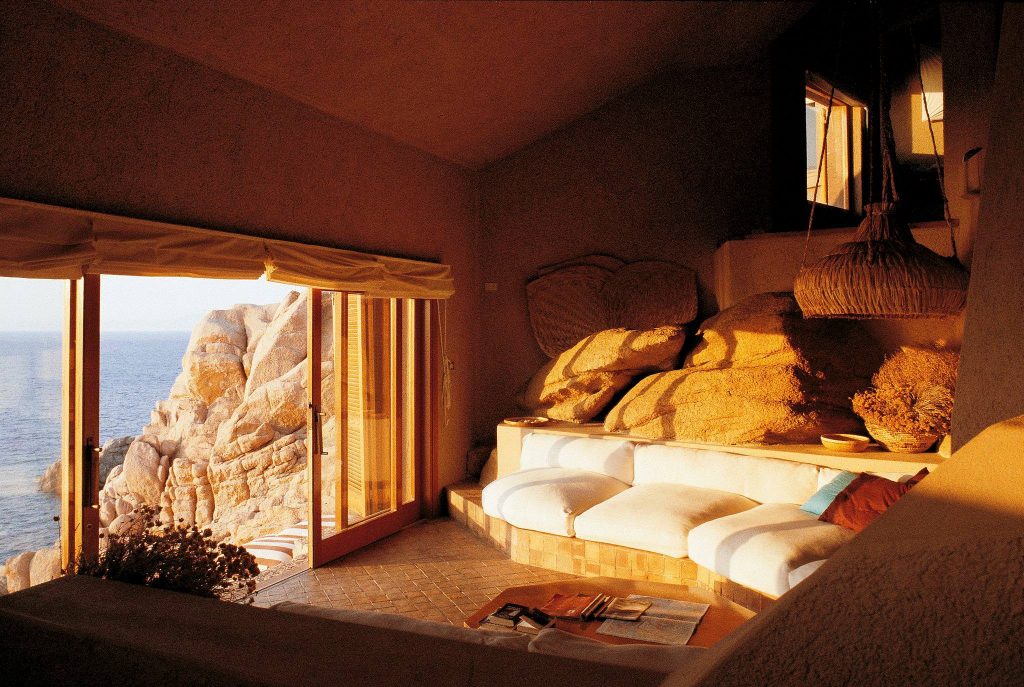
In an age where luxury architecture often means enormous glass walls, floating staircases, and enough marble to make a Roman emperor blush, Ponis offers something far rarer: radical grounding. His houses do not perform wealth; they perform belonging. They are rooted, literally and emotionally, in place. And that makes them infinitely more luxurious than another shiny object balanced above an infinity pool.
Alberto Ponis did not simply design homes in Sardinia. He established one of the most powerful dialogues between construction and geology in modern Mediterranean architecture. His work continues to shape the identity of the island’s built landscape because it understands a truth many architects forget: sometimes the best design decision is not to conquer the land, but to let the land lead.