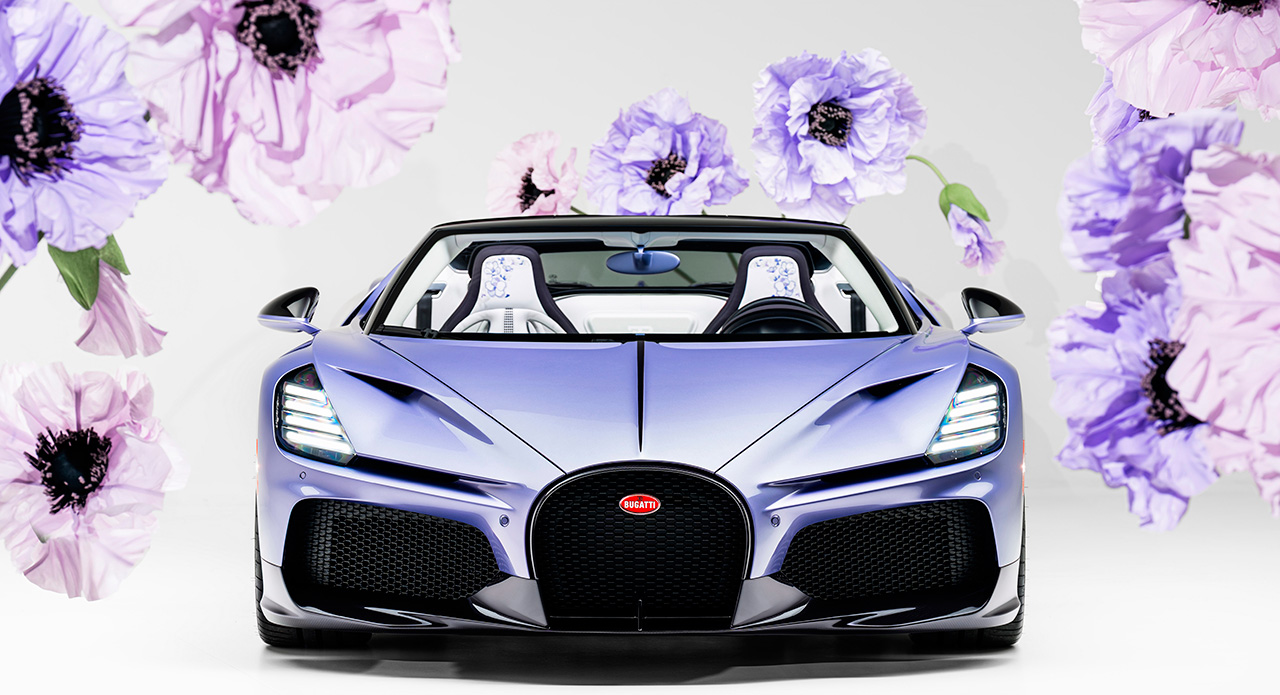


Most hypercars are born out of ego. Bigger numbers, louder engines, more speed than anyone could reasonably need. But every now and then, one turns up that feels a bit different, like it has been built not just to impress strangers, but to mean something to someone. The Bugatti W16 Mistral Caroline is exactly that sort of machine. Yes, it will rearrange your internal organs if you press the throttle hard enough, but at its core, it is not about showing off. It is about a father, a daughter, and the rather lovely idea that even the fastest car in the world can carry a bit of tenderness within it.
The Final Roar of the W16
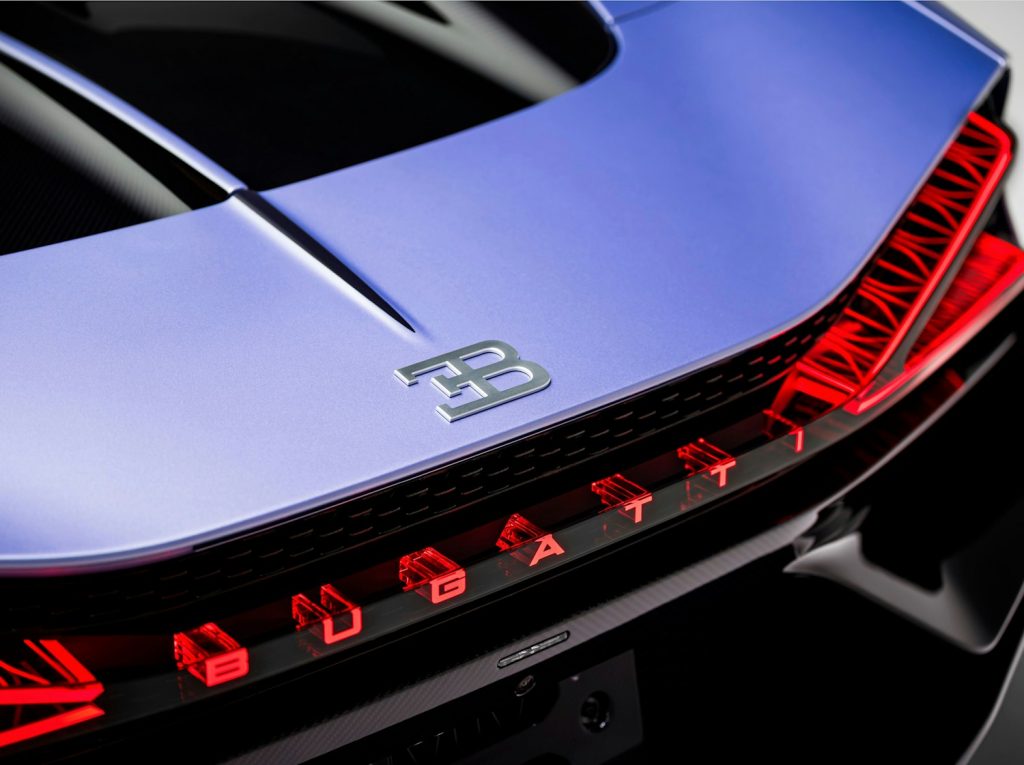
At its core sits the now mythical W16 engine, producing a scarcely believable 1600 PS. This is the final bow of Bugatti’s legendary quad turbocharged masterpiece, a powertrain that has defined an era and terrified physics in equal measure. In the Mistral, it is liberated from a roof, allowing the world to properly hear it, feel it, and quite possibly question its own sanity as it storms past.
A Story That Begins With Emotion
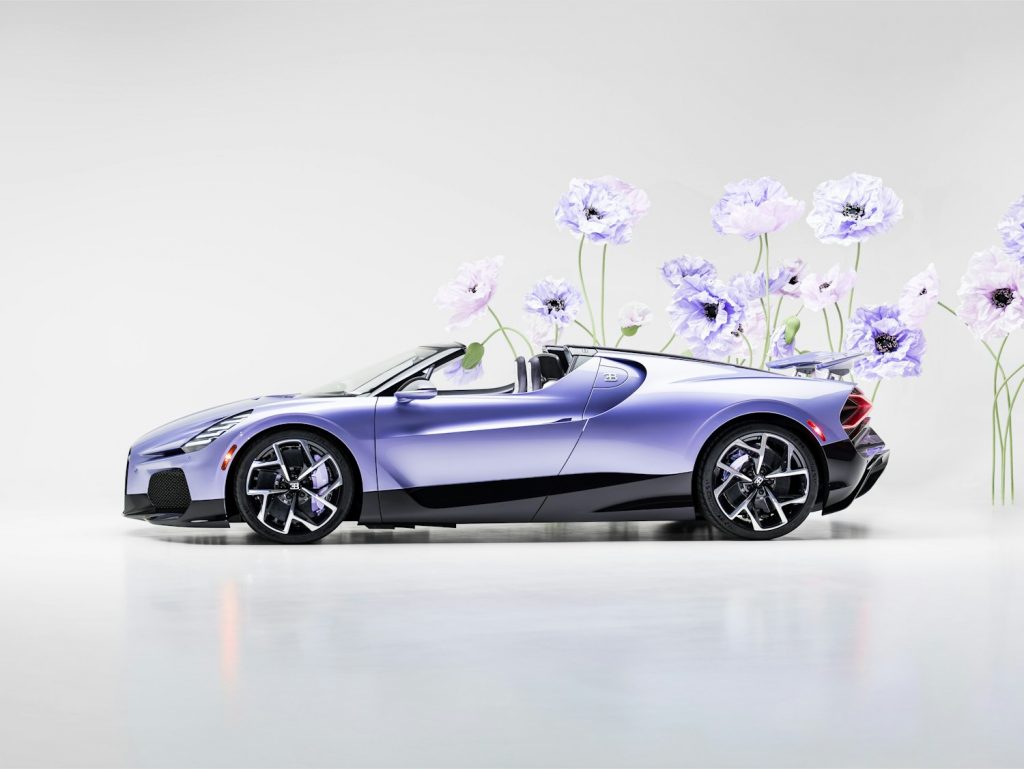
But Caroline is not just about numbers. It is about meaning. Commissioned through Bugatti’s Sur Mesure program, this particular Mistral begins with something far more delicate than horsepower. Its inspiration lies in flowers, in haute couture, and in something even more powerful than both, a tribute to a daughter. The name Caroline is not a badge. It is a statement of intent.
From Vision to Craftsmanship
From the ateliers of Molsheim to the design studios in Berlin, the team led by Sabine Consolini took that idea and treated it not like a brief, but like a story that needed to be told properly. And so they immersed themselves in the language of flowers, which, as it turns out, is far more complex than simply picking something that looks nice in a vase.
Lavender, Light, and Moving Colour
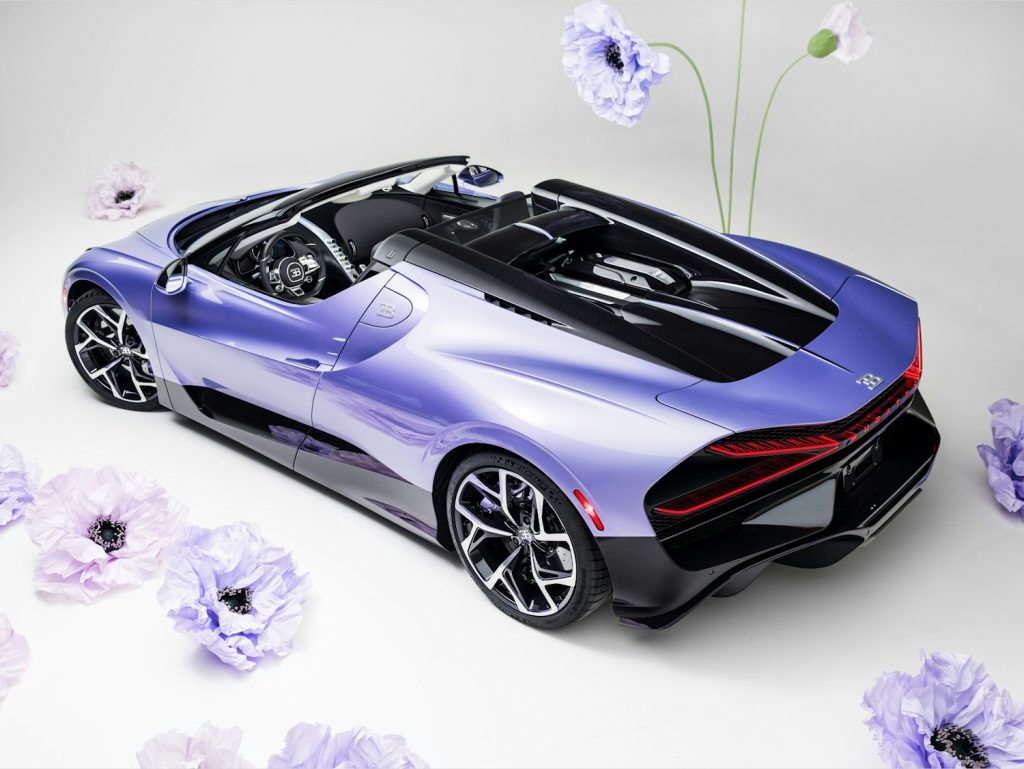
The result begins with colour. Not just any colour, but a bespoke lavender finish that feels alive. Inspired by the rolling lavender fields of Provence and the meticulous beauty of Parisian gardens, the paint shifts as light dances across it. One moment it leans towards a cool bluish violet, the next it warms into something richer, deeper, almost glowing. It is not paint so much as mood. Beneath this sits exposed violet carbon fibre, grounding the car visually while adding depth and contrast. It is a clever bit of theatre. Lightness above, darkness below, like the car is hovering between elegance and aggression.
Also Read: Celebrating 140 Years of Mercedes-Benz: The Evolution Of Automotive Greatness
When Engineering Becomes Art
Then you notice the details. At the rear, the retractable wing becomes something entirely unexpected. When deployed, it reveals an intricate, hand painted floral composition. Layers of lilac and iris tones are built up with painstaking precision, each petal defined, each shade carefully interwoven. At the centre, the name Caroline appears, not shouted, but quietly asserted, like a signature on a painting. And make no mistake, this is painting. The wing is masked, layered, and treated through multiple stages, each one requiring absolute accuracy. It is less about manufacturing and more about craftsmanship, the sort that takes time because there is simply no other way to do it properly.
A Cabin That Feels Like Couture
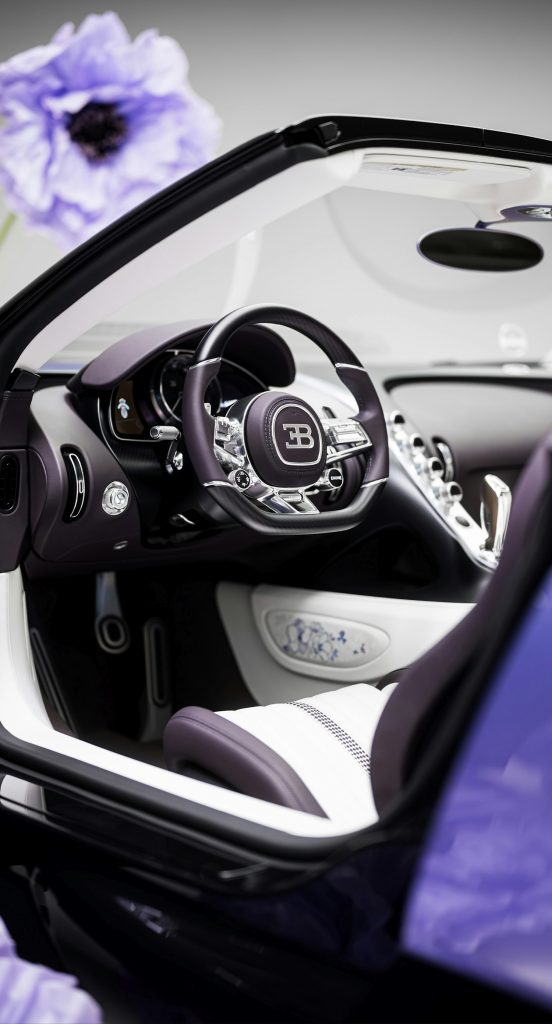
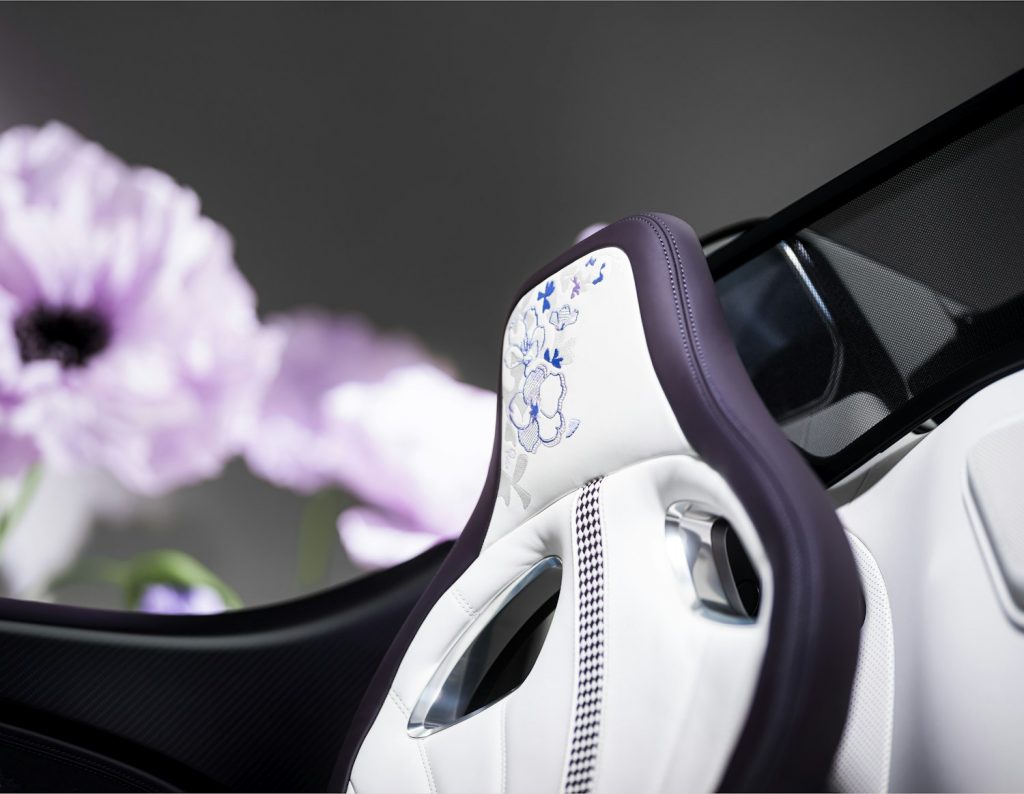
Inside, the story continues, but now it becomes tactile. The cabin is a carefully judged blend of Blanc and Minuit leather, violet tones, and carbon fibre elements that echo the exterior. It feels calm, almost serene, but never dull. The floral theme returns through embroidery that is frankly astonishing. Each headrest carries a mirrored design made from thousands of individual stitches, layered in such a way that the flowers seem to have depth, almost as if they could be plucked from the leather. Across the doors, the petals appear to drift, as though caught in motion. It is a subtle nod to speed, a reminder that even at rest, this machine is built to move.
Heritage in the Smallest Details
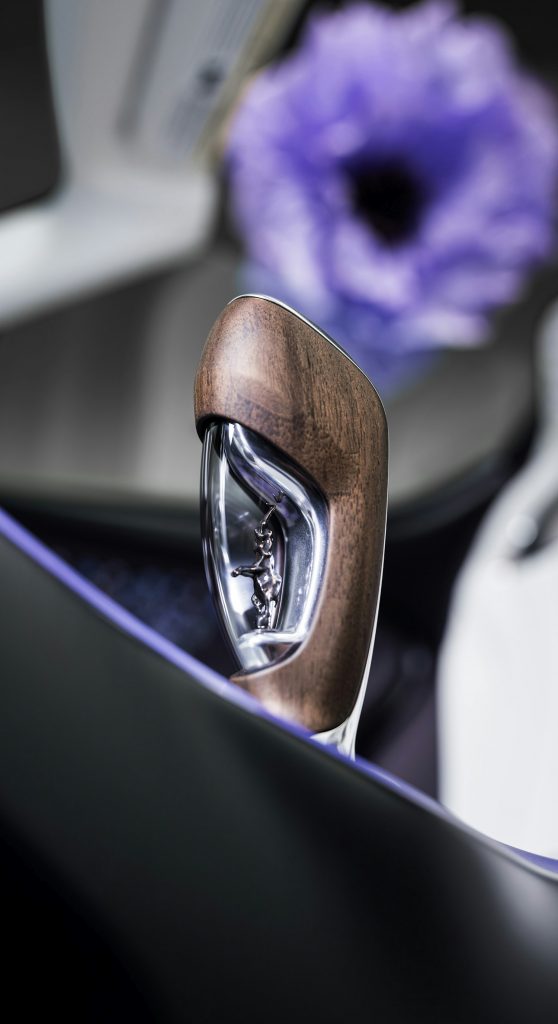
And then, at the centre, there is a small but significant detail. The gear selector houses Dancing Elephant, encased in tinted glass that harmonises with the violet theme. It is a quiet link to Bugatti’s artistic heritage, a reminder that this brand has always existed somewhere between engineering and art. What makes the Mistral Caroline extraordinary is not just its components, but how they come together. The floral motif, the colours, the materials, the performance, they all speak the same language. Nothing feels forced. Nothing feels excessive. It is cohesive in a way that most cars, even very expensive ones, simply are not. And that is why this is the ultimate collector’s car. Not because it is fast, although it is devastatingly so.
Not because it is rare, although you will almost certainly never see another like it. But because it is personal. It captures a moment, an emotion, and preserves it in carbon fibre, leather, and paint. In years to come, when the W16 is spoken about in hushed, reverent tones, cars like this will be the ones that matter most. Not just because they marked the end of something extraordinary, but because they proved that even at the absolute pinnacle of performance, there is still room for beauty, for storytelling, and for a touch of humanity.