

There comes a moment every winter when nature decides to remind you who’s really in charge. You’re cruising along a frozen motorway, the thermometer is displaying a number normally reserved for Antarctic research stations, and a filthy cocktail of snow, salt and road grime suddenly splatters itself across your windscreen. Visibility disappears. You instinctively pull the washer stalk, expecting the tiny jets to surrender to the cold. But instead, out comes a perfect spray, effortlessly washing away the mess as though the freezing weather simply doesn’t exist. Magic? Not quite. It’s chemistry, and rather clever chemistry at that. Because unlike plain water, which freezes the moment temperatures become remotely unfriendly, windshield washer fluid has been engineered to laugh in the face of winter. It’s one of those wonderfully overlooked pieces of automotive engineering that quietly saves your journey without ever asking for applause. Like heated seats, anti lock brakes or the humble windscreen wiper, you rarely appreciate it until the day it stops working. And then, suddenly, it becomes the most important invention since the internal combustion engine.
It’s far more than coloured water
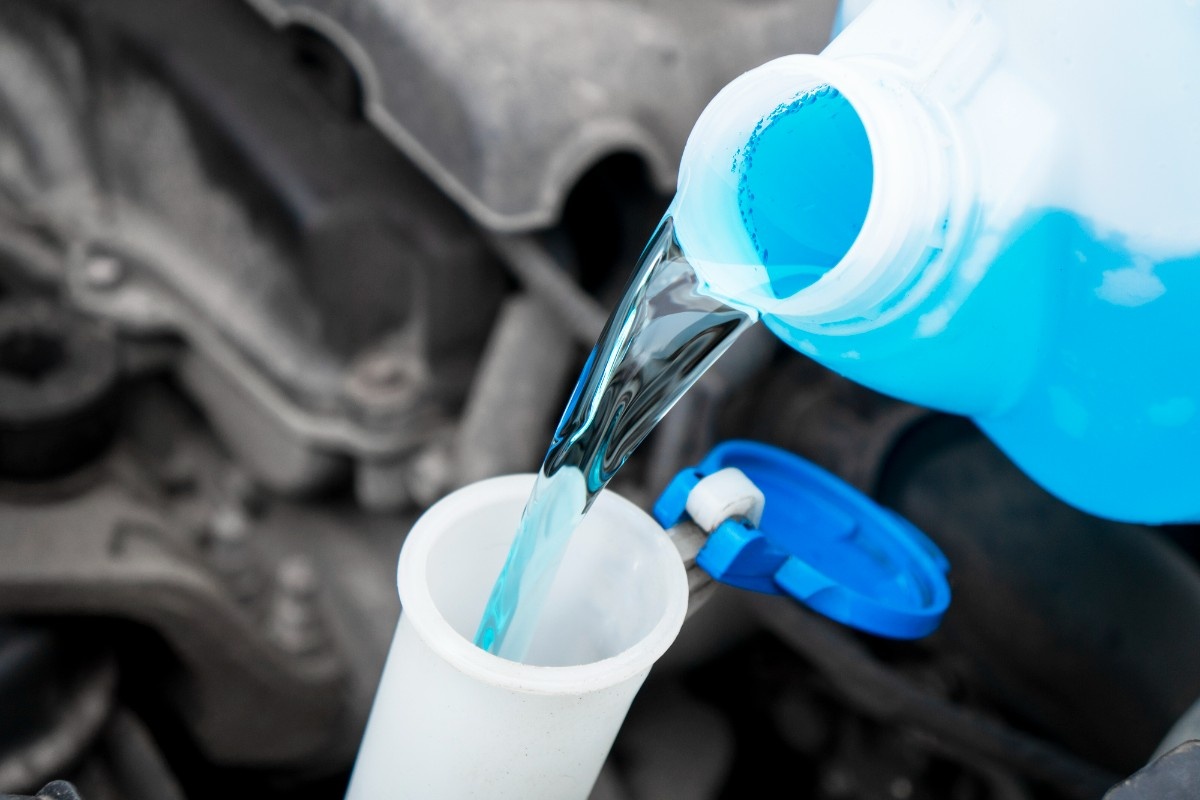
Most people assume windshield washer fluid is little more than blue water with a fancy label. That’s rather like saying champagne is just fizzy grape juice. Modern washer fluid is an extraordinarily well engineered chemical cocktail comprising water, alcohols such as methanol or ethanol, detergents, corrosion inhibitors and cleaning agents, each carefully measured to perform a specific task. Some ingredients stop the liquid freezing, others dissolve oily road grime, while several quietly protect pumps, hoses and seals from corrosion. It may sit unnoticed beneath the bonnet for years, but chemically speaking, it’s one of the hardest working fluids in your entire car.
Also Read: Aston Martin Dreadnought: Everything You Need To Know About The Call of Duty MW4 Collaboration
The secret lies in alcohol

Water has an irritating habit of turning into solid ice the moment temperatures reach zero degrees Celsius. Add alcohol, however, and suddenly the rules begin to change. Alcohol molecules interrupt the formation of ice crystals, dramatically lowering the freezing point of the mixture. Depending on the formulation, premium winter washer fluids remain perfectly liquid at temperatures as low as minus 20, minus 30 or even minus 40 degrees Celsius. So while your garden hose has become an impressive frozen sculpture worthy of a Scandinavian art exhibition, your washer reservoir continues calmly supplying fluid as though winter never received the invitation.
Keeping the fluid liquid

Winter roads produce a truly revolting mixture of salt, diesel soot, tyre rubber, oily residue, mud and slush that somehow adheres to a windscreen with remarkable determination. Plain water merely spreads this unpleasant cocktail into an even larger mess. Washer fluid contains specially formulated detergents and surfactants that break down grease, loosen stubborn contaminants and allow the wiper blades to clear the glass properly. The result is a windscreen that becomes genuinely transparent rather than simply rearranged into a different shade of dirty.
Also Read: Do Bigger Wheels Improve Performance? The Truth Explained
Behind the cleaning power

Manufacturers could easily have stopped after solving the freezing problem, but engineers rarely know when to quit. Modern washer fluids also include corrosion inhibitors that protect metal components from rust, lubricating additives that help preserve pumps and rubber seals, and anti scaling compounds that prevent mineral deposits from blocking delicate washer jets. Every time you spray your windscreen, you’re not simply cleaning glass. You’re extending the life of an entire system that most people forget exists until the day it suddenly refuses to work.
Replacing washer fluid

Every winter there are motorists convinced they’ve discovered an ingenious financial loophole by filling the washer reservoir with ordinary water. Unfortunately, physics remains unimpressed. Water freezes, expands and happily cracks plastic reservoirs, splits rubber hoses and destroys washer pumps. Even when temperatures stay above freezing, untreated water encourages algae growth and leaves behind mineral deposits that clog nozzles over time. Saving a few pounds on washer fluid is rather like refusing to buy engine oil because cooking oil also looks slippery. The experiment rarely ends well.
Manufacturers formulate different washer fluids

The washer fluid used during summer isn’t necessarily the same one you’ll want in the middle of January. Warm weather blends prioritise removing insect residue, pollen and tree sap, while winter formulations significantly increase their alcohol content to withstand freezing temperatures. Premium products often go further, incorporating hydrophobic additives that encourage rainwater to bead and roll off the glass while reducing glare during night driving. Like tyres, suspension or engine tuning, washer fluid is another reminder that engineering is always about matching the right solution to the right environment.
One of the cleverest pieces of automotive engineering
Modern cars are packed with astonishing technology, from adaptive suspensions and four wheel steering to electric motors producing more power than yesterday’s supercars. Yet one of the most quietly brilliant innovations costs less than lunch. Windshield washer fluid continues working when everything around it wants to freeze solid, keeps visibility clear during the worst weather imaginable and protects the system responsible for doing so year after year. It isn’t glamorous, it won’t impress anyone at a car meet, and it certainly won’t help you win a drag race. But when you’re travelling at motorway speeds through a snowstorm and can actually see the road ahead, you’ll quickly realise it’s one of the smartest inventions your car has ever been given.