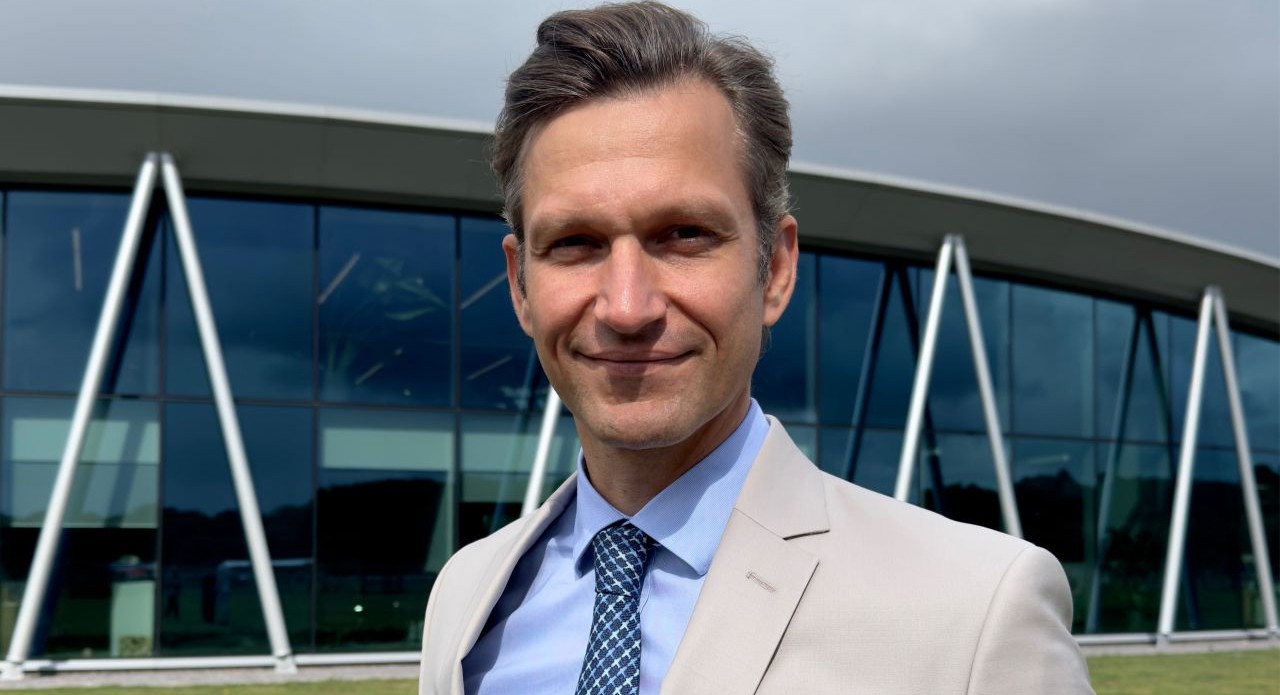


There are moments in the world of watches when things tick along with the quiet predictability of a well regulated chronometer, and then there are moments when someone comes along, loosens a few screws, and reminds you that luxury, much like a V12 engine, is at its most exciting when it is pushed just a little harder than it ought to be. Bremont, that resolutely British outfit known for its aviation bravado and mechanical earnestness, finds itself at precisely such an inflection point. And at the centre of this recalibration stands Stéphane Pichavant, a man who has spent enough time navigating the sharp, impeccably tailored corridors of TAG Heuer to understand that selling watches today is not merely about gears and springs, but about theatre, timing, and a rather delicate dance between heritage and modern appetite. The brief, if one dares to simplify it, is deceptively straightforward. Take a brand rooted in the stoicism of British engineering and make it resonate in a world that now demands personality, immediacy, and just a hint of irreverence. Easier said than done, of course, because in horology, as in motoring, one misjudged turn and you are not just off course, you are in a ditch explaining yourself to purists with very long memories. Yet, as global markets shift and India emerges as a particularly compelling stage for luxury’s next act, the question is no longer whether Bremont can evolve, but how far it is willing to go. And so, with curiosity firmly in gear and scepticism idling in the background, Outlook Luxe sat with Stéphane Pichavant.

Your career has traversed some of the most influential corridors of modern horology, including over a decade and a half at TAG Heuer within the formidable ecosystem of LVMH. How have these formative years shaped your philosophy of luxury retail and brand expansion?
Stéphane Pichavant: My years within TAG Heuer, and more broadly within LVMH, were deeply formative in shaping how I think about both luxury and growth. What that environment teaches you very quickly is that scale, in itself, has little meaning unless it is anchored in clarity and discipline. The most successful brands are those that understand precisely what they stand for, and then expand in a way that consistently reinforces that identity. It also shaped my view that luxury retail is not simply about distribution it is about curation and control. Every touchpoint contributes to how the brand is perceived. So fundamentally, those years instilled in me the belief that expansion is not an objective it is the consequence of a well-defined and consistently executed brand vision.
Having consistently driven international growth and strengthened brand positioning, what, in your view, distinguishes sustainable expansion from mere proliferation in today’s luxury watch market?
SP: The distinction lies in clarity and discipline. Proliferation is often opportunistic it’s about being present everywhere, sometimes at the expense of consistency. Sustainable expansion, by contrast, is controlled => being present in the right places, with the right partners in a way that strengthens the brand over time.
Today’s clients are increasingly informed; overexposure can dilute desirability very quickly. So sustainable growth requires discipline, clarity of positioning, control of distribution, and a long-term perspective. It is less about how many doors you have, and more about what each of those doors represents.

As Chief Commercial Officer of Bremont, you oversee a complex matrix of retail, wholesale, and market development. How do you harmonise these channels into a coherent global strategy without diluting brand identity?
SP: At Bremont, we approach these not as separate channels, but as components of a single ecosystem. Retail and e-commerce offers immersion and direct connection. Wholesale provides reach and strategic amplification. The role of the brand is to orchestrate these elements so that they feel seamless to the client. That requires consistency in storytelling, in product presentation, and in the overall experience. Ultimately, the client should not perceive channels, they should experience a unique brand universe.
The modern luxury consumer is increasingly discerning, often seeking meaning beyond materiality. How do you cultivate emotional resonance while maintaining the technical gravitas that defines fine watchmaking?
SP: That balance is at the very core of watchmaking. Technical integrity engineering, precision, craftsmanship is what gives a watch its legitimacy. But what gives it meaning is the emotional dimension the story, the context, the connection. The two are not opposed, they reinforce each other. So the objective is alignment to ensure that both dimensions exist and reinforce each other.

In leading high-performing international teams, what qualities do you believe are indispensable in navigating the cultural nuances of a truly global clientele?
SP: I would highlight three: cultural intelligence, clarity, and trust. Cultural intelligence is essential! You need to understand that clients and teams operate within different contexts. Clarity ensures alignment; people need to understand direction and priorities. And trust is fundamental; high-performing teams are built on empowerment, not control. When those three elements come together, you create a global organisation that is both aligned and locally relevant.
Bremont has historically been anchored in aviation and military heritage. How do you interpret and evolve this legacy for a contemporary audience without succumbing to nostalgia?
SP: Bremont is only 24 years old but this question is interesting because we can quickly succumbe to Nostalgia! The key is to treat heritage as something living, not static. Bremont’s roots in aviation and military history are incredibly strong, but the objective is not to simply reference the past, it is to interpret those values in a contemporary context and keep building the history. That means focusing on what sits beneath the design: precision, resilience, engineering. In that sense, it is less about nostalgia, and more about continuity and relevance.
The recent collaboration with Felix the Cat is both whimsical and unexpected. What intellectual and strategic considerations underpinned this creative departure?
SP: The starting point was not novelty, but authenticity and context. Felix the Cat might appear playful, but it has a very real connection to aviation history, it was used as a lucky charm by by US naval aviation since 1928 , by the Tomcatters and also by RAAF during WW2.
There’s also a subtle reference on the dial with Felix stealing the 6, which links to the expression ‘watch your six’ in military aviation.
Pop culture icon inspired watches are a new meaningful way to express a story that is authentic. So what might initially seem unexpected is, in fact, layered with meaning. It allowed us to introduce a more expressive dimension while remaining firmly anchored in aviation culture.
In an industry often defined by restraint, does the embrace of a culturally iconic, almost “kitsch” figure like Felix the Cat represent a broader shift in how luxury brands engage with storytelling?
SP: I think it reflects an evolution rather than a rupture. Luxury brands today are exploring different forms of storytelling, where different facets of identity can coexist. There is a growing openness to cultural references, but the key is always intention and meaning.
I would also say that using a pop culture icon such as Felix is not a recent shift, Omega did it with Snoopy, Gerald Genta with Mickey Mouse. So it is not so much about shifting, it is about being authentic through a different expression.
Nostalgia, when deployed judiciously, can be a potent commercial and emotional catalyst. How do you ensure that such collaborations transcend novelty and achieve enduring relevance?
SP: It comes back to coherence and meaning, if a collaboration is purely aesthetic, it tends to fade quickly. But if it is grounded in something real, historical, cultural, or conceptual, it has a much stronger foundation. It also needs to align with the brand’s broader narrative.
Longevity comes from authenticity, not novelty.
From a commercial vantage point, how do you assess the success of such an unconventional timepiece—through immediate sales metrics, brand visibility, or its capacity to initiate new conversations within horology?
SP: It is a combination of factors:
• Commercial performance is important, but it is only one dimension.
• Equally important is the halo effect generated, engagement of collectors, recruitment of new clients, expansion of the brand’s audience.
In that sense, success is also measured by its ability to create new points of entry into the brand.
Do you see this collaboration as part of a longer-term strategy to democratise or diversify Bremont’s appeal, particularly among younger or first-time collectors?
SP: I would frame it less as a shift in identity, and more as an extension of expression.
The core of Bremont remains unchanged engineering, purpose, authenticity. What evolves is how that identity is expressed and how we engage with different audiences. So it is about broadening the conversation, without diluting the foundation.
India today stands at a fascinating inflection point in its luxury journey. How do you perceive the evolution of the Indian watch collector, and what distinguishes this market from others globally?
SP: India is a fascinating market because it is evolving very quickly. What we are seeing is a new generation of collectors who are globally informed, digitally connected, and more and more confident in their choices. There is a strong appreciation for craftsmanship, but also a growing openness to discovery and individuality. That combination makes it a very dynamic and promising market.

As Bremont deepens its engagement with India, what opportunities—and perhaps challenges—do you foresee in translating the brand’s distinctly British ethos to an Indian sensibility?
SP: The opportunity lies in the alignment between Bremont’s values and the mindset of the emerging client. Also the choice of the partner in India is important and Ethos is a very established and recognized company in India with a strong dynamic of development. Through our partnership, we will work on this translation ensuring that a distinctly British brand resonates locally without losing its identity. It is about finding the right balance between global consistency and local relevance.
Would a culturally playful creation like the Felix timepiece resonate with Indian collectors, or does the market still gravitate more strongly toward classical expressions of horological prestige?
SP: I think the market still has a strong affinity for classical watchmaking, but at the same time, there is growing openness to more creative propositions. That diversity of taste is precisely what makes the market so interesting.
Finally, as you look to the future, do you envision Bremont continuing to explore such unexpected cultural intersections, or will the brand’s next chapter be defined by a return to its more traditional narrative anchors?
SP: I think the future lies in maintaining a strong core, while allowing for selective exploration.
Bremont’s identity is well defined, and that remains the anchor. But within that framework, there is room to express the brand in different ways, provided it is always done with coherence and intention. So it is not about choosing between tradition and innovation, but about ensuring that both coexist in a way that feels authentic.