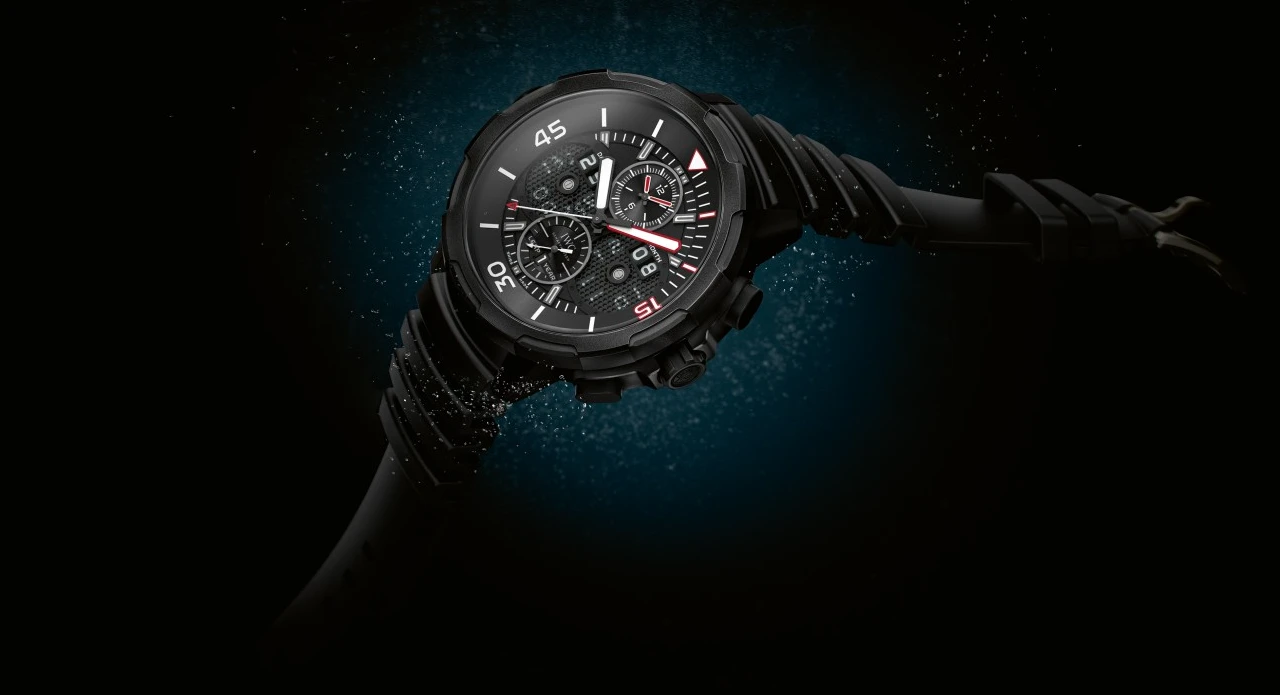


The world of professional diving has produced some of the most iconic tool watches ever made, and among them, the IWC Aquatimer stands as a testament to ingenuity, clarity, and purpose-driven design. While the diving watch landscape is often dominated by a handful of familiar legends, the Aquatimer has spent nearly six decades carving a niche defined by engineering innovation and a distinctly IWC identity. It is a watch shaped not by trends, but by exploration—one that mirrors the spirit of adventure that first inspired its creation.
The story of the Aquatimer begins in 1967, a defining moment in the evolution of recreational and professional diving. The oceans were becoming accessible in new ways, scuba certification was now widespread, and underwater exploration had captured the imagination of adventurers around the world. Sensing a need for a reliable, highly legible dive instrument, IWC responded with its first Aquatimer, the reference 812 AD. With a depth rating of 200 metres—a remarkable achievement at the time—it introduced a design that immediately set it apart: instead of an external rotating bezel, IWC opted for an internal timing bezel controlled by a second crown.
This design choice was not merely aesthetic. By placing the bezel inside the case, IWC protected it from accidental shifts and environmental stress, creating a secure timing system that divers could rely on in harsh conditions. The Aquatimer’s clean dial, bold luminous markers, and utilitarian charm made it instantly distinctive. It represented a sophisticated alternative to the rugged, militaristic dive watches of the era—one that emphasised clarity and precision.
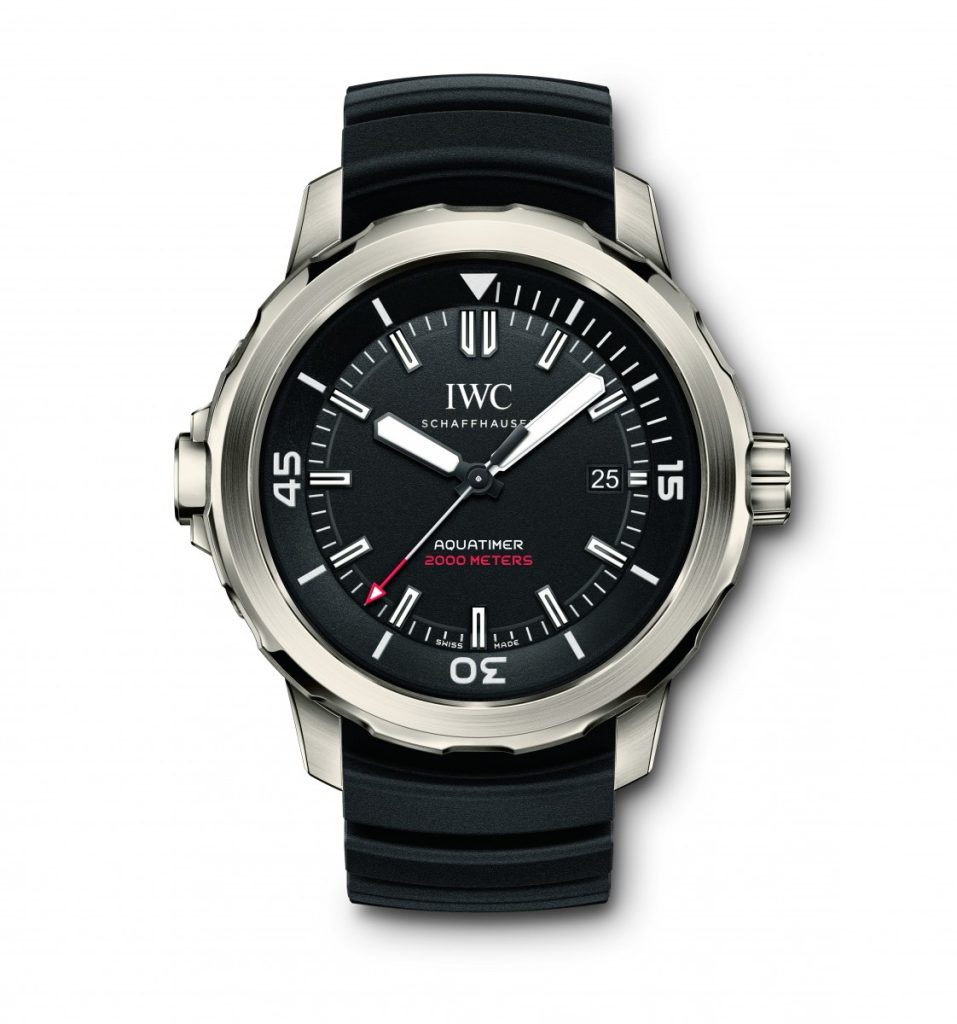
The 1980s marked a turning point for the Aquatimer, as IWC embraced radical experimentation. The brand released the Aquatimer Ocean 2000, designed in collaboration with renowned German industrial designer Ferdinand A. Porsche. The watch was a revolution: constructed entirely from titanium long before the metal became mainstream, it achieved an astonishing 2000-metre depth rating. Its smooth, futuristic profile and commanding performance made it one of the most advanced dive watches of its generation. The Ocean 2000 did not just evolve the Aquatimer—it redefined what a dive watch could be.
By the 1990s and early 2000s, IWC continued to refine the Aquatimer’s engineering while broadening its appeal. The GST Aquatimer collection introduced improved water resistance, screw-down crowns, and mechanical precision. The line embraced a more robust aesthetic, bringing the Aquatimer firmly into the realm of professional-grade tool watches without sacrificing the minimalist charm of earlier models.
In 2009, the Aquatimer underwent one of its most significant transformations. IWC introduced an external rotating bezel once again—this time with an innovative SafeDive system. The mechanism allowed the outer bezel to adjust the internal dive ring while preventing accidental counter-rotation. It was a clever synthesis of functionality and safety, preserving the internal bezel heritage while giving divers tactile control. This period also saw the introduction of the Deep Two and Deep Three, mechanical depth gauges that expanded the Aquatimer’s relevance for scientific and commercial diving applications.
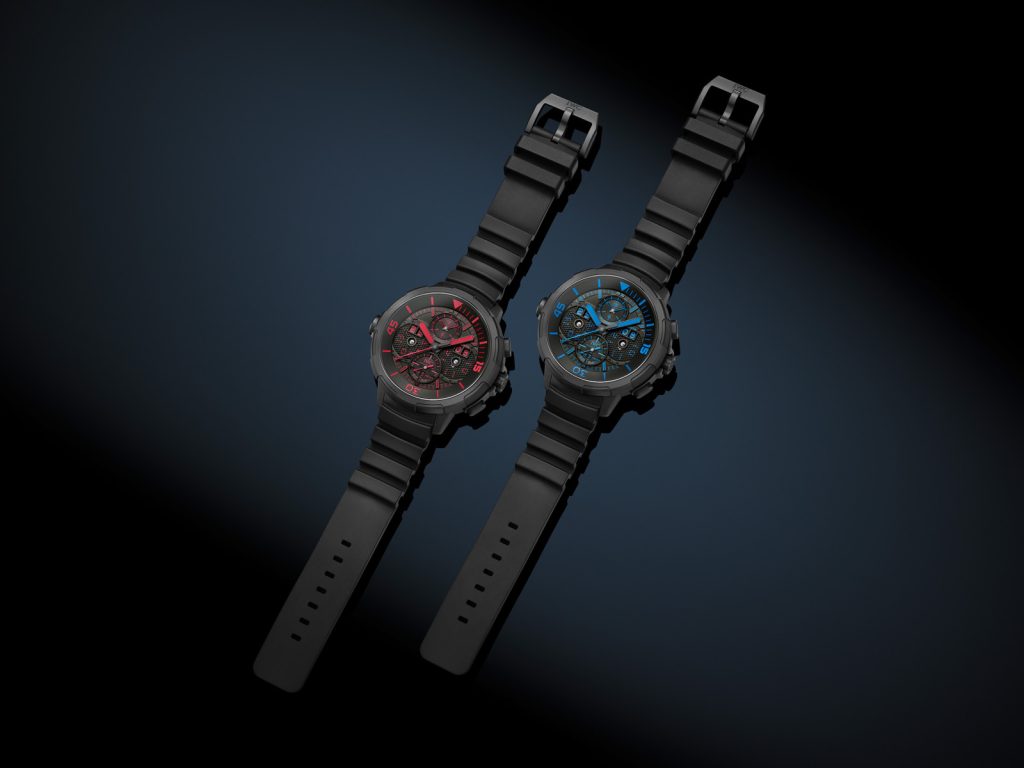
The modern era of the Aquatimer, beginning around 2014, reflects IWC’s commitment to sustainability, performance, and collaboration. The brand partnered with the Cousteau Society and the Charles Darwin Foundation to highlight marine conservation, introducing special edition models crafted in distinctive materials and ocean-inspired aesthetics. These watches did more than commemorate causes—they brought attention to the fragile ecosystems from which the Aquatimer draws its inspiration.
Technological upgrades continued as well. IWC introduced robust movements, improved lume, quick-change strap systems, and anti-corrosion materials suitable for saltwater environments. The Aquatimer Automatic 2000 and the Chronograph Edition pieces showcased the brand’s engineering prowess, while the entry-level models maintained elegant proportions and daily-wear versatility.
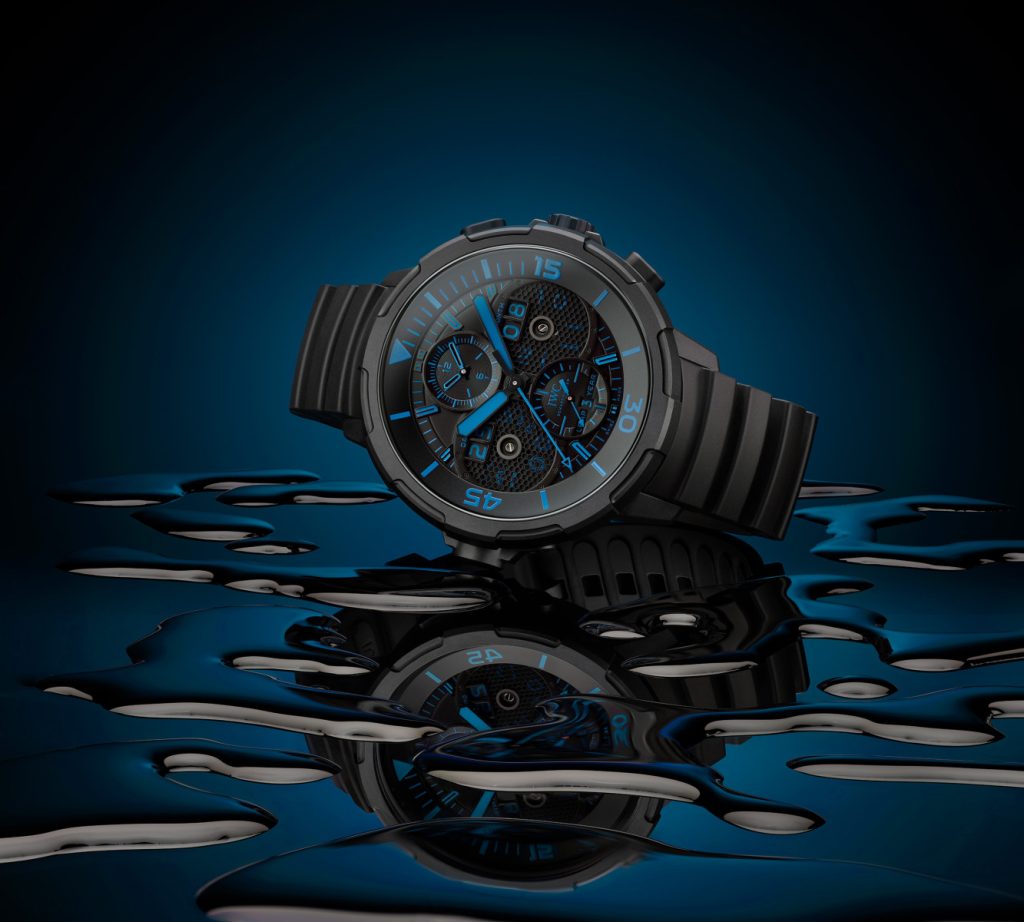
What makes the IWC Aquatimer remarkable is that it has never tried to imitate its rivals. It has always followed its own current—sometimes industrial, sometimes futuristic, sometimes conservation-focused, but always unwavering in its purpose. Its external–internal bezel hybrid, titanium breakthroughs, depth-gauge feats, and design collaborations have given the Aquatimer a voice entirely its own.
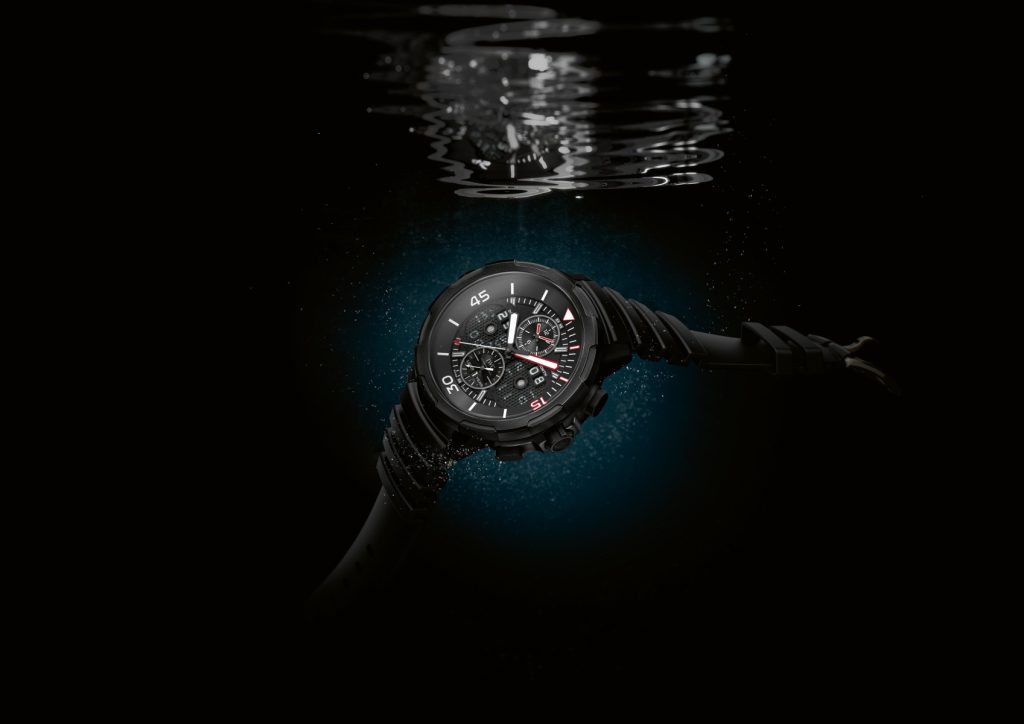
Today, the Aquatimer continues as a modern diver that balances technical sophistication with understated luxury. It is a watch built for those who see the ocean not as a boundary, but as an invitation—one that calls to adventurers, researchers, and collectors alike. And like the sea itself, the Aquatimer’s story is far from finished. What began in 1967 as a pioneering tool watch has grown into a symbol of exploration and innovation. The IWC Aquatimer remains a tribute to the depths—and a reminder that some of the greatest journeys begin beneath the waves.