Portraits in Time: A Rare Look at Shifting Identity Across Eras with 50 Artworks
After you depart, how’d you wish to be remembered? The recent art show ‘Portraits in Time: Power, Presence, and Identity Across Centuries' exhibited 50 portrait works from the 19th-21st century to probe if identity can ever be truly fixed…
Ages ago, when selfies, photography or cinema didn’t exist, how did we trace ourselves? “Portraits!”, says curator Sonali Batra in a jiffy. “Portrait art was one of the only ways to record presence, status, and memory,” adds the curator on her recently concluded exhibition in Bikaner House, Delhi, titled ‘Portraits in Time: Power, Presence, and Identity Across Centuries.’
As a viewer and art lover, I was surrounded by a chronological display of 50 artworks at the art show. They spanned centuries, geographies, and various schools of art, creating a cross-century conversation on portraiture that is almost forgotten art in the digital era. For Sonali, the exhibition was not merely a documentation of identity through eras; it went beyond it.
“Across centuries, the portrait art shifts from simply capturing likeness to expressing psychology, emotion, and identity. It becomes a space where the artist, sitter, and viewer all shape the portrait’s meaning,” she reflects on the theme.
Of the European Gaze
As I move around, each room coloured in jewel tones from emerald green, sapphire blue, ruby red, to amethyst purple, and coral pink, presented artworks from different eras. It showed the evolution of portraiture from European Idealism, Orientalism, to Indian Modernism.
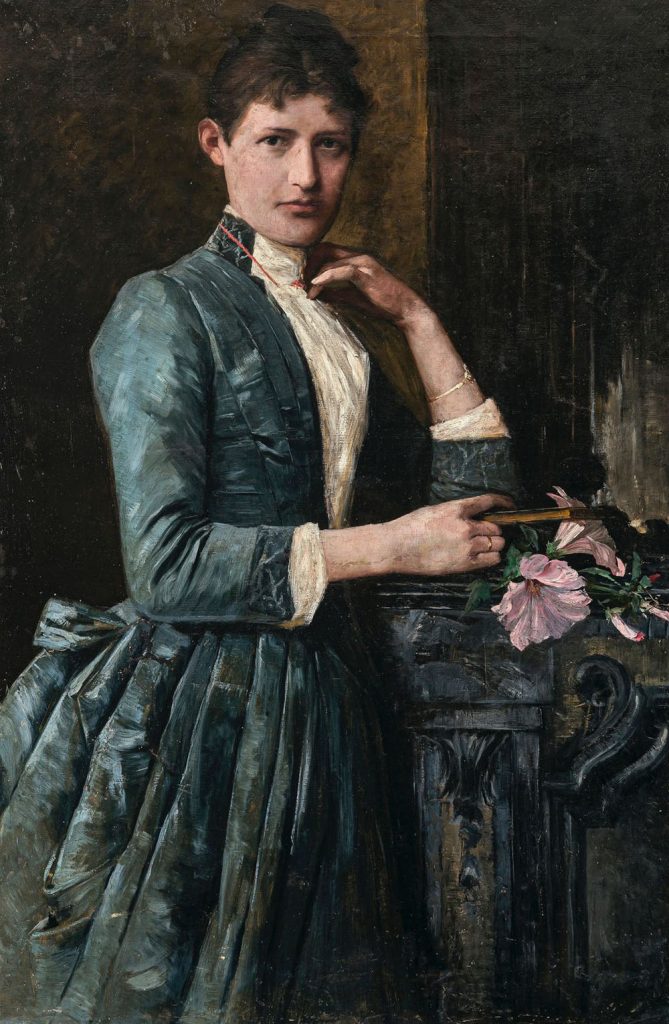
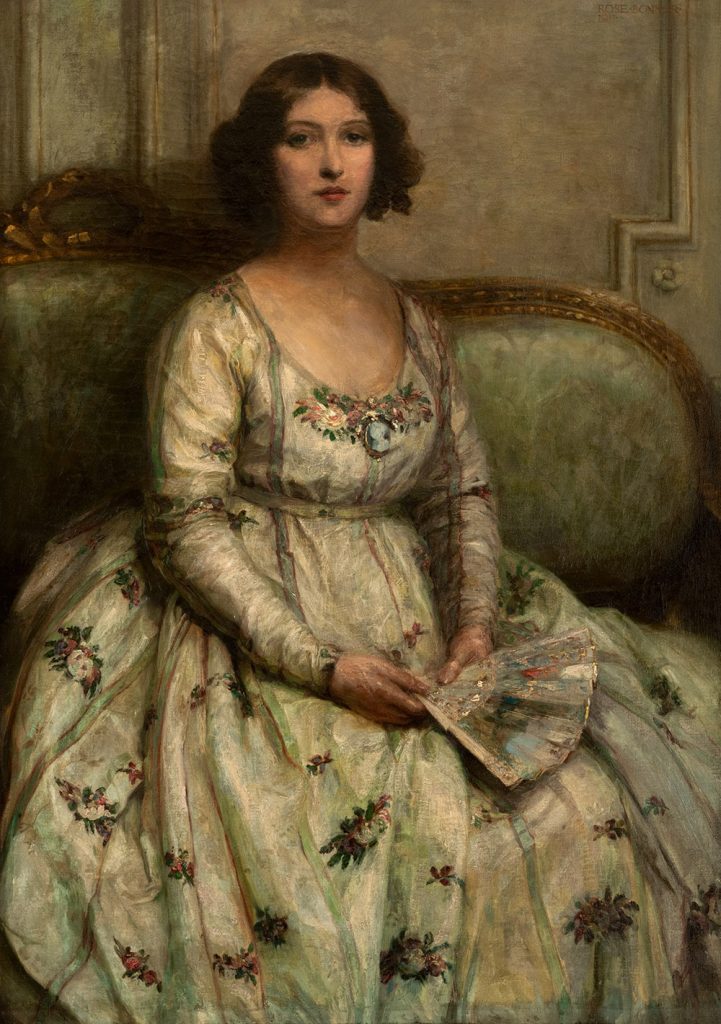
For instance, beginning with European art of the 1800s, artists like Germany’s Ernst Liebermann, Britain’s Rose Bonnor, and Denmark’s Oscar Schütte presented figurative works that reflected realism. The portraits, largely of women in European gowns, were seen sitting in orderly fashion, such as Portrait of a Young Woman Sitting with a Fan (Oscar Schütte) to A Young Woman on a Sofa with a Fan in Her Hand, 1911 (Rose Bonnor) and the striking Portrait of a Lady (Ernst Liebermann).
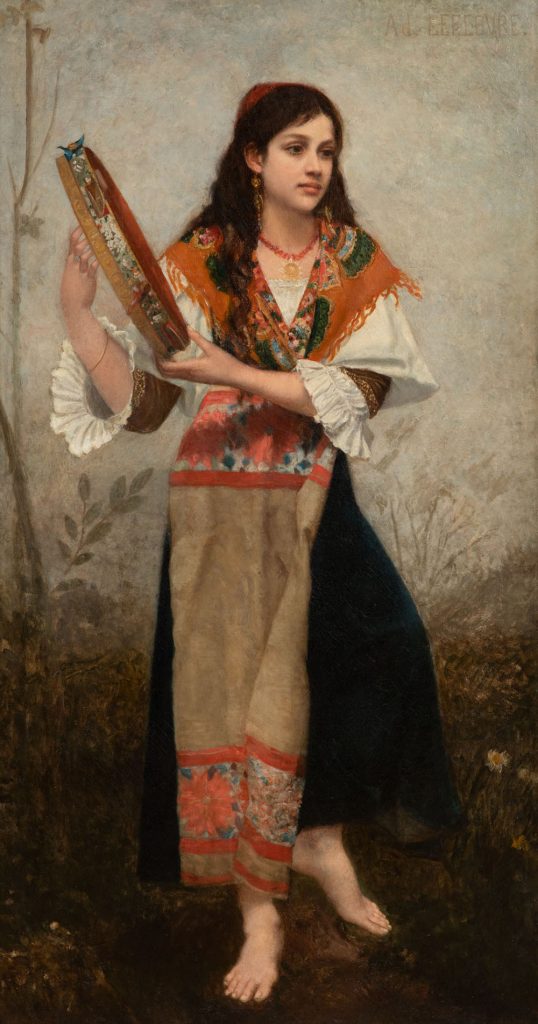
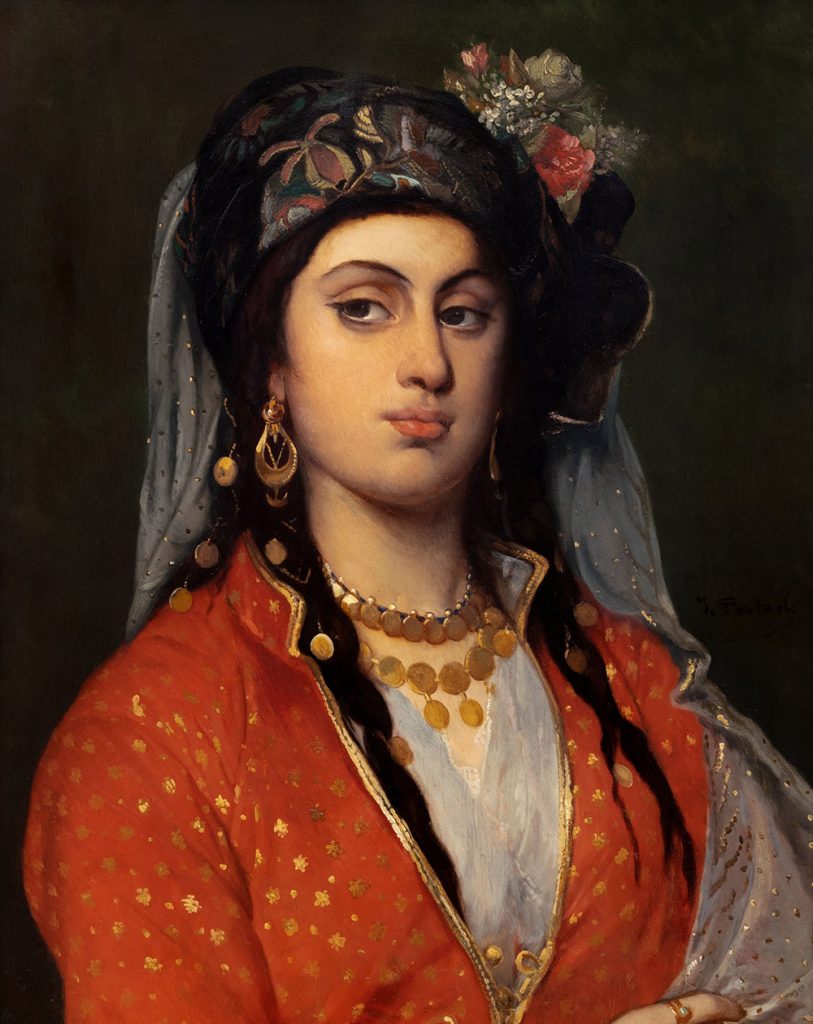
A next set of paintings showcased European artists’ fascination with Eastern subjects. Historically, it marked the beginning of Orientalism that reached its peak in the 19th century. The curation captured this “exoticism” of the East. There were portraits of Middle Eastern and Asian women seen from a European gaze, dressed in richly ornamented garments and jewellery, rendered with careful attention to colour, texture, and decorative details. Some artworks also uncovered European idealism, where European artists imagined European models in Eastern costumes rather than women from those regions themselves wearing it.
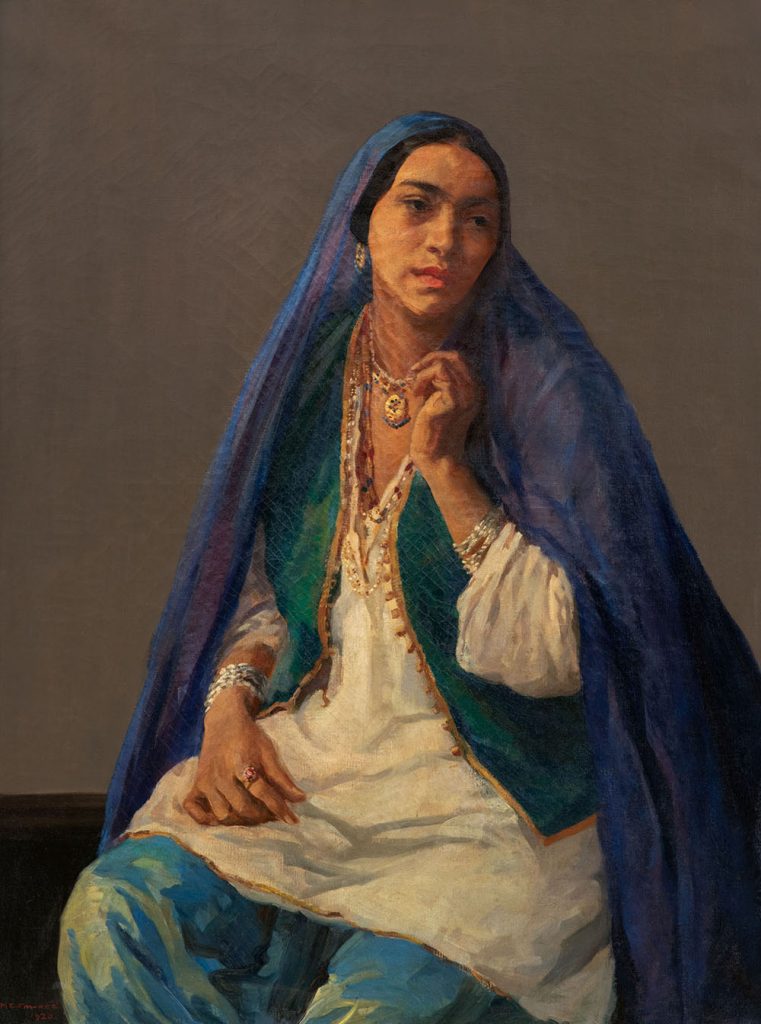
The result was an idealised vision of leisure and femininity as seen in ‘Rêverie’ by Paris-based painter Edouard Frederic W. Richter.
A Stamp of Power
Portraits also served as a record of lineage and authority. From Mughal and regional kingdoms in India to European aristocracy, they enjoyed royal patronage. The artworks on display were a testament to how instrumental they were in the formal representation of legacy and preserving dynastic continuity, as seen in Portrait of Wasif Ali Mirza, Nawab of Murshidabad by Indian academic realism painter Jamini Prakash Gangooly, to an Untitled work by South Indian painter Sekhara Warrier. They depicted academic portrait conventions that became widely adopted in India during the late 19th century and the early 20th century.
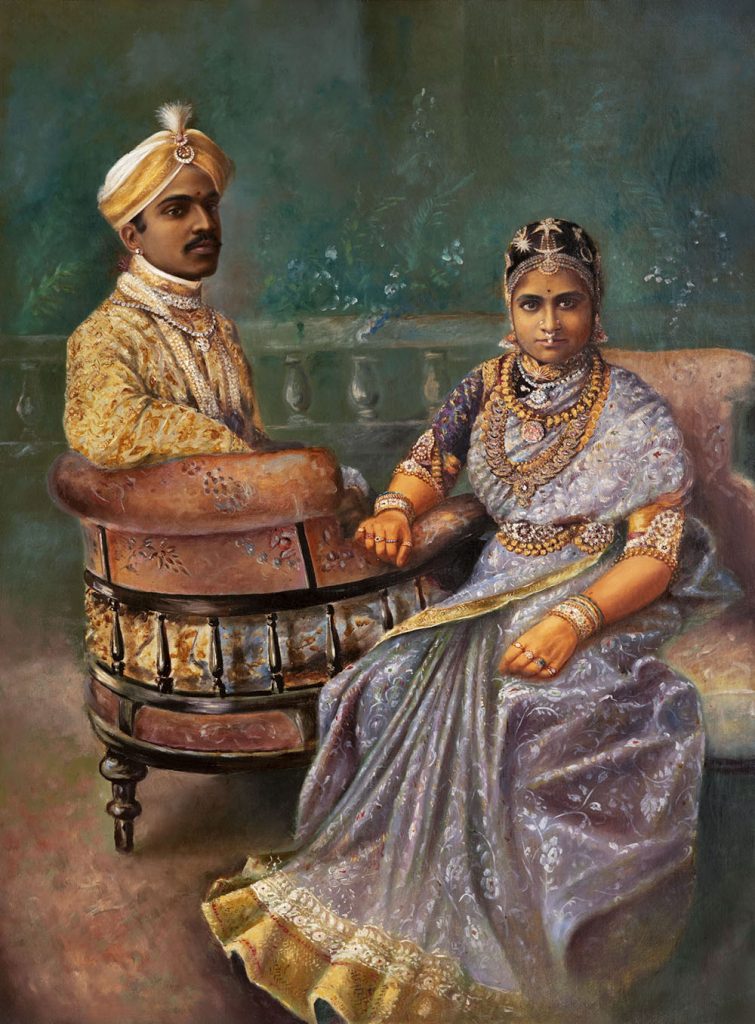
“The realistic modelling of the figures, the restrained landscape background, and the subtle handling of light demonstrate an engagement with Western pictorial conventions, while the depiction of Indian dress and jewellery firmly situates the work within local cultural traditions,” notes Sonali. The works capture the dignity, class, and higher social standing of individuals.
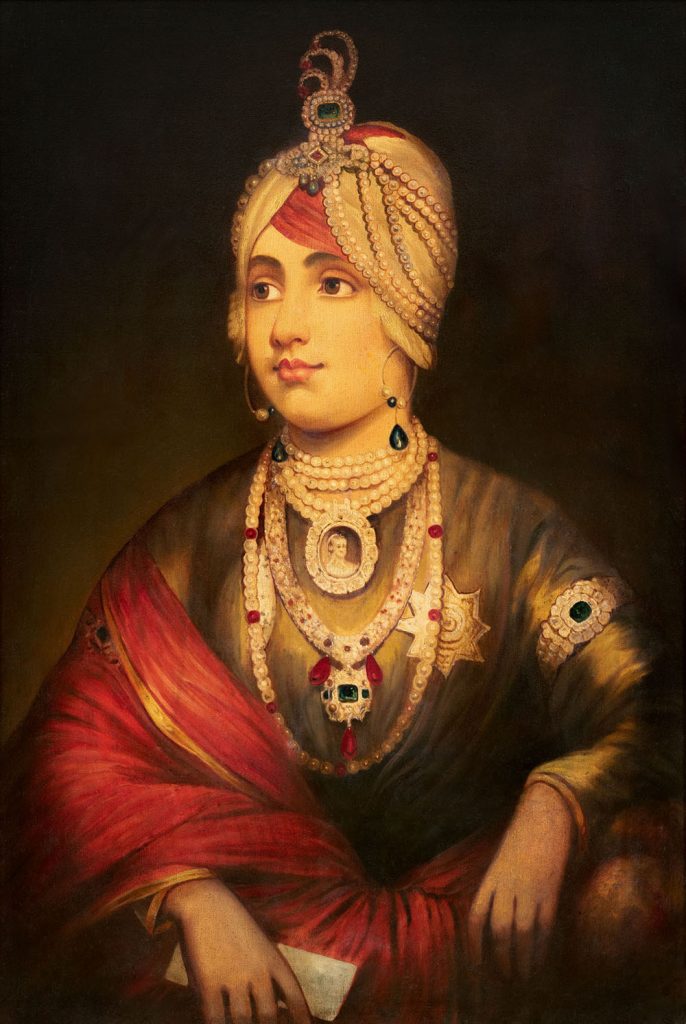
Sonali agrees, saying, “Portraits were instruments of power. For royalty, they were not just images but carefully constructed representations of authority, lineage, and legitimacy. These works circulated across courts and regions, shaping how rulers were perceived even in their absence. Every detail, from posture to costume, was deliberate. The portrait had to project stability, control, and continuity, often idealised rather than realistic.”
Also Read: Bhavna Kakar On Bringing rare Pre-Partition Phulkaris In Delhi
The Moving Face
As I progressed, almost walking from the 19th century to the 20th century, a collection of Indian artists’ works moved away from European academic realism to modernist expression. Face, that had looked sophisticated and near perfect, was now distorted, dejected and in some places, expressionless. For instance, in the works of F. N. Souza, Krishen Khanna, and Anjolie Ela Menon, a distorted face replaced flattery, colours were intensified, and lines became charged with emotion. The focus shifted from outward likeness to probing inner states, dilemmas, fears and truths.
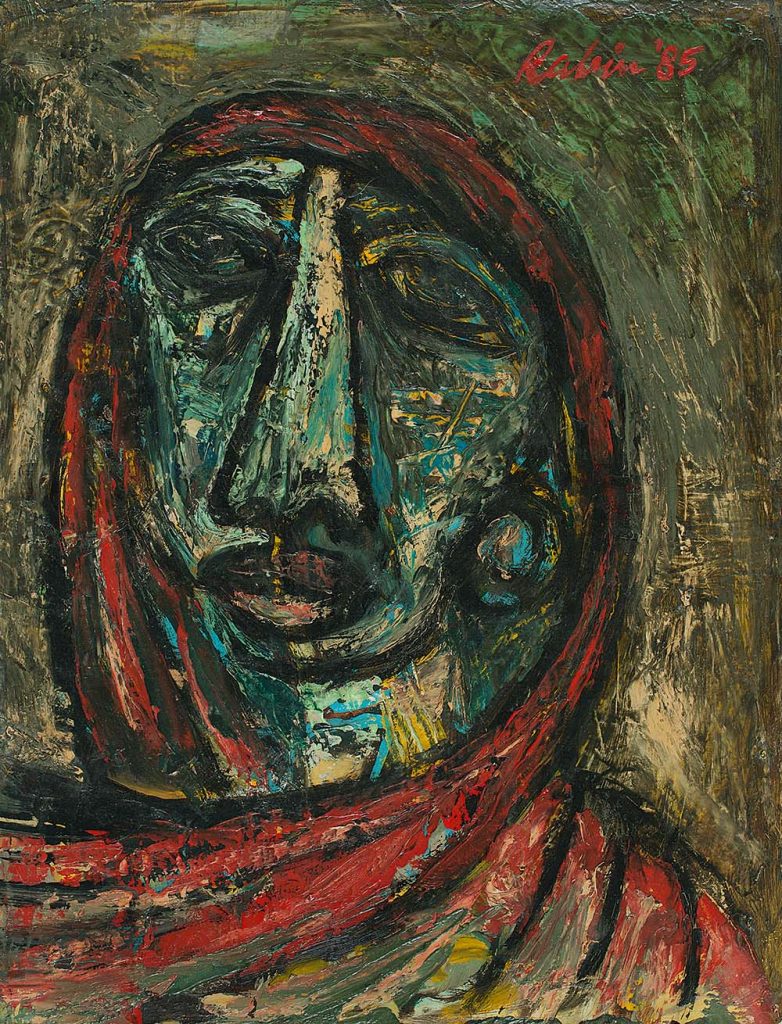
“With the Progressive Artists’ Group, particularly artists like F. N. Souza and H. A. Gade, identity becomes more psychological and expressive. The portrait shifts from describing outward appearance to exploring inner life, shaped by a newly independent and rapidly changing nation,” shares Sonali.
Moving towards the last stretch of the exhibition, the portraits revealed a more layered identity. “As artists move across geographies and cultures, figures reflect hybridity, memory, and personal narrative. These portraits explore relationships, gender, and lived experience, rather than fixed definitions of the self,” notes Sonali, pointing to a set of paintings.
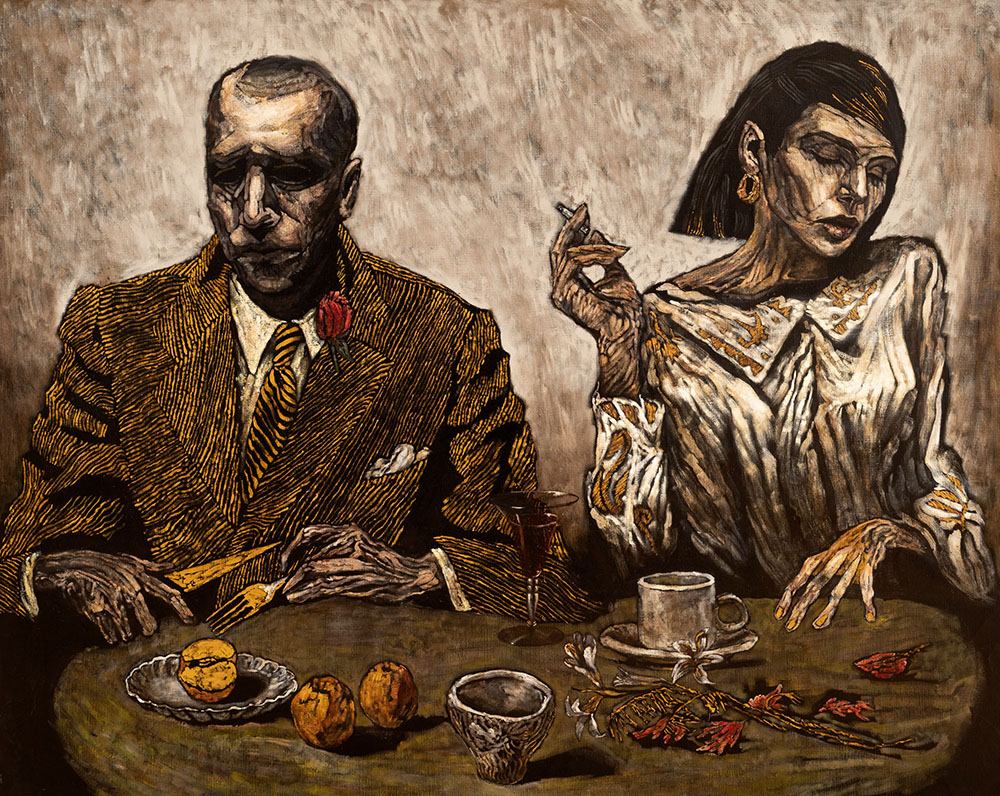
By placing historical and contemporary works together, the exhibition creates a dialogue between past and present. It reminds us that while the tools of depiction may have changed (from portraits to selfies), the questions remain the same: how do we present ourselves, how are we perceived, and what does an image reveal or conceal?
“In that sense, the exhibition feels especially relevant today. It shifts the conversation from the immediacy of the selfie to a deeper reflection on identity, memory, and representation,” concludes Sonali, leaving me with thoughts to reflect.