Bridal Couture as Living Art: Pankaj S Chadha Reimagines Indian Fables, Raja Ravi Varma And Navarasa Into Heirloom Wedding Masterpieces
Conservationist and textile protagonist, Pankaj S. dresses four brides in hues of history, mythology and culture
Bridal couture is definitely the most elevated form of Indian fashion. One that involves depth, emotions and sensitivity. Besides looking her ethereal best on the day she weds the love of her life, the young bride hopes to be dressed in something that reflects her persona. So perfect that it remains etched in her memory forever.
Outlook Luxe traces the tale behind four bridal forms conjured by conservationist and couturier Pankaj S. An artist at heart, he shares how he dipped into Indian fables and folklore to dress four brides in a piece of history. From the mellifluous art of Ravi Varma, to an ode to Navarasa, he turns these bridal designs into folklore. Rich, resplendent and gossamer. Each one of them reflecting his deep understanding both of heirloom design and traditional art.
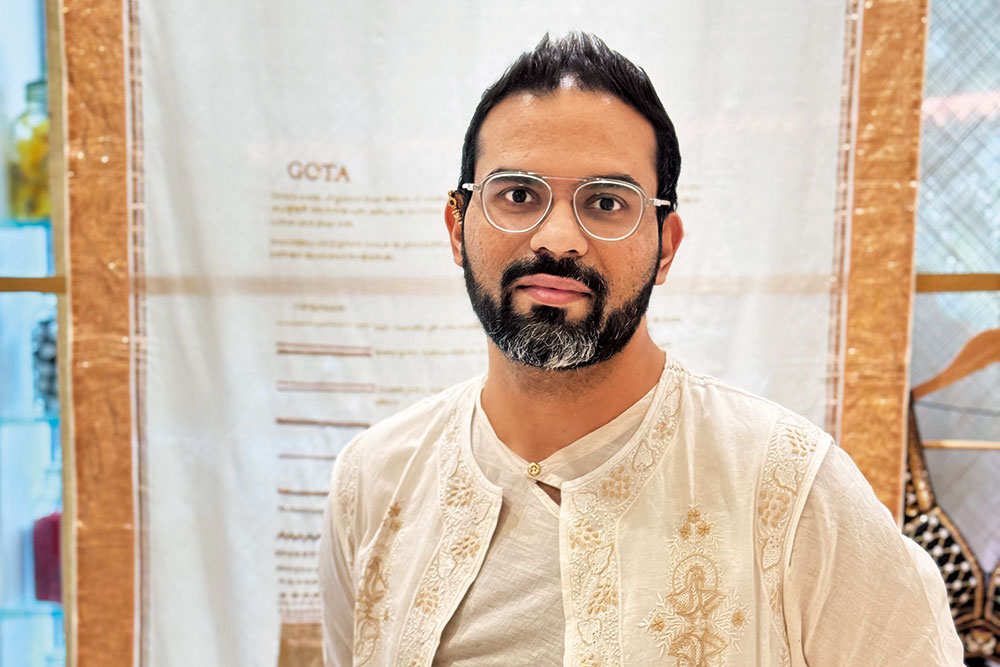
When Nita Ambani’s pet project Swadesh came alive recently in Mumbai, imagery of many celebrities posing before breath-taking Pichwais flooded the internet. As did the image of a reticent and shy, artist looking man who was often found quietly explaining the intricacies of his art to the guests. Or regaling them with the mythological relevance of the pichwais he had rendered on textiles. Pankaj S Chadha, is not just a couturier , conservationist and textile protagonist. He is in fact a true blue Indophile who keeps traipsing to the past to create masterpieces of the present.
“As someone who is incessantly inspired by the richness and diversity of Indian hand embroidery techniques my aim is to showcase high quality needle work on exquisite textiles that the connoisseur cherishes for generations,” he says as he shares four iconic looks he created for four beautiful brides.
GANGAUR
It’s the day Parvati returns to her beloved Sita, dressed like a blushing bride, each rustle of her flowing lehenga echoing her pounding heart filled with love. Gangaur, celebrated with great aplomb in Rajasthan is personified with festive dressing by women who gather around a resplendent statue Parvati ready to depart to her husband.
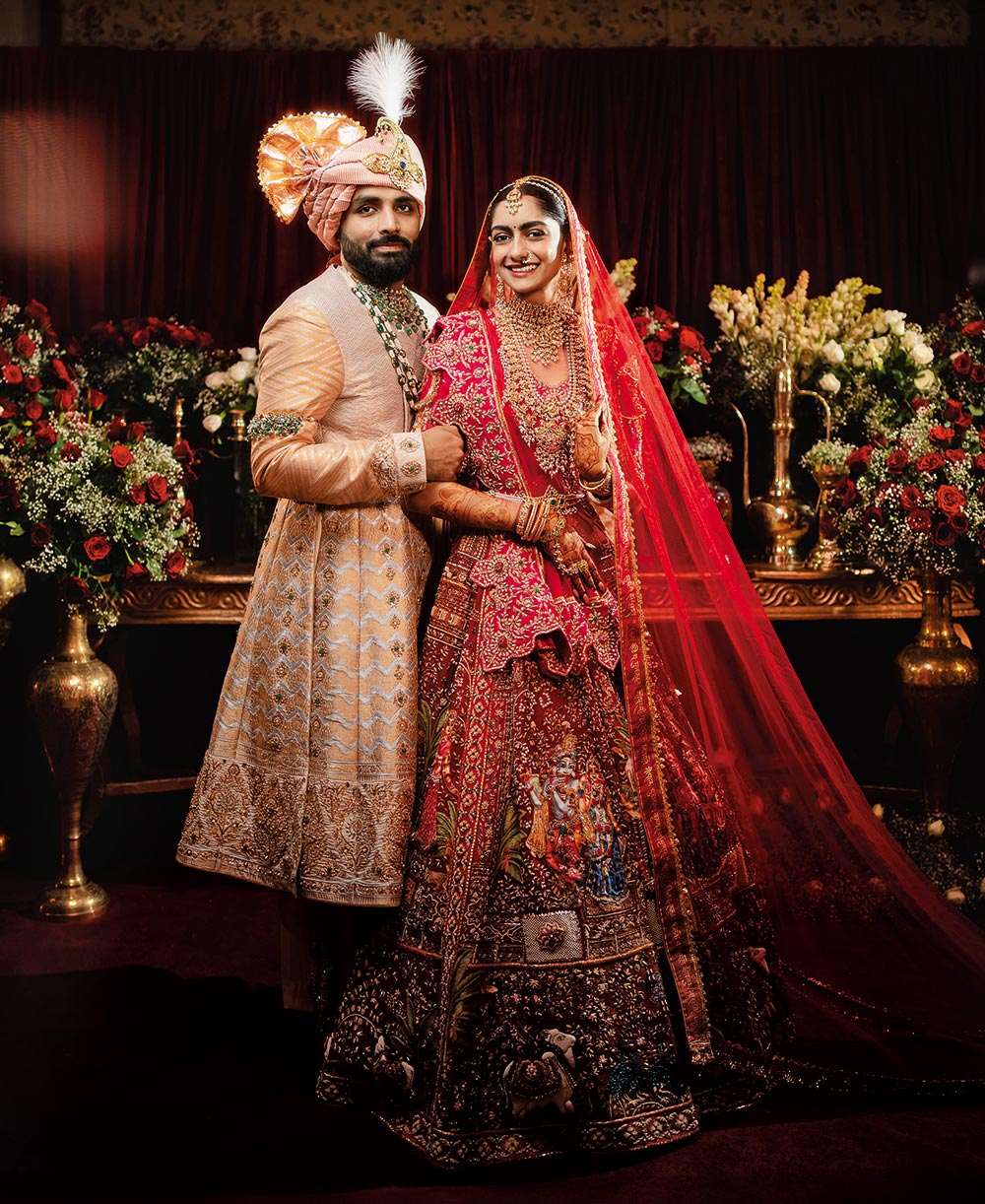
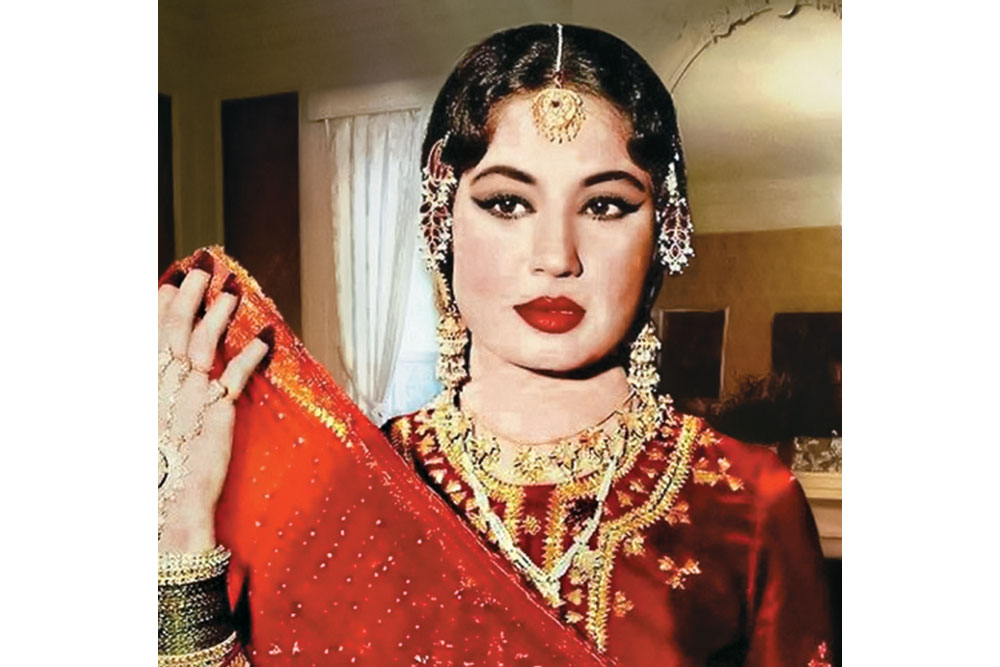
The look created for Niyati Mirani, a Gujarati bride in Istanbul, was inspired by the Gangaur. “We wanted to present a sartorial language derived from portraits of royal Rajasthani women dressed for the Ganguar that is so beautifully celebrated in the Marwar region. I have seen portraits of Gayatri Devi during such celebrations and while working on the moodboard for Niyati, those images flooded my mind. We combined lots of Rajasthani Gota Patti with Kashmiri Tilladozi and Lucknow’s Chikandozi to achieve elegance through maximalism. Tones of champagne and gold were juxtaposed with chatak rani pink as well as the gulal red and pink.”
Gota Patti, an embroidery done with hand beaten silver, folded and stitched on the textile, in ancient Rajasthan helped identify not just the age of a girl but also her social standing. “Young girls wore skirts with a thin line of gota done. It was called kinari. When she reached puberty, the width of the gota increased. When she was married the embroidery ensured the gota was thicker and subsequently it became laffa ka kaam, which was identifiably the broadest gota. just by looking at the gota width one could judge the age of the girl and her social standing amongst noble and royal families of Rajasthan. For Niyati’s lehenga we used stunning laffa ka kaam made with beaten antique silver, just like the royal women wore in Rajasthan during Gangaur!”
Navarasa
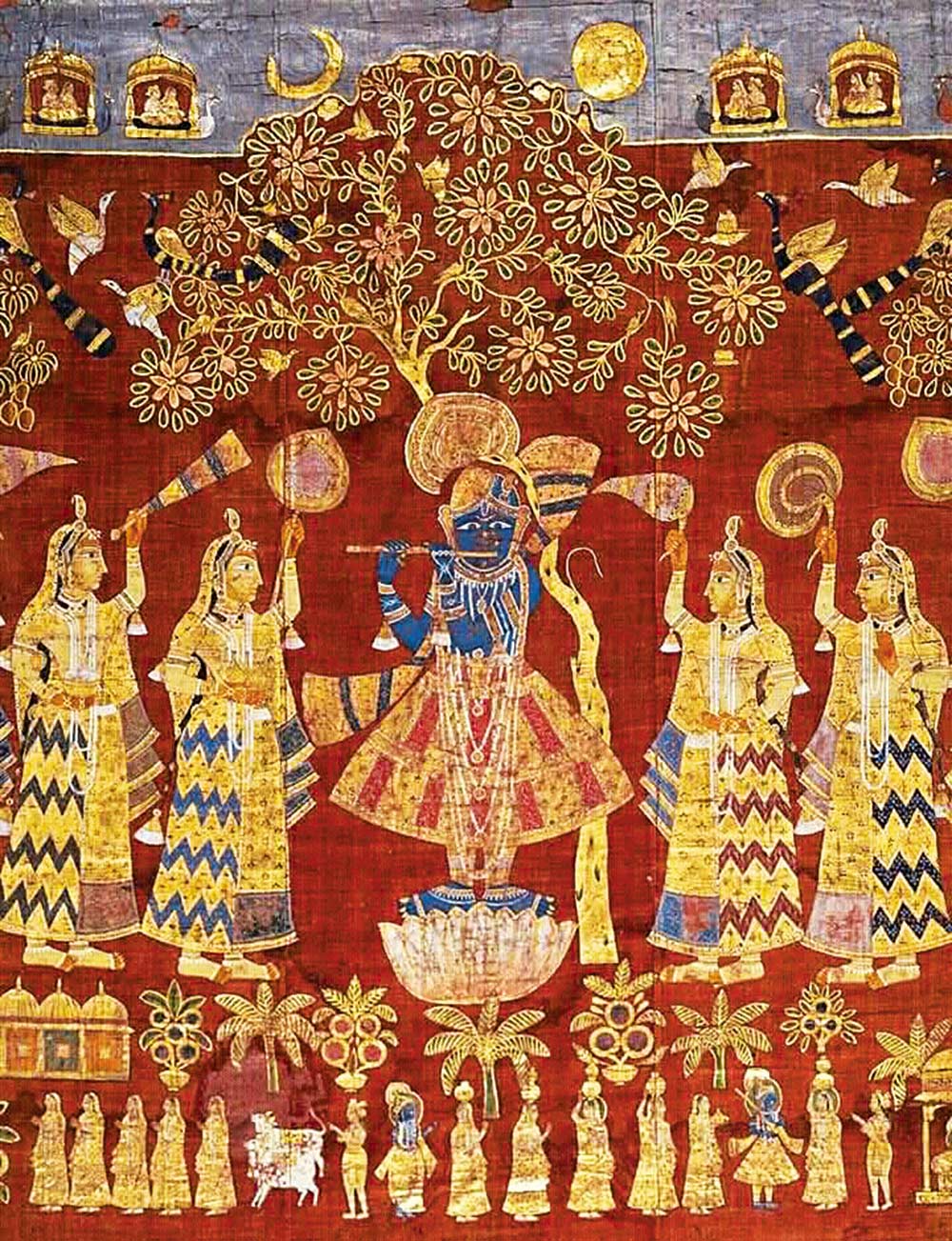
An opulent and extravagant sartorial homage to the nine Rasas was brought to life when Chadha designed the bridal ensemble for Ariva Kalhatia. Her lehenga became a canvas for the interpretation of the nine Rasas or emotions shared between Krishna and Radha, each being represented in different panels. You have Krishna playing the flute for Radha, him combing her hair, he mollifying an upset Radha, the Gopis indulging Radha in Shringaar Ras and so on. Elaborately embroidered elephants and peacocks could also be seen on the apparel. “For this bridal outfit, we incorporated nine different kinds of GI tagged embroideries from all over India. There were intricate forms of Gota Patti, Moti ka kaam, Vasli, Dhok, Badla, Zardozi, Mochitankha, Aari and Applique work from hand paintings done on fabric.”
The inspiration for this exquisite couture garment came directly from the Pushthi Marghi interpretaton of Shrinath ji in Nathdwara where the idol if given attires that are thoroughly maximalist and extremely pleasurable to the sight. “When I went to visit the idol I noticed how Shrinathji was wearing vermillion as well. It was a beautiful sight.
A royal confluence
One thing that Chadha noticed during his extensive travels through the length and breath of Rajasthan is how the ancient architecture of the state, while being built in typical Rajputana and Marwar traditions, carry plenty of Mughal influences throughout, courtesy the socio-political shifts that happened after Islamic invasions in the country.
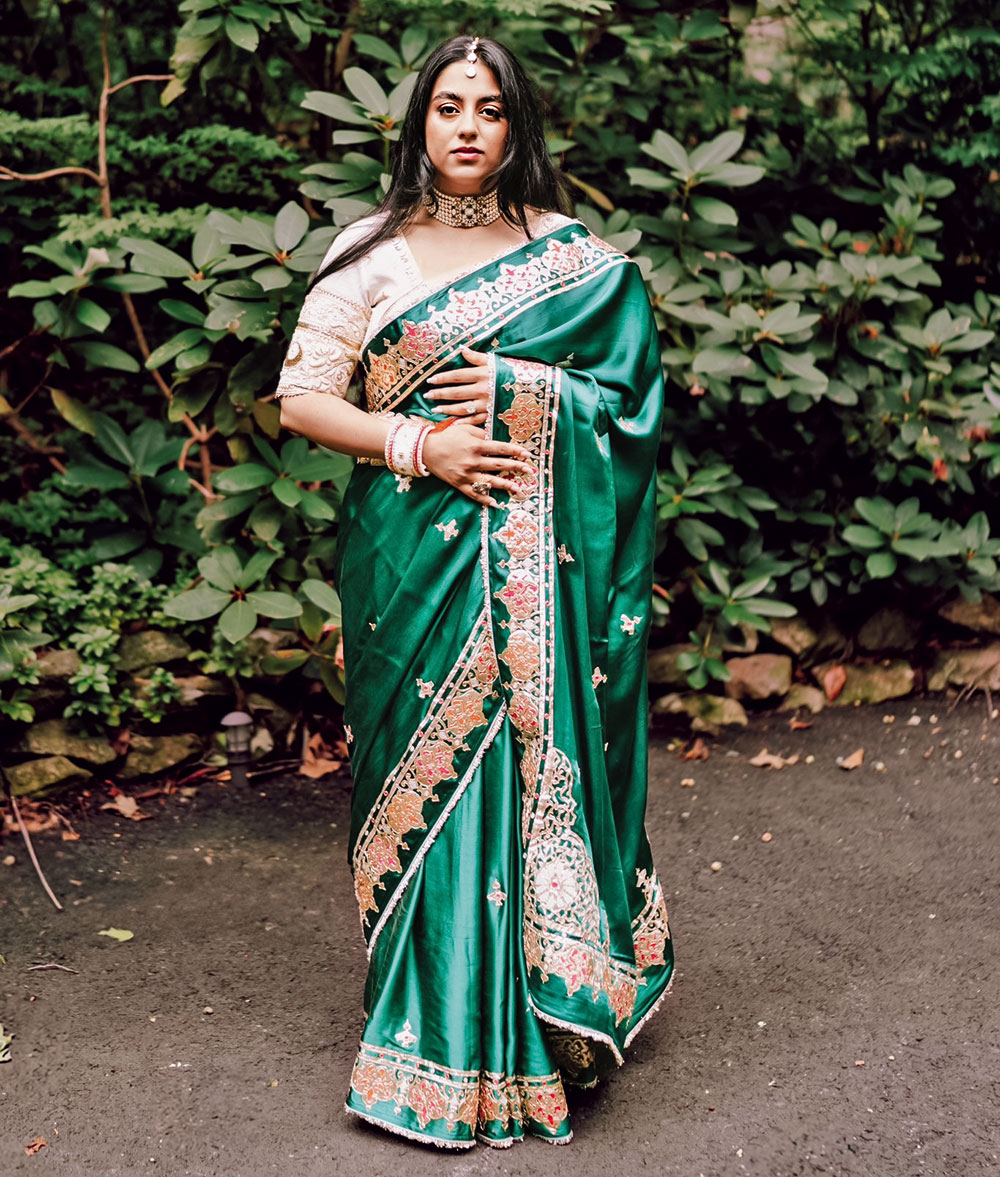
“We were creating a Gajji silk saree for Rajul that she wanted to be adorned with Khara Gota but she wanted the motifs to pay an homage to the roots of her Muslim husband. While working on the mood board I realised the depth of cultural exchanges that has shaped the design vocabulary of our crafts. If you notice Amer Fort, you will definitely find some Mughal influences in the architecture that was primarily built by the Rajputs. This speaks of the confluence of inspirations and cultures. Hence, the gota we embroidered on the saree were shaped with Arabic artwork that gave the saree an eclectic look,” explains the couturier.
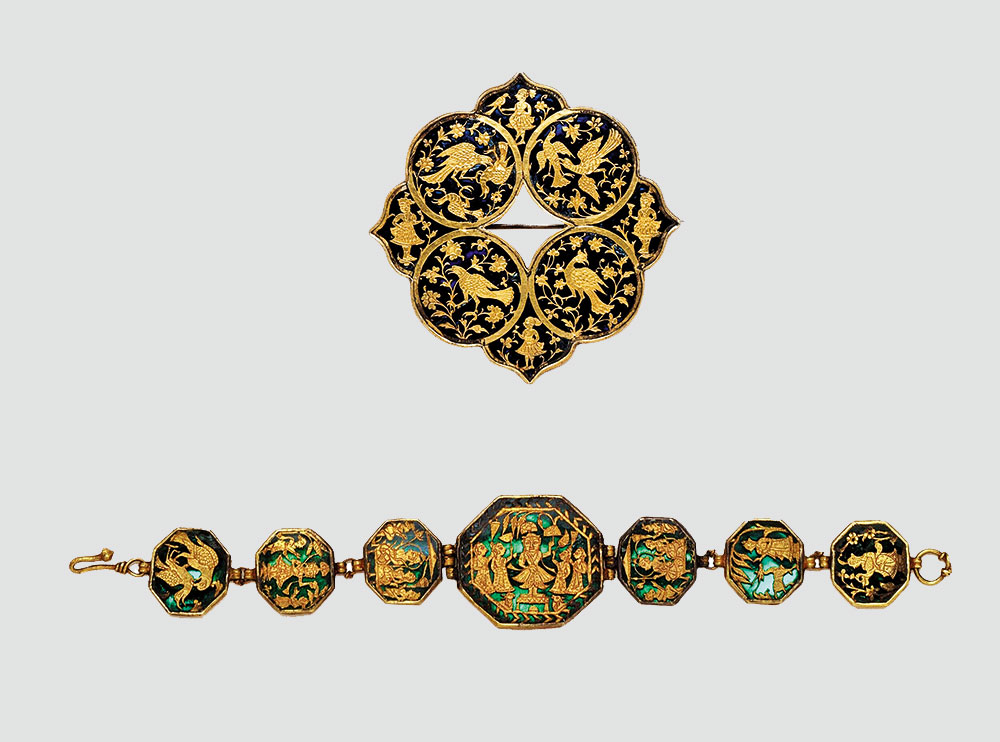
For the blouse, the fabric chosen was Khadi. On it, karigars were instructed to do intricate gota patti with motifs of the crescent moon. “Shiva’s jataa is adorned by the crescent moon, an imagery you find a lot in Arabic art and architecture as well. This was Rajul and our interpretation of the beautiful coming together of her Indian Hindu traditions, iconography and her Muslim husband’s roots.”
Raja Ravi Varma
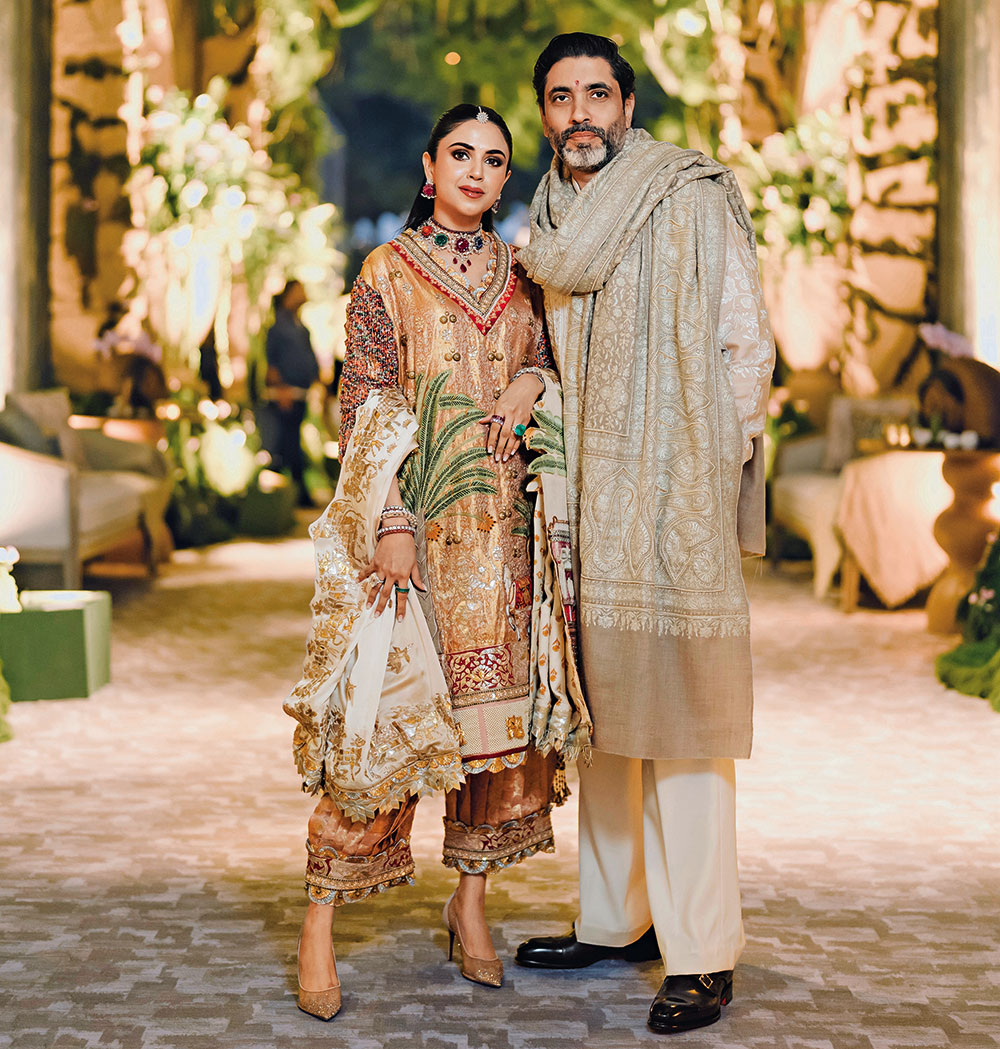
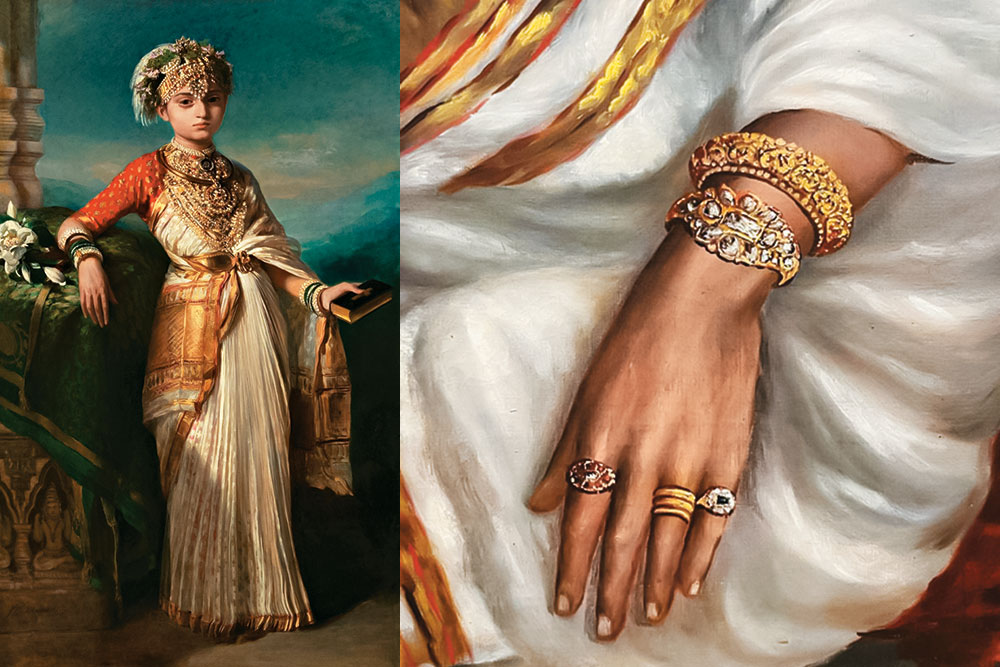
In the melee of bridal outfits, Chadha singles out the creations he designed recently for Ayushi Juneja, who was the sister of the groom. “Ayushi is an out-and-out saree person but she left it to me to create something different for her to wear at the sitar night during her brother’s wedding. She looked so in sync with the soulful music performed by Rishab Rikhiram Sharma. I had turned to the beauty of Raja Ravi Varma’s paintings for creative succour! If you notice carefully, it is a beautiful homage to everything refined interpreted in a Kashmiri chogha suit with the base of a Kanjeevaram silk. Generally, that weave is always used as a saree but here we took a saree and cut it into a Kashmiri chogha kurta suit. We embellished it with multiple embroideries. The banyan trees on it were embroidered in the mochi tankha technique, which comes from Gujarat. The Nandis are 3D, inspired by Tanjore paintings and the Gota Patti on the hem and dupatta are replete with the Rajput aesthetic. I had witnessed a portrait of a Maharaja where he wore a Kanjeevaram achkan. So we were egged to create a silhouette close to that. There was also one picture of a kamdhenu encrusted with crystal that was painted in the 17th century. These were some of the other inspirations and this outfit became an amalgamation of all these art pieces.”
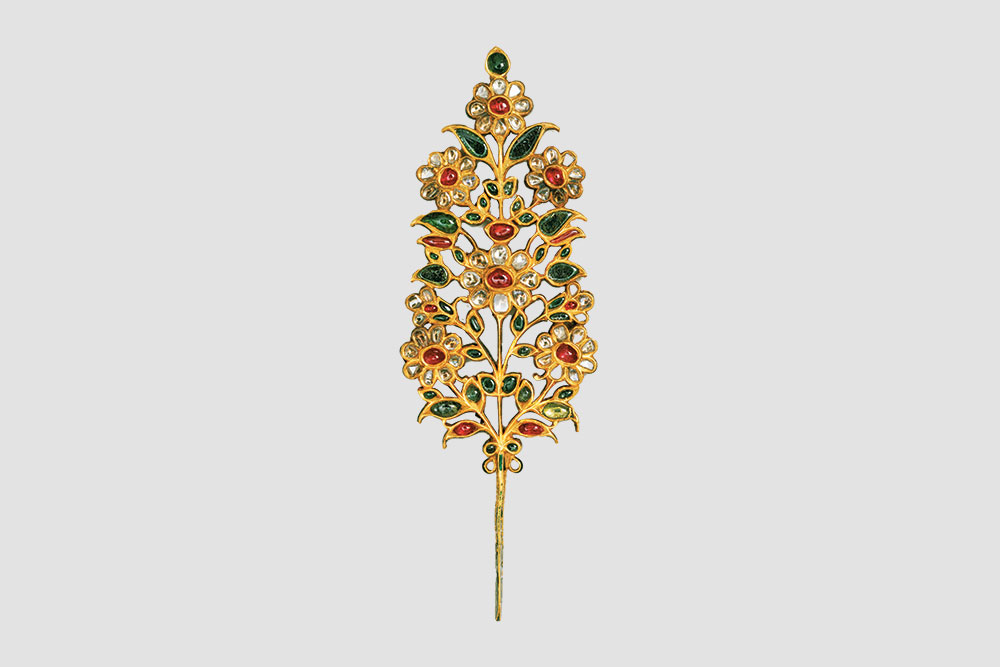
Anshul, Ayushi’s husband, is a wildlife enthusiast. For him the atelier designed a tone on tone ivory and grey Pashmina dushala that took almost two years to be handwoven in Srinagar. It was then hand embroidered there itself. After the outfits were completed, it was time for the jewellery to be matched. “Ayushi and I sat with the jeweller and ideated on the Navratna set that on completion complemented the outfit spectacularly.”