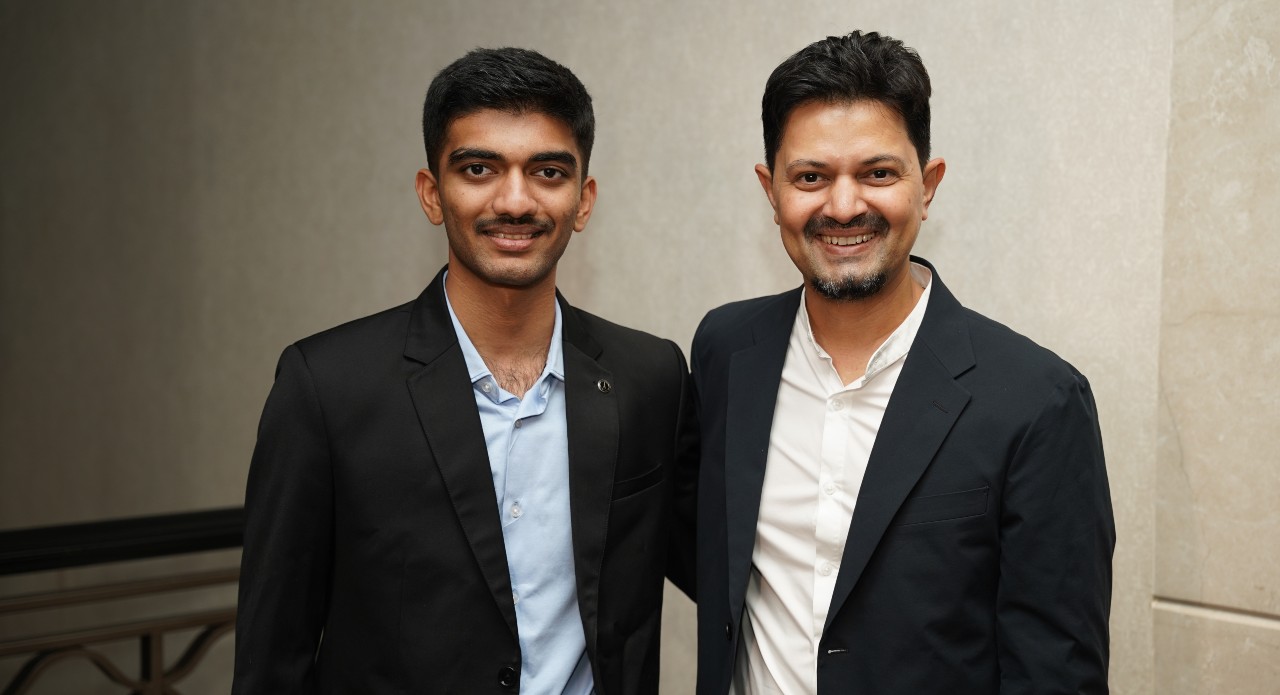


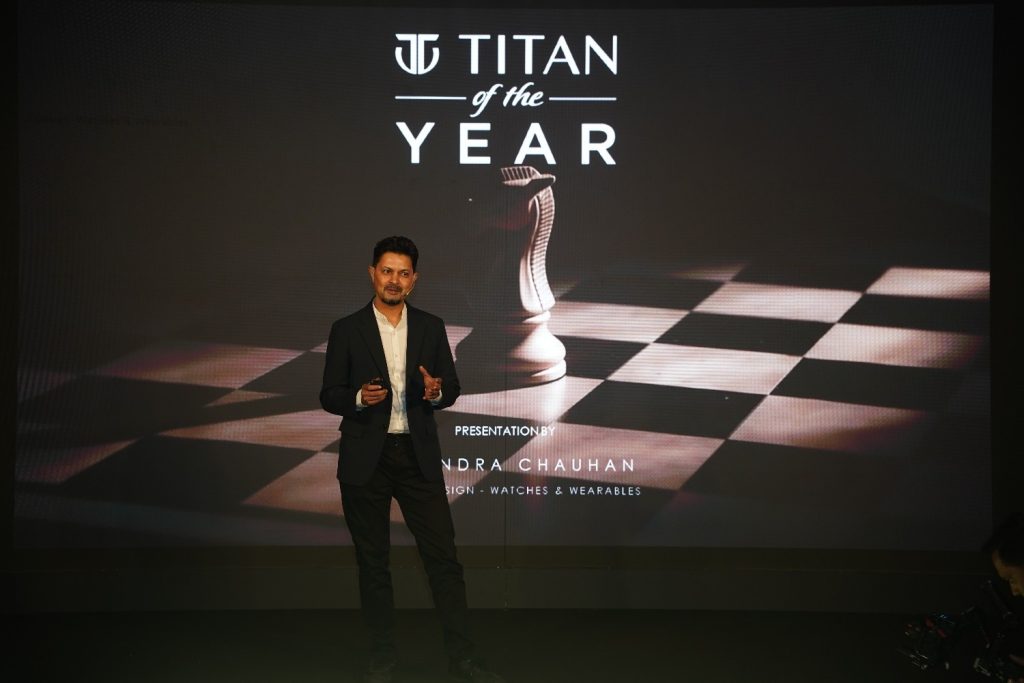
In an era where watchmaking increasingly seeks a balance between technological precision and emotional resonance, design has emerged as the quiet language through which objects become meaningful companions rather than mere instruments of time. At the centre of this evolving conversation stands Mahendra Chauhan, whose philosophy at Titan Watches treats every watch as a narrative shaped by craft, culture, and human experience. From concept led storytelling to material innovation and in house engineering, his approach reflects a commitment to creating timepieces that remain relevant long after trends fade. Outlook Luxe had a candid conversation with Mahendra Chauhan, Design Head, Titan Watches, on design as storytelling, the delicate balance between emotion and engineering, and how the Grandmaster edition inspired by D Gukesh reflects a new era of Indian watchmaking defined by material innovation, cultural nuance, and in house mechanical ambition.
You have designed some of the most recognisable products in the industry and earned global honours such as the Red Dot and Good Design Awards. Looking back, what core design philosophy has consistently guided your work?
Mahendra Chauhan: The core philosophy has been to treat design as an emotional object than just form. A watch is not only a functional instrument. It becomes part of a person’s daily life and, over time, starts holding memories, milestones, and personal significance. That perspective has shaped the way I approach every project, whether it is a simple everyday watch or a high-complication piece.
At Titan, the intent has always been to move beyond surface styling into concept-led design, where every product begins with a clear idea or narrative. The design process is about finding the right balance between emotional resonance and engineering integrity, so the watch feels purposeful, not just visually appealing. Ultimately, good design should age gracefully, stay relevant over time, and build a quiet but lasting relationship with the wearer.
As a design leader, how do you balance aesthetic ambition with functionality, particularly in a category as emotionally driven yet technically precise as watchmaking?
MC: In watchmaking, aesthetics and functionality are not separate decisions. They have to evolve together. A watch that looks appealing but lacks mechanical integrity will not hold value, and a technically sound watch without emotional appeal will not build a connection with the wearer.
The approach is to treat engineering, ergonomics, and visual language as one system. Proportions, dial layout, legibility, case construction, and movement architecture are all considered together. When these elements are aligned, the form feels natural rather than imposed. In more mechanical and premium segments, the design process often begins with the intent and the overall movement architecture of the watch. The aesthetic direction then grows out of these technical decisions. This ensures that the final product is not only visually balanced, but also coherent, functional, and built with long-term integrity.
Your expertise spans product and interaction design. How has this multidisciplinary perspective influenced the way you approach modern watch creation?
MC: Working across different areas of design has shaped a more holistic perspective. It encourages you to look beyond the object and consider the complete experience of using it. A watch is never just about the case or the dial. It is about how it feels on the wrist, how the crown responds to touch, how intuitively the time can be read, and how naturally the watch integrates into a person’s daily rhythm.
At the same time, the design conversation around smartwatches converges strongly on the fundamentals of interaction design. This diversity of experience: understanding product, technology, and movement architecture, and fusing it with human sensibility becomes the bridge that connects my varied design projects.
Today, you lead design for Titan, one of India’s most influential lifestyle companies. What does designing for millions of consumers across diverse markets demand from a creative standpoint?
MC: Designing for such a wide and diverse audience demands absolute clarity of intent. But more than anything, it requires strong brand alignment and precise segment positioning. Titan serves millions of consumers. Within that vast universe, there are multiple personas, psychographic maps, aspirations, and emotional triggers. As designers, we constantly shift mindsets, going deep into the consumer psyche to create products that are true to the brand, relevant to the segment, and meaningful to the individual.
The design language must be simple enough to travel across regions, cultures, and lifestyles, yet distinctive enough to carry a clear point of view. It is about discovering ideas that feel universal, while remaining rooted in authenticity. India itself is incredibly diverse in taste, tradition, and expectation. When you layer international audiences onto that, the complexity multiplies. The role of design, then, is not just to create products, but to create relevance without dilution — to ensure the watch feels at home in many contexts, without ever losing its identity.
How do you cultivate originality within large teams of industrial designers, fashion designers, engineers, and interaction specialists while ensuring a cohesive design language?
MC: Originality within large teams begins with a clear narrative. Every project starts with a strong idea or concept, very strong consumer and brand alignment and that becomes the anchor for everyone involved, whether they are working on form, materials, engineering, or detailing. When the intent is clear, teams can explore freely within that direction without losing coherence.
The process is collaborative and iterative. Designers, engineers, and material specialists work closely together, so decisions are not made in isolation. This helps the product evolve as one integrated system rather than as a collection of separate inputs. Products you have helped create are worn in over 32 countries.
How do cultural nuances shape your design decisions when building watches for an international audience?
MC: Cultural nuances influence preferences in subtle yet meaningful ways. whether in case size, colour choices, dial layouts, or finishing. Different markets respond to distinct visual cues, and it is important to recognise these variations without over-designing for each region. Designing for Middle Eastern consumers, for instance, is very different from designing for a specific cohort in India. It requires a deep process of consumer insight, an effort to understand the emotions, aspirations, and cultural context of a place and to design with that spirit.
At the same time, the goal is not to create entirely separate identities for every market. The focus remains on values that travel well across cultures: proportion, comfort, clarity, and material quality. When these fundamentals are strong, the watch feels relevant in multiple contexts without needing dramatic adjustments. Ultimately, when a watch carries authenticity and integrity in its design, it has a far greater chance of connecting with people across diverse cultures.
In your view, what distinguishes Titan’s design ethos from that of other global watch brands?
MC: A key difference lies in approaching design as a form of storytelling. Many of our significant collections begin with an idea, a cultural moment, or a distinct personality, and the product is built around that narrative. This allows design, materials, engineering, and symbolism to come together as a coherent expression, rather than existing as isolated decisions. At the same time, the design team at Titan operates with a global mindset. The design process and fundamental values are aligned with leading studios around the world. It is rooted in deep consumer insight, rigorous attention to detail, and a commitment to delivering an exceptional product experience. The focus is also on creating watches that carry meaning, not just visual appeal. When a product reflects a story, a value, or an achievement, it builds a deeper connection with the wearer and often has greater long-term relevance.
There is also a strong emphasis on developing in-house engineering capabilities and exploring new materials. This allows the design process to go beyond surface styling and become more integrated with movement architecture, case construction, and material choices. As a result, the watch feels more cohesive, with the concept influencing every aspect of the product.
The Grandmaster edition celebrates a historic achievement in chess. When translating such an intellectual sport into a wristwatch, where did the design journey begin emotion, symbolism, or mechanics?
MC: The journey began with the philosophy of the game and the personality of the individual being honoured. Chess is a highly cognitive sport, defined by strategy, discipline, and mental resilience, so the intent was to capture those qualities in the character of the watch rather than rely on literal or decorative references. Early conversations with Gukesh also played an important role in shaping the direction. He was clear about wanting certain elements to be part of the watch, including the number 18 to mark the age at which he became world champion, and a reference to the title itself.
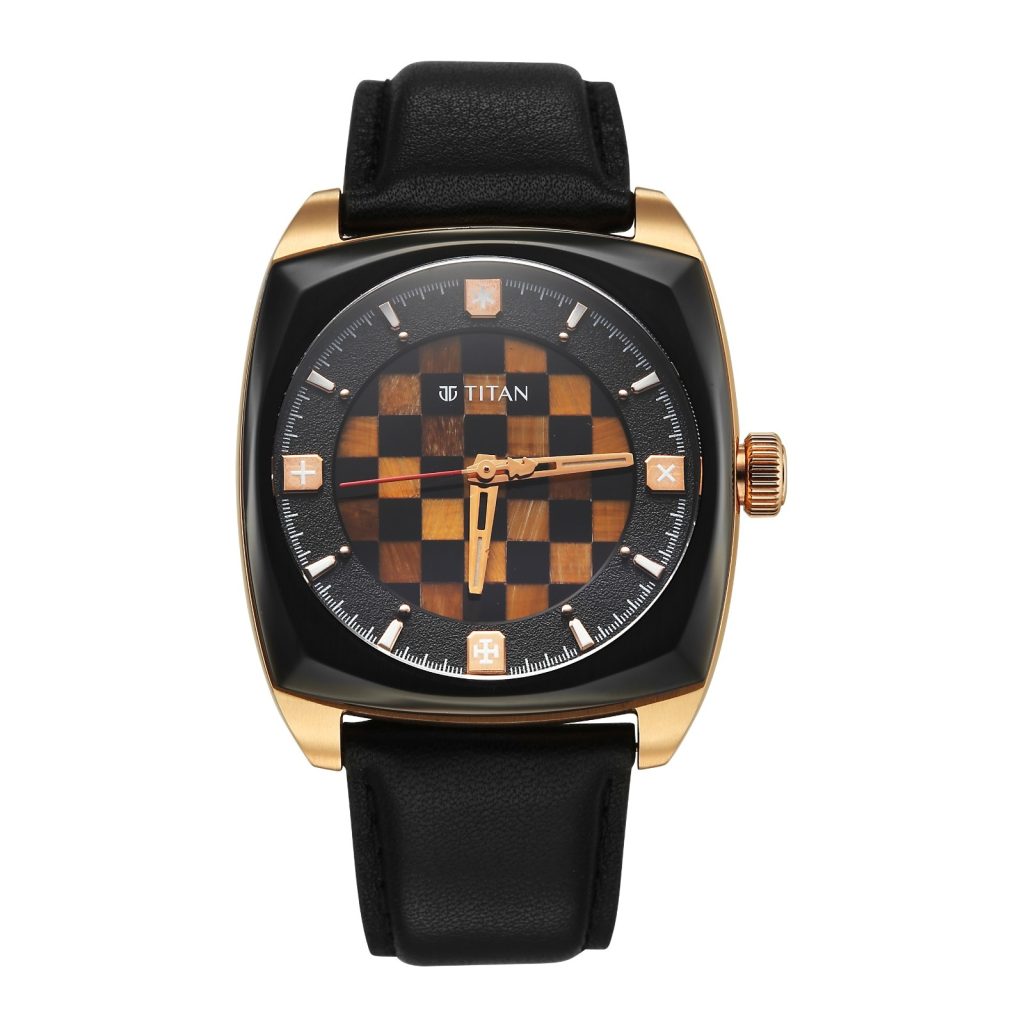
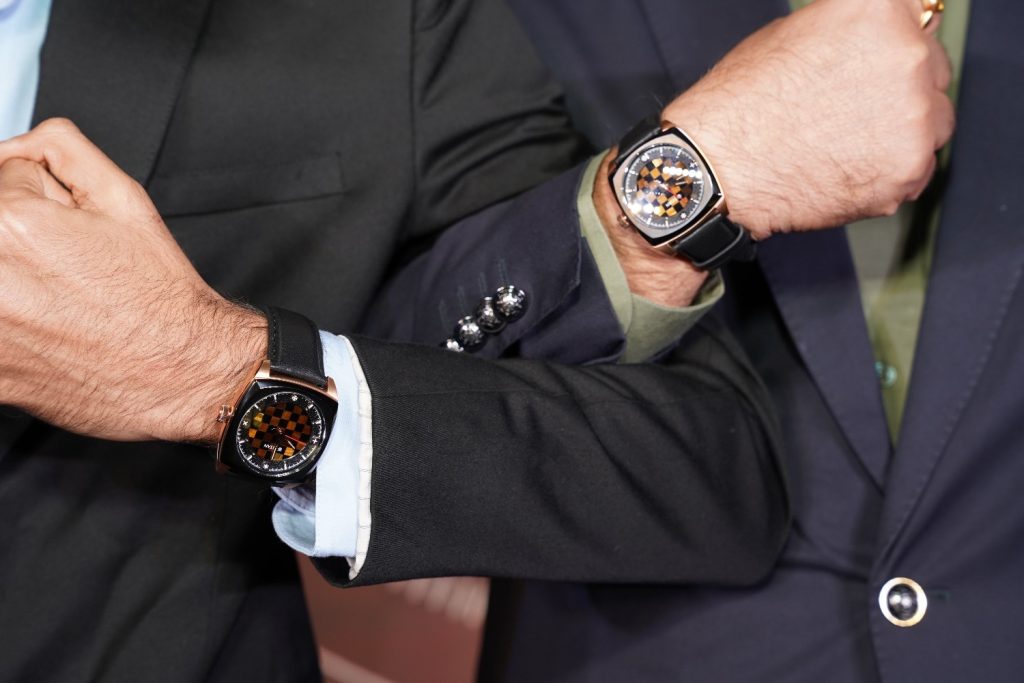
These inputs helped anchor the narrative and ensured that the watch felt personal to his journey rather than just conceptually linked to chess. From there, the design narrative was built around balance, restraint, anticipation, and controlled complexity, which are central to high-level chess. Once this conceptual direction was clear, symbolic and mechanical elements were introduced to support the story. The marquetry dial, the custom indices mapped to chess movements, and the engraved rotor all work together to express the structure and discipline of the game in a subtle, cohesive manner.
The watch is limited to 500 numbered pieces and honours the youngest World Chess Champion at 18. How important is storytelling when creating a collectible timepiece of this nature?
MC: Storytelling is central to a collectible watch because collectors are often drawn to pieces that represent a moment, a philosophy, or a personal achievement. Rarity alone does not create lasting value. The watch also needs a narrative that gives it context and meaning over time.
In this case, the story of the youngest world chess champion adds emotional weight to the timepiece. It captures a defining milestone in the world of chess and reflects qualities such as discipline, focus, and youthful ambition. This narrative gives the watch a sense of purpose beyond its function, turning it into a marker of a historic moment. When storytelling is integrated into the design itself, through materials, symbols, and mechanical details, the watch becomes more than an accessory. It becomes a time capsule that carries memory and meaning. That is what gives a collectible its long-term relevance and emotional value.
Each index references a chess move or piece from the king to the pawn. How did you approach embedding these details without overwhelming the dial?
MC: The approach was to keep the design subtle and allow the references to reveal themselves over time. From the early conversations around the watch, it became clear that the product should feel restrained, with a quiet sheen and depth, rather than overtly thematic or decorative.
Instead of placing obvious chess symbols on the dial, the idea was to embed the logic of the game into the indices themselves. Each index reflects the movement or hierarchy of a chess piece, but the execution is deliberately understated. At first glance, the watch feels balanced and composed. The conceptual layer becomes visible only when someone looks closer and begins to notice the markings and their connection to the moves in chess.
This approach was also influenced by discussions with Gukesh, where the focus was on creating a watch that felt personal and meaningful rather than literal. Elements such as the reference to his world champion title and the number 18 were incorporated thoughtfully, so the watch carries his journey in a subtle way. The idea was to design something that an intellectually curious wearer would discover gradually, much like the layered nature of the game itself.
The marquetry dial combining Tiger Eye and Black Agate introduces material richness rarely seen in this segment. What drew you to these stones, and what challenges did they present?
MC: The choice of Tiger Eye and Black Agate came from the desire to express the character of chess through material rather than literal imagery. The contrast between the two stones naturally echoes the duality of the chessboard, while their textures and depth add a quiet sense of movement to the dial. This helped create a visual link to the rhythm and structure of the game without relying on overt symbolism.
From a design standpoint, the intent was to use materials that could introduce depth and variation, so the dial feels layered rather than flat. Both stones have distinct grain patterns and reflective qualities, which add character to each piece and make every watch slightly unique.
The main challenges were technical. These stones are brittle and difficult to machine at the thin tolerances required for watch dials. Achieving precise cuts, maintaining symmetry in the marquetry layout, and ensuring durability during assembly required careful material handling and multiple iterations. The process demanded a balance between craft and engineering to ensure the dial remained refined while also meeting performance standards.
Custom indices tracing chess patterns add a layer of narrative subtlety. How do such micro details elevate the wearer’s experience over time?
MC: Micro details play an important role in creating depth in a watch. They may not be noticed immediately, but they reveal themselves gradually as the wearer spends more time with the piece. This sense of discovery builds a more personal relationship between the watch and the owner.
In this case, the indices are not just markers for time. They carry a quiet reference to the movements and hierarchy of chess pieces. At first glance, the dial appears balanced and composed. Over time, as the wearer begins to notice the underlying logic, the watch takes on a deeper meaning. These layered details ensure that the watch continues to engage the wearer beyond the initial purchase. Instead of a design that is understood in a single glance, it becomes something that unfolds slowly, much like the game of chess itself.
The Grandmaster Knight engraved on the custom rotor feels deeply personal. Was the intention to create moments of discovery that reveal themselves gradually to the owner?
MC: Yes, the idea was to create a watch that reveals its narrative in layers rather than presenting everything at once. The rotor engraving is not immediately visible in everyday use. It becomes apparent only when the owner turns the watch over or engages more closely with the movement. That sense of discovery was an intentional part of the design process.
The Grandmaster Knight is a symbolic element that reflects creativity, unpredictability, and tactical intelligence, qualities closely associated with both the piece and the individual being honoured. By placing it on the rotor, the story becomes part of the movement itself, rather than a surface-level reference. These kinds of hidden or subtle details help create a more personal relationship with the watch. Over time, the owner continues to notice new elements, which keeps the experience engaging and reinforces the idea of the watch as a narrative object rather than just a functional instrument.
Could you elaborate on the decision to power the watch with Titan’s in house automatic movement 7AC0 How significant is movement autonomy in shaping Titan’s future?
MC: The decision to use the in-house 7ACO automatic movement was closely tied to the overall intent of the watch. When the movement is developed internally, the design and mechanics can evolve together, rather than one being adapted around the other. This allows for better control over proportions, case architecture, and the overall character of the watch.
Movement autonomy is also an important step in building long-term credibility. It reflects a shift towards building new complications, material experiments, and more integrated design approaches. Over time, this independence will play a significant role in shaping the future of the brand. It allows design and engineering to grow together, and positions the watch not just as a styled object, but as a product built with both technical and conceptual integrity.
From lume filled hands to the knight counterpoise, the watch balances sportiness with refinement. How do you ensure harmony when multiple visual elements compete for attention?
MC: Harmony comes from establishing a clear visual hierarchy. Every element on the watch has a specific role, and the design process is about ensuring that no single detail overwhelms the overall composition. Proportions, finishes, and contrasts are carefully controlled so that the watch feels balanced at a glance.
Even elements that introduce a sporty character, such as lume-filled hands or the knight counterpoise, are executed with restraint. Their scale, colour, and placement are aligned with the overall tone of the watch, so they support the narrative rather than distract from it. The goal is to make the watch feel cohesive, where all the elements work together instead of competing with one another. When the hierarchy is clear and the detailing is controlled, the design can carry both sportiness and refinement without losing balance.
Collectors often seek watches that combine narrative, rarity, and craftsmanship. How did you ensure the Grandmaster limited edition speaks to seasoned collectors as much as first time enthusiasts?
MC: The intent was to balance narrative, material depth, and mechanical credibility in a way that feels accessible yet meaningful. For seasoned collectors, elements such as the limited production, in-house automatic movement, and the use of materials like Tiger Eye and Black Agate add substance and technical interest.
At the same time, the story behind the watch plays an important role. The achievement it represents and the philosophy of chess give the piece an emotional anchor, which makes it relatable even for someone who may be entering the world of mechanical watches for the first time. The design is layered, so it offers immediate visual appeal, but also deeper meaning for those who choose to engage with it more closely. The idea was to create a watch that feels credible to collectors while still being approachable, so it can serve both as a collectible object and as a meaningful first step into mechanical watchmaking.
Also Read: Edge Fumage: Where Smoke Becomes Structure
How important is material experimentation such as the Tiger Eye and Black Agate dial in signalling seriousness to the collector community?
MC: Material experimentation plays an important role in building credibility with collectors. It signals that the brand is investing in craft, engineering, and design depth rather than relying only on surface styling. When unusual or demanding materials are used thoughtfully, they demonstrate both technical capability and a clear design intent. In the case of the Tiger Eye and Black Agate dial, the materials are not just decorative choices. They are integral to the concept of the watch, reflecting contrast, structure, and the rhythm of the game.
Working with such materials also requires precision in cutting, alignment, and assembly, which adds to the technical substance of the piece.
For collectors, these decisions indicate that the watch has been developed with depth and care. It shows that the brand is engaging with material innovation and design complexity in a way that aligns with broader conversations in the global collector community.