Interview: Gaurav Gupta On Returning To The Primordial With ‘Lha: The Living Spirit’
In a new initiative, the country’s most globally worn couturier, Gaurav Gupta, speaks to Outlook Luxe on looking inwards; engaging with India’s indigenous and tribal communities, their ancient wisdom, craft, and lived traditions in a world moving towards hyper-globalisation
It has been a whirlwind of a busy year for ace designer Gaurav Gupta. His ‘futuristic primitive’ aesthetic that serves sci-fi fantasy couture with Indian design sensibilities has been making waves on the red carpet, in global collaborations, and at international runway debuts. And in doing so, the body often becomes the extension of his couture language, inseparable from the work of art itself.
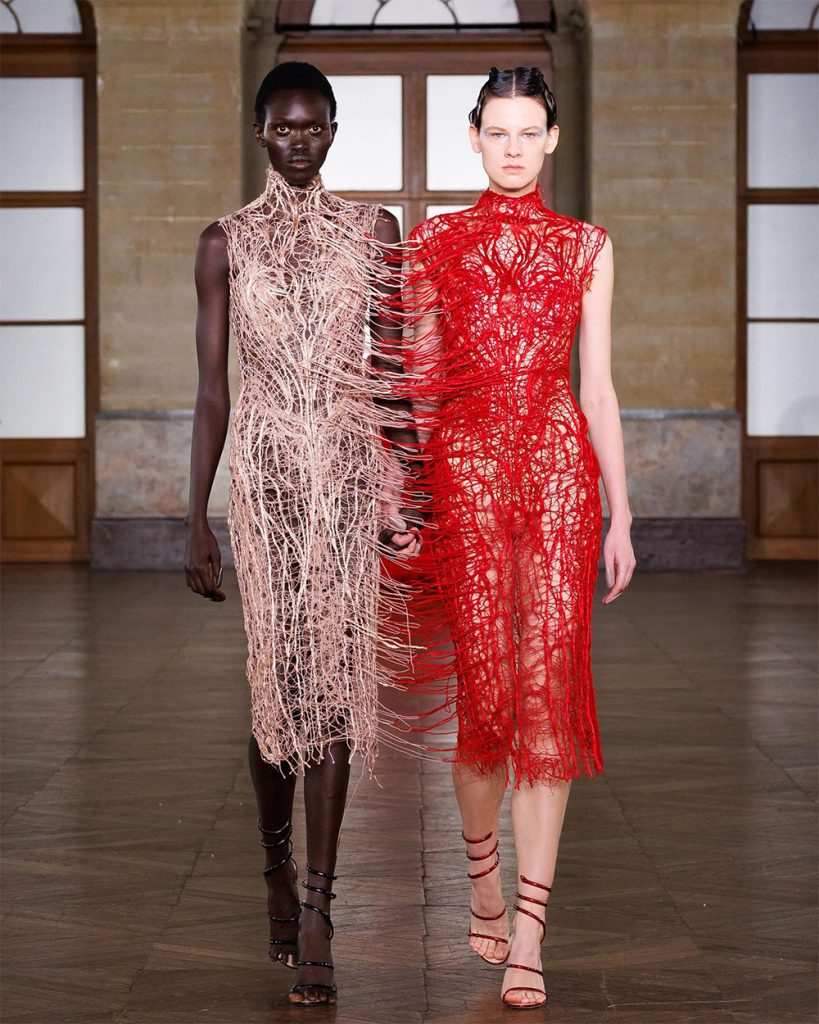
For instance, in his Paris Haute Couture Week SS26 debut, he showcased avant-garde body-conscious silhouettes to exhibit Advaita philosophy, where masculine and feminine energies converge in a single reality. The body became a canvas to blur binaries not just metaphorically, but quite literally. Engineered filaments threaded into web-like structures mapped human anatomy in an eye-opening runway debut.
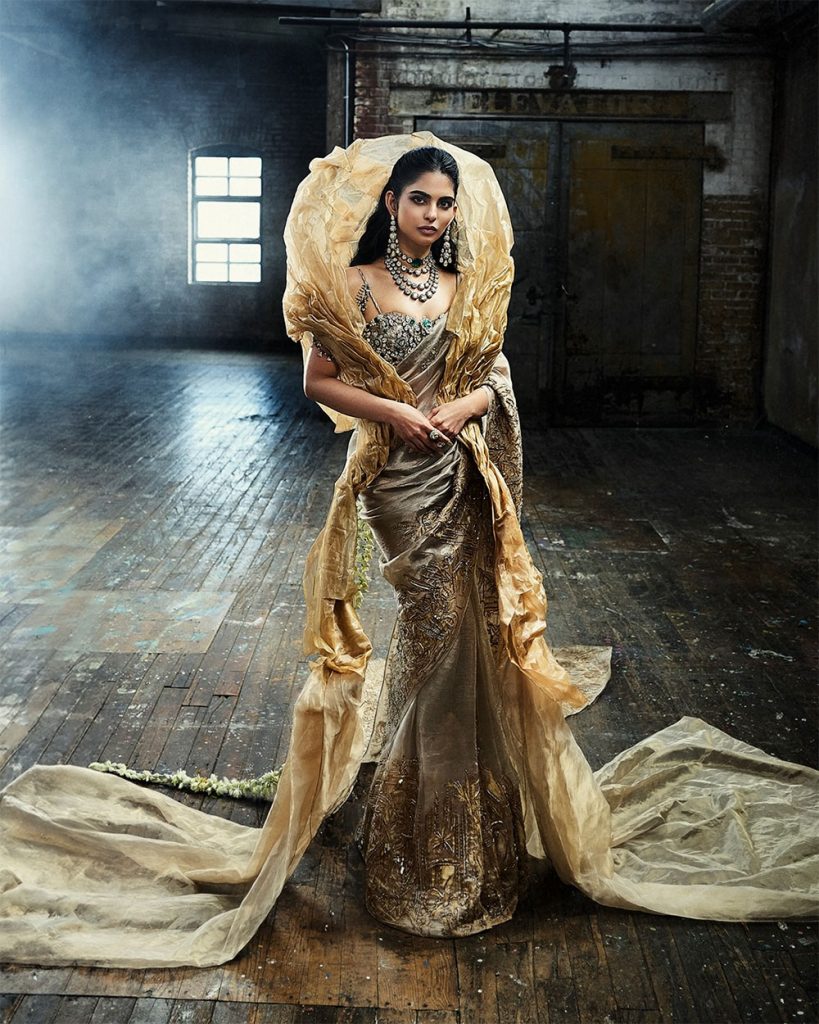
Later, at The Met Gala, too, he morphed a saree into a sculptural resin-draped cape forming a halo around Isha Ambani’s body in an iconic reference to Raja Ravi Varma’s painting Padmini: The Lotus Lady.
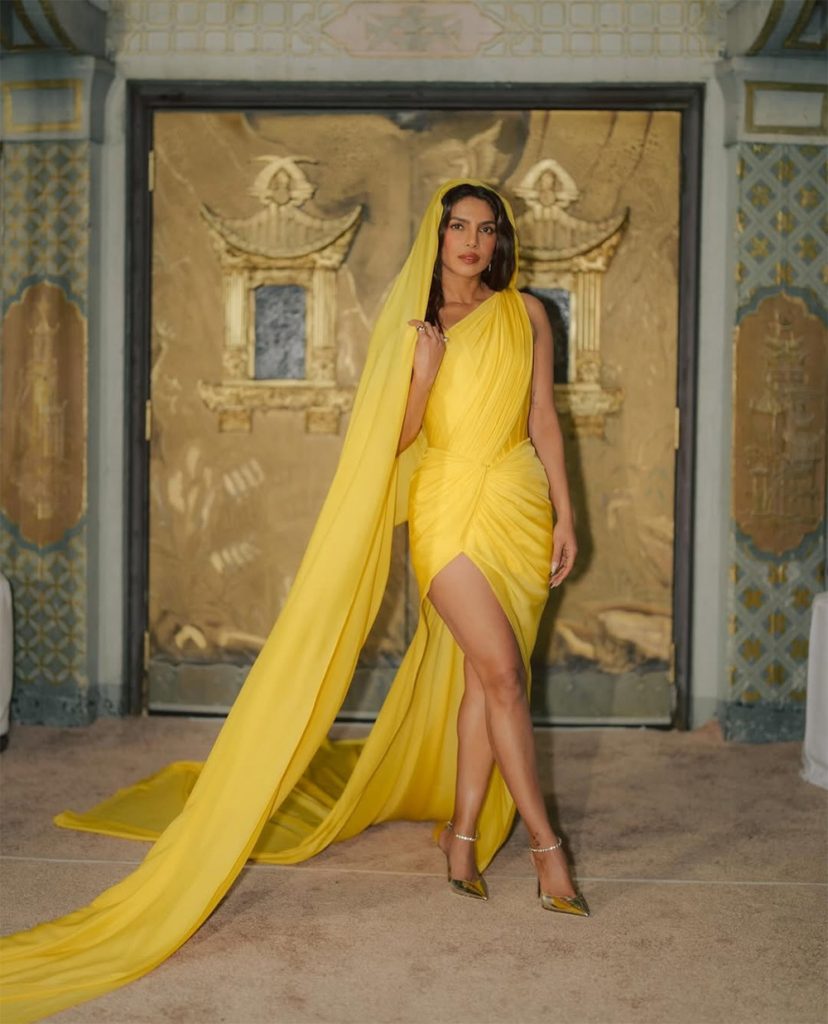
And in between, he dressed global celebrities Li Jun Li, Priyanka Chopra Jonas, and most strikingly Grammy-winning artists Lady Gaga and Doechii for The Devil Wears Prada 2 collaboration, where yet again, the body became an extension of couture.
After dressing the world, the Delhi-based designer returns to the primordial question: what’s the genesis of this future-ready yet India-rooted imagination? He finds answers in his new initiative, ‘Lha: The Living Spirit’, dedicated to India’s indigenous and tribal communities.
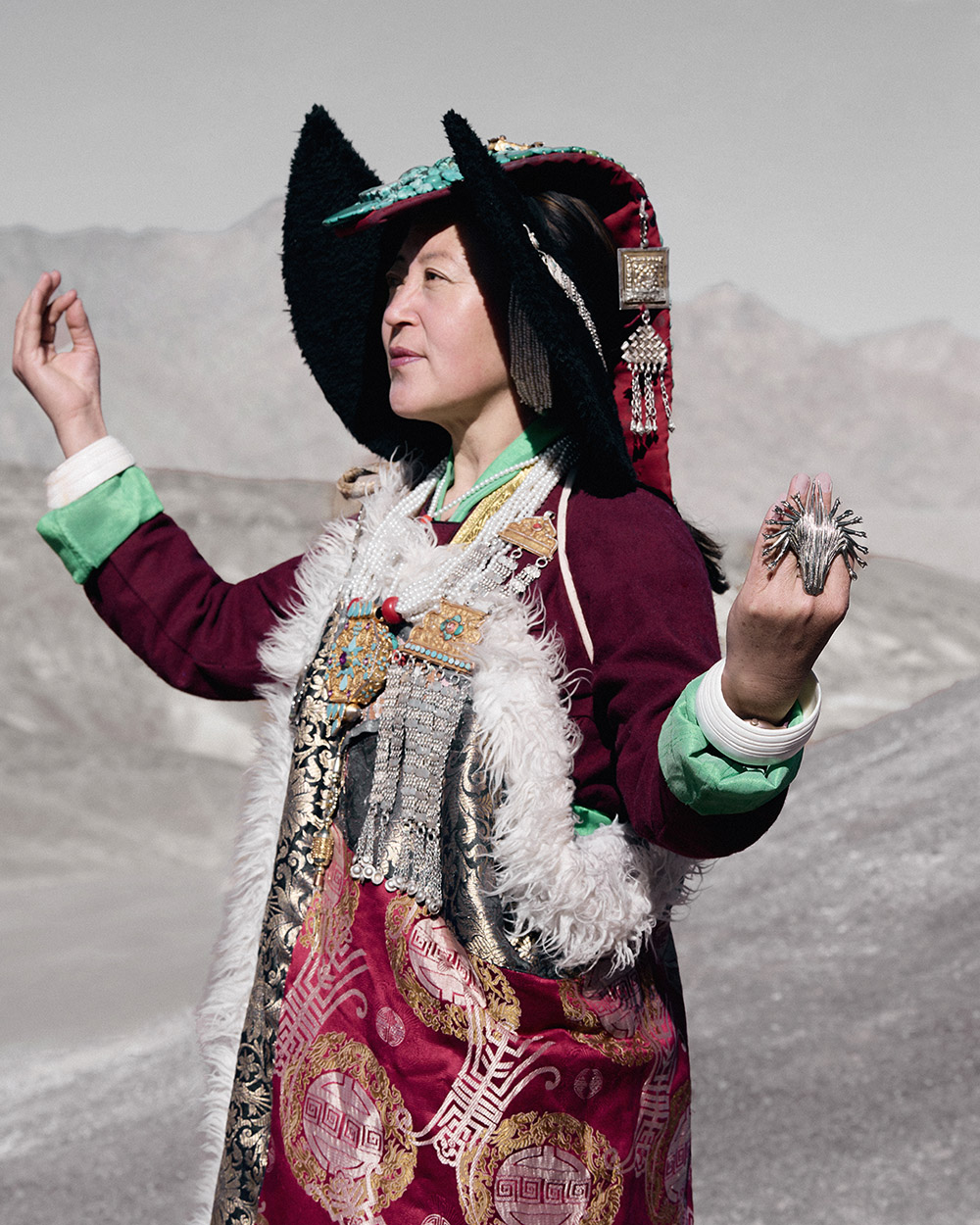
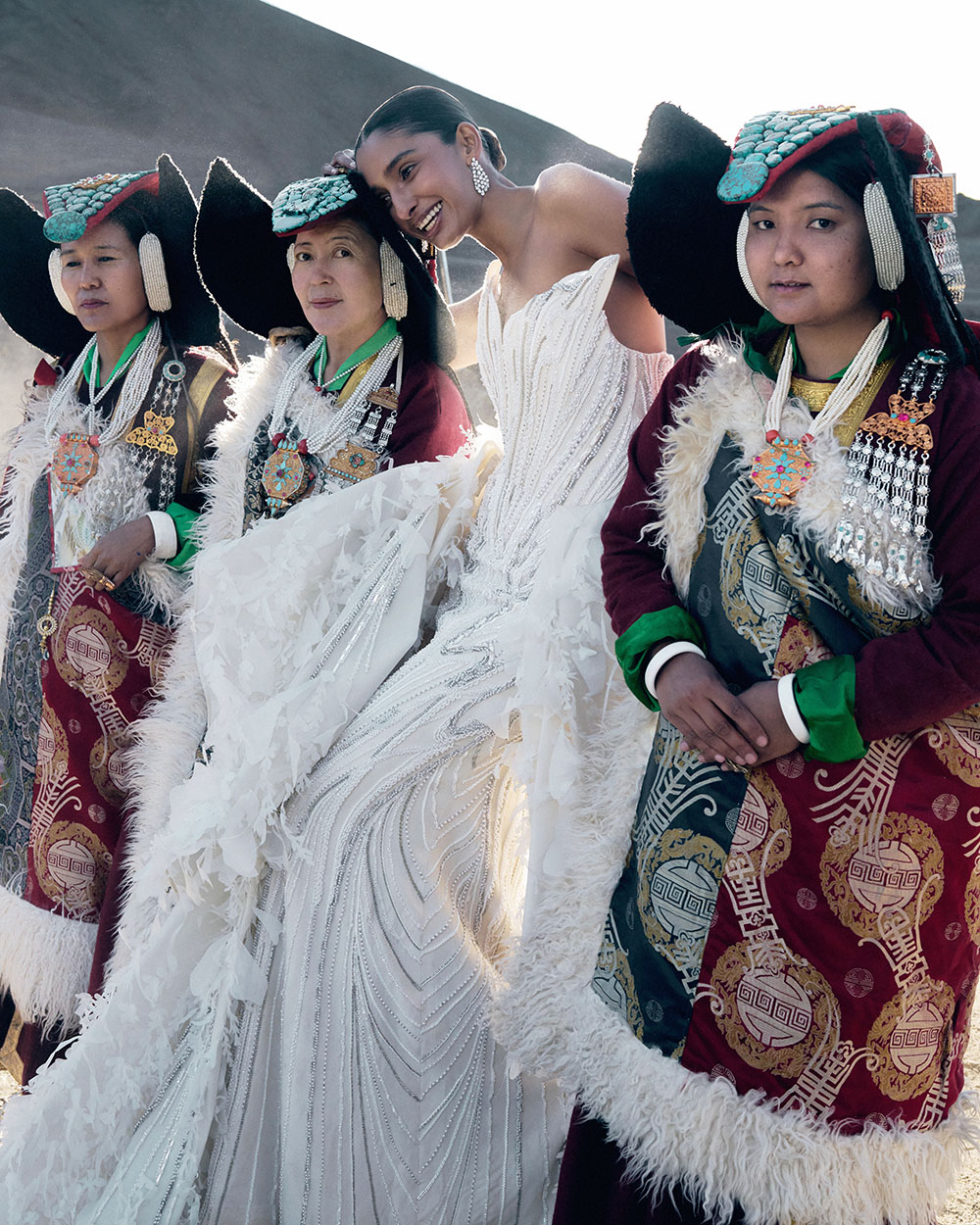
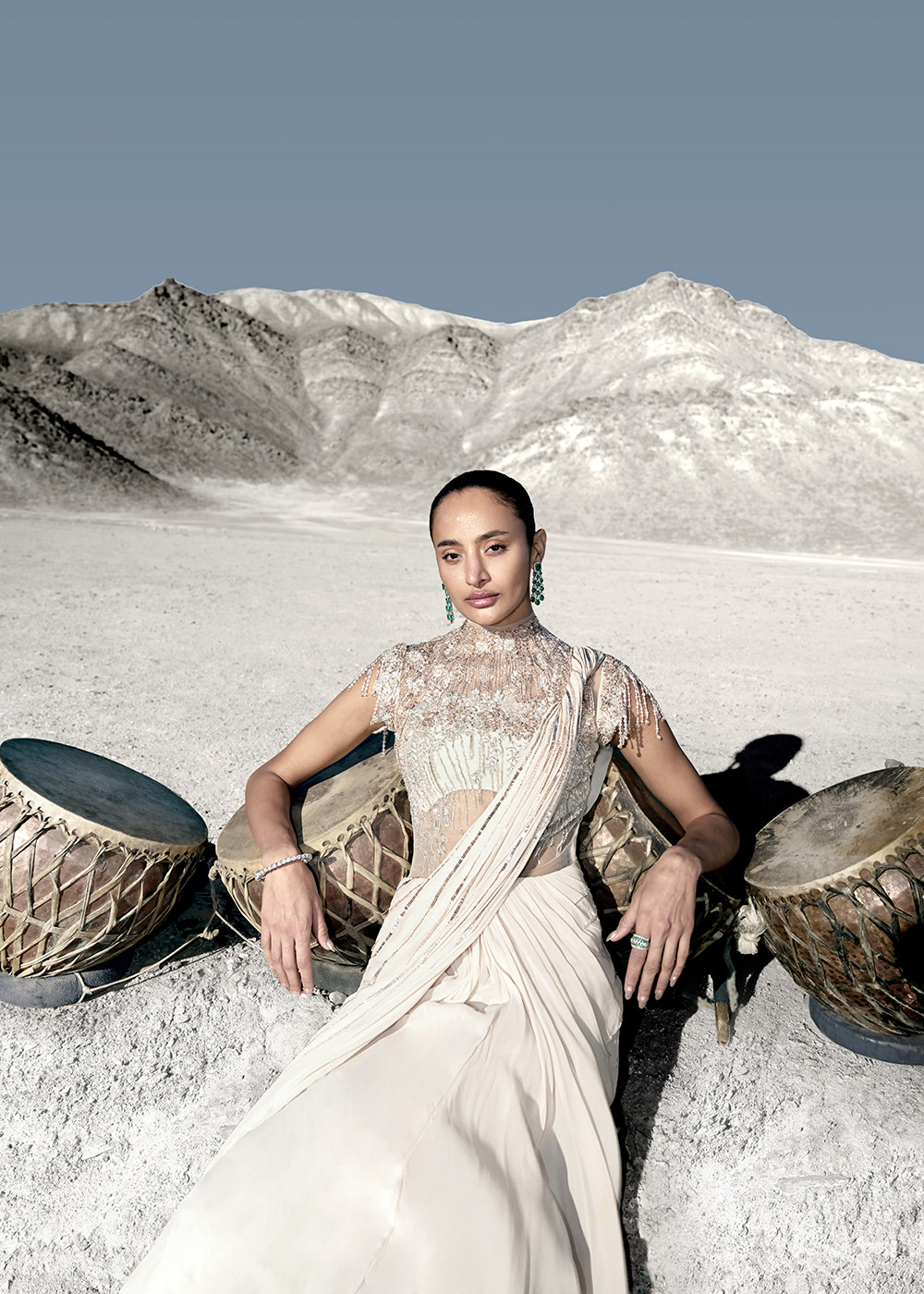
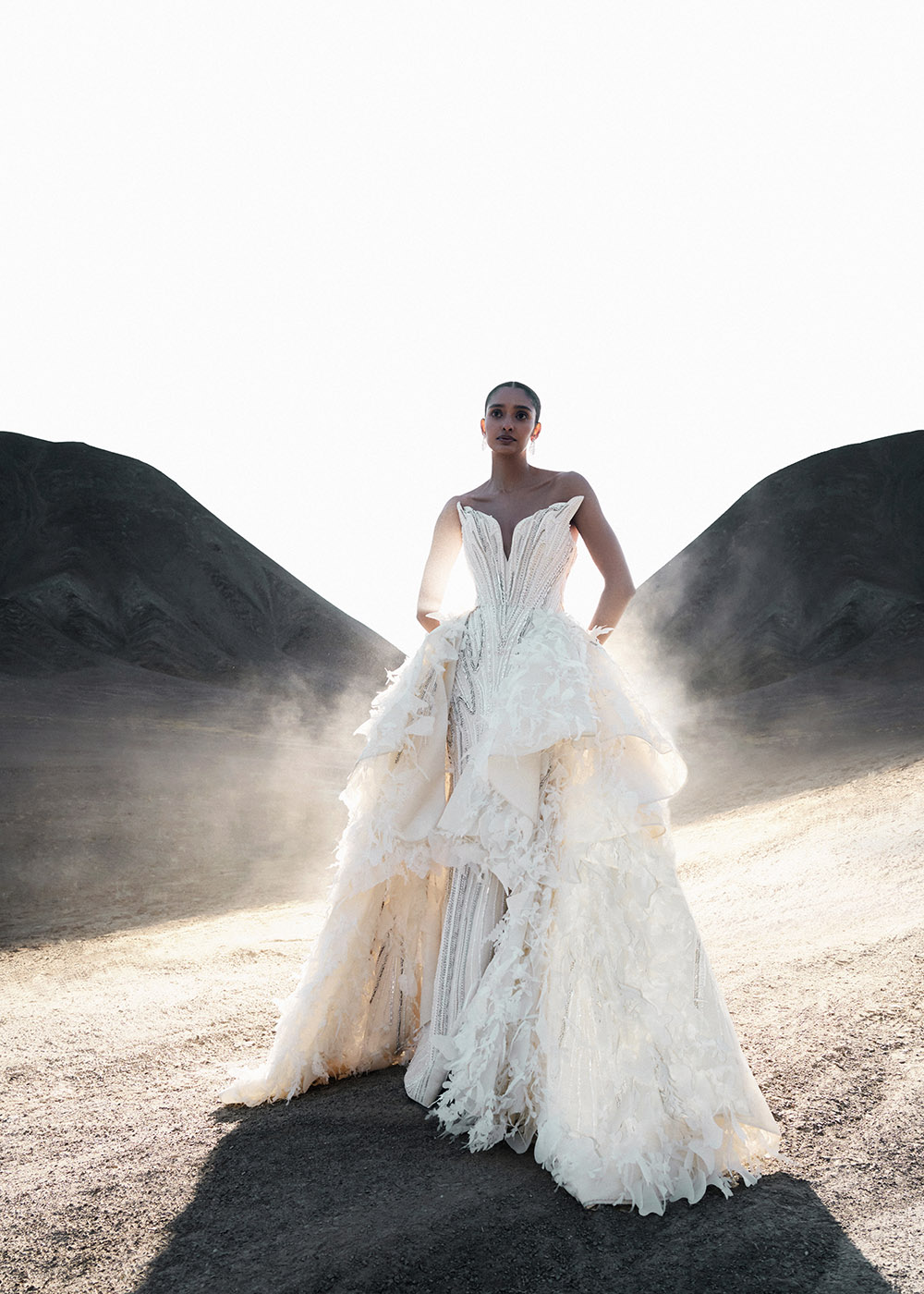
Shot in Ladakh, the campaign shows Gaurav’s creations in the picturesque landscapes of the mountain land. Models wearing saree gowns, gowns with sculpted bodices, and bridal wear like lehengas, dance on the beats of the 400-year-old ceremonial instrument of the Himalayas, Daman Drum, in a traditional folk dance of Shondol and Shonta Lima. Resultingly, the local music, dance, body’s rhythm with nature, and spiritual chants become a form of communication rather than performance, to connect with unseen forces, as per the Ladakhi belief system. Notably, the campaign is interspersed with the real voices of Ladakh’s tribal communities, musicians, and dancers so fashion chronicles the tale of the remotest of the lands.
View this post on Instagram
We speak to the designer on the new project, its first chapter and what lies ahead with the new IP.
Tell us about your new initiative focused on India’s indigenous and tribal communities. What was the intent and inspiration behind it? Why do it now?
In 2026, we began a long-term initiative to engage with the living artistic traditions of India’s indigenous and tribal communities. The intent is to create space for practices that continue through ritual, craftsmanship, and oral inheritance, and to place these communities at the centre of the narrative. It felt important to do this now, as many of these traditions are still alive but remain underrepresented within contemporary cultural and fashion conversations.
What made you start the series with a project in Ladakh? Why does it focus on traditional folk dances, Shondol and Shonta Lima?
Ladakh offered a unique starting point because of its strong relationship between land, spirituality, and community. The belief that the land carries a presence deeply resonated with our own design philosophy. Shondol and Shonta Lima are among the region’s enduring folk traditions, with histories rooted in monastic, royal, and village life. Their structure, rhythm, and collective movement felt like a natural extension of how we think about form and composition.
In the campaign video, we see ceremonial instruments, like Daman Drum played by legacy drummer Baba Napo. How did you meet him and collaborate?
We were introduced to Baba Napo through local networks while researching the region. What stood out immediately was the depth of his relationship with the Daman drum. He carries not just the technique, but a lineage that has been passed down through generations. There is a sense of responsibility and quiet mastery in the way he performs. Our interactions with Ladakh’s local community were grounded in listening rather than directing. Spending time with monks, elders, musicians, and younger members of the community gave us a deeper understanding of how culture is sustained through everyday practice. One of the key learnings was how seamlessly ritual, sound, and environment exist together without being separated into different categories.
How did your new collection best capture the spirit of this legacy, inheritance, and cultural preservation that you just spoke about?
The collection reflects this through a shift in approach. There is a movement towards lighter, fluid forms alongside jewel-toned evening pieces, allowing the garments to exist in dialogue with the landscape and the narrative. It is less about ornamentation and more about presence, restraint, and continuity.
Where do you plan to go next for this initiative and why?
This is conceived as an ongoing journey across different regions of India. Each chapter will focus on a distinct community and its living traditions. The intention is to build a series that reflects the diversity of cultural practices across the country while maintaining a consistent respect for context and authenticity.
Your sculptural gowns are world famous. Why do you stick to it, and what makes your label a go-to for global celebrities and collaborations such as for Devil Wears Prada 2?
Sculptural couture allows me to think of the body as a space rather than a surface. It gives me the freedom to explore movement, structure, and emotion in a way that feels closer to art. It has become a language that continues to evolve with each collection. On the second part, I think it comes down to a strong point of view. The work is recognisable, sculptural, and rooted in a distinct design language. At the same time, it allows for individuality, which is important for artists and public figures looking to express themselves.
What makes you a maximalist at heart?
I grew up surrounded by environments that embraced detail, celebration, and visual richness. Indian weddings, festivals, and everyday aesthetics all carry a sense of layering and intensity. That exposure shaped my instinct to create work that feels immersive and expressive.
What are your upcoming projects?
We are continuing to expand both the couture and cultural aspects of the brand. This includes new chapters within the indigenous and tribal initiative, as well as upcoming couture collections and international collaborations. The focus remains on building a body of work that connects craft, narrative, and global audiences.