Watches and Wonders 2026: Rolex Unveils New Collection Of Timepieces
Rolex stuns at Watches and Wonders 2026 with a refined yet confident lineup, from vibrant Oyster Perpetuals to bold Yacht-Master II updates and exceptional haute horlogerie pieces
At Watches and Wonders 2026, most brands arrive like overexcited students, desperate to impress, armed with complications, colours, and concepts that scream for attention. And then there is Rolex. It doesn’t scream. It doesn’t even raise its voice. It simply walks in, places a few watches on the table, and somehow becomes the only thing anyone talks about. Because Rolex has mastered something the rest of the industry still struggles with. Anticipation. The sort that builds quietly over months, fuelled by rumours, speculation, and the faint hope that perhaps, just perhaps, the Crown will do something unexpected. And yet, when it finally does unveil its novelties, the surprise is not in how radical they are, but in how effortlessly they refine what already exists. This year is no different. The 2026 line-up is not about reinvention. It is about evolution executed with such precision that it feels almost inevitable. From refreshed Oyster Perpetuals to the ever-reliable Datejust and the unapologetically bold Yacht-Master II, Rolex has once again delivered a collection that demands attention without ever asking for it.
Oyster Perpetual 41
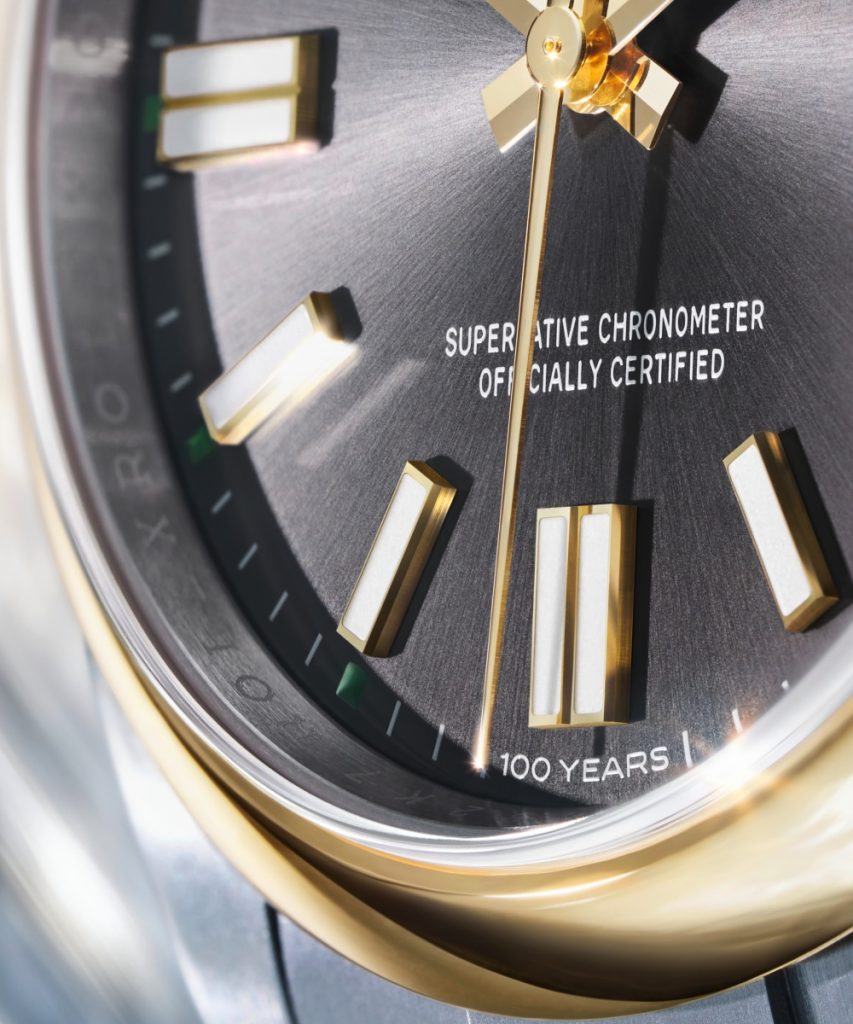
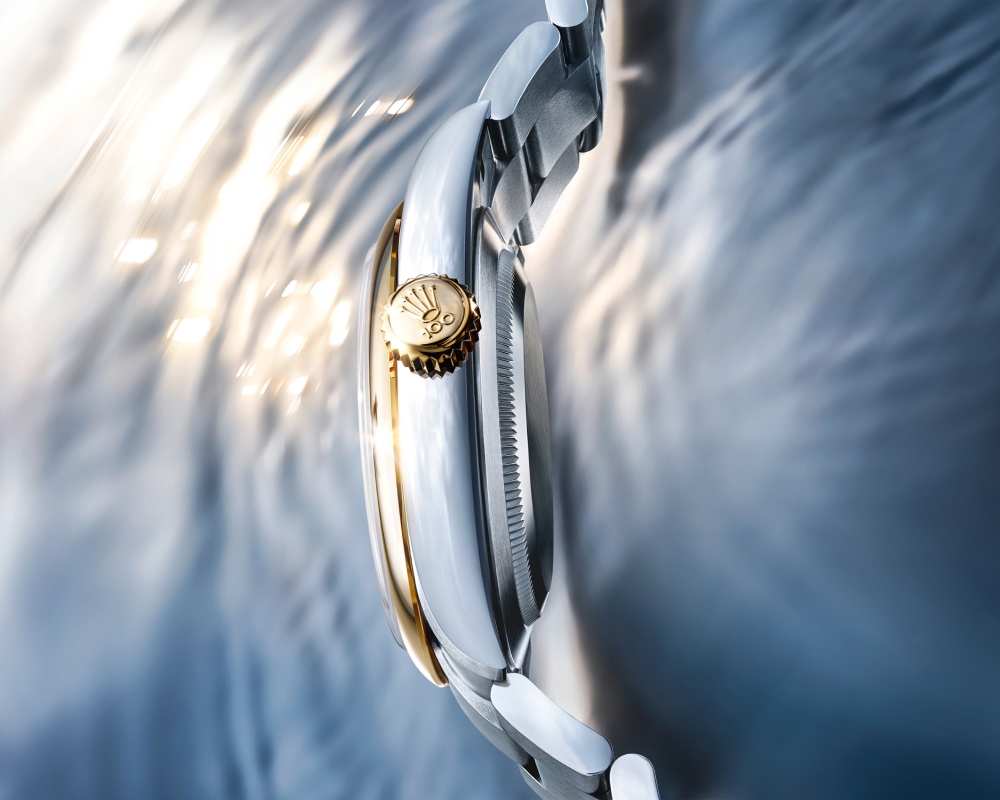
The new Rolex Oyster Perpetual 41, arguably Rolex’s most stripped-back expression of watchmaking, arrives with a twist that is subtle but far more deliberate than it first appears. This is Rolesor, but not as one typically knows it. Instead of the usual two-tone approach, yellow gold is used sparingly and with intent, reserved only for the bezel and the Twinlock crown, while the bracelet remains entirely in Oystersteel, creating a contrast that feels controlled rather than decorative.
Also Read: Top 5 Rolex Watch Dials That Changed The Game
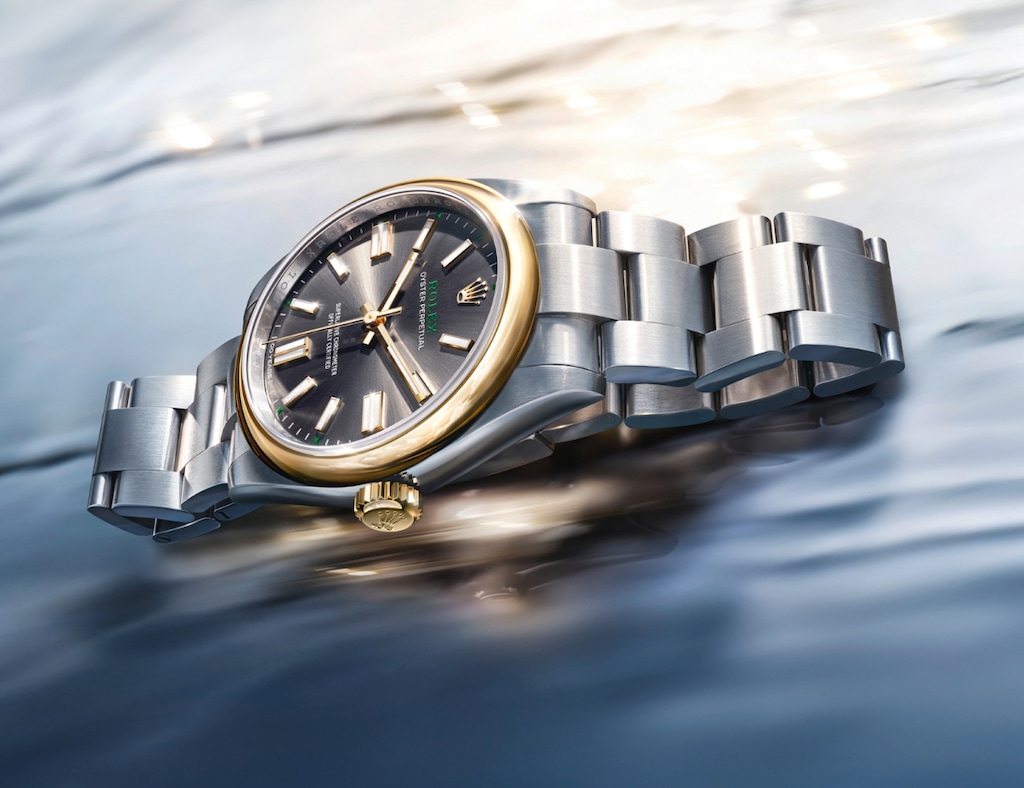
The slate sunray dial carries the anniversary theme with admirable restraint. At 6 o’clock, where one would normally find “Swiss Made,” there is instead a discreet “100 years” signature, positioned just beneath the marker. It is not loud, not celebratory in the obvious sense, but quietly significant. Green accents trace the minute track and highlight the Rolex logo, adding just enough colour to lift the composition without disturbing its balance. Applied yellow gold hour markers and hands, filled with Chromalight, ensure excellent legibility, emitting a long-lasting blue glow in low light conditions.
Powering the watch is the calibre 3230, Rolex’s no-date automatic movement, engineered with the sort of precision that has become second nature to the brand. Featuring the Chronergy escapement, a Parachrom hairspring, and Paraflex shock absorbers, it is built for efficiency, resistance to magnetic interference, and long-term durability. Operating at 28,800 vibrations per hour, it delivers a robust 70-hour power reserve. As expected, it meets the strengthened 2026 Superlative Chronometer standard, maintaining an accuracy of -2/+2 seconds per day, tested after casing, because anything less simply would not do.
Oyster Perpetual 36
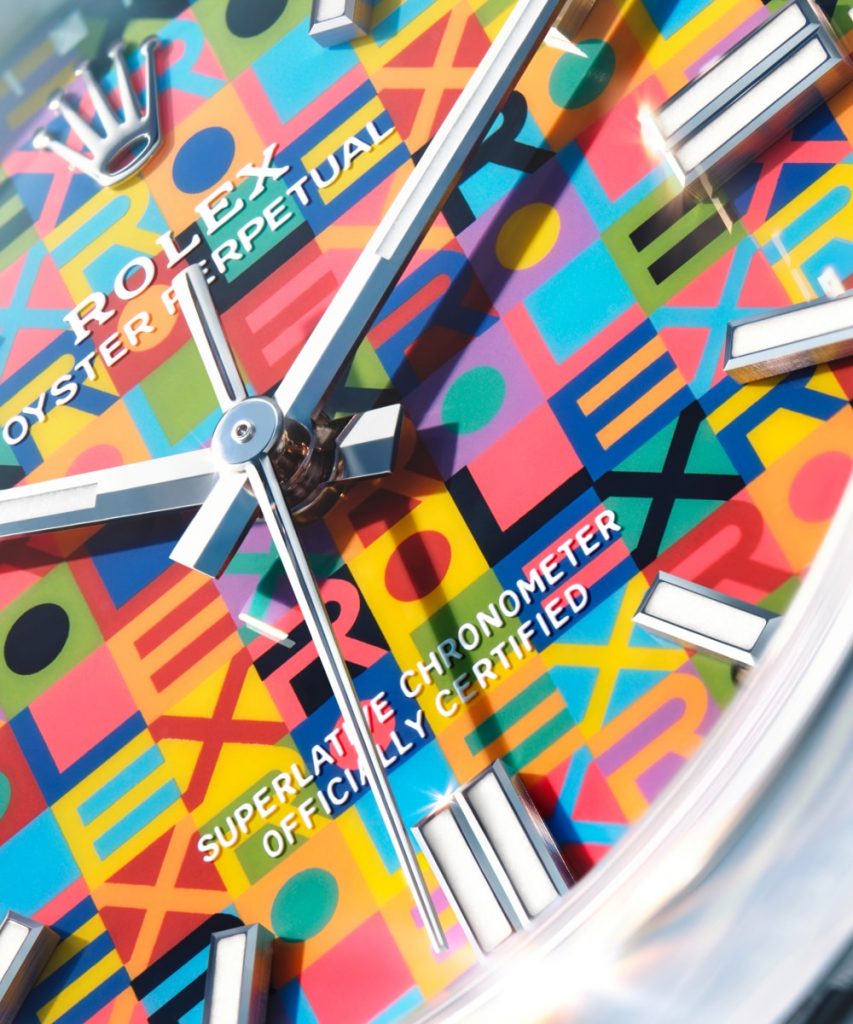
The Rolex Oyster Perpetual 36 arrives like a burst of controlled exuberance, the sort that only Rolex can get away with. At first glance, it feels playful, almost carefree. But spend a moment with it, and you realise this is not whimsy. It is discipline masquerading as joy. The lacquered dial, adorned with the Jubilee motif, draws from a design first introduced in the late 1970s, now reimagined with modern precision. The letters of the Rolex name form the pattern itself, rendered in a striking interplay of ten colours. Crucially, these colours are not applied in one go. Each is layered individually, one after the other, demanding near-perfect alignment. The result is a dial that shifts with light, sometimes bold, sometimes restrained, but always deliberate.
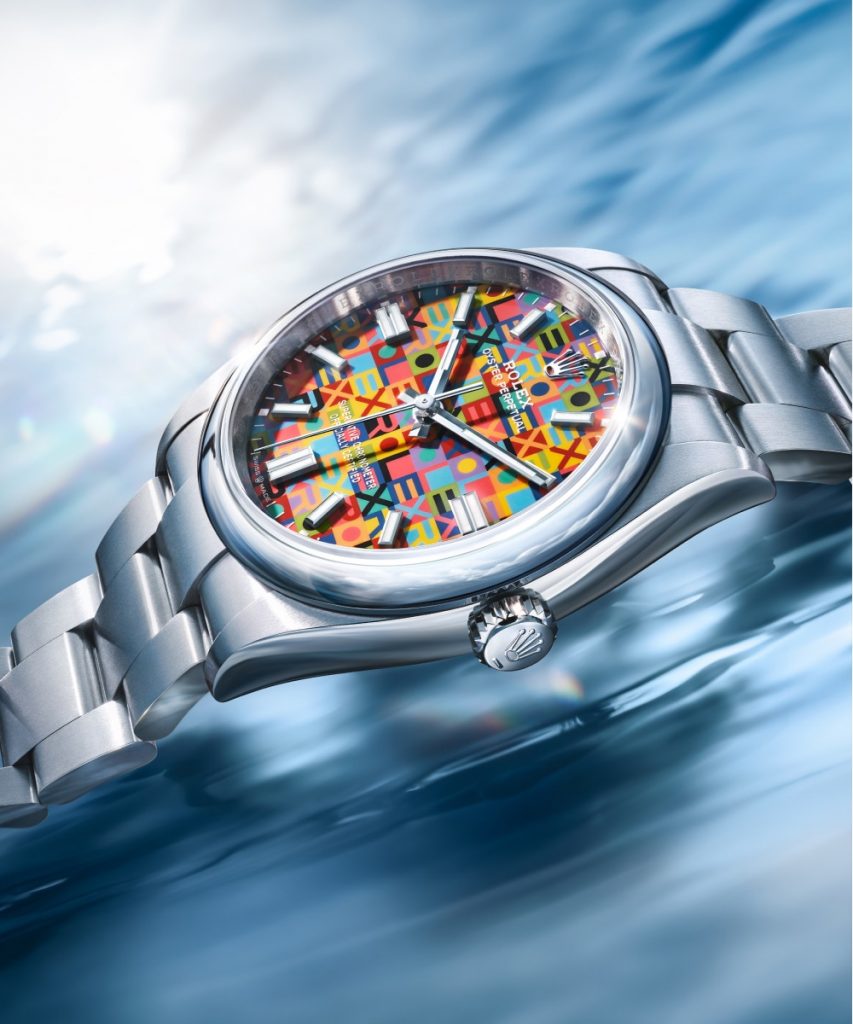
Look closer, and the dial reveals even more depth. The lacquer finish is built up in multiple coats, creating a smooth, almost glass-like surface that enhances colour vibrancy while maintaining uniformity. Applied hour markers sit crisply above this backdrop, filled with Chromalight to ensure long-lasting blue luminescence in low light. The hands follow suit, offering clarity without disturbing the visual rhythm of the dial. It is a composition that manages to be expressive without ever becoming chaotic, a careful balance between creativity and control.
Encasing this spectacle is Oystersteel, Rolex’s proprietary alloy from the 904L steel family, more commonly used in aerospace and chemical engineering. It offers exceptional resistance to corrosion while maintaining a sheen that rivals precious metals. The Oyster case remains a benchmark in functional design. Milled from a solid block of steel, it features a domed bezel, a hermetically screwed caseback, and the Twinlock crown with its dual waterproofness system. Together, they ensure water resistance to 100 metres. The sapphire crystal, virtually scratchproof and treated with an anti-reflective coating, protects the dial without compromising clarity.

The Oyster bracelet, introduced in the late 1930s, continues to define durability and comfort. Its three-link construction feels robust yet fluid, secured by an Oysterclasp. The Easylink extension system allows for a quick 5 mm adjustment, a small but meaningful detail that enhances everyday wear. Inside, the calibre 3230 delivers Rolex’s signature performance. The Chronergy escapement improves energy efficiency while maintaining reliability. The blue Parachrom hairspring resists magnetic fields and temperature variations, while Paraflex shock absorbers provide additional stability. With a 70-hour power reserve driven by a Perpetual rotor, it is built for consistency. Certified as a Superlative Chronometer, it operates within -2/+2 seconds per day, now reinforced in 2026 with enhanced testing for magnetism, reliability, and sustainability. It may look expressive, but at its core, it remains unmistakably Rolex: precise, robust, and utterly composed.
Also Read: Rolex Announces Five Laureates For 2026 Rolex Awards
Oyster Perpetual 28 & 34
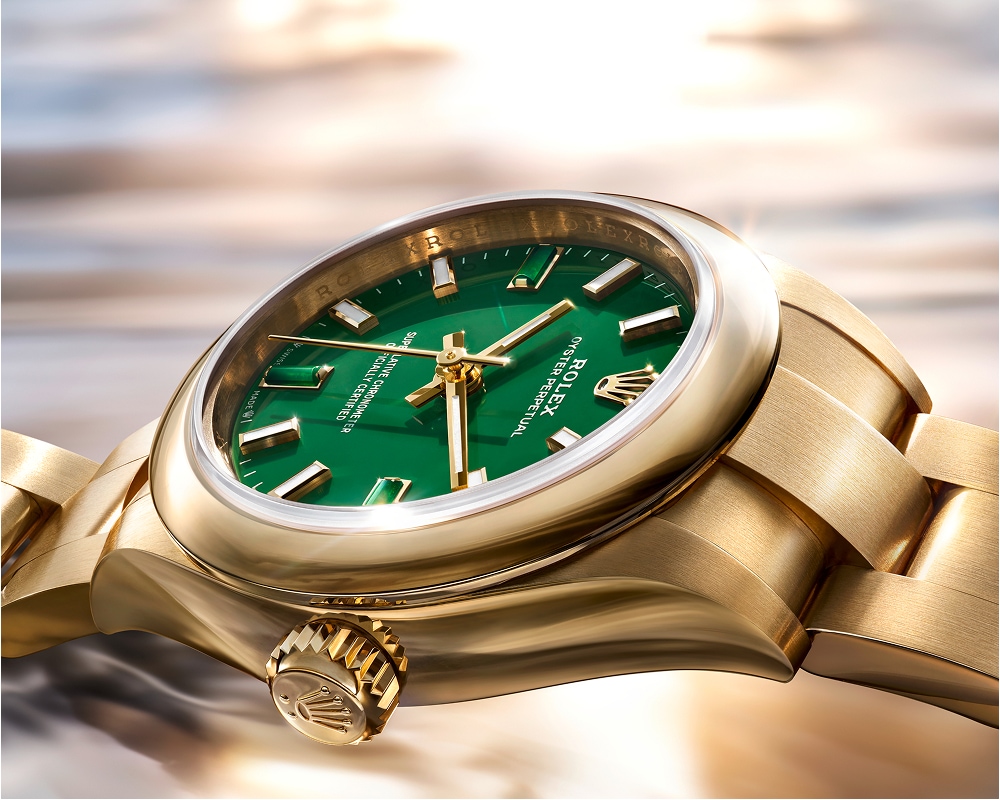
The Rolex Oyster Perpetual 28 and Rolex Oyster Perpetual 34 arrive not as mere extensions of the collection, but as a rather elegant rethinking of what simplicity can look like when dressed in precious metal. The Oyster Perpetual 28 is rendered in 18 ct yellow gold paired with a green stone lacquer dial, while the Oyster Perpetual 34 takes on a warmer tone in 18 ct Everose gold with a blue stone lacquer dial. At first glance, they appear restrained, almost understated, but look closer and the details begin to reveal themselves. Most notably, the hour markers at 3, 6 and 9 o’clock are crafted from natural stone, a first for Rolex, and not merely placed but sculpted with an ogive cut that enhances their natural structure and colour while eliminating unwanted reflections. On the 28 mm model, these markers are formed from heliotrope, offering a rich spectrum of green hues that subtly echo the dial beneath. On the 34 mm, dumortierite is used, its layered shades of blue creating depth and contrast against the lacquered surface. It is a detail that feels both unexpected and entirely deliberate, adding a layer of individuality without disturbing the watch’s composure.
The use of 18 ct gold here is equally considered. Rolex, uniquely, operates its own foundry, allowing complete control over the casting and shaping of its alloys. Composed of 750 parts per thousand pure gold, these alloys are engineered not just for visual richness but for durability and consistency. Whether in yellow gold or the brand’s proprietary Everose gold, the result is a material that carries both warmth and resilience. For the first time, these precious metal Oyster Perpetual models feature predominantly satin-finished surfaces, lending the case and bracelet a softly textured sheen that contrasts beautifully with the polished domed bezel. It is a subtle shift in finishing, but one that changes the character of the watch entirely, making it feel more contemporary while retaining its inherent elegance.
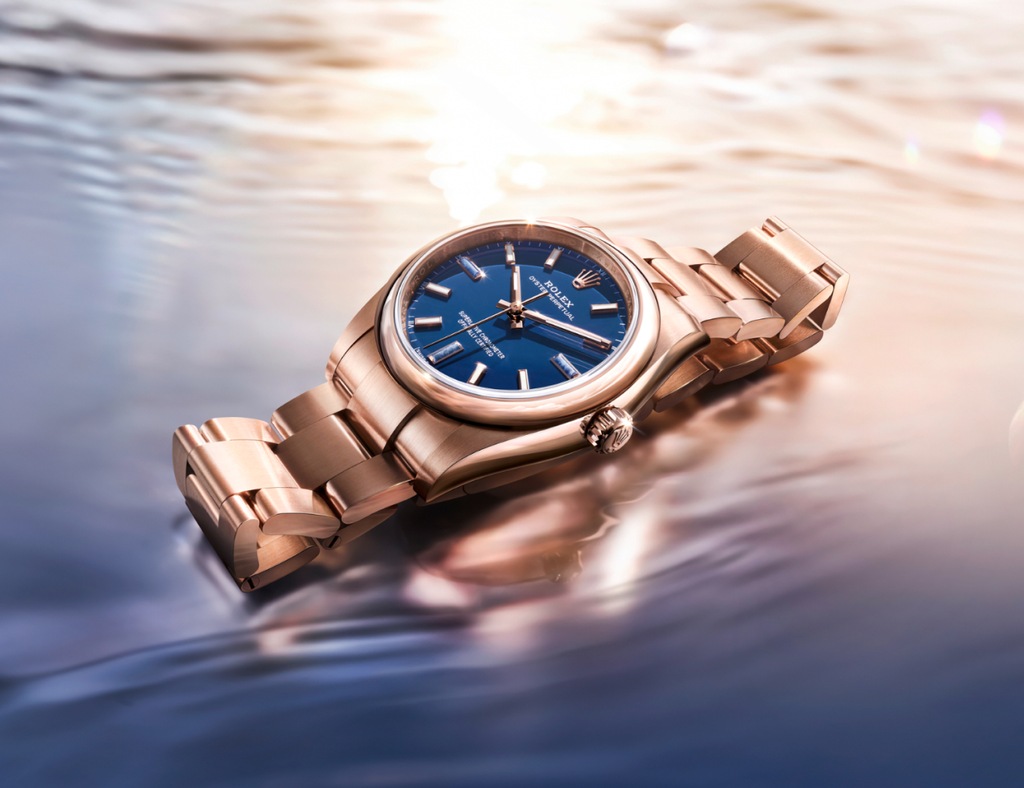
Both models are fitted with the classic Oyster bracelet, its three-piece link construction delivering the familiar balance of robustness and comfort. Secured by a folding Oysterclasp and equipped with the Easylink extension system, it allows for quick adjustments of approximately 5 mm, a small but practical touch that enhances everyday wearability. Beneath the surface, the calibre 2232 powers both watches, a self-winding movement entirely developed and manufactured by Rolex. Equipped with the Syloxi silicon hairspring, it ensures remarkable stability in any position, while a paramagnetic nickel-phosphorus escape wheel and Paraflex shock absorbers enhance resistance to magnetic fields and physical shocks. With a power reserve of approximately 55 hours delivered via a Perpetual rotor, it maintains the brand’s reputation for reliability and precision.
As part of the Oyster Perpetual lineage, these watches remain direct descendants of the original Oyster of 1926, carrying forward its defining traits of waterproofness, chronometric precision, and automatic winding. Certified as Superlative Chronometers, they meet Rolex’s stringent accuracy standard of -2/+2 seconds per day, now reinforced in 2026 with additional criteria for magnetism resistance, reliability, and sustainability. Accompanied by the signature green seal and a five-year international guarantee, the Oyster Perpetual 28 and 34 do not attempt to reinvent the formula. Instead, they refine it, adding just enough intrigue to remind you that even the simplest watches can still surprise.
Oyster Perpetual Datejust
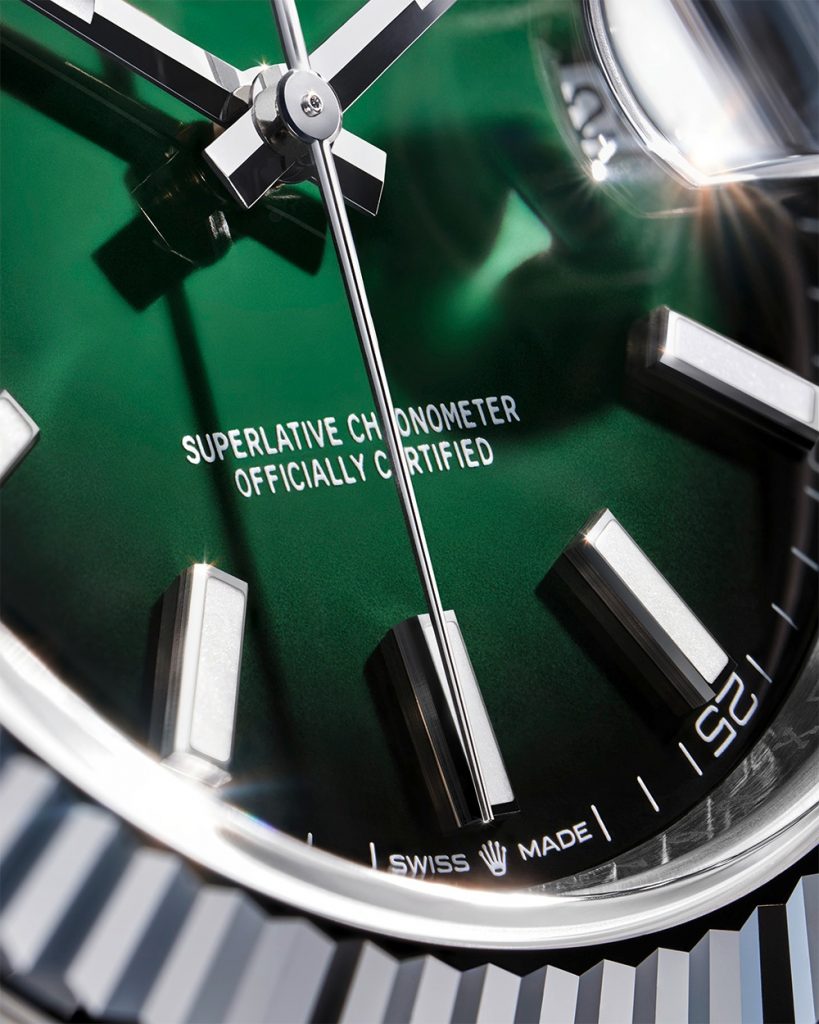
The Rolex Datejust 41 returns in 2026 with the sort of quiet authority that only a watch of this stature can command, now dressed in a white Rolesor configuration that pairs Oystersteel with white gold, and crowned—quite literally—by a fluted bezel that catches light like it was designed to do nothing else. But the real theatre lies in the dial. A green lacquer ombré, executed entirely through lacquering for the first time since Rolex reintroduced the gradient motif in 2019, it begins with a rich green base before black lacquer is sprayed in concentric motions to create a deepening vignette towards the edges. The effect is subtle yet dramatic, a shifting gradient that feels alive under changing light. White inscriptions stand out with remarkable clarity against this backdrop, while Chromalight-filled index hour markers ensure legibility remains uncompromised, glowing with that familiar long-lasting blue hue in low light.
The watch itself remains every bit the Datejust one expects. The 41 mm Oyster case, a benchmark in durability, is milled from a solid block of Oystersteel, its caseback hermetically screwed down and edged with fine fluting. The Twinlock winding crown, equipped with a double waterproofness system, seals the case securely, ensuring water resistance to 100 metres. The sapphire crystal, fitted with the signature Cyclops lens at 3 o’clock, magnifies the date for effortless reading while maintaining scratch resistance and clarity thanks to its anti-reflective coating. It is a construction that does not seek attention, yet delivers unwavering protection for what lies within.
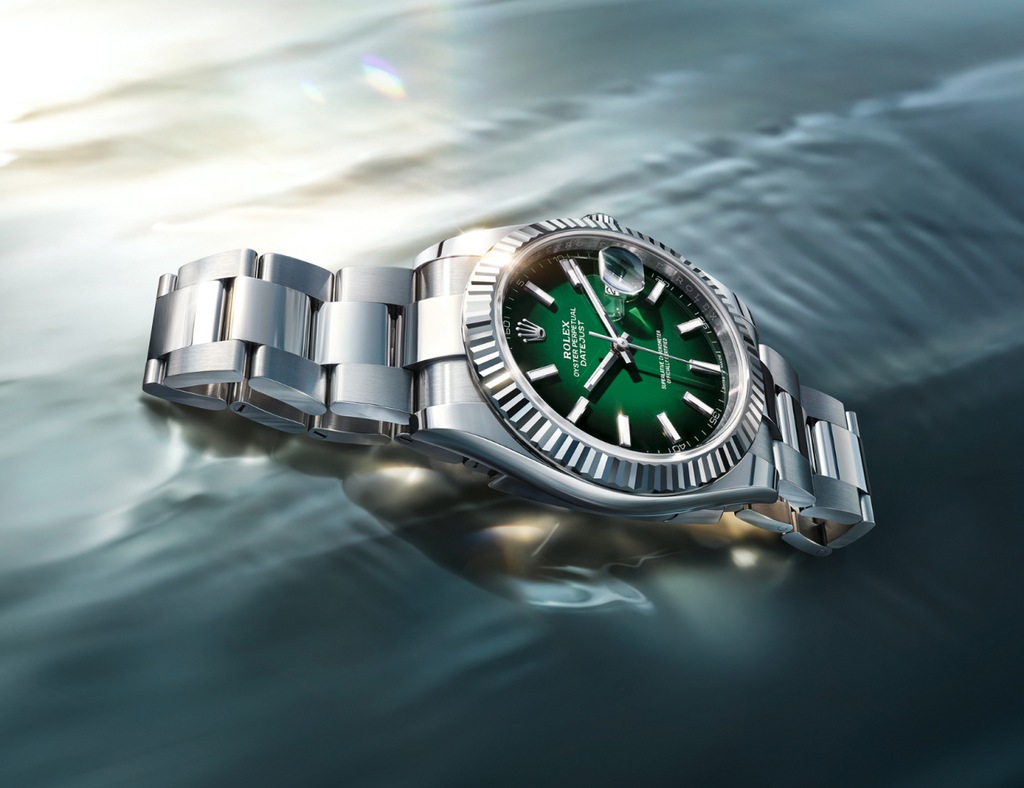
The Oyster bracelet, with its three-piece link design introduced in the late 1930s, continues to offer a blend of robustness and comfort that feels reassuringly familiar. Finished with a folding Oysterclasp and equipped with the Easylink comfort extension system, it allows for a quick 5 mm adjustment, ensuring the watch adapts as easily as it impresses.
Powering the Datejust 41 is the calibre 3235, a movement that represents Rolex at its most technically refined. Featuring the Chronergy escapement, it maximises energy efficiency while maintaining exceptional reliability. The blue Parachrom hairspring, resistant to magnetic fields and temperature variations, works in tandem with Paraflex shock absorbers to deliver stability under pressure. With a 70-hour power reserve driven by a Perpetual rotor, it is engineered for consistency, precision, and endurance.
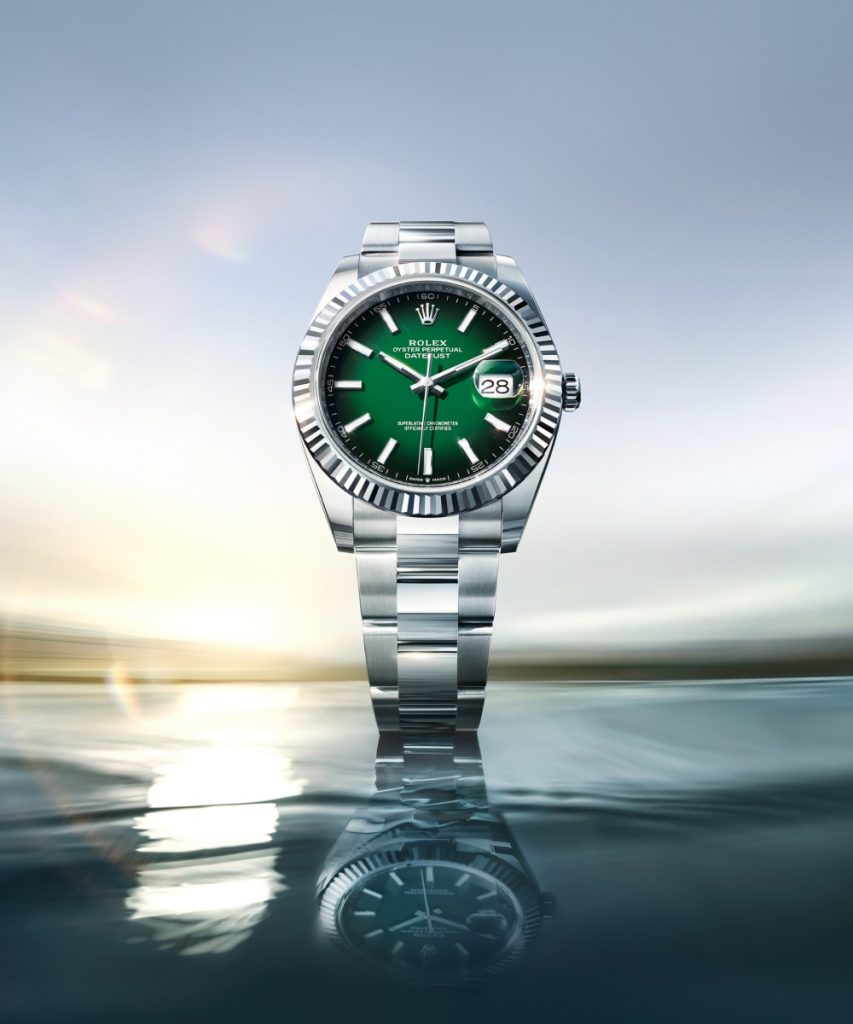
As expected, the watch carries the Superlative Chronometer certification, now strengthened in 2026 with additional criteria for magnetism resistance, reliability, and sustainability. Accuracy is maintained within -2/+2 seconds per day after casing, a level of precision that borders on obsessive. Yet beyond the specifications, the Datejust 41 remains what it has always been since its debut in 1945: the archetype of the classic wristwatch. A piece that evolves without losing itself, balancing innovation with continuity, and proving, once again, that true icons do not need reinvention—only refinement.
Oyster Perpetual Yacht-Master II
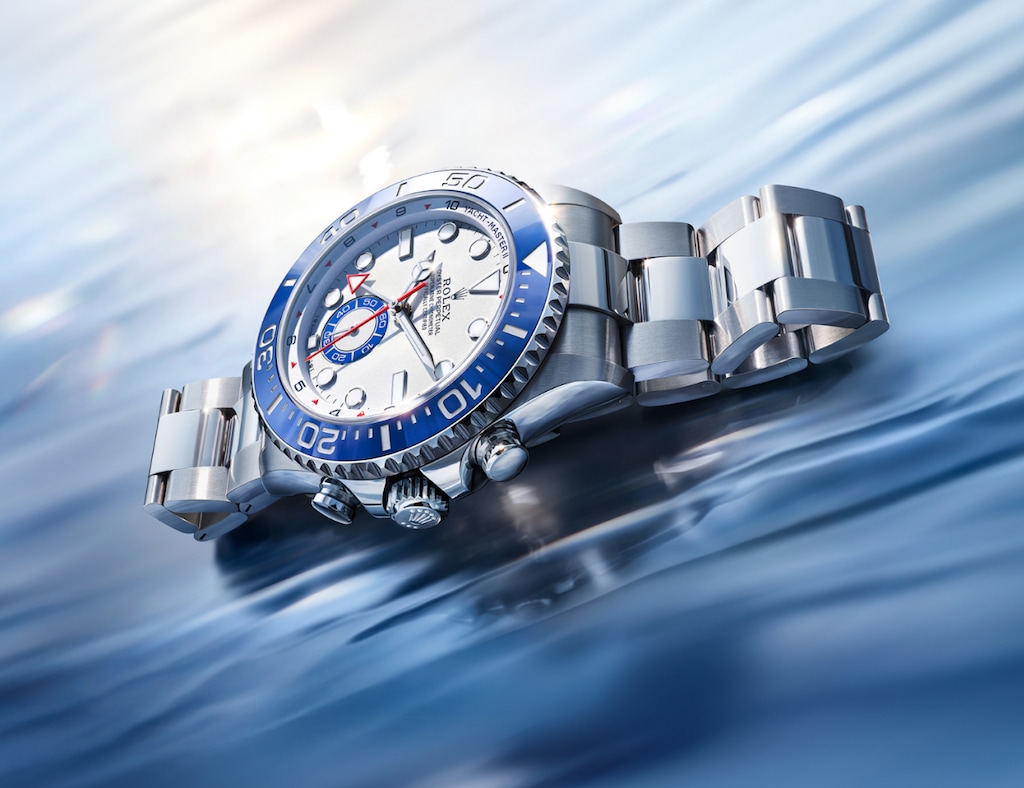
The Rolex Oyster Perpetual Yacht‑Master II returns with the sort of authority that makes one pause mid-sentence. This is not merely a nautical chronograph but a mechanical instrument forged for the theatre of competitive sailing, where seconds decide triumph or embarrassment. First launched in 2007 as one of the most technically ambitious watches in the Rolex catalogue, the latest generation arrives thoroughly reworked, sharper in design and far more intuitive in operation. Available in robust Oystersteel or opulent 18-carat yellow gold, the watch carries the unmistakable DNA of the Yacht-Master family while presenting a dramatically refreshed architecture. At its core lies a singular purpose: assisting sailors through the chaotic ballet of a regatta start sequence, where timing must be exact and nerves are rarely calm.
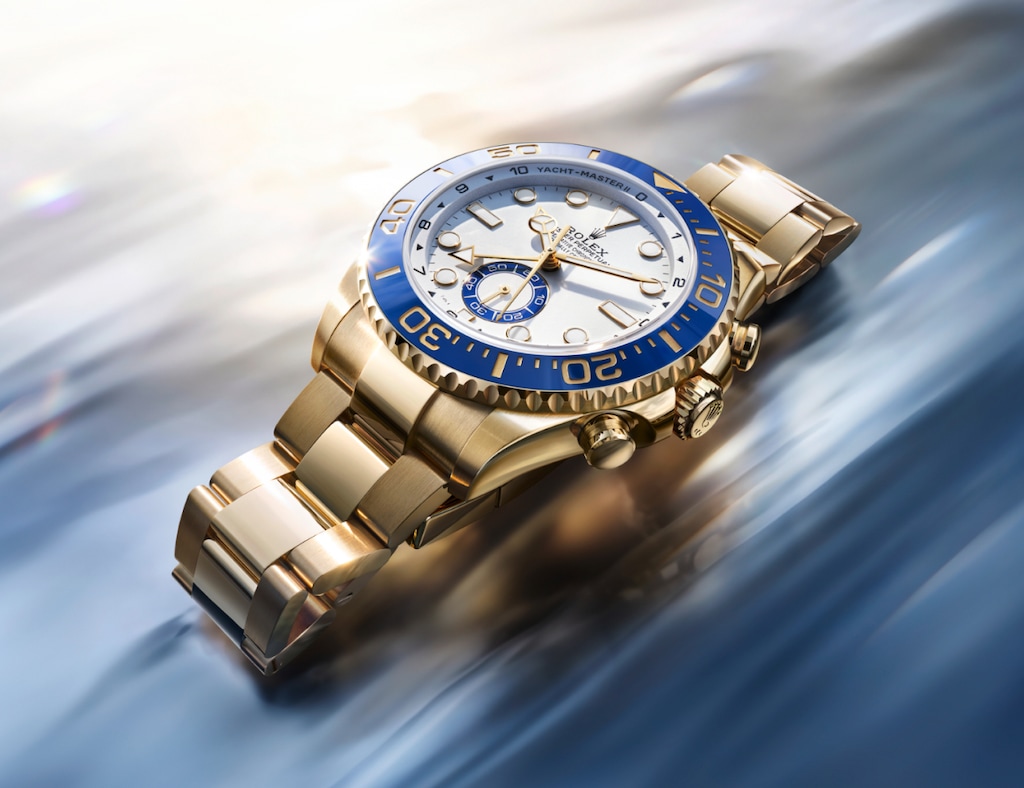
The dial of the new Yacht-Master II is cleaner, bolder and far easier to read at a glance. A newly introduced matte white lacquer dial reduces glare under harsh sunlight, ensuring the information remains visible even on the shimmering deck of a racing yacht. Surrounding it is a precisely positioned flange carrying the countdown scale from ten to zero minutes, an element so precisely engineered that Rolex has filed a patent application for its construction. Red triangular markers and matching hands accentuate the countdown indications on the Oystersteel version, creating an immediate visual hierarchy. The central seconds hand and the distinctive triangle-tipped countdown minute hand rotate counterclockwise, a first in Rolex watchmaking, visually reinforcing the idea of time running toward the decisive moment when the starting gun fires.
Equally striking is the bezel. The bidirectional rotatable bezel features a Cerachrom insert in deep blue ceramic, its moulded graduations coated in platinum or yellow gold via Physical Vapour Deposition. The first half hour is marked minute by minute, allowing sailors to measure intervals between race markers or tactical manoeuvres. The knurled edge offers exceptional grip, even with wet hands, while the bezel’s visual presence ensures the watch retains its unmistakably maritime personality.
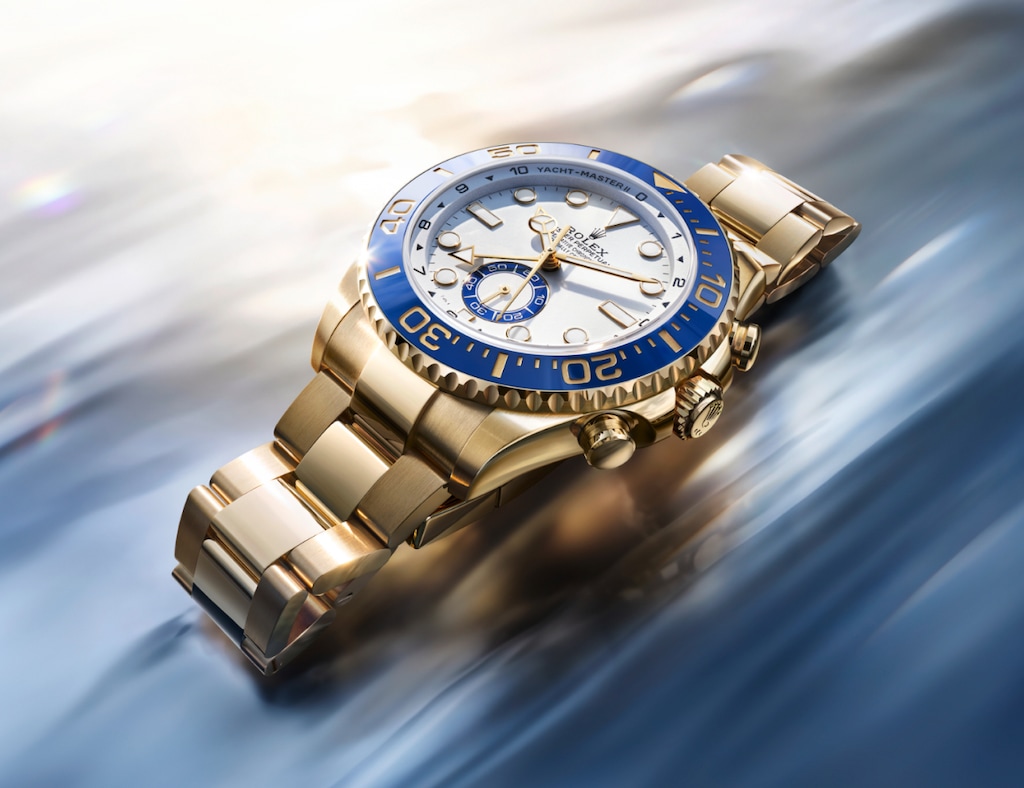
Inside beats calibre 4162, an entirely new chronograph movement developed specifically for this model. It represents the evolution of the earlier calibre 4161 but incorporates significant mechanical refinements. The innovative countdown programming mechanism allows the wearer to set the desired countdown duration using the lower pusher alone, eliminating the complex Ring Command system used previously. Each press advances the countdown minute hand, while the watch’s mechanical memory retains the programmed time for future races. The column-wheel chronograph architecture with vertical clutch guarantees an instantaneous and precise start, critical when synchronizing with official race signals.
Rolex has also lavished attention on finishing. The movement features bridges decorated with Rolex Côtes de Genève, distinguished by a subtle polished groove between each stripe, and a skeletonized oscillating weight. The Chronergy escapement, crafted from nickel-phosphorous, enhances energy efficiency while resisting magnetic interference. Combined with the blue Parachrom hairspring and Paraflex shock absorbers, the calibre achieves formidable reliability and a power reserve of approximately 72 hours.
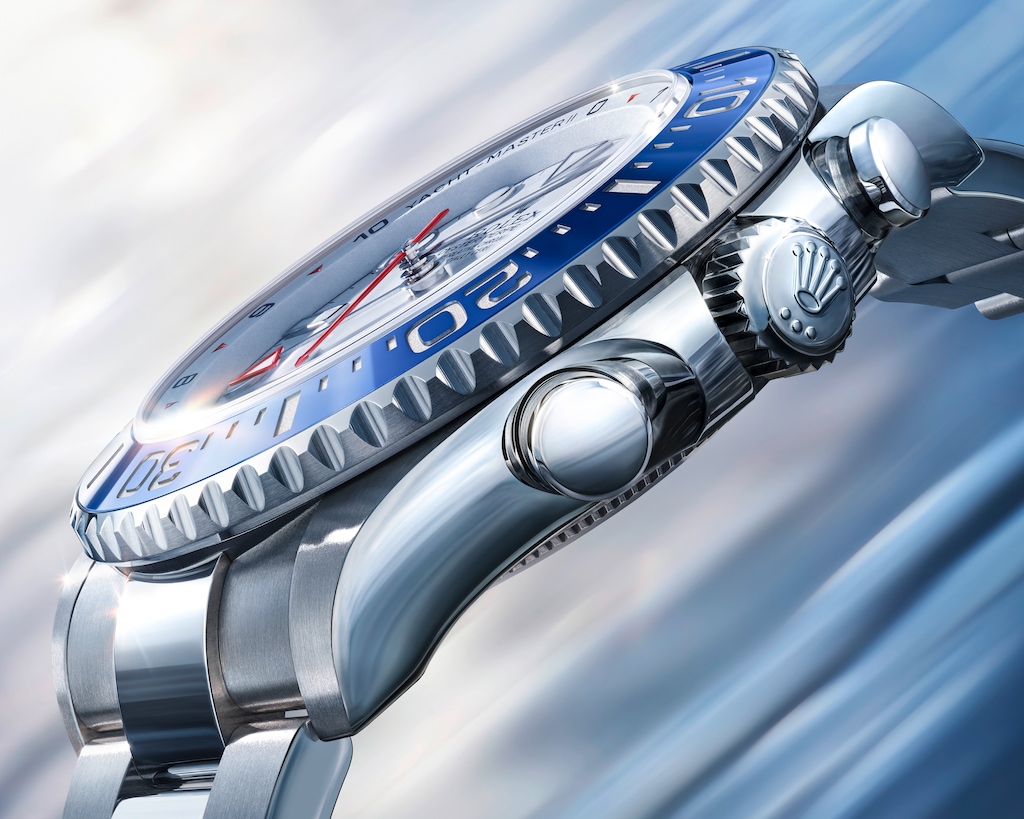
Encasing this sophisticated mechanism is the 44 mm Oyster case, waterproof to 100 metres and built from a solid block of Oystersteel or 18-carat gold. The Triplock crown with triple waterproofness system and the robust Oyster bracelet with Oysterlock safety clasp reinforce the watch’s professional credentials. Altogether, the Yacht-Master II stands as one of Rolex’s most technically audacious creations, a watch that translates the drama of competitive sailing into precise, mechanical theatre on the wrist.
Oyster Perpetual Day-Date 40 & Oyster Perpetual Cosmograph Daytona
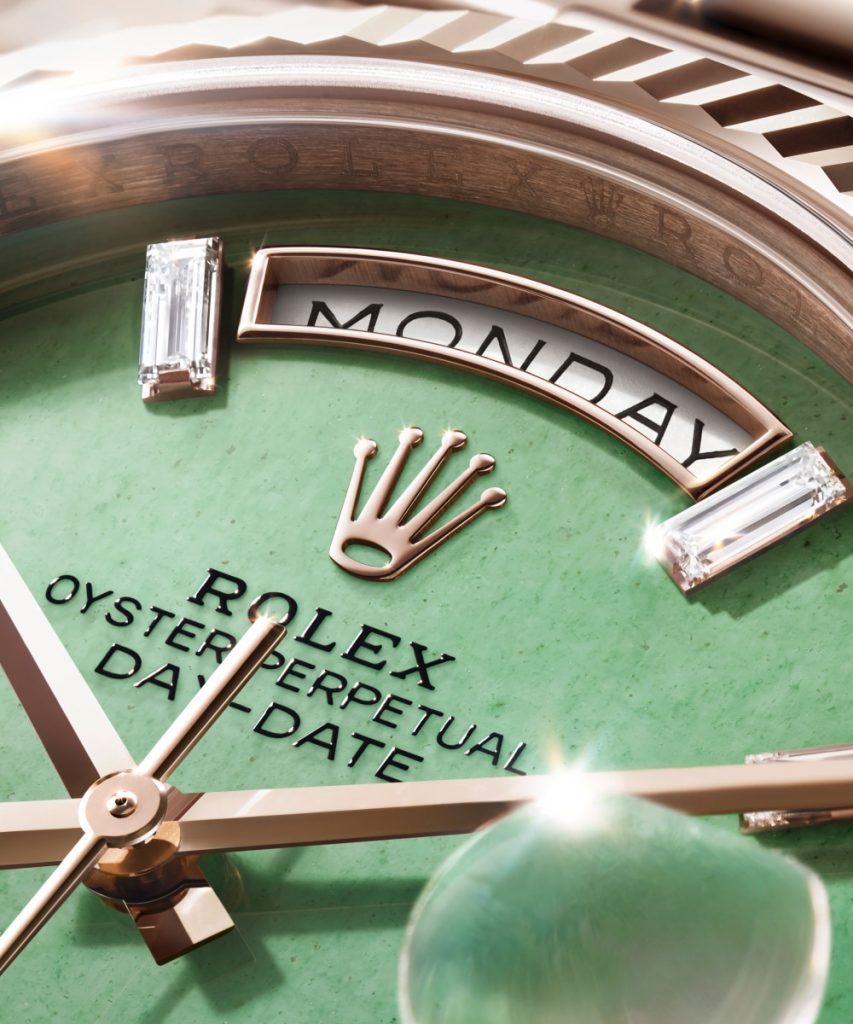
The Rolex Day-Date 40 arrives as a statement not just of luxury, but of quiet experimentation, the sort that Rolex rarely indulges in unless it is absolutely certain of the outcome. At the centre of this release is Jubilee Gold, a completely new 18 ct alloy conceived, developed, and produced in-house. It is not the loud, brash yellow gold of old, nor the rosy warmth of Everose. Instead, it sits somewhere intriguingly in between, glowing with tones of soft yellow, warm grey, and the faintest hint of pink. The result is subtle, almost understated, but unmistakably rich, a metal that changes character depending on the light rather than demanding attention outright.
Then there is the dial, and this is where things become properly interesting. Cut from bright green aventurine, a natural stone from the quartz family, it shimmers with a depth that no lacquer or enamel could convincingly replicate. Tiny mineral inclusions catch the light, creating a soft, almost cosmic sparkle that feels alive beneath the sapphire crystal. Around its perimeter sits an hour circle composed of ten baguette-cut diamonds, each precisely set to form a ring of brilliance that frames the dial without overwhelming it. It is a delicate balance between extravagance and restraint, one that Rolex executes with its usual clinical precision.
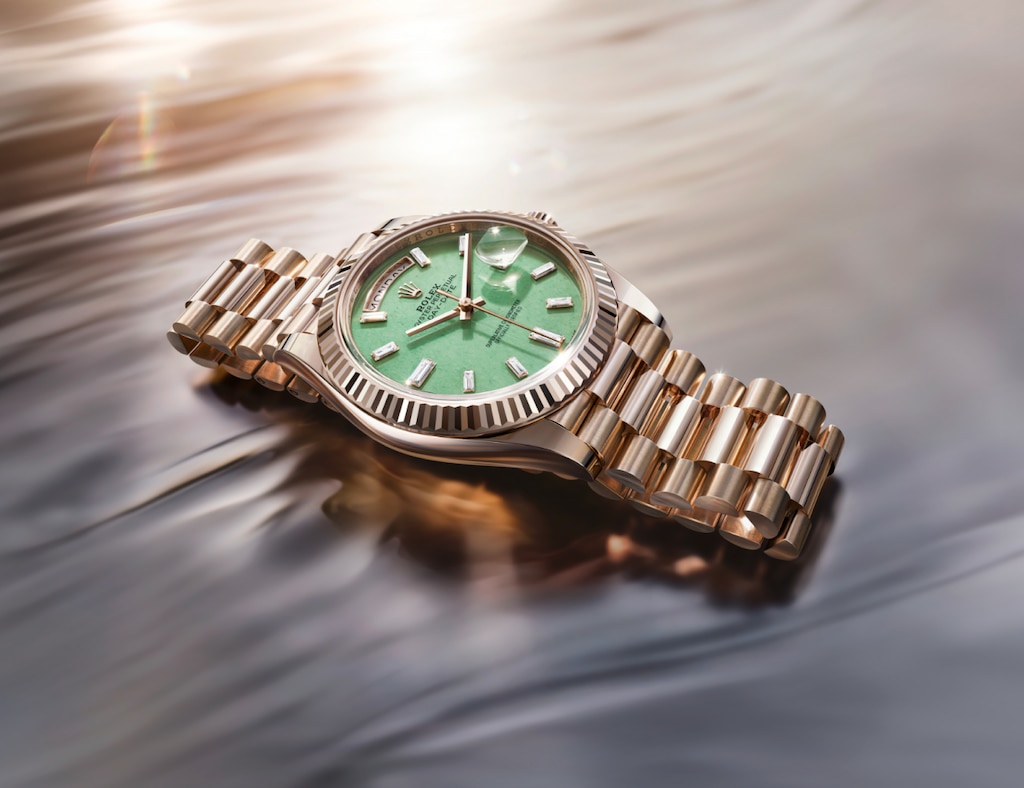
The case remains the familiar 40 mm Oyster architecture, paired with a fluted bezel that interacts beautifully with the shifting tones of Jubilee Gold. But it is the bracelet that truly defines the Day-Date. The President bracelet, introduced in 1956 specifically for this model, remains exclusive to the Day-Date and select precious metal Datejust references. Here, it is rendered entirely in Jubilee Gold, its three-piece links offering both visual fluidity and structural integrity. The concealed Crownclasp maintains the uninterrupted elegance of the bracelet, while ceramic inserts within the links, a patented Rolex innovation, enhance durability and prevent premature wear, ensuring that the watch feels as solid in a decade as it does on day one.
Beneath this refined exterior lies the calibre 3255, a movement that represents Rolex at its most technically accomplished. Entirely developed and manufactured in-house, it incorporates the patented Chronergy escapement, improving energy efficiency while maintaining exceptional reliability. The blue Parachrom hairspring, resistant to magnetic fields and temperature variations, works alongside Paraflex shock absorbers to ensure stability in less-than-ideal conditions. Equipped with a Rolex overcoil, the movement maintains consistent timekeeping regardless of position, a detail that underscores the brand’s obsession with precision. With a power reserve of approximately 70 hours delivered via a Perpetual rotor, it is built to perform with quiet consistency.
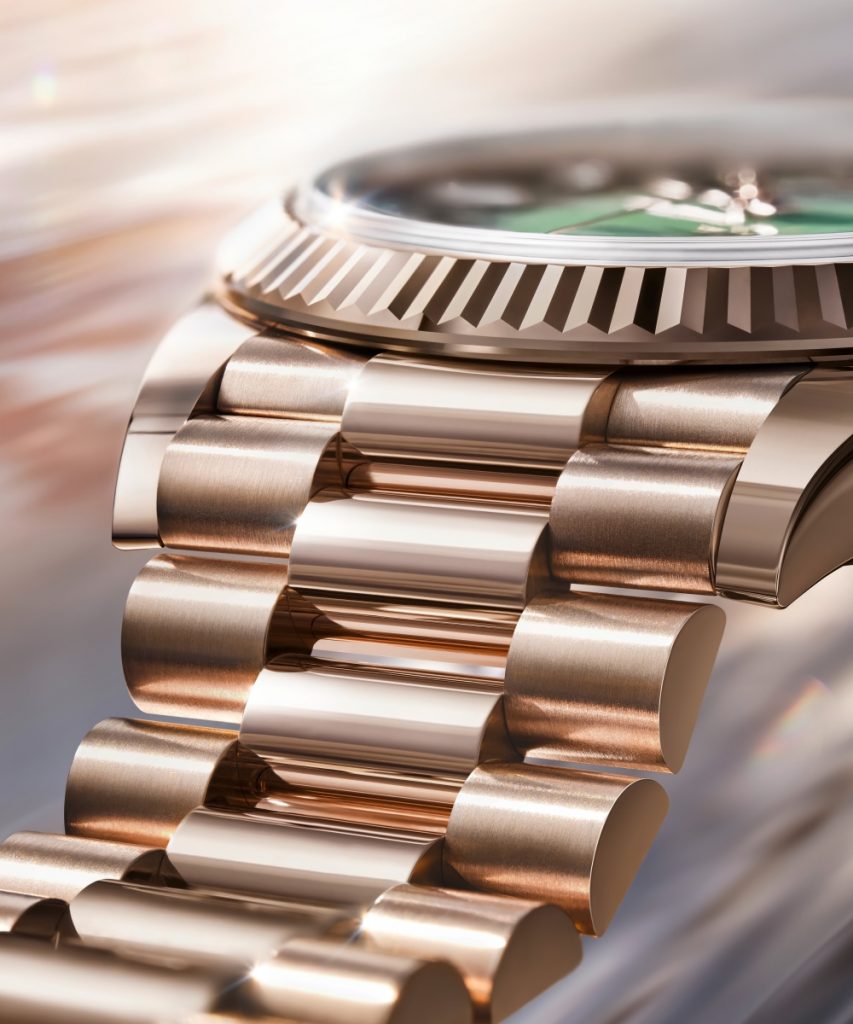
As expected, the Day-Date 40 carries the Superlative Chronometer certification, now strengthened in 2026 with additional criteria for magnetism resistance, reliability, and sustainability. Accuracy is maintained within -2/+2 seconds per day after casing, a standard that few can match. Yet beyond the specifications, this watch remains what it has always been: the ultimate expression of Rolex’s philosophy. A watch that does not shout, but simply exists, confident in the knowledge that it has nothing to prove.
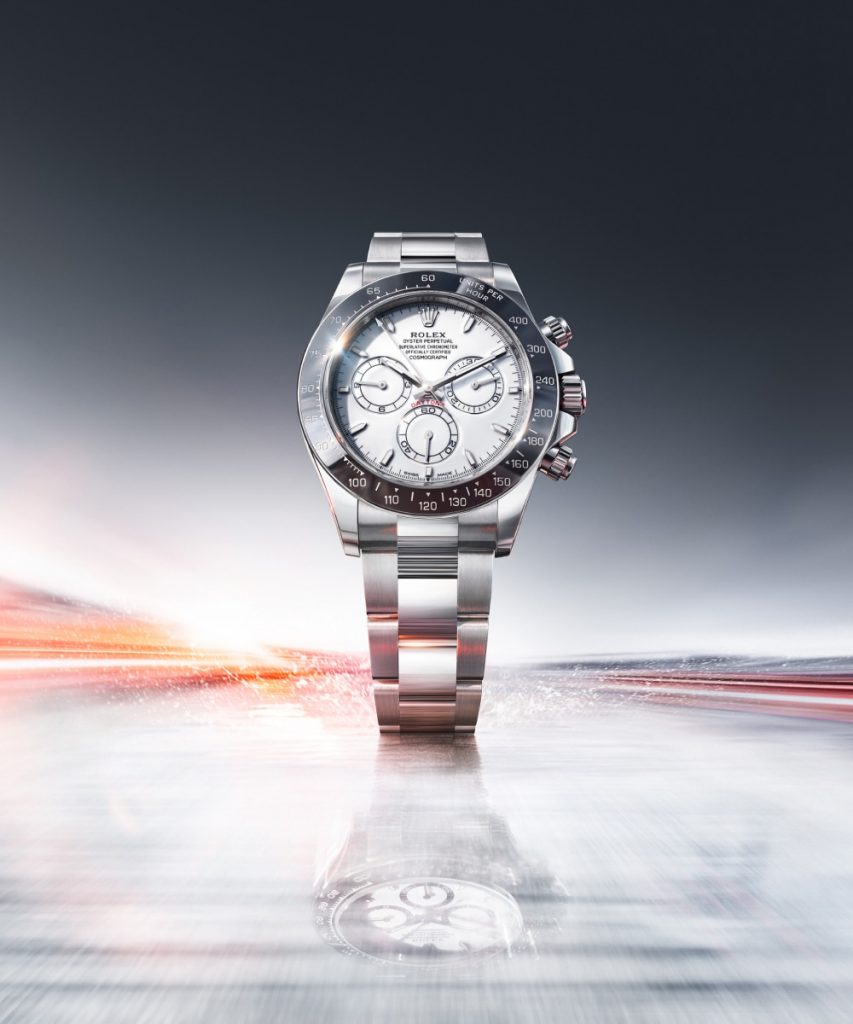
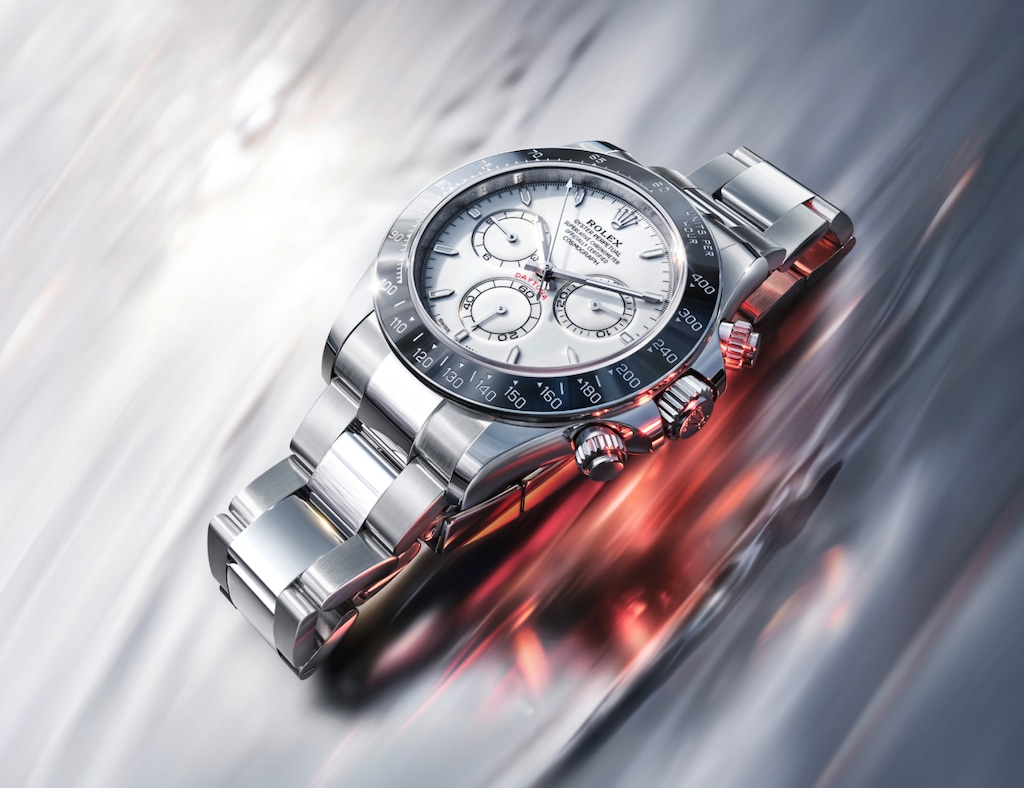
The Rolex Cosmograph Daytona arrives in a configuration that feels both unexpected and entirely inevitable, as Rolex introduces Rolesium to the Daytona for the very first time. Combining Oystersteel with platinum, this new execution brings a cooler, more technical character to a watch that has long thrived on motorsport heritage. The visual centrepiece is the anthracite Cerachrom bezel, a newly developed shade with a metallic sheen that feels almost liquid under light. Achieving this effect required Rolex to engineer a proprietary ceramic composed of zirconia enriched with tungsten carbide, a material innovation that underscores the brand’s relentless pursuit of refinement. The tachymetric scale itself has been reimagined, with numerals now displayed horizontally in a contemporary font, echoing the layout of the original 1963 model while appearing distinctly modern.
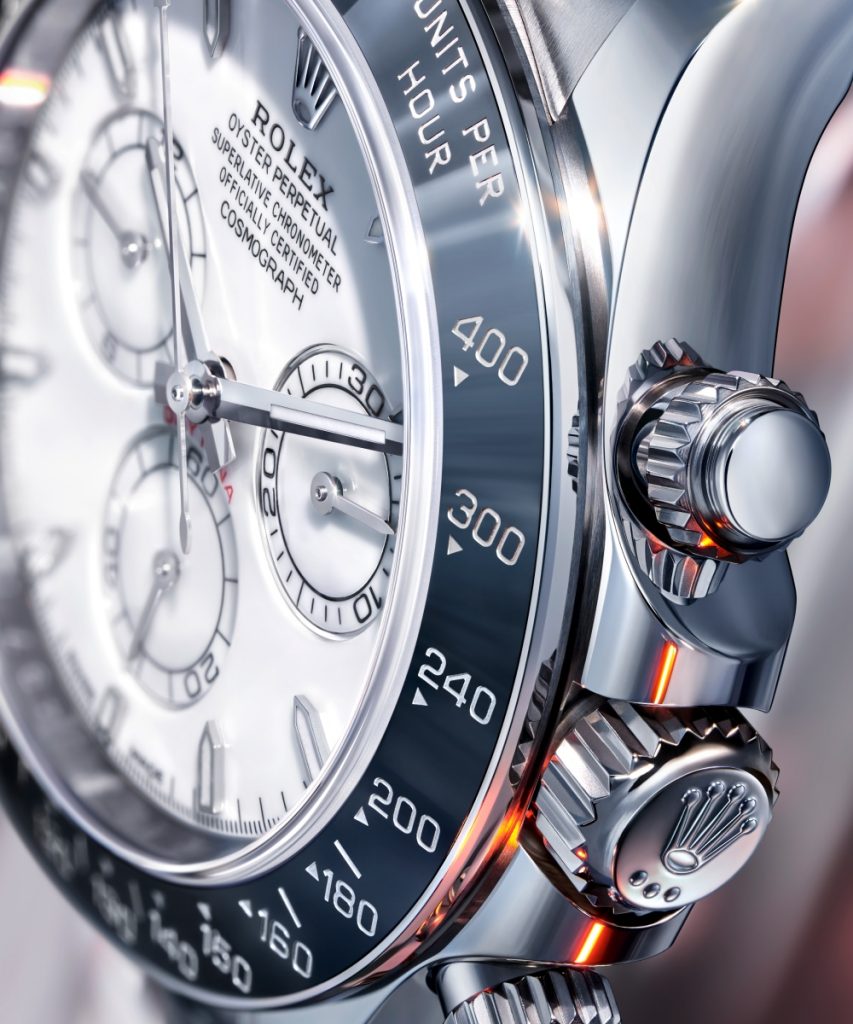
The dial, however, is where the watch truly asserts its identity. Rendered in white enamel using the grand feu technique, it represents one of the most demanding crafts in watchmaking. The enamel, applied as a powder mixed with water, is fired at temperatures exceeding 800 degrees Celsius, creating a surface that is both luminous and enduring. In a departure from traditional methods, Rolex applies this enamel to ceramic plates rather than directly onto metal, before assembling them onto a brass base. The result is a dial of remarkable clarity and depth, its pristine white surface providing a stark, almost surgical contrast to the darker tones of the bezel.
Structurally, the watch remains every bit the robust instrument expected of the Daytona. The 40 mm Oyster case is primarily fashioned from Oystersteel, with platinum elements integrated into the bezel surround and caseback ring. For the first time in this configuration, a transparent sapphire caseback reveals the movement within, framed by a finely fluted platinum ring. The Triplock crown, equipped with a triple waterproofness system, and the screw-down chronograph pushers ensure water resistance to 100 metres, while the sapphire crystal with anti-reflective coating preserves dial clarity under all conditions.
Inside beats the calibre 4131, Rolex’s latest evolution of its chronograph movement. Designed with a reduced number of components to enhance reliability, it employs a column wheel and vertical clutch for instantaneous and precise chronograph engagement. The movement is visually striking as well, featuring bridges adorned with Rolex Côtes de Genève and a cut-out oscillating weight crafted in yellow gold. The Chronergy escapement improves energy efficiency, while the blue Parachrom hairspring and Paraflex shock absorbers ensure resistance to magnetic fields and physical shocks.
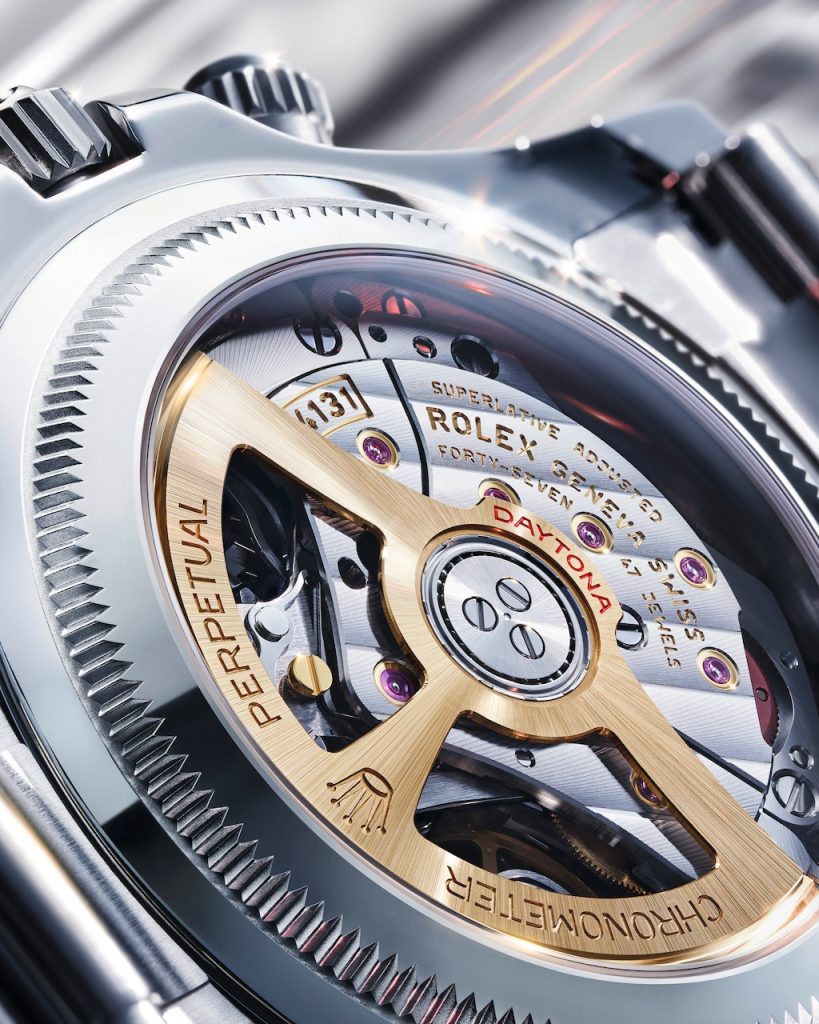
With a power reserve of approximately 72 hours delivered via a Perpetual rotor, it combines endurance with precision. Fitted on the iconic Oyster bracelet, complete with an Oysterlock safety clasp and Easylink extension system, the watch balances comfort with durability. As expected, it carries the Superlative Chronometer certification, now strengthened in 2026, guaranteeing accuracy within -2/+2 seconds per day. This is not merely a new Daytona. It is a recalibration of what the model can be, blending heritage with material innovation in a way that feels both deliberate and quietly revolutionary.