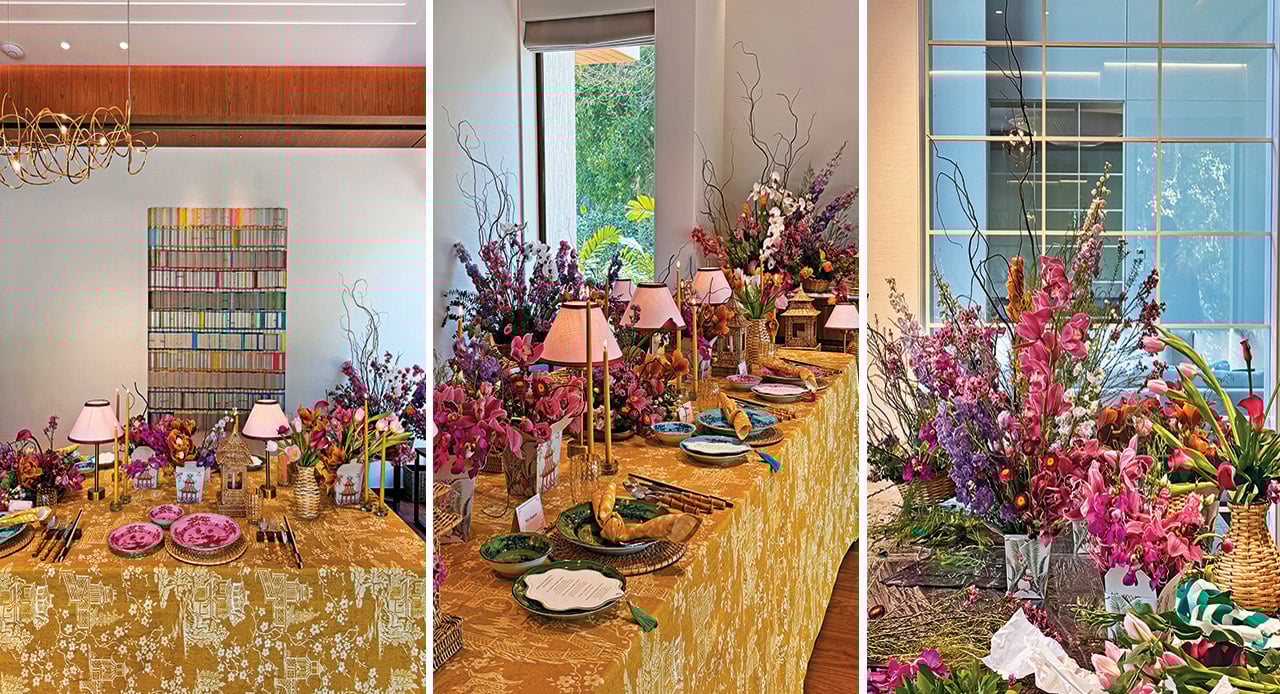


At home, the table sits at the heart of every gathering, quietly commanding attention without ever asking for it. It is where the eye instinctively settles, where time softens its pace, and where intention reveals itself most clearly—not in excess, but in thoughtfulness. When done well, a tablescape is not merely a finishing touch; it is the foundation.
Today, as India steps into its rightful place on the global luxury map, the language of the tablescape is evolving too. Luxury is no longer about excess items, loud elements or borrowed aesthetics; it is about discernment, restraint and detail. The most compelling tables are rich in nuance yet restrained in expression—engaging without spectacle and revealing a deeper understanding of how we gather, host and truly connect.
For this setting, the cuisine is oriental, and the table mirrors that sensibility with a sense of nostalgia rather than modernity—something rooted, familiar and quietly luxurious. We will use chinoiserie as a starting point: ornamental, evocative and timeless. As always, I begin with the tablecloth as the foundation. D’Ascoli’s Pagoda tablecloth, printed on their Brabant linen-cotton, becomes the base of the story. Its motifs—oriental garden pavilions interspersed with cherry blossoms—feel classical rather than contemporary, lending the table an old-world elegance that immediately sets the tone.
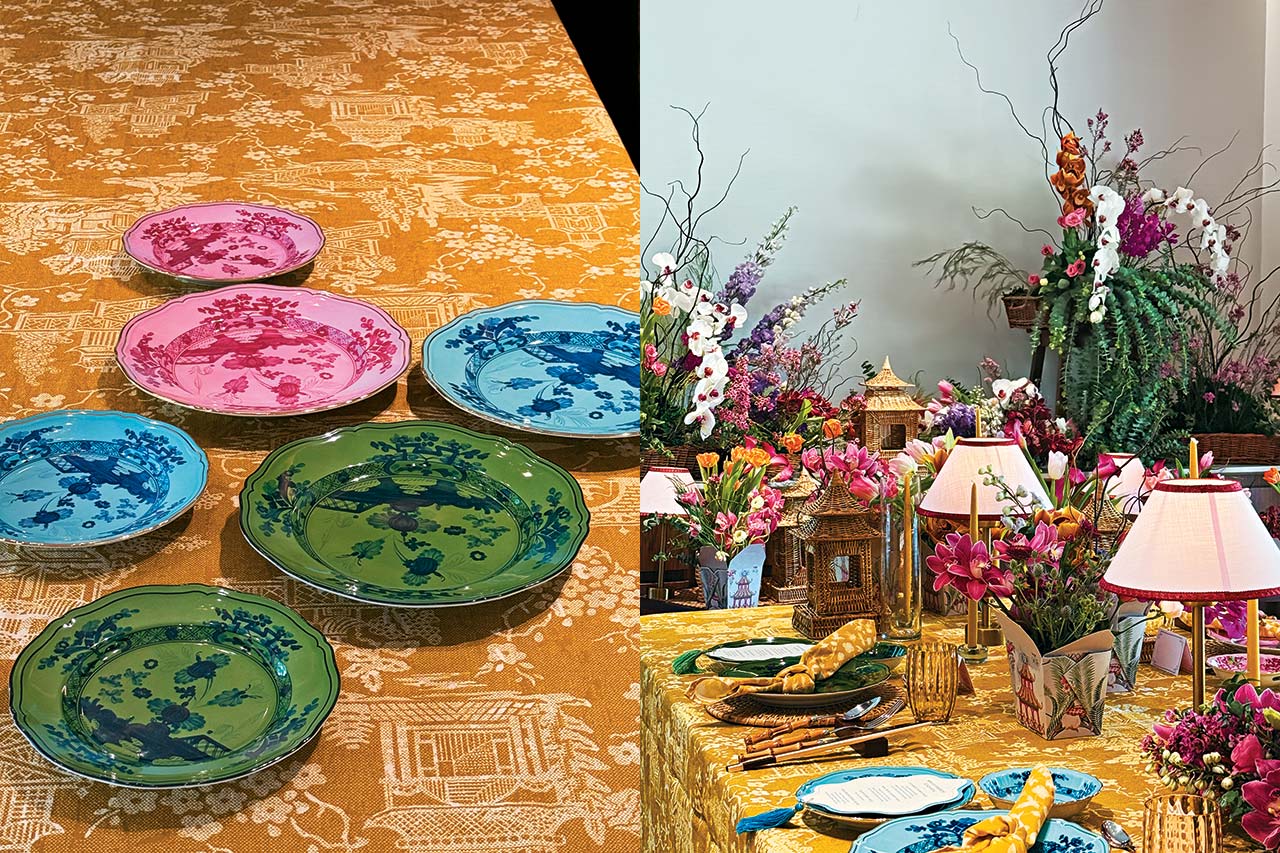
From there, we start layering thoughtfully. Ginori 1735’s Oriente Italiano collection followed naturally. Designed by Gio Ponti in the early 20th century, the collection is both historic and enduring. It is a bold homage to Italian craftsmanship, marrying the refined lines of the Antico Doccia tradition with the Garofano, a floral motif inspired by the mystique of oriental gardens. The palette is energetic yet controlled, and the decoration process allows colours to softly merge, turning each porcelain piece into a miniature canvas. It introduces vibrancy without overpowering the base.
Texture and atmosphere are key. Rustic wicker pagoda lanterns adds warmth and charm, introducing a sculptural quality to the table and reinforcing the garden narrative. Soft yellow floral napkins echoes the tones of the cloth, lifting the setting with lightness and continuity, while Sabre Paris cutlery from the Panda collection—with its bamboo handles—grounds the table in natural, timeless elegance.
To introduce depth and a sense of maximalism without excess, tall soy wax taper candles, hand-poured in India, are layered in tones that complements the tablecloth. To break the dominance of yellow, we introduce lamps in soft pink—an intentional contrast that adds dimension and allows the motifs to breathe rather than compete.
For the florals, tradition is subtly disrupted. Instead of conventional vases, we designed miniature oriental takeaway boxes to hold the arrangements—an unexpected detail that feels playful yet considered. The florals themselves are organic and textural: phalaenopsis, cymbidiums, tulips and dried roots, arranged loosely to keep the table from feeling overly composed.
The finishing touch lies in these signature elements—the unexpected vessel, the thoughtful contrast, the careful layering of texture and colour. Together, they elevate the table from decorative to memorable, creating a setting that invites guests not just to dine, but to linger.
My philosophy has always been to create spaces that feel both of their time and quietly timeless—where meals and their settings are never just about what is served or how beautifully it is arranged, but about the people who gather, the conversations they share, and the moments that linger long after the meal ends. When you strip away the unnecessary and honour form, function and feeling, the result is a table that can evolve year after year without losing its soul. Contemporary luxury lies in knowing what to leave out, trusting instinct over novelty, and allowing beauty to emerge through restraint. A well-set table should never shout; it should invite, linger, and be remembered long after the last candle has burned out.
The author is the founder of Mai Stories, a luxury events studio based in Mumbai