

In the mist laden Highlands and wind brushed Lowlands of Scotland, whisky is not merely produced; it is composed. It is geography distilled into spirit, patience translated into amber, and tradition guarded with almost ecclesiastical seriousness. Yet within this noble fraternity of Scotch whisky exists a distinction that often confounds the uninitiated and animates the aficionado: the difference between single malt Scotch and blended Scotch. Both bear the same national pedigree, both submit to the same legal rigour, yet their philosophies diverge in craft and character.
What Defines Single Malt Scotch
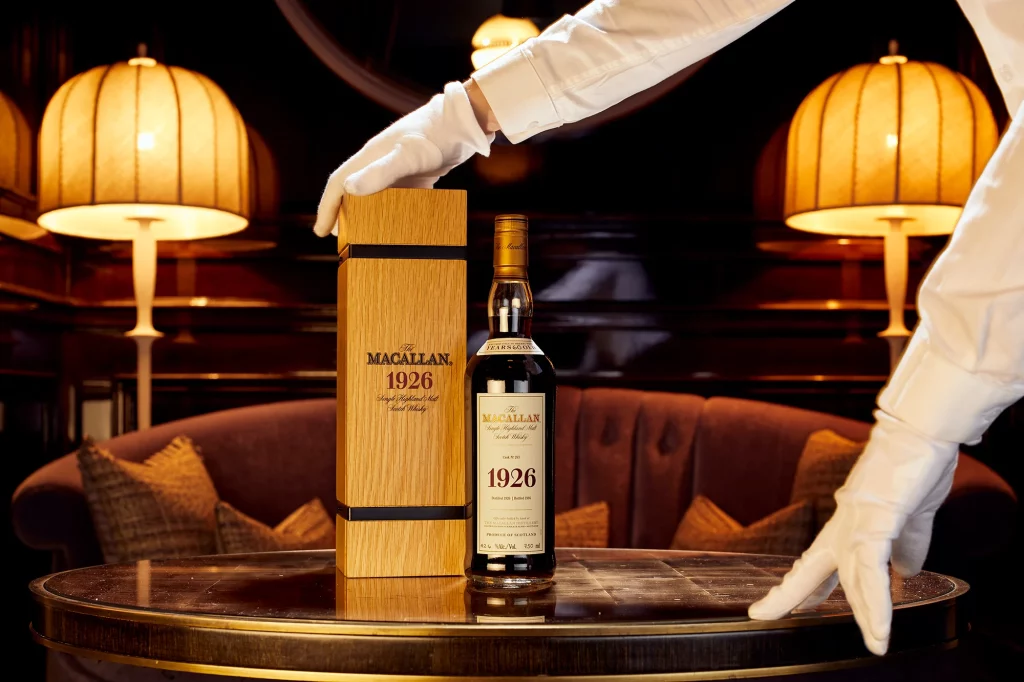
A single malt Scotch whisky must adhere to three uncompromising principles. It must be made from 100 percent malted barley, distilled at a single distillery, and produced in pot stills. The term single does not imply a single barrel, but rather a single distillery. Preparation begins with malting barley, allowing it to germinate before halting the process through drying, often with peat smoke in certain regions. The barley is then milled, mashed with water, and fermented with yeast to produce a beer like liquid known as wash.
Distillation occurs in traditional copper pot stills, typically twice, though some distilleries opt for a third distillation for added refinement. Copper plays a vital role, removing sulphur compounds and shaping texture. The spirit is collected, diluted to legal limits, and matured in oak casks for a minimum of three years, though in practice far longer. The result is a whisky that expresses the identity of its distillery. It is singular, sometimes idiosyncratic, often complex. A single malt speaks in a distinct accent shaped by local water, still design and maturation style.
Also Read: Whiskey vs Whisky: What’s the Real Difference And How Distillation Makes It Unique
What Defines Blended Scotch
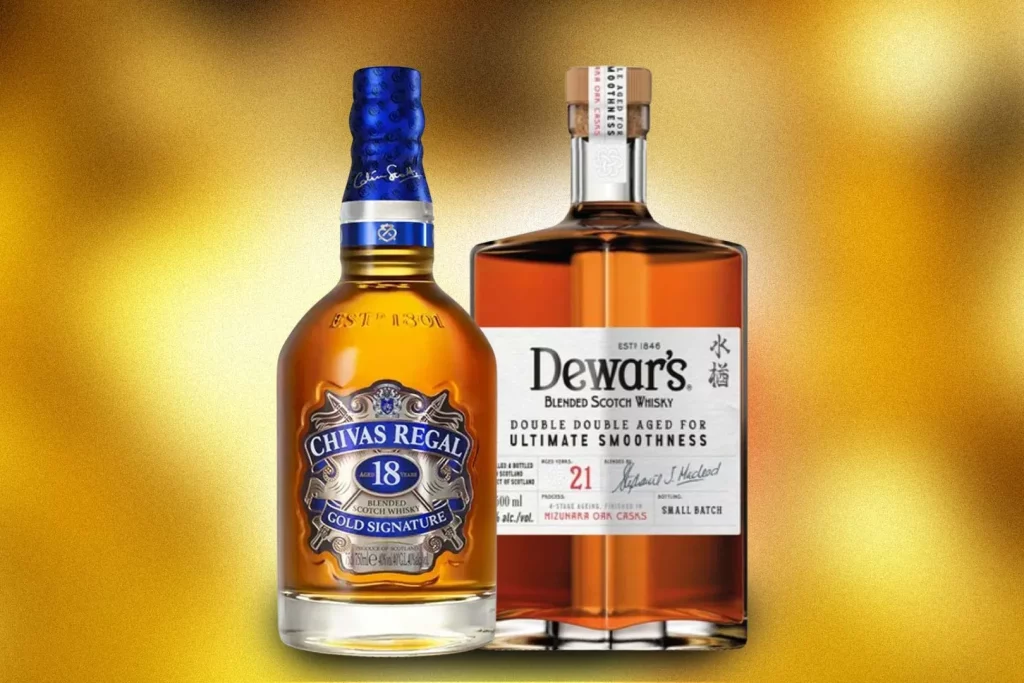
Blended Scotch, by contrast, is an exercise in orchestration. It combines one or more single malt whiskies with one or more single grain whiskies, the latter made from grains such as wheat or corn and distilled in column stills. Grain whisky differs in preparation and distillation. While it may contain some malted barley to facilitate fermentation, it is not restricted to barley alone. More significantly, it is typically distilled in continuous column stills, which produce a lighter, cleaner spirit at higher alcohol strengths.
The art of blending involves selecting whiskies from various distilleries and marrying them to achieve balance, consistency and a desired flavour profile. If single malt is a soloist, blended Scotch is a carefully conducted ensemble. The majority of Scotch sold globally is blended, owing to its approachability and consistency. Yet this popularity should not be mistaken for inferiority. A well crafted blend requires remarkable sensory precision.
Preparation: Grain and Intent
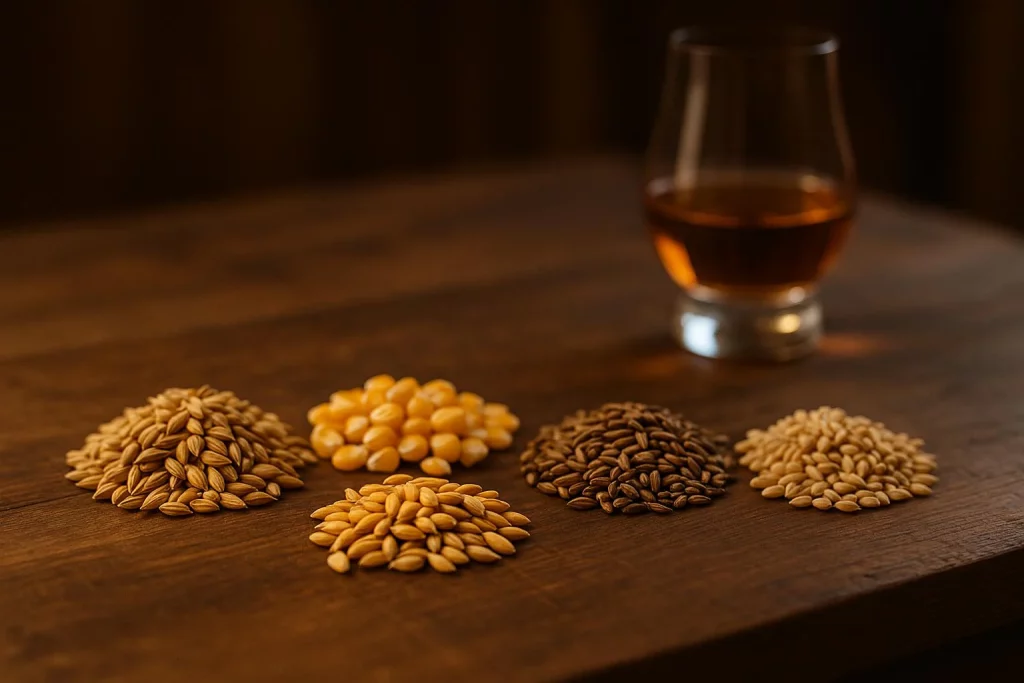
The preparation of single malt is narrower in scope but deeper in expression. Its exclusive use of malted barley and pot still distillation often results in richer texture and more pronounced regional character. Blended Scotch, incorporating both malt and grain whiskies, allows greater flexibility. Grain whisky contributes lightness and sweetness, while malt whiskies add structure and aromatic complexity. The blender’s role becomes paramount, shaping harmony from diversity.
Distillation: Pot Still versus Column Still
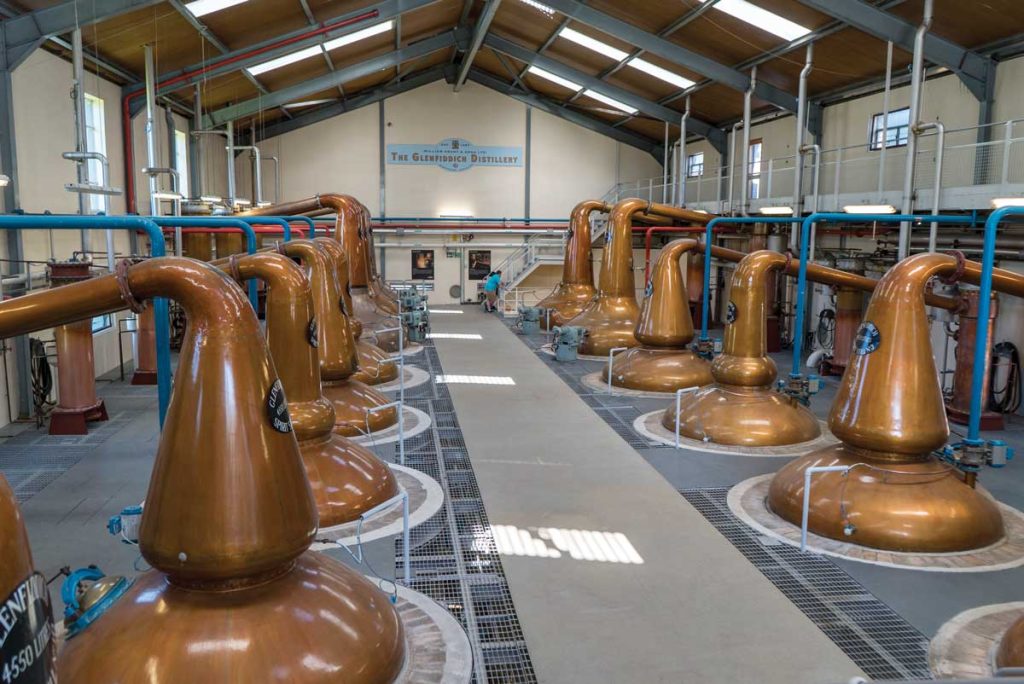
The heart of the difference lies in distillation. Pot stills, used for single malt, operate in batches. They encourage heavier congeners and flavour compounds to pass through, yielding a spirit of depth and nuance. Column stills, used primarily for grain whisky in blends, operate continuously and at higher efficiency. They produce a lighter spirit, cleaner but less character driven on its own. Neither method is inherently superior. They are tools serving different purposes.
A Matter of Philosophy
Ultimately, the distinction between single malt and blended Scotch is philosophical rather than hierarchical. Single malt celebrates provenance and individuality. Blended Scotch celebrates balance and accessibility. Both are bound by Scotch whisky regulations, both must be distilled and matured in Scotland, both must age in oak casks for a minimum of three years. Yet one whispers the story of a single distillery, while the other narrates a broader Scottish conversation. In the end, preference is not a question of correctness but of temperament. Do you seek the contemplative solitude of a singular voice, or the layered resonance of a composed ensemble? In Scotland’s amber lexicon, there is room for both.