Resort Architecture: Crafting Homes In Nature With Care And Conscience, Through An Architect’s Lens
If true luxury is defined by experiences rather than possessions, then living in close connection with nature may be its purest expression. Set amid forests and wildlife-rich landscapes, resort architecture creates that rare opportunity - bringing people closer to place and the natural world. An architect shares insights on why this connection matters now more than ever
As our cities sprawl into concrete jungles, the yearning to escape the chaos and reconnect with nature has become increasingly urgent. In our hurried lives, many of us have lost that vital connection with the natural world and are turning to resort getaways to heal this deprivation. But resorts are not merely hotels transplanted into scenic locations. They are experience-driven establishments purposefully nestled within nature itself. Eco-resorts, in particular, offer guests the profound luxury of living with nature, experiencing its raw, wild beauty while still enjoying the comforts needed to relax. Yet we must remember that the luxury we design for humans must equally serve as a luxury for nature and its local communities. One cannot exist meaningfully without the other.
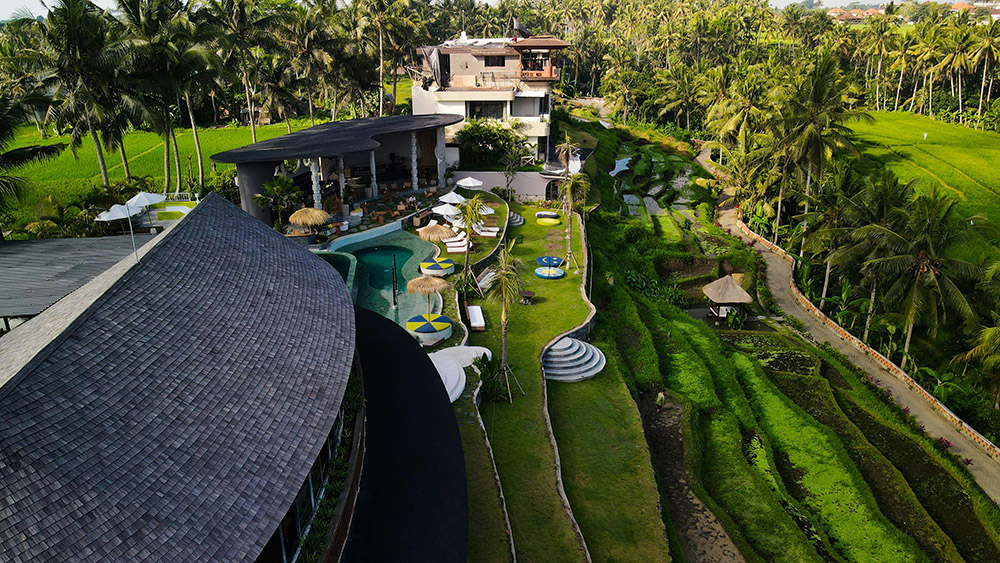
The Growing Appeal Of Eco-Tourism
As this yearning for eco-tourism grows, we architects face a critical question: Are we creating spaces that honour both human guests and the environment that hosts them?
Unlike urban projects constrained by density and infrastructure, resorts have the space and mandate to integrate deeply with their natural surroundings. They exist precisely because of the landscape they inhabit. This gives architects the unique opportunity and responsibility to design buildings that don’t merely sit in nature, but live with it.
Also Read: Mandai Rainforest Resort Promises A Restful Stay In Stunning Biophilia
What is the ultimate luxury? A chance to fall asleep to the sounds of wind, breezing through indigenous trees, waking up to natural sunlight, and to share the space with the other living species who are the original owners of the land you inhabit. True luxury lies in experience over objects, in the fleeting beauty of a moment lived fully within the natural world.
Thoughtful Masterplanning: Let The Land Lead
It begins with how we approach the land itself, with masterplanning that establishes respect from the outset. When designing a resort within a forest or wildlife habitat, our first responsibility is ensuring we don’t disrupt the very nature guests come to experience. Too often, I’ve witnessed developments that treat the land as a blank slate by clearing vegetation for easier construction access, levelling topography for uniform building pads, and filling in natural water channels that complicate neat property lines. The irony is stark: we destroy the very ecosystems that give these places value, then wonder why the experience feels hollow.
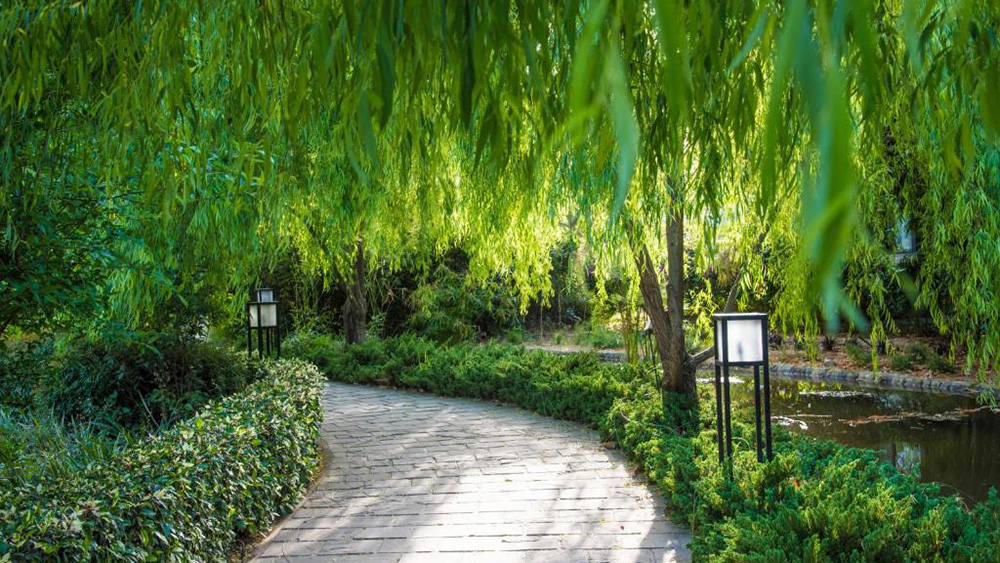
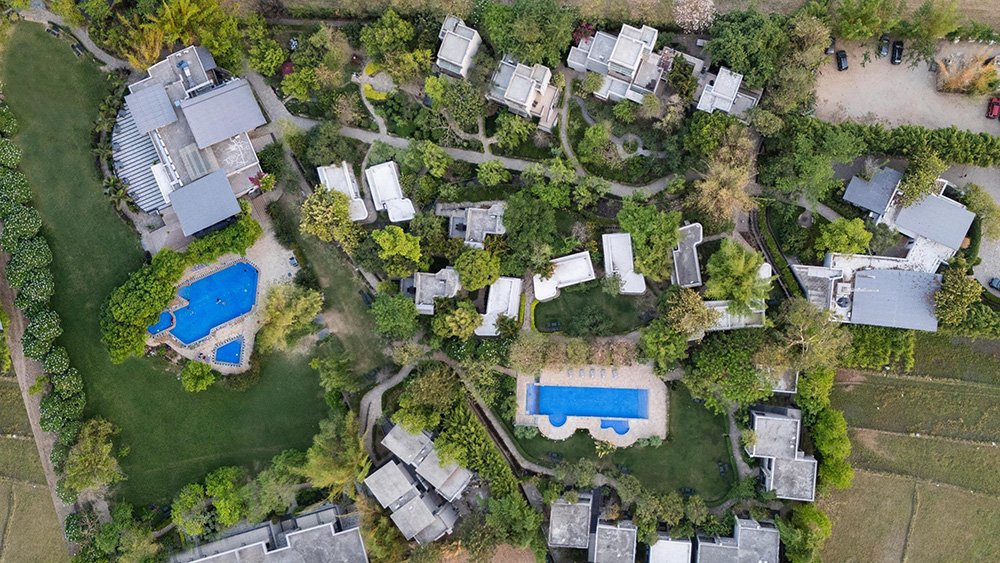
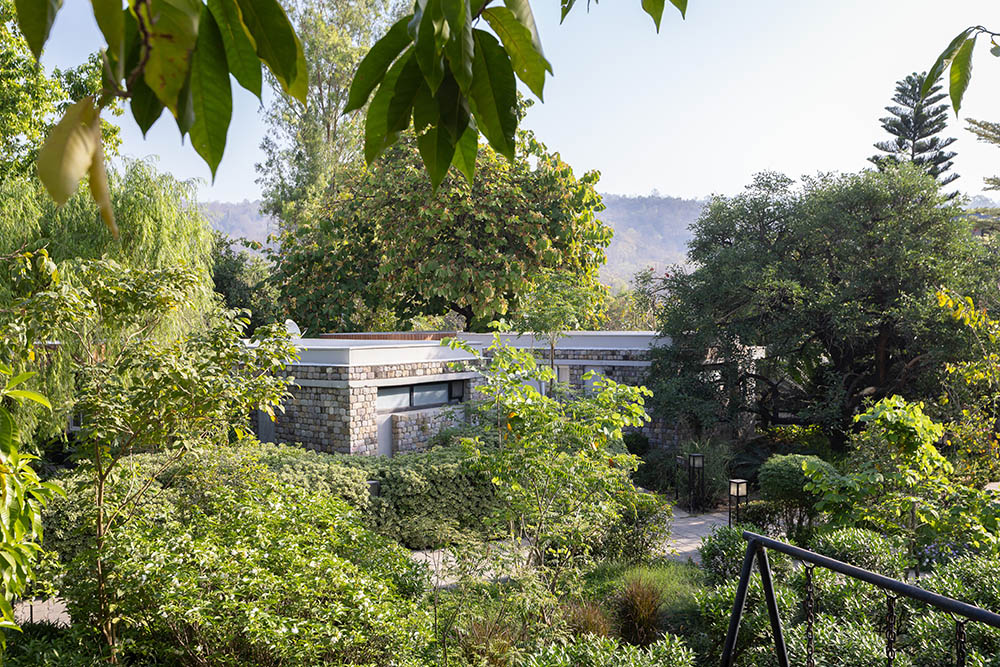
The alternative is to listen before we build, to read the land’s existing patterns and work with them. At a boutique wildlife resort we designed in association with the renowned horticulturist from the local region of Ranikhet, Late Shri Rajendra Nijhawan, near Jim Corbett National Park in Dhela village, we let everything that belongs to the land guide us. Spread over seven acres, the resort occupies only 25% of the site for construction. Landscaped greens, indigenous plantations, gardens, and wildlife-friendly open areas fill the remaining 75%.
The site began with just four existing trees. We introduced a landscape of five senses, plantations that bring in visual treats when in full bloom, sounds created by the birds around the planted fruit trees, the aromas of freshness within the forest, the taste of the fresh produce from the land in the restaurant and the tactility of every stone that one walks within this planned wilderness. We introduced indigenous vegetation to restore the ecosystem. Today, the land supports over 70 bird species and more than 500 species of native trees and flora, transforming the land into a biodiverse refuge.
Materiality: Making Nature The Protagonist
Beyond masterplanning, we can realise this potential through the materials we choose, the very fabric of our buildings.
Also Read: Create Stunning Outdoor Spaces: Furniture Tips for Open-Air Living
When architecture stands out as a stark entity within its surroundings, the experience can feel disjointed. Materials that feel foreign to the setting can create a barrier rather than a bridge, constantly reminding guests that they are observers behind walls, instead of participants in the landscape. On the other hand, when materials come from the very landscape you’re inhabiting, they facilitate connection with nature even when you’re indoors. They allow nature to remain the protagonist of the experience.
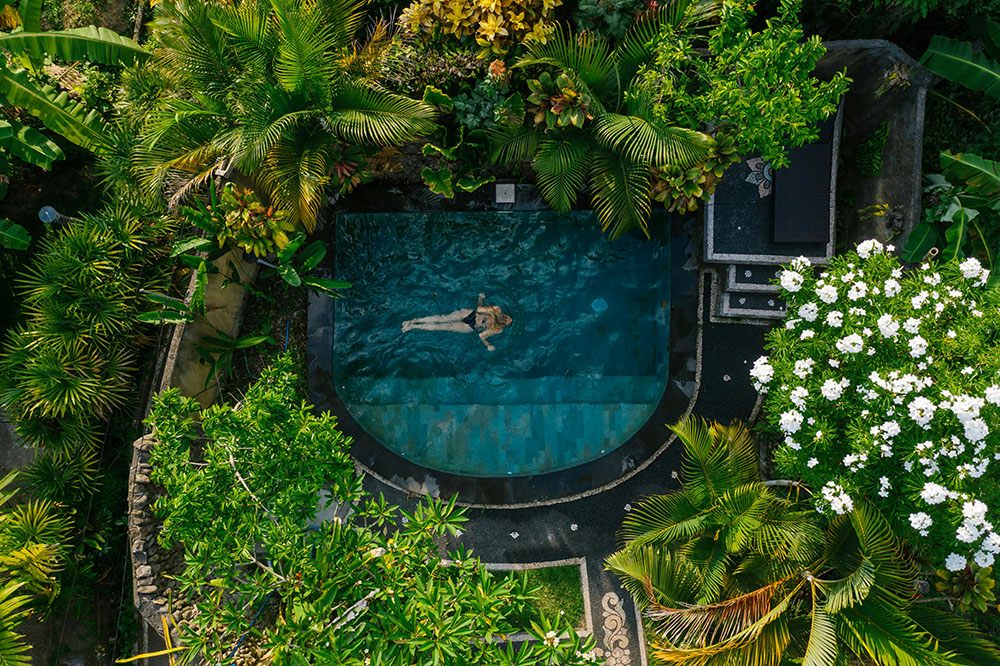
For instance, our Dhela village resort stays true to its regional roots through locally mined river stone, sand, and grit for construction. Interior timber comes from Forest Department auctions, supplemented by reused ship-deck wood from Gujarat, giving new life to materials that would otherwise be discarded.
Activity Programming: Living With The Landscape
Yet another way to realise this potential is through activity programming that deepens guests’ connection with nature within the property and beyond its boundaries. Guided wildlife tours and nature walks offer the profound luxury of experiencing the ecosystem intimately, transforming passive observation into active participation.
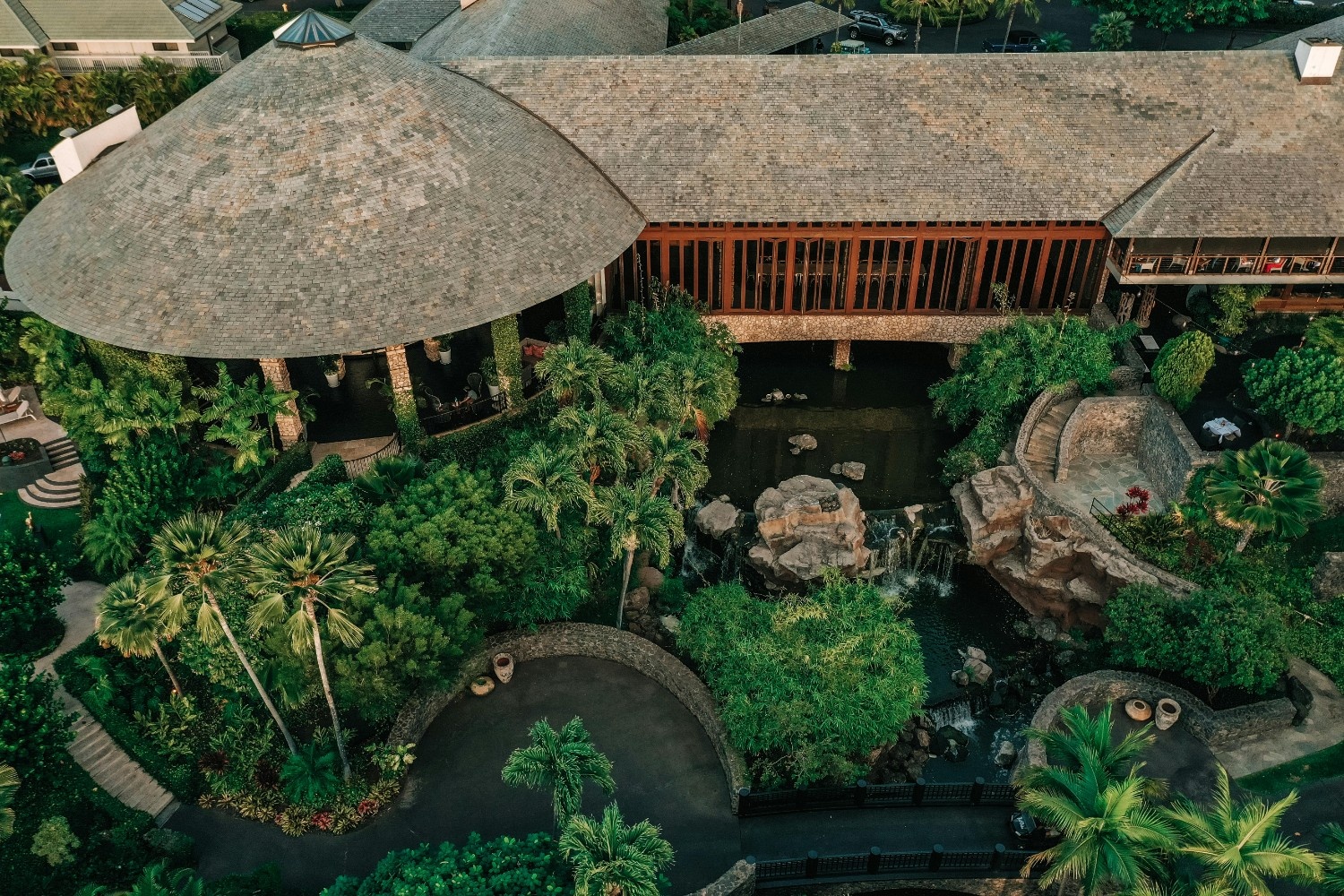
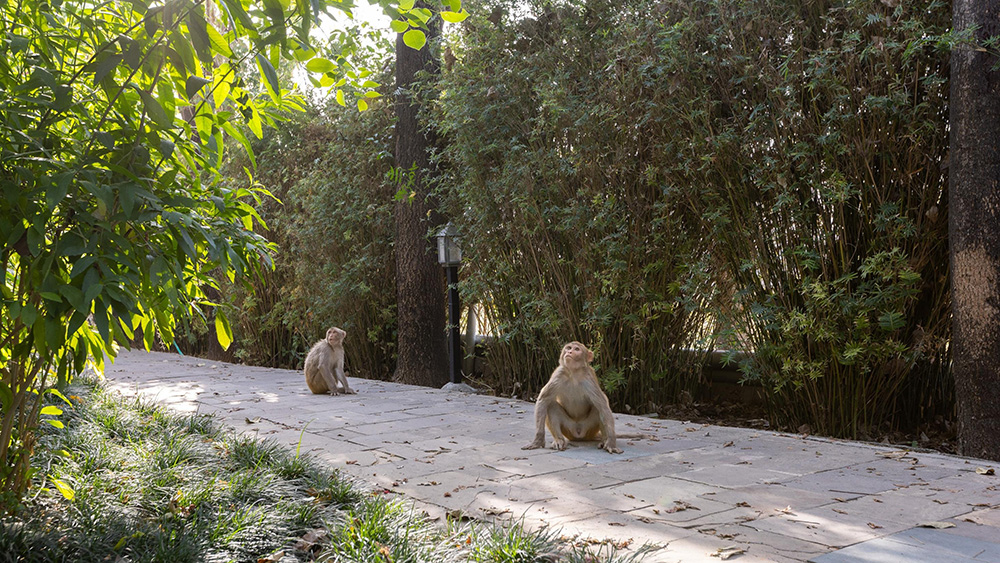
The resort we designed near Jim Corbett exists as a continuum of village and forest. Paths run along canals, streets cross farmland, movement flows organically through trees, and buildings become part of the landscape. The rural life of the surrounding village extends naturally into the resort experience—farmlands and horticulture facilities blur the boundaries between hospitality and habitat. With minimal fencing, the resort blends with its surroundings and allows the natural context to remain uninterrupted, inviting wildlife to move freely across what becomes shared territory.
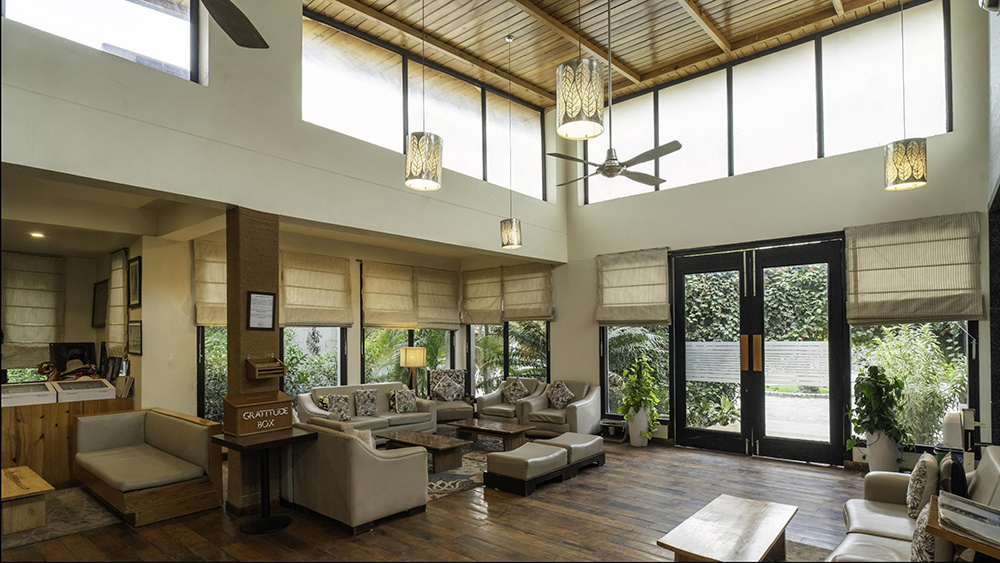
This approach transcends mere harm reduction and embraces restorative thinking. Through masterplanning that listens, materiality that emerges from terrain, and programming that erases boundaries, we can create a harmony between the human guests and the land that hosts them. As our cities sprawl and the hunger for nature deepens, resort architecture proves that true luxury is in what we preserve and participate in.
In an age of crisis and disconnection, this gentle inhabitation, perhaps, is the greatest luxury of all.
Manish Gulati is the Founder and Principal Architect of MOFA Studio.