Mayyur Girotra Wants You To See The Calloused Hands Behind His Couture, Will You?
Every piece in Mayyur Girotra’s “The Collectables” is perfection - but it is crafted by hands you’ll rarely notice, eyes full of hope, hearts brimming with passion and dreams both big and small. In this exclusive interview, he invites you to meet the people behind the couture and it’s high time we did
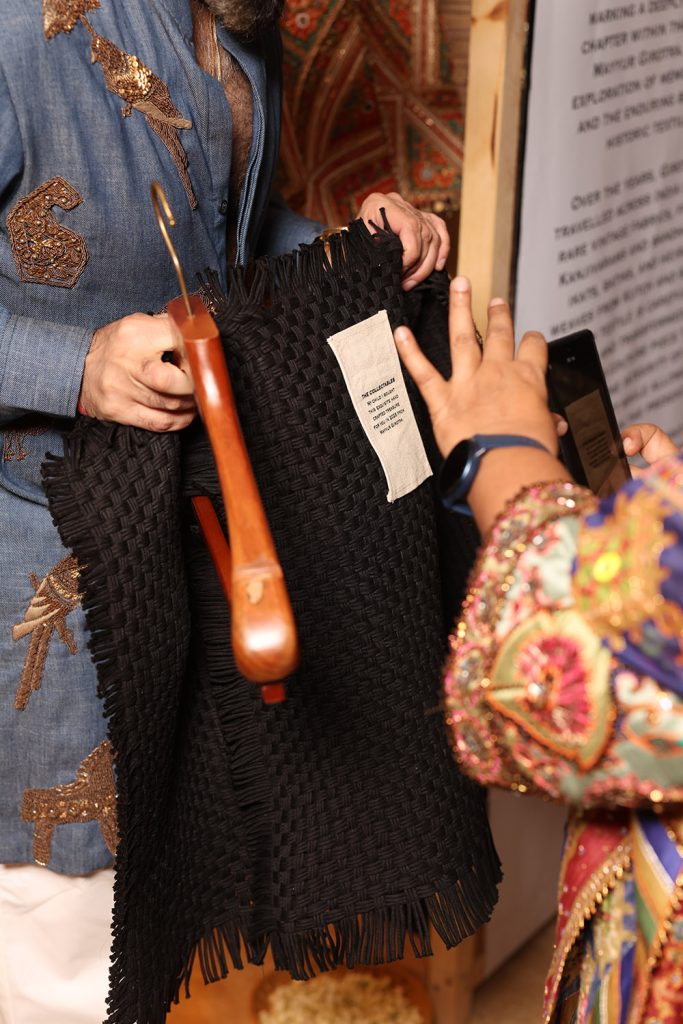
‘My child, I bought this exquisite handcrafted treasure for you in 2026 from Mayyur Girotra.’
This personal note is stitched into the inside of a black, hand-done mesh jacket with kora embroidery. It’s a small label, easy to miss if you’re only looking at it as another piece of couture. But read the note, and listen with your heart and you’ll know that it’s speaking to you and to someone else who isn’t even here yet. Almost as if the jacket already knows it will one day belong to another special woman.
The Journey Of A Garment Through Mayyur’s Eyes
This piece was never meant to belong to just one person. Before it ever reached a rack, it passed through hands. Many of them. Hands that don’t sign their names anywhere.
For Mayyur, the journey of every couture piece spanning collections and eras has always started with the hands. The ones we don’t see when something arrives looking pristine, polished and perfect. The weavers, the artisans, the karigars, each one holding a part of the process long before it becomes something you can wear.
The Hands That Create Couture
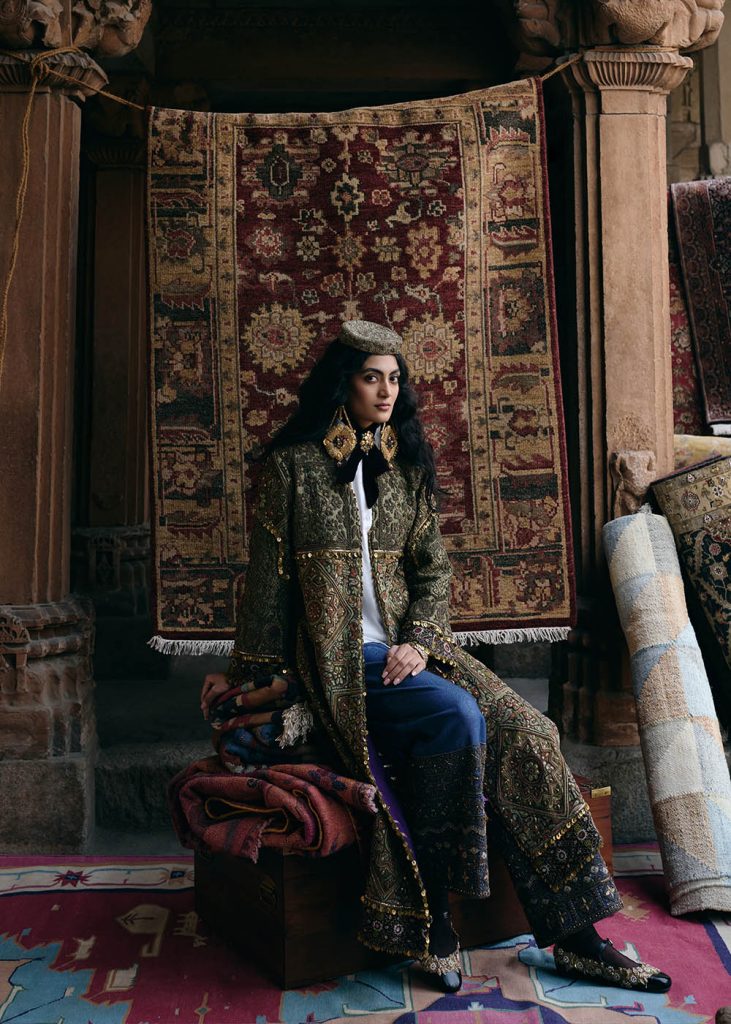
“The Collectables” comes out of years of him travelling across the country, finding textiles that already have a past. Kutch weaves, ikats, kanjivarams, bandhanis. Fabrics that have lived other lives before this one. What he is really gathering, piece by piece, are stories that risk being forgotten.
‘There are weavers who created the original textiles, artisans who helped preserve or restore vintage fabrics, and the karigars in the atelier who translated them into contemporary couture pieces’. Each garment from The Collectables, Mayyur tells me, ‘represents the work of many skilled hands, often spanning different regions and stages of the process.’
Also Read: ‘This Exhibition Begins At Home’: Bhavna Kakar On Bringing rare Pre-Partition Phulkaris In Delhi
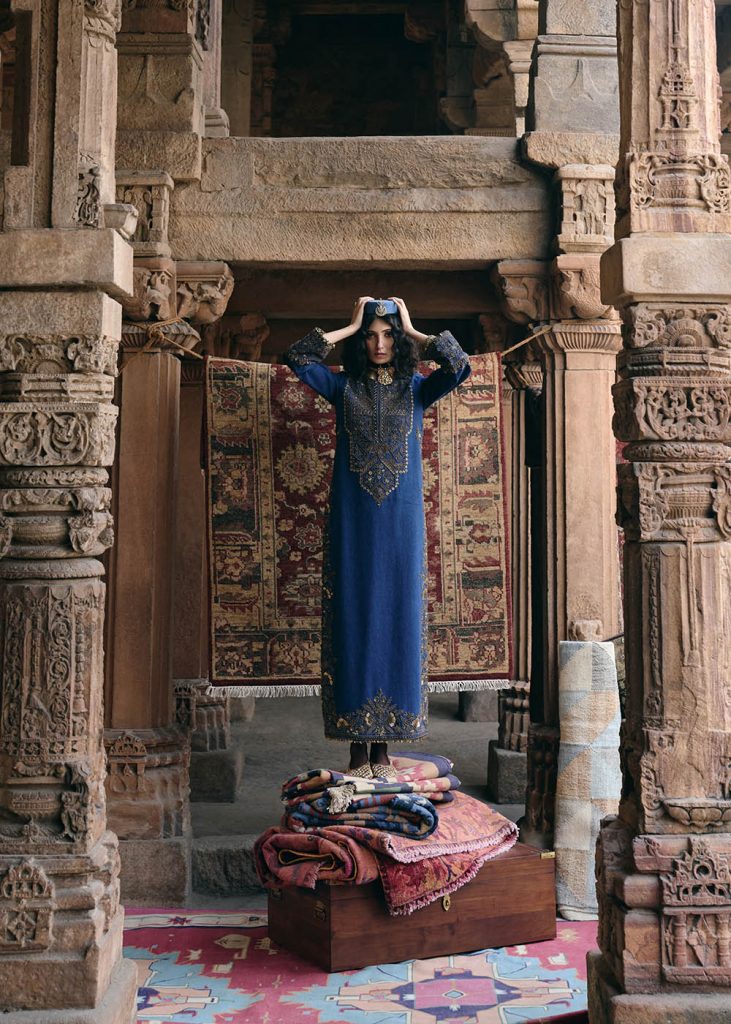
He is clear about where the credit lies. Or rather, how widely it is shared.
The Collectables: A Journey From Within
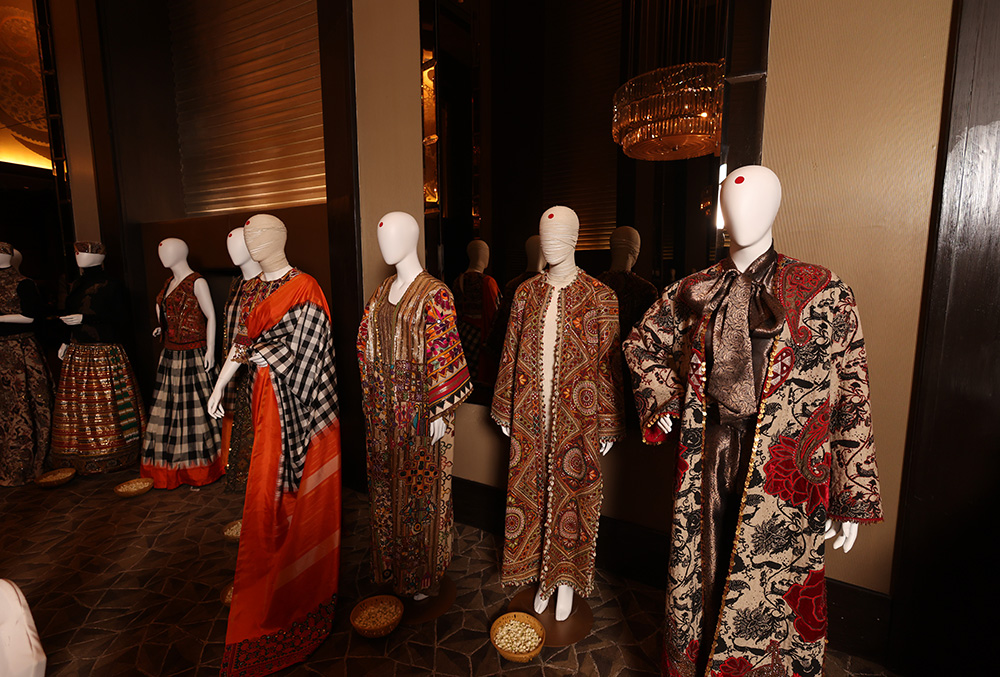
A few days ago, he hosted an exclusive preview of The Collectables, inviting a select group of journalists and writers to Jamavar at The Leela Palace, New Delhi. In his closing note, he joked that he had written something, grudgingly no less, at the behest of Prateek, a dear friend who knew he needed to have a speech ready. As fate would have it, he lost the piece of paper and had to face us without his rehearsed pitch.
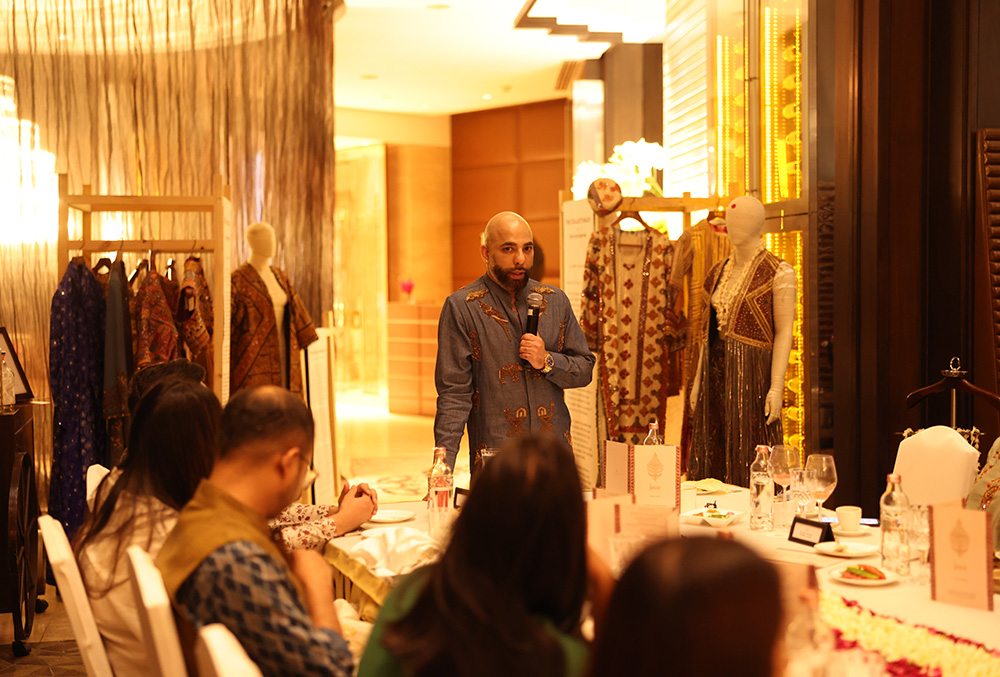
Maybe it worked out for the best, as Mayyur himself noted, because it allowed him to speak from the heart about what mattered most: honouring the stories of those who brought his designs to life with their hands, weathered by time and by sewing.
The Price Of Couture
His voice cracked, his eyes brimming with tears, as he shared, ‘The man who is making the real couture, the real luxury of India, has no electricity at his home, which doubles as his workshop. If the light goes for six hours, it’s gone. He is sweating. At that moment, I knew that even though it may be a small step, collaborating with them is going to help feed ten families.’
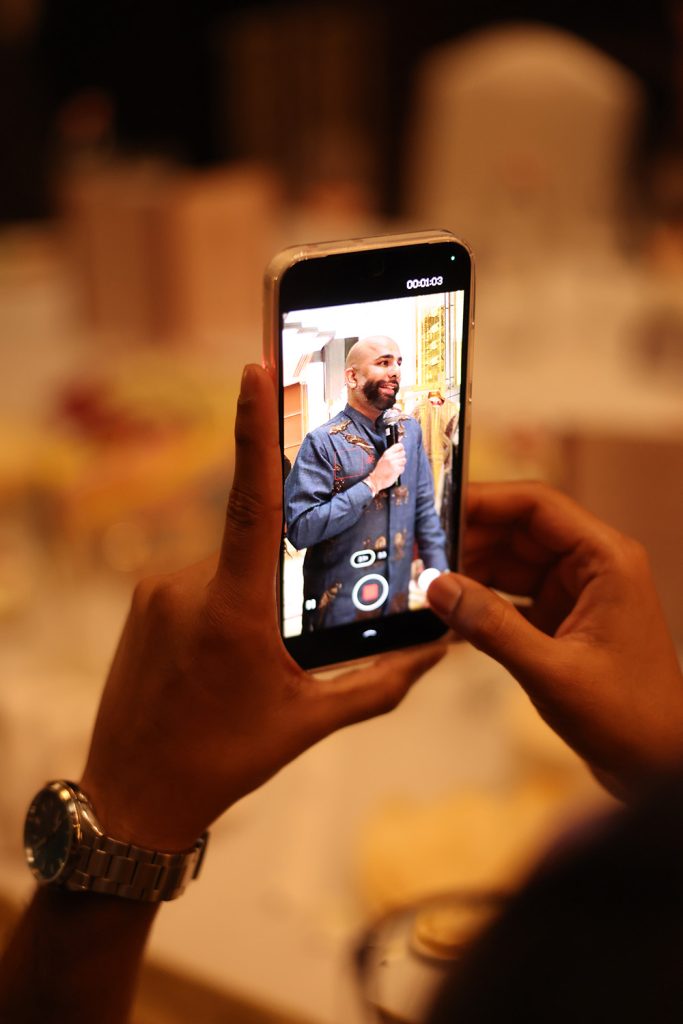
At that moment, he pauses for a brief moment to compose himself before he continues, ‘What we have come to know as couture, you should remember, many a times, is made in very, very dark rooms with minimal or just basic amenities.’
It is not an easy thing to sit with. That what we admire in well-lit rooms often begins in spaces we would rather not picture.
Also Read: Turning Discarded Wood Into Art: The Sustainable Journey Of A Naga Design Duo
A New Perspective, A New Modern India
He then spoke about his recent trip to Kanchipuram. About meeting a weaver working on a saree that would eventually be sold for lakhs.
‘I was in Kanchipuram last week. I had gone there to work with the weavers. After asking around for good weavers, I finally got a chance to meet someone. This weaver was sweating as he worked on an exquisite piece of saree. That made me think again, “We buy these sarees that retail for lakhs. But what about this weaver? He is the mother of this craft.”’
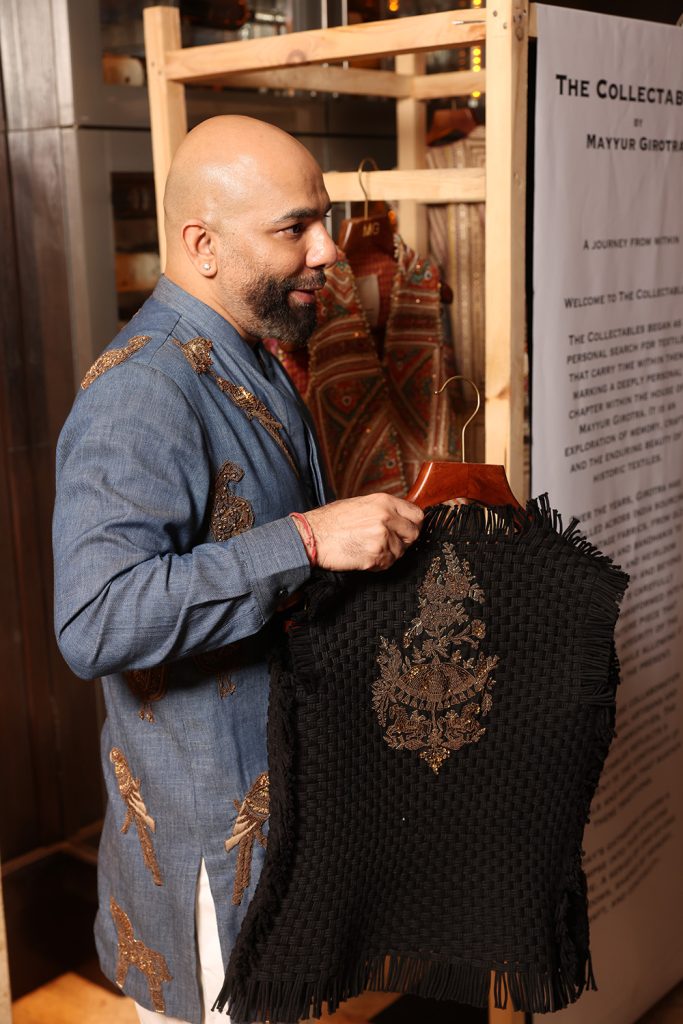
‘So when I am selling these pieces to the right people, I am also selling them the process, which in turn tells their stories. And I want to make sure that a part of this process, and whatever comes to us, is going to them. To their kids. Because we don’t want some of these techniques and crafts to die. We don’t want the kids to be scared of holding those looms, those machines, those needles, because they might feel that the life we are dreaming of, we won’t get it. We do this. So the new modern India has to bring that change.’
What Mayyur Girotra Wants You To Know
There is a kind of honesty in the way he speaks that is hard to ignore. He makes no effort to make it sound easier than it is.
The pieces in The Collectables are intentionally limited. Not as a marketing decision, but because they cannot be made any other way. They come from different parts of the country, from different hands, moving at their own pace. They carry time in them. Effort. Lives.
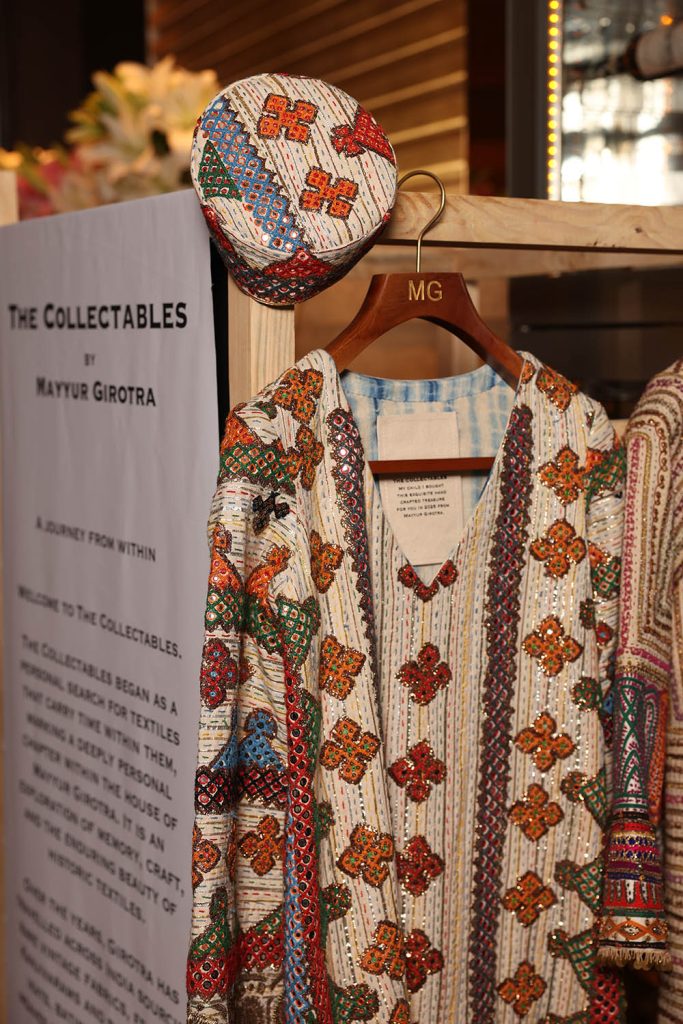
And that small label stitched into each garment feels like his way of asking something of the person who eventually owns it.
To hold on to it and to remember that it didn’t begin with them. More than anything, to remember the hands that made it.
Bridging The Gap Between Maker, Wearer And Patron
The Collectables is not just about preservation. It is a conscious effort to close the distance between the person who makes and the person who wears.
This empathy and appreciation of art, for Mayyur, began at home.
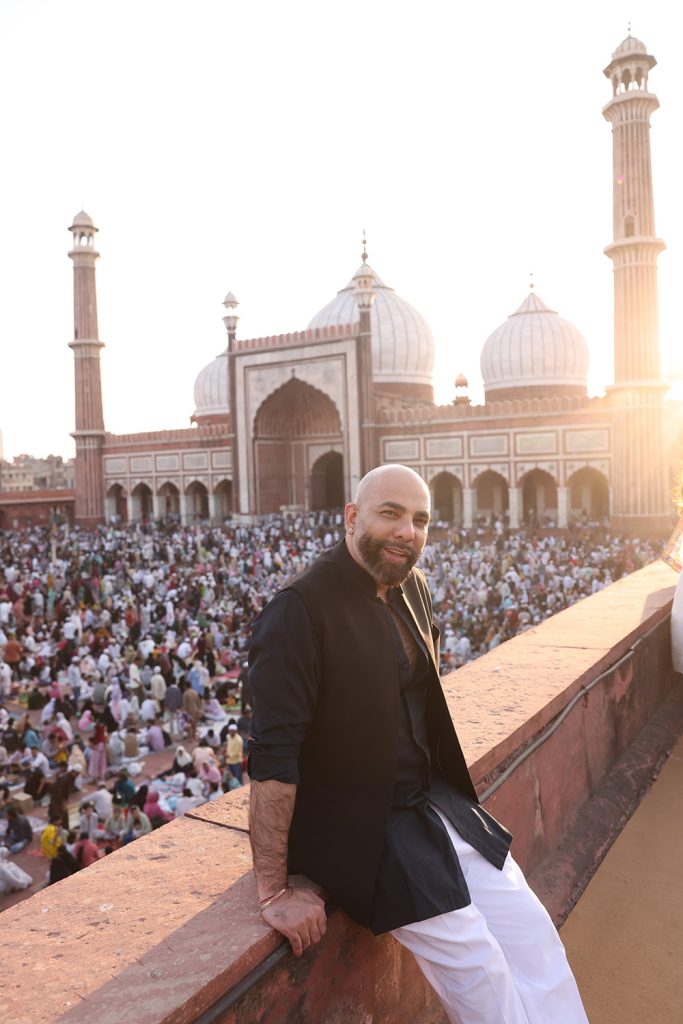
‘My relationship with textiles began long before I became a designer,’ he tells me. ‘I grew up in a home where fabrics were collected and admired almost like art. My mother had a deep love for traditional weaves and that exposure gave me an early understanding that every textile carries the imprint of a person’s labour, skill and memory.’
Threads Of Change
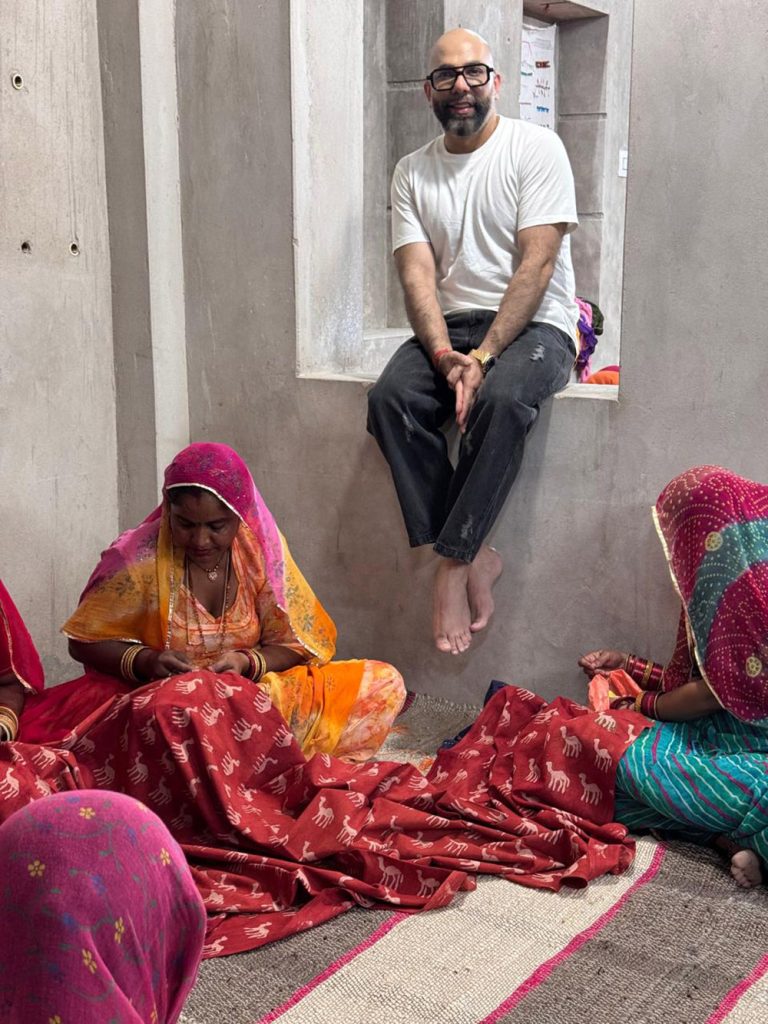
That understanding deepened over time. Sitting beside a loom. Watching the rhythm of work that cannot be rushed. ‘Sitting beside a loom, watching an artisan work patiently for hours to create a few inches of fabric, changes the way you look at clothing forever.’ Once you have seen that process up close, it becomes impossible to reduce a garment to just its surface.
The Soul Of Indian Couture And Craftsmanship
The way he finds these textiles and the people behind them is rarely linear. One conversation leads to another. One artisan points him towards a village, a family, a loom that has been in use for decades. ‘There is something almost meditative about it,’ he says. ‘I remember sitting with an elderly weaver who had been working on a textile for months. He spoke about the pattern the way an artist would speak about a painting.’
That sensitivity shapes how he collaborates. There is immense respect of the craft and the hands that put in the work. ‘For me, the first step is always listening. Every craft has its own grammar, rhythm and limitations. If a designer ignores that, the intervention becomes intrusive rather than meaningful.’
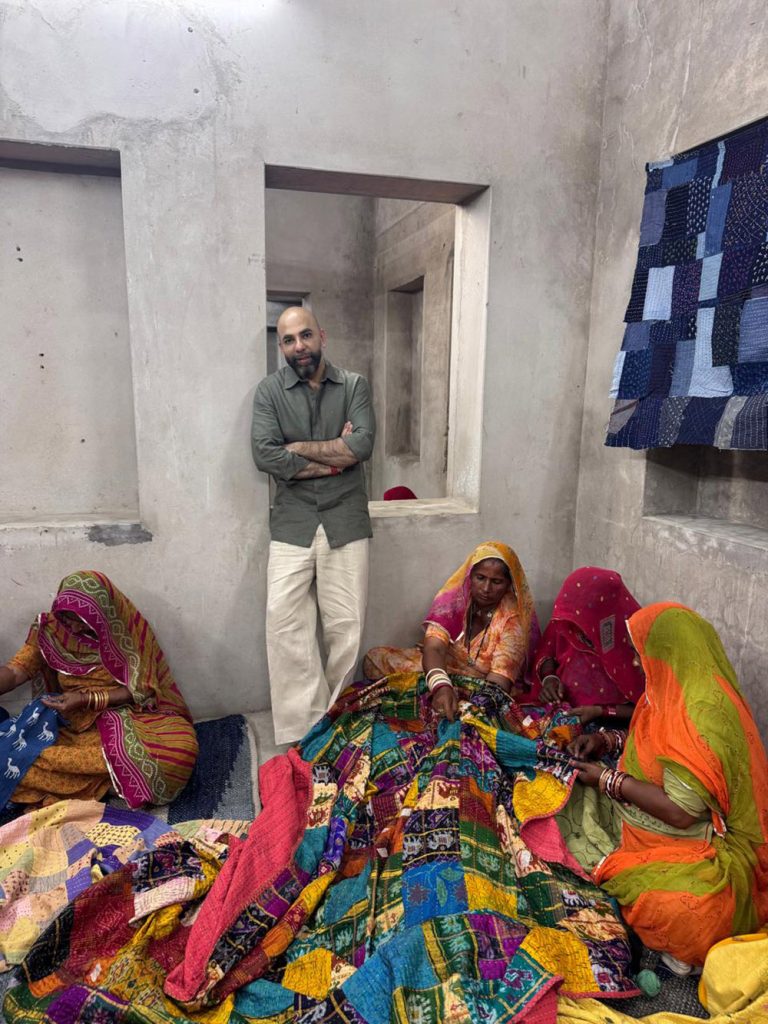
So the work becomes a conversation. Sometimes subtle, at times layered but never imposed.
The Business Of Being Ethical: Couture Edition
Respect, for him, cannot remain an idea. ‘Fair wages are only the starting point,’ he says. ‘Ethical collaboration means recognising artisans as partners rather than anonymous labour. It involves transparency, timely payments, and long-term relationships rather than one-off engagements.’
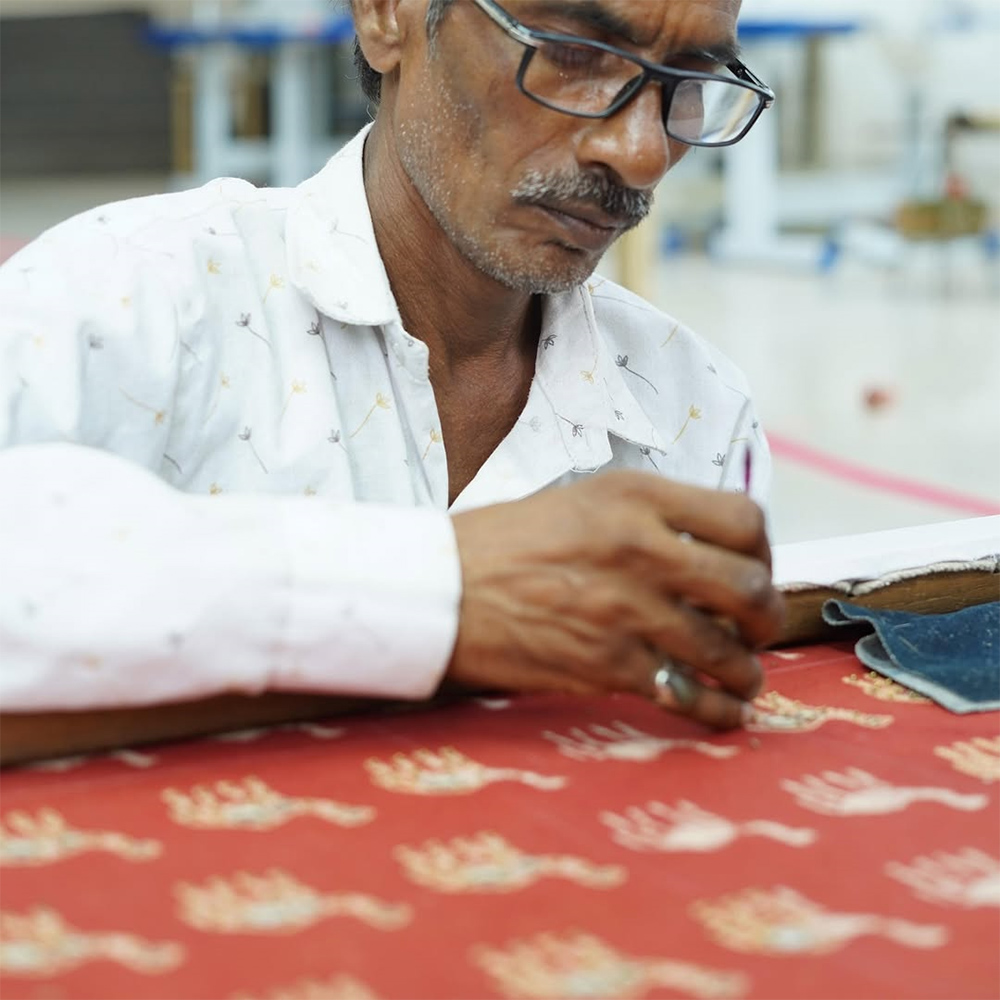
He returns often to the question of value. ‘If a piece commands value in the market, the people who made it should feel that value in their lives as well.’
It sounds obvious. It rarely is. Even now, much of the industry is built on speed and scale. Craft asks for patience. ‘There is certainly more awareness today,’ he says. ‘But empathy still often depends on individual values. Designers who genuinely believe in the importance of artisans must actively choose to work within that slower rhythm.’
The Human Hands Behind Every Stitch
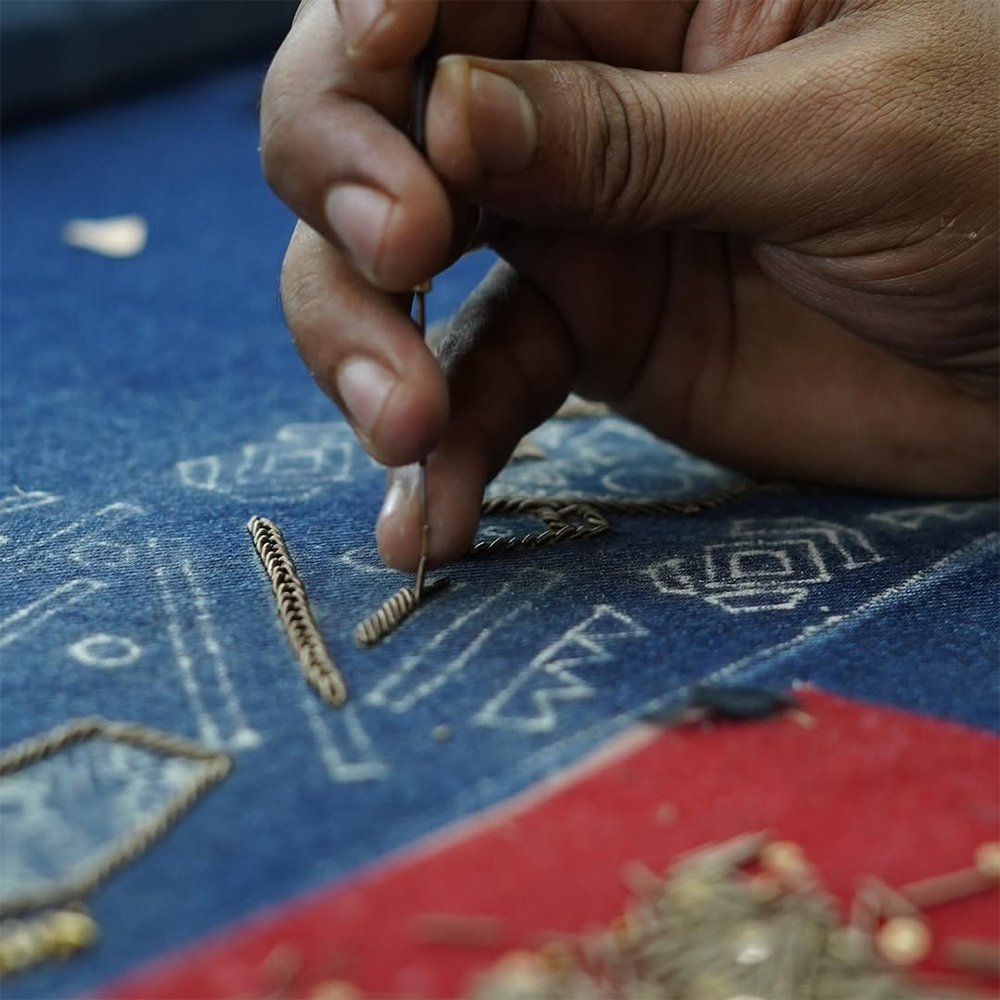
And that rhythm is visible here. In the fact that a single garment can carry the work of ten or more people. Each one leaving something of themselves behind. And through Mayyur’s efforts, those hands are not entirely disconnected from where their work travels.
‘Many of them ask who wears their clothes,’ he tells me. ‘They are curious about where it will go. There is a quiet pride in knowing that something created by them will move across cities and countries.’ That idea stays with you. That a garment can carry not just labour, but hope.
Redefining True Luxury
At its core, The Collectables asks a simple question. What does it mean to call something luxury? ‘True luxury is not about excess. It is about authenticity, time and emotional value,’ Mayyur explains.
And responsibility.
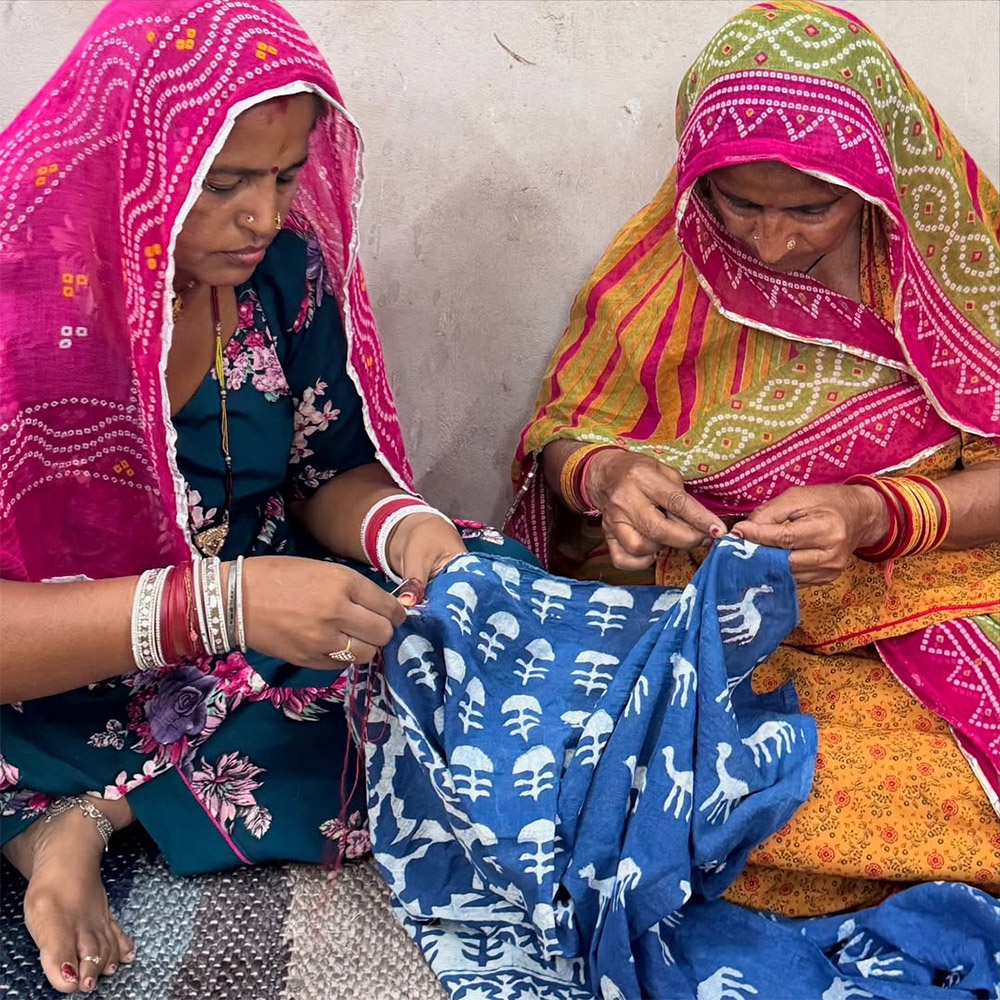
‘Responsibility in luxury fashion means recognising that beauty and ethics cannot exist separately.’ It feels urgent, especially now. Because if this work does not continue, something else disappears with it. ‘I have met artisans who were once masters of their craft but had to abandon it because there was no longer enough demand. Each lost craft represents centuries of knowledge disappearing quietly.’
For these artisans, even the smallest of gestures can go a long way.
‘When an artisan sees their work appreciated, there is a visible sense of pride. It reinforces that their knowledge matters.’ That pride depends on whether we choose to see it.
Why Mayyur Girotra’s Work Matters Now More Than Ever
Which brings you back, almost inevitably, to that label. To the idea that what you are holding is not just an object, but a continuation.
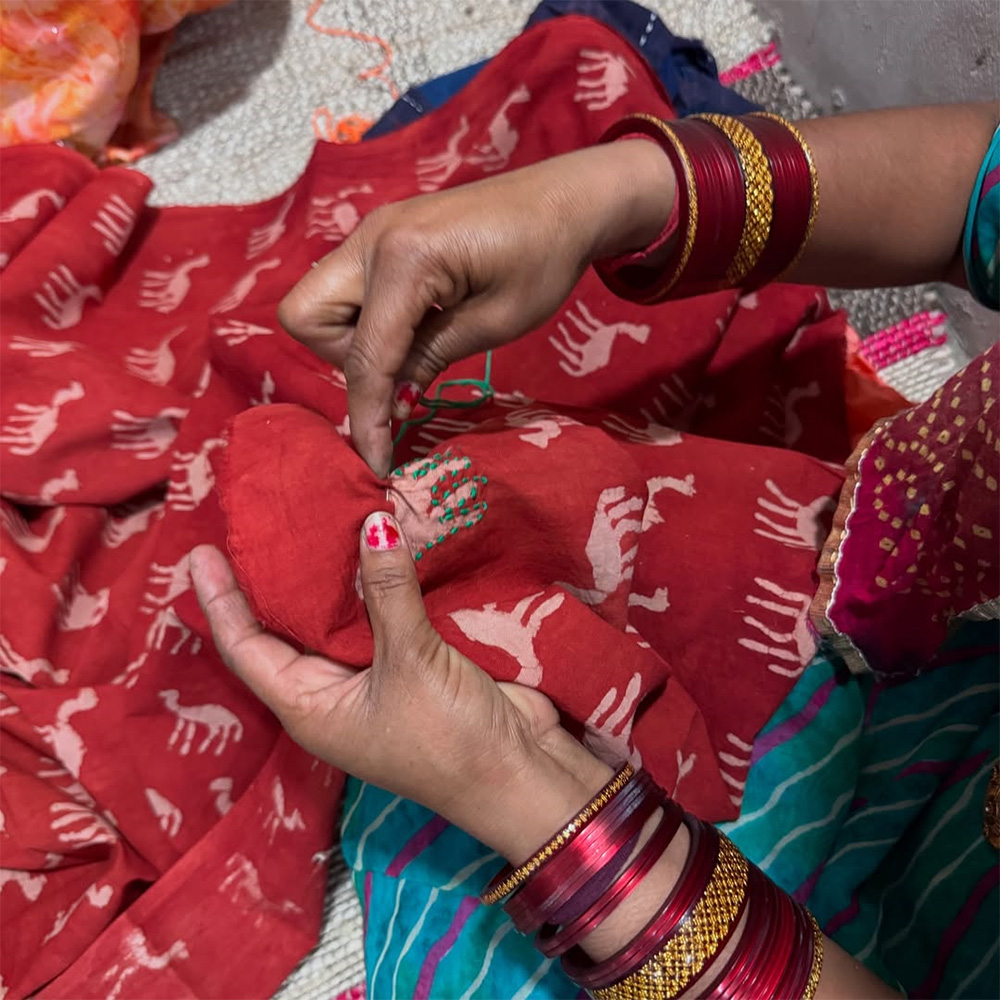
And that is what lingers. A question that refuses to settle.
How much do we really know about the hands that make couture?
And don’t they deserve more?
After that day at The Leela with Mayyur, I find myself returning to that thought more often than I expected. It appears in the middle of other things, in the rush of everyday work. I’ve found myself carrying it into conversations, passing it on, only to realise how rarely we sit with it long enough.
So I’ll end this the only way it feels honest to.
This has been me, the writer, the observer, the appreciator of all things beautiful, writing for Outlook Luxe but leaving with something far more personal. Perhaps even, let’s admit it, a bit of a crush. (Yes, lines borrowed from the pages of Bridget Jones’s Diary, the eternal romantic!) On Mayyur, yes.
But more than that, on the empathy he carries so openly. On the care with which he works.
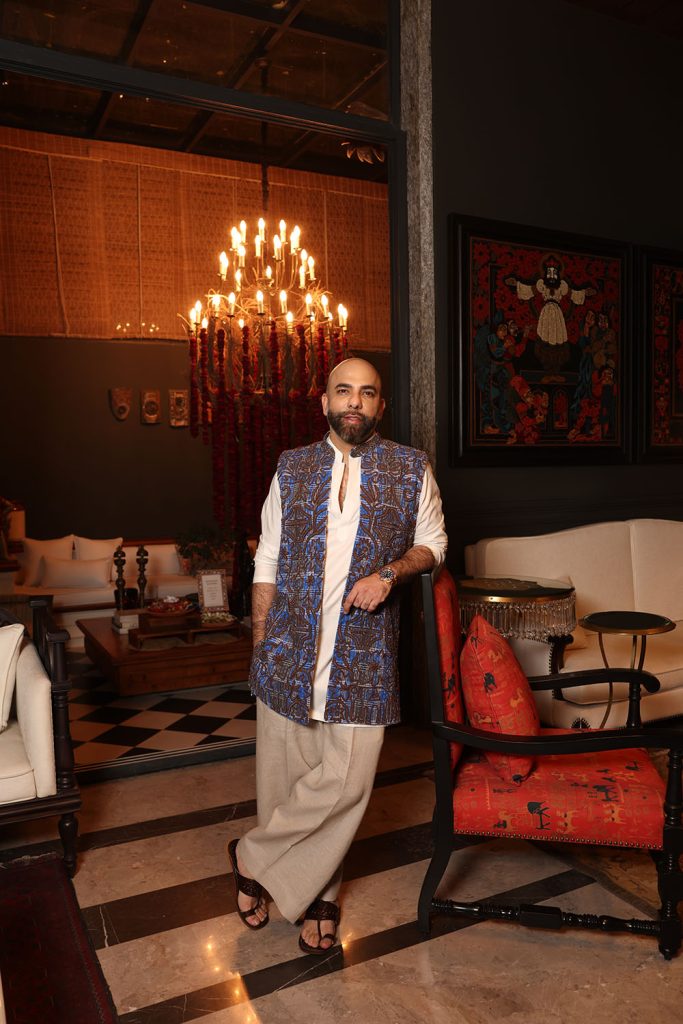
And on a question he has left me with.
About the hands.
And whether we have truly seen them at all.