

The current war in Middle East is expected to hit the country’s $2 billion worth of gems and jewellery exports in the near term, as per the Gem and Jewellery Export Promotion Council (GJEPC). “Of that $2 billion, we can divert $800 million of goods, but $1.2 billion we cannot divert anywhere,” says Sabyasachi Ray, Executive Director, Gem and Jewellery Export Promotion Council (GJEPC) as reported by several publications. He adds that in March, 20% of India’s gems and jewellery trade will be hit due to the ongoing tensions in West Asia.
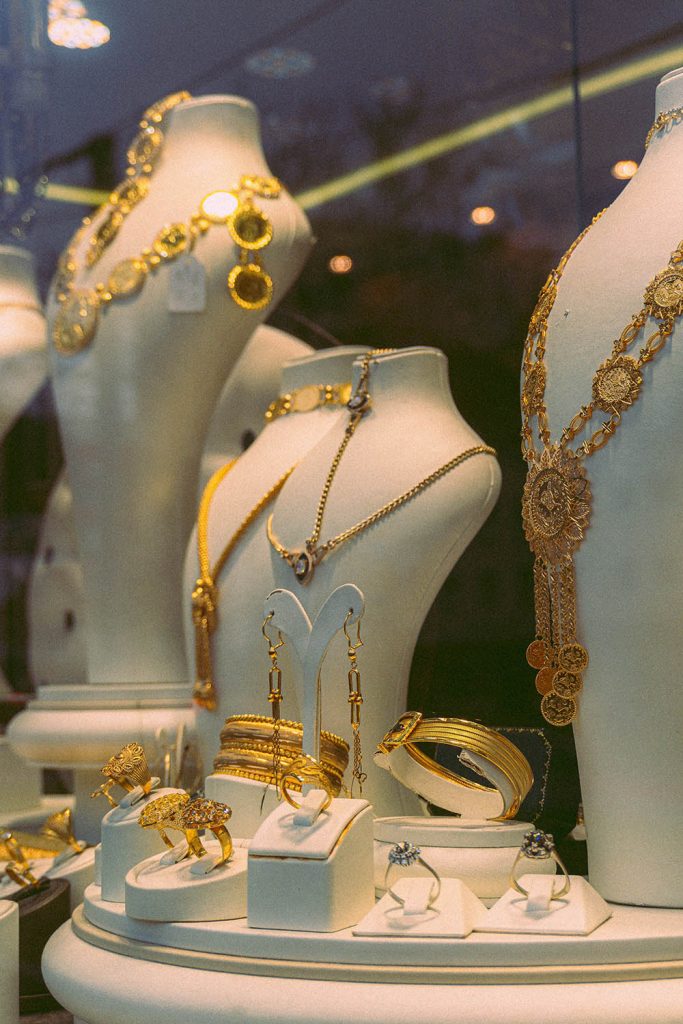
India’s gems and jewellery exports stood at $29 billion in FY25. The United States remained the largest destination, with exports valued at $9.24 billion, while the UAE followed at $7.87 billion. However, after the imposition of US tariffs last year, the UAE has now taken the lead in both exports and imports of raw materials. “If Dubai is affected, $8.3 billion worth of exports are affected. Dubai takes mostly what we sell in India, the chunky gold jewellery. That you cannot offload or divert anywhere,” says Ray as per media reports. Notably, Dubai is the hub for the entire West Asia, where Indian gems and jewellery shipments first reach before they are distributed throughout the Gulf Cooperation Council (GCC). With the current escalation in the Middle East, reports indicate chances of trading companies trying to come to India and diamond auctioneers starting in Surat next week. Here’s what industry experts have to say on the current disruption in the jewellery trade.
Prithviraj Kothari, Managing Director, RSBL
“The ongoing West Asia conflict is creating significant disruptions across the gems and jewellery value chain, putting nearly $2 billion of exports at risk in the near term. Supply chains for rough diamonds, gold, and coloured gemstones are facing delays due to logistics bottlenecks, higher freight and insurance costs, and restricted trade routes. India, which relies on imports of raw materials and exports finished jewellery to key markets like the US and Middle East, is also impacted by tariff uncertainties and currency volatility.”
While gold jewellery remains a long-term store of value, near-term demand may soften. The industry needs policy support, diversified sourcing, and hedging strategies to navigate this volatility.
Ankur Daga, Founder and CEO, Angara
“The ongoing geopolitical tensions in West Asia are creating a dual impact on the gems and jewellery sector, affecting both regional demand and global supply structures. We are seeing a near-standstill in demand across key GCC markets like the UAE and Saudi Arabia, which were previously strong growth areas that have seen sales drop to almost zero in recent weeks. This is particularly concerning for India’s export landscape because these regions are vital destinations. On the supply side, the disruption is more structural. Approximately two-thirds of the rough diamonds imported into India traditionally flow through Dubai. With that hub currently impacted, we are facing a significant bottleneck. If this conflict is prolonged, we expect broader supply chain challenges to follow. Jewellery is often the ‘canary in the coal mine’ for discretionary spending. As a pure disposable asset, it is typically the first category to slow down during periods of global uncertainty. While Western markets like the US, UK, and Australia remain resilient for now, the industry must remain cautious.”
“At Angara, we’ve found stability by focusing on colored gemstones and maintaining a diversified global supply chain, which shields us from the specific volatility currently hitting the diamond market. From an investment perspective, we are witnessing a fundamental shift from ‘soft luxury’ to ‘hard luxury.’ Gold is increasingly being viewed as a critical asset rather than just an adornment, with potential move meaningfully higher from current levels, if interest rates shift. Despite the current turbulence, India remains a massive bright spot, potentially crossing $92 billion this year to become the world’s largest jewellery market. For the industry to navigate this, the focus must remain on inventory efficiency and diversifying sourcing to mitigate regional dependencies.”
Namita Kothari, Founder, Akoirah by Augmont
“The ongoing West Asia conflict highlights India’s reliance on hubs like Dubai for sourcing and re-exports in the gems and jewellery trade, putting the sector at risk of a potential $2 billion impact if disruptions persist. With a significant share of the ~$30 billion export market linked to this corridor, delays in air cargo, rising freight and insurance costs, and tighter trade flows are already leading to shipment delays and working capital pressures.These challenges are unfolding alongside evolving US trade conditions and elevated gold prices, further tightening margins and impacting demand. India’s dependence on global markets for rough diamonds and precious metals, while exporting polished diamonds and jewellery to key markets like the US, makes the sector particularly exposed to such external shocks. While broader disruptions do weigh on overall market sentiment, the lab-grown diamond segment has remained relatively steady due to its more controlled production environment and predictable supply. This reinforces the need for the industry to gradually move towards more diversified sourcing, stronger trade linkages and supply chains that can better withstand periods of global uncertainty.”
Rhea Poddar Loyalka, Creative Director, Deshya by Ma Passion
“India is one of the largest cutting centres of diamonds in the world. The war is affecting the supply chain of many industries, including the Gem and jewellery industry, so in the short term, the market is getting affected. However, given that India is a stronghold for diamonds, export issues cannot last forever. The stock markets are at an all-time low, so general sentiment is low. As a result, luxury industries worldwide are suffering. Industry thrives when there’s stability, and with the volatile nature of geopolitics, it is in shock. Investors should pause in investing in gold in the short term because of volatility in the bullion markets. Gold should stay around 1,50,000 – 1,60,000 per 10 grams on MCX in the near future. It is a time to wait and consolidate for the gem and jewellery industry, but I remain positive for the long term.”
Prapanjj Kota, Co-founder, Réia Diamonds
“India doesn’t mine diamonds. We cut and polish them. India processes over 90% of the world’s cut and polished diamonds by volume — but the rough stones come largely from Russia, Botswana, and through trading hubs in Dubai and Antwerp. The G7 ban on Russian rough diamonds directly hurt India’s diamond workers, and rough diamond imports fell to $10.8 billion in FY2024-25, a 24% decline from $14 billion the year prior. Dubai, our largest raw material corridor, has been equally vulnerable. India imports 250–300 diamond parcels daily via Dubai. Middle East conflict, flight cancellations, and airport disruptions have threatened to shut even that pipeline.
Three things matter most right now. First, diversify markets aggressively. The US dependency has been dangerously exposed. The India-UAE trade agreement has already driven 60% growth in gold jewellery exports to the UAE. Similar frameworks with the UK, EU, Gulf, and Southeast Asia need to be fast-tracked. Second, build domestic demand as a buffer. India is the world’s largest gold consumer and a growing diamond market. Lower GST on studded jewellery, simplified hallmarking, and investment in design infrastructure can convert latent demand into a real industry shield. Third, protect the lab-grown diamond opportunity. India has a chance to dominate this segment globally. That requires targeted export incentives and a clear policy voice in US trade negotiations — separating lab-grown diamonds from the natural diamond tariff conversation entirely. The world is being realigned — trade routes, alliances, supply chains. India’s jewellery industry was built on being at the centre of those flows. The challenge now is to stay central, even as the map is redrawn.”