

There was a time, not too long ago, when Indian cinema seemed slightly embarrassed of India. Aspirational skylines replaced dusty town squares. Romance unfolded in the Scottish Highlands; heartbreak was framed against Manhattan’s glittering avenues. The grammar of success was often geographical: the farther the location, the greater the prestige. Cinema became a passport, and India itself was frequently reduced to a colourful backdrop rather than the beating heart of the narrative. But something fundamental has shifted. Over the last few years, Indian cinema has turned the camera homeward, and in doing so, it has found both authenticity and global resonance. The new cinematic mood is not apologetic. It is not anxious about appearing “local.” It is, quite simply, comfortable in its own skin. “Dil se desi” is no longer a slogan. It’s a sensibility.
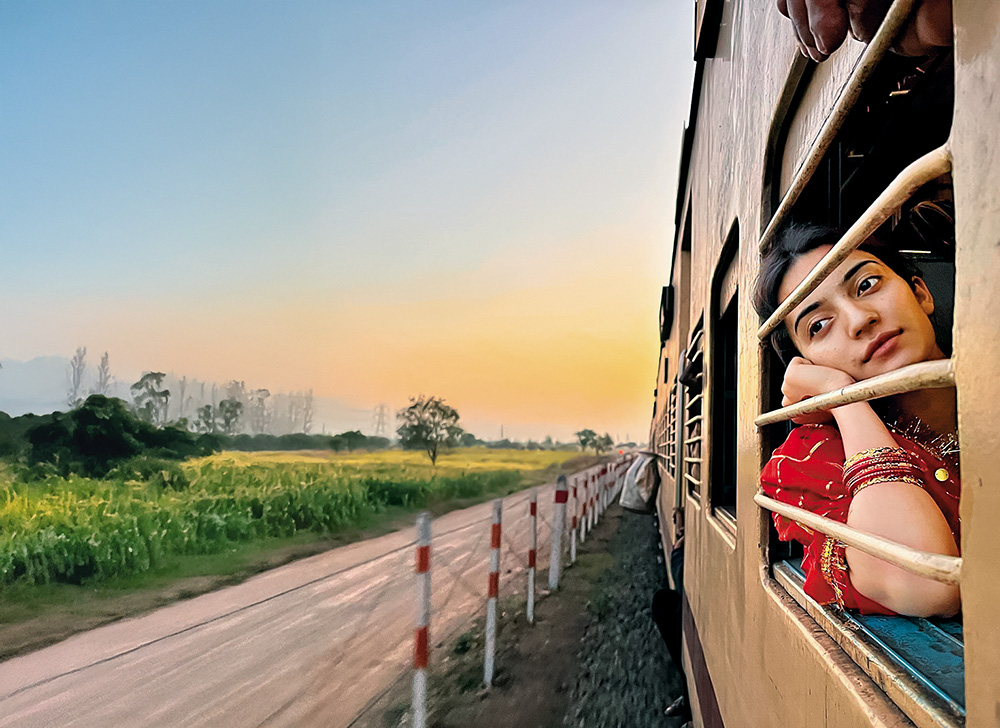
Consider Laapataa Ladies. On the surface, it is a deceptively simple tale of two brides accidentally swapped during a rural train journey. But beneath its gentle humour lies a quiet interrogation of patriarchy, female agency, and the anonymity imposed upon women in India’s hinterlands. The village is not exoticised, nor is it mocked. It is lived in. The dialect, the silences, the moral negotiations; everything feels rooted. The film’s power comes not from spectacle but from recognition.
In a different register, Homebound explores displacement and belonging with emotional precision. It speaks to migration, longing, and the fragile idea of “home” in a country constantly in motion. The film trusts the audience with ambiguity. It does not chase grandeur; it sits with interiority. And that quiet confidence is precisely what makes it expansive.

Then there is The Elephant Whisperers, a documentary set in the forests of Tamil Nadu that observes the intimate bond between mahouts and orphaned elephants. There is no performative urgency in its storytelling. The camera watches, listens, and breathes. Yet, this deeply local narrative travelled across continents, winning the Academy Award and touching audiences far removed from its geography. Its universality emerged from its specificity. It did not attempt to be global; it simply remained truthful. If one were to trace this arc further, the global stage has repeatedly affirmed this inward turn. All We Imagine as Light by Payal Kapadia made history at the Cannes Film Festival, winning the Grand Prix and earning widespread international acclaim. Set within the emotional landscapes of Indian women navigating love and loneliness, the film unfolds like a quiet poem. It does not shout. It lingers. And the world listened.

Regional cinema, too, has been part of this resurgence. Dear Jassi found recognition at the Toronto International Film Festival, weaving a transnational love story that spans Punjab and Canada. Its emotional stakes were rooted in migration and honour, yet its ache felt universal. Meanwhile, films from Marathi, Malayalam, Tamil, and Assamese industries continue to gather festival laurels, expanding the idea of what “Indian cinema” even means.
What connects these diverse works is not genre or budget. It is a gaze which has shifted from aspiration to introspection. A story set in a modest village can feel epic if it engages honestly with freedom, dignity, and desire. The underbelly; the migrant worker, the rural bride, the forest dweller, the dislocated youth are no longer peripheral; but central. This transformation also reflects a psychological evolution within Indian audiences. With streaming platforms offering immediate access to global cinema, there is no longer a need for Indian films to masquerade as Western fantasies. Viewers can watch New York in an American film. What they seek from Indian cinema is something else: recognition, texture, lived detail. They want to see themselves not as caricatures of poverty or of privilege, but as layered human beings negotiating a complex society.

Importantly, this “desi” turn is not regressive or nostalgic escapism into a mythic past, but is contemporary, politically alert, aesthetically sophisticated. The cinematography is deliberate; the writing nuanced; the performances restrained. The village is not romanticised; it is interrogated, the city is not glorified; it is humanised. There is also an ethical dimension to this shift. By foregrounding stories from the margins, these films expand the field of visibility. They challenge who gets to be seen and heard by decentralising power. In doing so, they transform cinema from mere entertainment into a site of cultural self-examination. Cinema has room for fantasy, for grandeur, for escapism. India is no longer a backdrop. It is the protagonist.