

A smile may look effortless, but beneath the skin it is anything but simple. Every lift of the brow, every downturn of the lips, and every line that gradually appears over time is the result of a sophisticated muscle system that determines how the face moves, folds and, ultimately, ages. At the heart of this system is a perpetual tussle between two opposing sets of muscles, and the best way to describe their functioning is as a constant tug of war.
Understanding the dynamics of facial muscles is essential to both expression and ageing in dermatology. Dermatologists refer to this as facial muscle dynamics. The two opposing sets of muscles of the face are namely elevators and depressors. These operate at two opposing ends—while one lifts the face upward, the other pulls it downward.

Elevators are responsible for the lifted looks that come with youth. They lift the eyebrows, raise the cheeks, and elevate the mouth corners with a smile. The zygomaticus major is one of the most crucial muscles in this group, widely referred to as the main smiling muscle. When it gets shorter, it lifts the tissues of the cheek upwards to add the convex curve of a real smile.
Depressors work in the opposite way. These muscles pull the face down and reflect tiredness and sadness or a feeling of tension. A strong example is the depressor anguli oris (DAO) that draws the corners of the mouth downwards. The platysma is a thin, sheet-like muscle found in the neck region, which gets extended to the lower part of the face. It also acts as a strong depressor, dragging down the lower face as ageing occurs gradually.
Also Read: How To Escape Complex Multi-Step Skincare?
Can we adjust facial expressions?
Facial expressions thus arise from an antagonistic muscular relationship. For the depressors to lift, the elevators must relax, and vice versa. Through this coordination, the face can present a plethora of expressions. However, the mechanism also determines how wrinkles and folds develop over time.

An important principle of the facial muscles is that the skin folds tend to form perpendicular to the direction of the underlying muscle fibres. When a vertical muscle is underneath the skin, the wrinkle or fold will typically run horizontally across it. The nasolabial fold, a very commonly occurring fold that exists between the nose and mouth, is formed partly because of the orientation and a repeated action of muscles below this area.
How Are Dimples Caused?
Dimples are another prime example of how muscles can shape the face. Not every face has dimples, because not everyone has this formation underneath the skin. In some individuals, the muscle involved with smiling attaches more directly to the skin, causing it to pull back when the muscle contracts, causing a small indentation, largely recognised as the dimple. Surgical dimple creation mimics this natural mechanism by attaching the skin to the underlying muscle so that contraction produces the same inward pull.
Facial Excercises For Face Toning
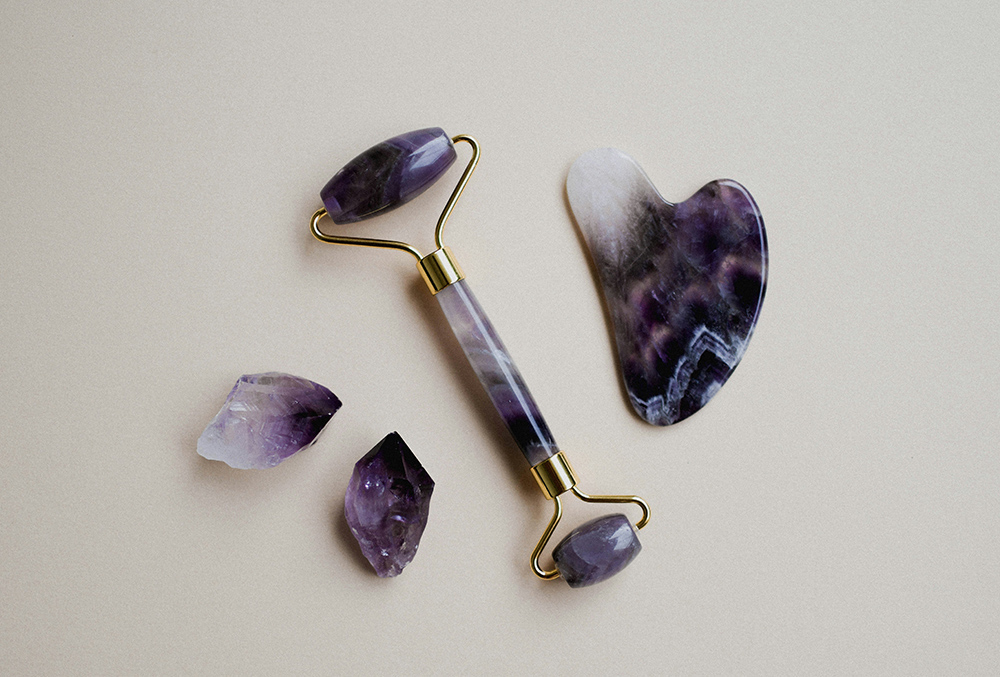
Facial exercises and facial yoga have become popular in recent years to tone the face. The principle behind these practices is similar to physical training. Facial exercises, like weightlifting for the biceps, aim to work the elevator muscles to strengthen their tone and lifting power. Various facial sculpting devices have also hit the shelves with the same purpose. Certain technologies depend on electromagnetic stimulation to trigger the repetitive contraction of facial muscles like the zygomaticus major and minor, and claim that they reproduce the effect of thousands of contractions in just one treatment session.
However, ignoring the biological mechanisms and polyanalogy of facial ageing, these procedures often do not live up to the hype. The depressor muscles tend to get stronger and more dominant over time naturally, outweighing the force of the elevators. Their muscles are always active thanks to habitual expressions and gravity pulling down on the face almost all the time. That is why facial muscle ageing is often referred to as structural imbalance. The downward muscles in most cases happen to overpower the upper ones.
Relax Face Muscles
Today, many aesthetic treatments aim to restore harmony by correcting this imbalance. One widely used technique is the selective relaxation of depressor muscles. When the downward pull from muscle action like the DAO or platysma is lessened, it allows for more efficient functioning of the elevators, which creates a lifting effect. This is a beautiful instance of biological engineering, namely weakening the muscles that pull down the face so that the natural lifting structures can regain control.

Despite the widespread use of these procedures, it is still important to be careful. The facial musculature is closely interrelated. The treatment of these muscles requires a thorough knowledge of anatomy and an exact clinical approach. Poorly executed interventions or excessive correction displace the natural expression easily.
Facial ageing is shaped by the quiet choreography of muscle movement beneath the skin. When that dynamic is understood, aesthetic medicine stops chasing dramatic change and begins restoring balance, allowing the face to age with structure, harmony and ease.
Dr Geeta Grewal is a dermatologist, aesthetic physician and the founder of 9Muses Wellness Clinic.