

Luxury, in the Indian context, has never been an acquisition. It has been an inheritance.
Long before the vocabulary of global branding and monograms entered our cultural lexicon, India had already articulated a deeply nuanced understanding of refinement. Not as spectacle, but as presence. Not as proclamation, but as quiet assurance. What is today termed “quiet luxury” is, in truth, an ancient Indian instinct.
Karigari As Quiet Luxury
We have always been a culture of tactile discernment. A civilisation that does not merely see, but feels. The hand has been as important as the eye. The weight of a textile, the fall of a weave, the temperature of stone, the grain of wood, and the irregular perfection of something made by human effort have been our measures of value.
Luxury, for us, has resided in karigari. In the slow, deliberate mastery of the artisan. In the patience of process. In the understanding that beauty is not manufactured, but revealed through time, through skill, through an intimate dialogue between material and maker.
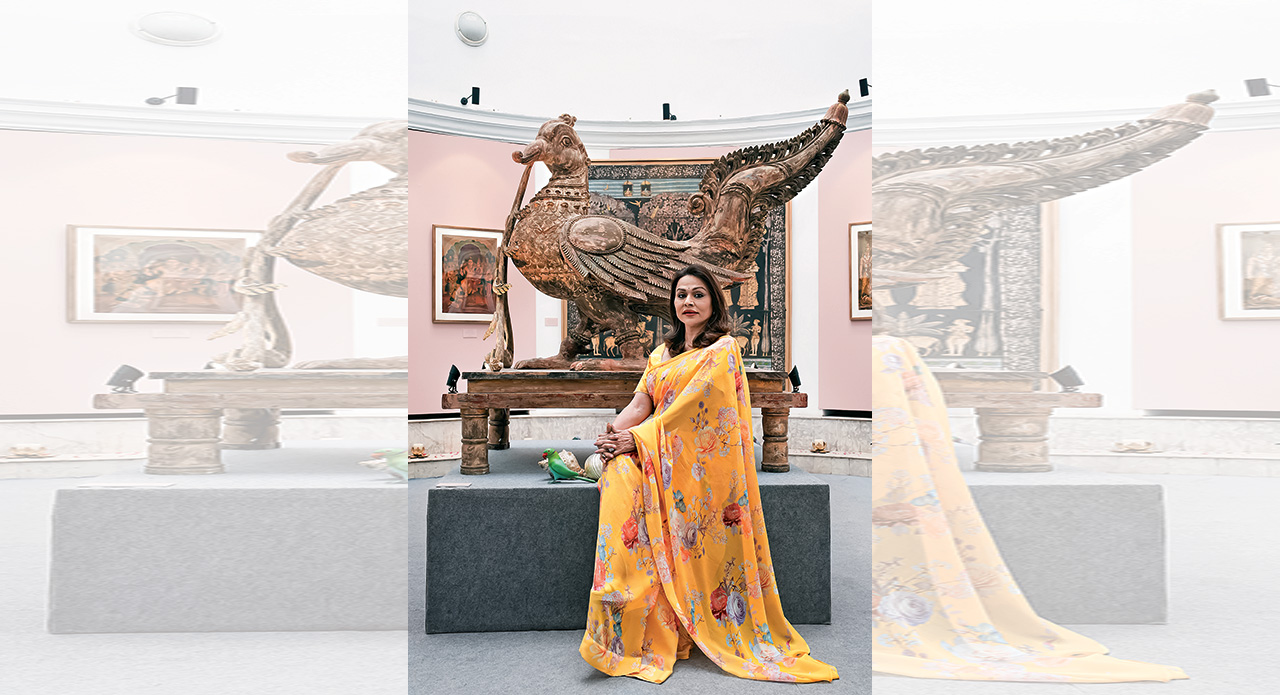
A handwoven textile does not announce itself, yet it carries within it hours, days, sometimes months of labour. A carved object holds the memory of the hand that shaped it. A painted surface bears the quiet discipline of repetition, of inherited technique, of devotion to form. This is luxury that does not need validation or a label to authenticate it. Its value lies in its making, in the invisible accumulation of skill, knowledge, and time. A master craft is, in essence, slow luxury. It is meticulous and resists haste. It cannot be replicated at speed, nor can it be diluted without losing its essence. In that resistance lies its enduring value.
Also Read: Discover India’s Textile Legacy: 6 Books You Shouldn’t Miss
Luxury, Lived Not Displayed
Indian aesthetics have always embraced refinement as an inward experience rather than an outward declaration. Our objects, whether textiles, paintings, or devotional forms, have historically lived within spaces, integrated into daily life. They were not created for distant viewing, but for intimate engagement. Art was not separate from life. It was embedded within it. From frescoes that adorned walls, to pietra dura that enriched surfaces, to rangoli drawn each morning at the threshold, to jewellery worn on the body, to architecture that shaped our environments, there has been a continuous impulse to adorn, to elevate, to create beauty as a lived experience.
Luxury, therefore, was never exclusive in its philosophy, even if access varied. It was democratic in its presence. It existed across scales, mediums, and geographies.
What has shifted in recent decades is the way luxury has been framed. The rise of global consumer culture brought with it a language of visibility, logos, labels, recognisable markers that allowed luxury to be identified instantly, often from a distance. In that framework, value became synonymous with recognition.
Yet, parallel to this, something quieter persisted. In the years following the pandemic, there has been a perceptible return, almost instinctive, towards what feels authentic, rooted, and enduring. A renewed gaze.
Belonging Over Buying
There is today a growing desire not merely to acquire, but to belong. To locate oneself within a lineage of making. To engage with objects that carry meaning beyond their surface. To seek out the handmade, the imperfect, the deeply human.
This resurgence is not nostalgic. It is not about looking back with sentimentality. It is about recognising the depth of what has always existed and choosing to engage with it consciously.
Indigenous craft is being seen anew, not as heritage alone, but as contemporary relevance. As a language that continues to evolve, that can inhabit modern spaces without losing its integrity. It is within this larger continuum that certain moments emerge, not as declarations, but as reflections of this shifting gaze. A coming together of geographies, practices, and visual languages that have developed across regions, yet share a common philosophical ground. The devotional traditions of the South and the narrative richness of the North, the material intelligence embedded in each, brought into dialogue within a contemporary spatial context.
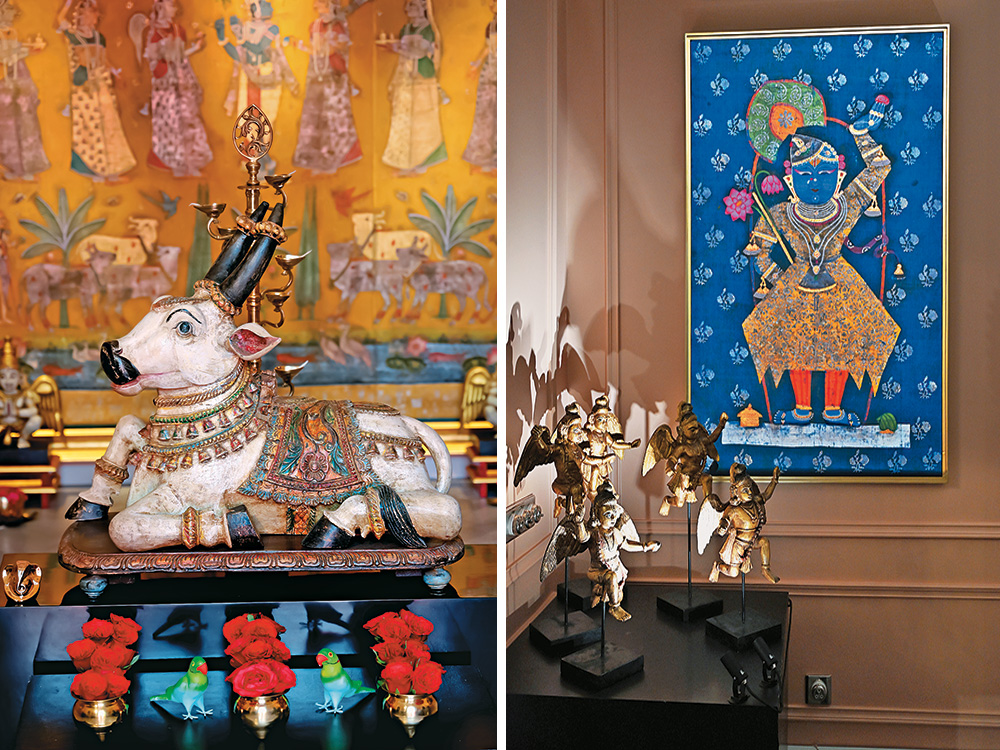
Here, traditional forms do not sit as relics of the past. They inhabit the present. A Tanjore painting, with its gesso relief and gold, carries both opulence and devotion, its surface luminous yet anchored in sacred intent. A Pichwai transforms a wall into a living landscape of ritual and season. Mysore works on glass, oleographs embellished with textile, and sculptural forms enriched with chromatic detail each speak of a tradition that is meticulous and expressive.
What unites them is not merely their origin, but their approach. Each is born of skill, repetition, and an understanding that mastery is cumulative. Refinement is achieved not through excess, but through precision.
Luxury That Deepens Over Time
Placed within contemporary environments, these works do not feel out of context. Instead, they reveal how seamlessly traditional luxury can translate into modern living without dilution or compromise.