

For most of watchmaking history, the tourbillon has been treated as a sacred mechanical sculpture—a whirling cage of balance, escapement, and brilliance that demands space, visibility, and reverence. It is the one complication that traditionally asks for room to breathe. But Bulgari, a house once known primarily for Roman glamour and jewellery mastery, decided to flip the script. It set out to miniaturize the unminiaturizable. The outcome? The world’s thinnest tourbillon, a milestone that not only defied Swiss tradition but placed the Italian-rooted brand at the vanguard of modern horological innovation.
The journey began with the Octo Finissimo collection, which Bulgari launched not to be merely slim, but to be a design and engineering manifesto. Even before the tourbillon emerged, the collection had already demonstrated a willingness to question industry norms—sharper geometry, wider surfaces, architectural identity, and movements shaved down to unimaginably slim dimensions. Each record pushed the next one into inevitability. The world’s thinnest tourbillon was simply the boldest leap in a sequence of calculated revolutions.
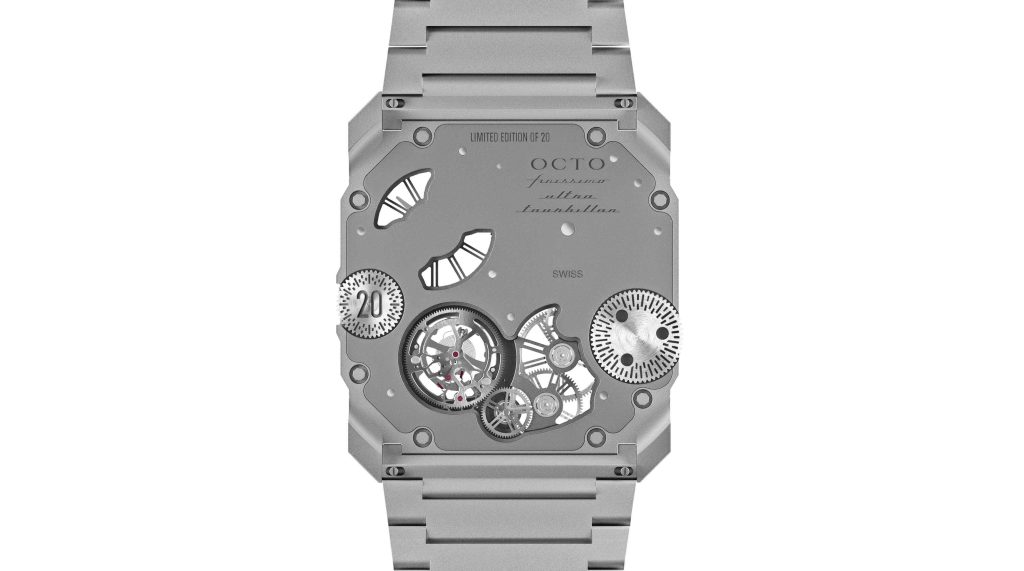
Creating an ultra-thin timepiece is never as simple as shrinking components. Miniaturization exposes fragility, balance issues, and structural weaknesses. With a tourbillon, these challenges multiply: the mechanism must remain durable, precise, and visually expressive, all while occupying almost no vertical space. The traditional approach—stacking components in layers—was no longer viable. Bulgari’s solution was radical: re-engineer the movement horizontally.
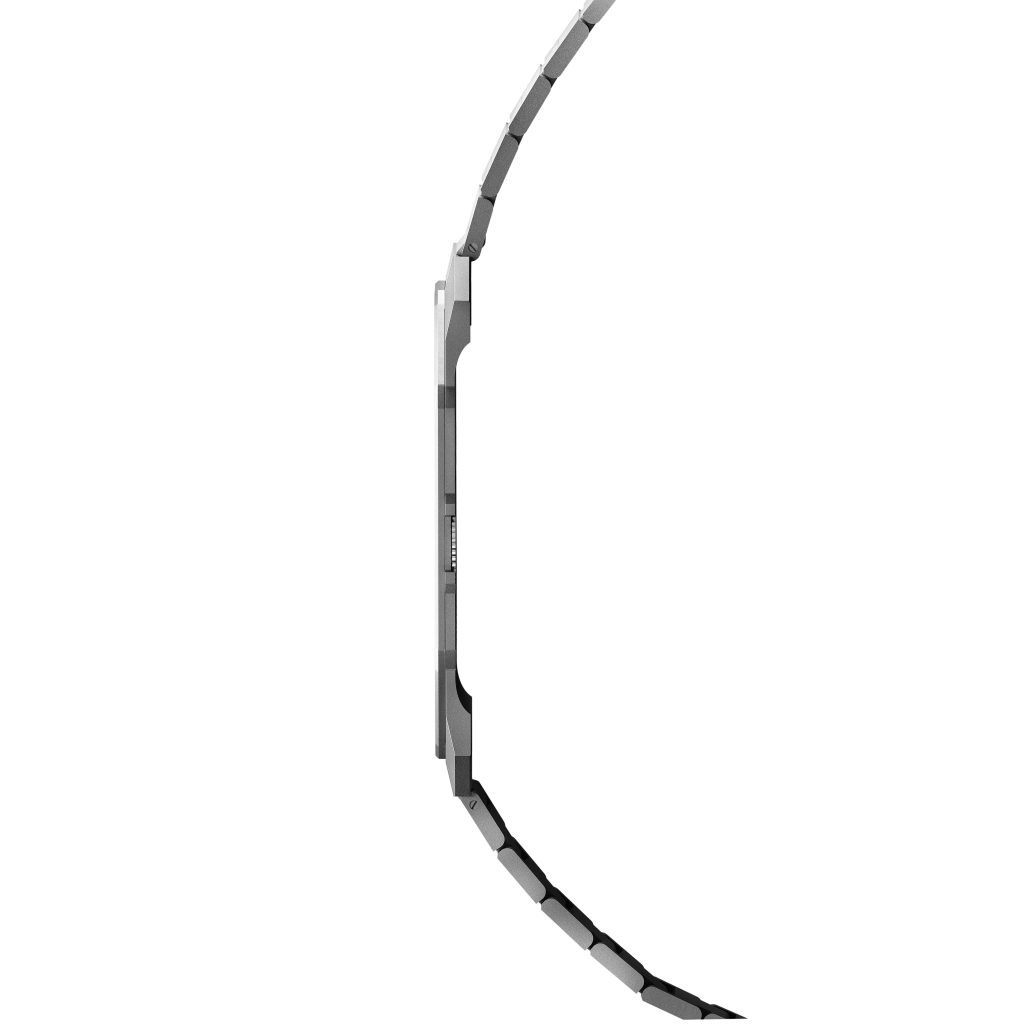
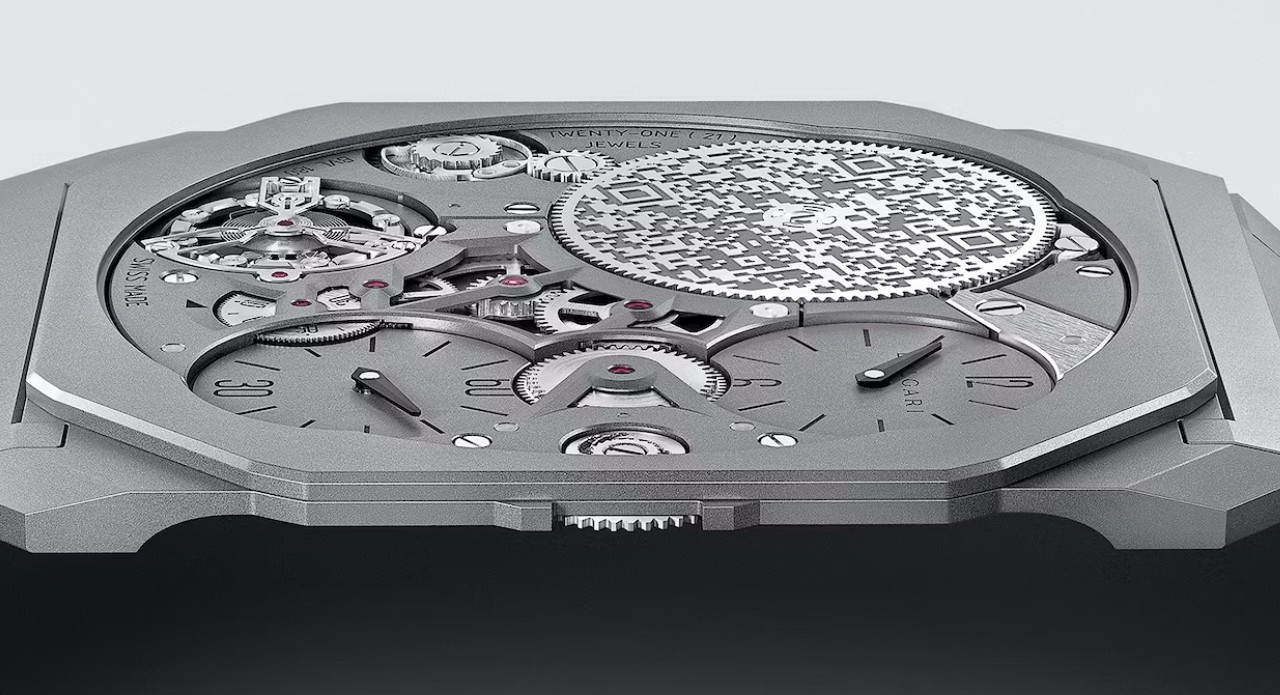
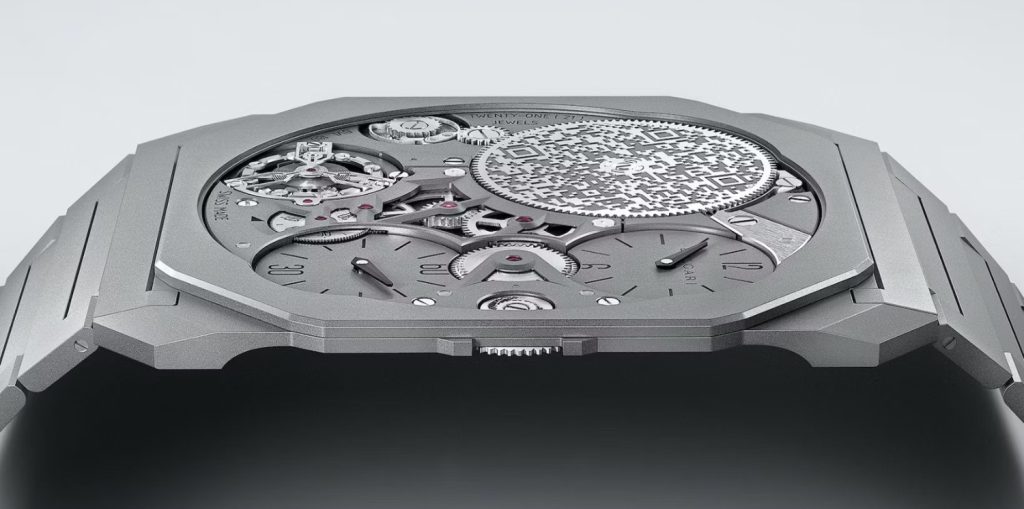
Instead of building upward, Bulgari spread the mechanical architecture outward. Bridges, plates, and even the tourbillon cage were redesigned to fit within a flat, wide footprint, removing excess height without compromising integrity. This required a complete reinterpretation of how a calibre is organized, resulting in a movement only a few millimetres thick.
But horizontal restructuring wasn’t enough. The brand went deeper, rethinking what each component should be. Every millimetre mattered; every screw, gear, and jewel needed reconsideration. The result was an ultra-thin flying tourbillon calibre, eliminating the upper bridge entirely and relying on an expertly balanced lower support—a daring mechanical choice that reduced height while keeping the cage supremely stable.
Materials became an equally critical battleground. Bulgari chose titanium not just for aesthetics, but for physics: it is light, rigid, and capable of supporting slim constructions without flexing. The case, bezel, and even bracelet of the Octo Finissimo were crafted with this architectural metal, minimising overall weight while maximizing structural strength. Where other brands might reinforce thickness, Bulgari reinforced geometry.
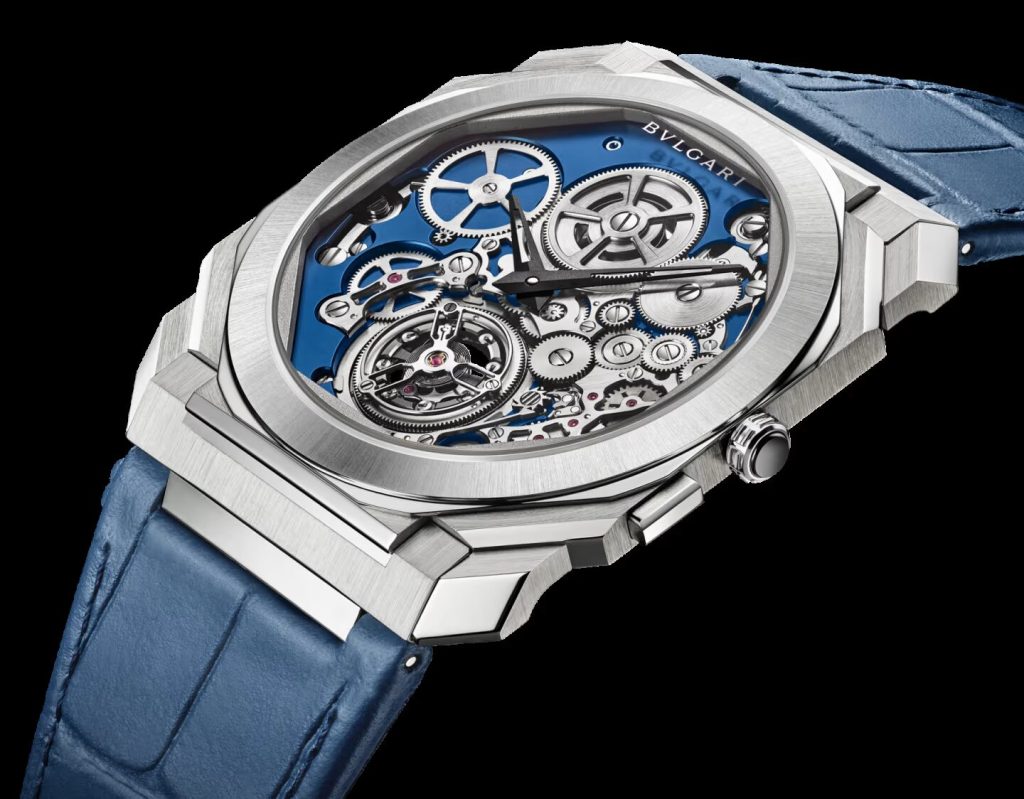
One of the most impressive feats was merging the movement and case into a single structural unit. Instead of the calibre sitting independently inside the watch body, the caseback effectively became part of the movement itself. This eliminated the need for additional plates and layers, allowing Bulgari to cut down thickness dramatically. In essence, the watch became a monobloc machine: case as engine, engine as case.
Aesthetically, the world’s thinnest tourbillon was not just a technical display, but a distillation of Bulgari’s Roman design DNA. The wide satin-finished planes, sharp angles, and clean, architectural lines emphasized the watch’s thinness rather than hiding it. Where others might flaunt complexity, Bulgari embraced Zen-like minimalism—allowing the tourbillon to shine as the singular star.
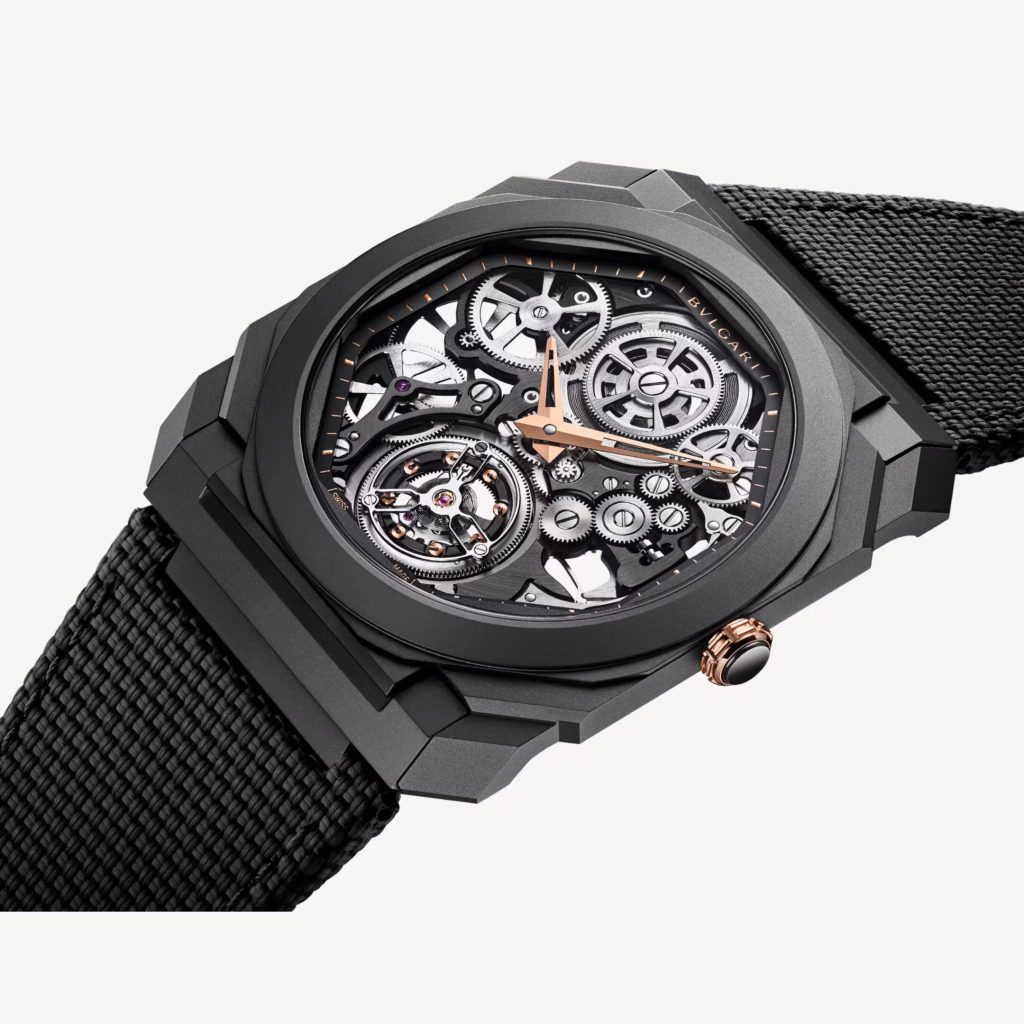
Achieving such thinness also demanded exceptional endurance testing. Ultra-thin movements are notoriously susceptible to shocks and positional variance. The Octo Finissimo Tourbillon underwent rigorous trials to ensure real-world wearability: temperature changes, vibrations, and daily wrist motion were studied meticulously. By the time it reached production, it wasn’t merely a record-setter—it was a functional masterpiece ready for actual use, not just display cabinets.
The most remarkable part of this story is not the record itself but what it represents. With this creation, Bulgari repositioned itself as a force in high watchmaking, competing not just with traditional Swiss maisons but redefining the future of horological minimalism. The achievement stands as proof that great innovation often comes from those unafraid to challenge entrenched norms.
By reshaping architecture, re-engineering mechanics, and refusing to accept vertical limitations, Bulgari didn’t just create the world’s thinnest tourbillon—it redrew the blueprint for ultra-slim watchmaking. In doing so, it proved that the pursuit of thinness isn’t about reducing space; it’s about expanding possibilities.